In the rugged frontier town of Tombstone, Arizona, 1881, you’d expect meals to consist of salted beef, beans, or hardtack. But step inside the Oriental Saloon, and the menu might surprise you. According to historian Richard Erdoes, the Oriental served “salmon au beurre noir,” that’s salmon in black butter sauce, a refined French dish, right there in the heart of cowboy country.
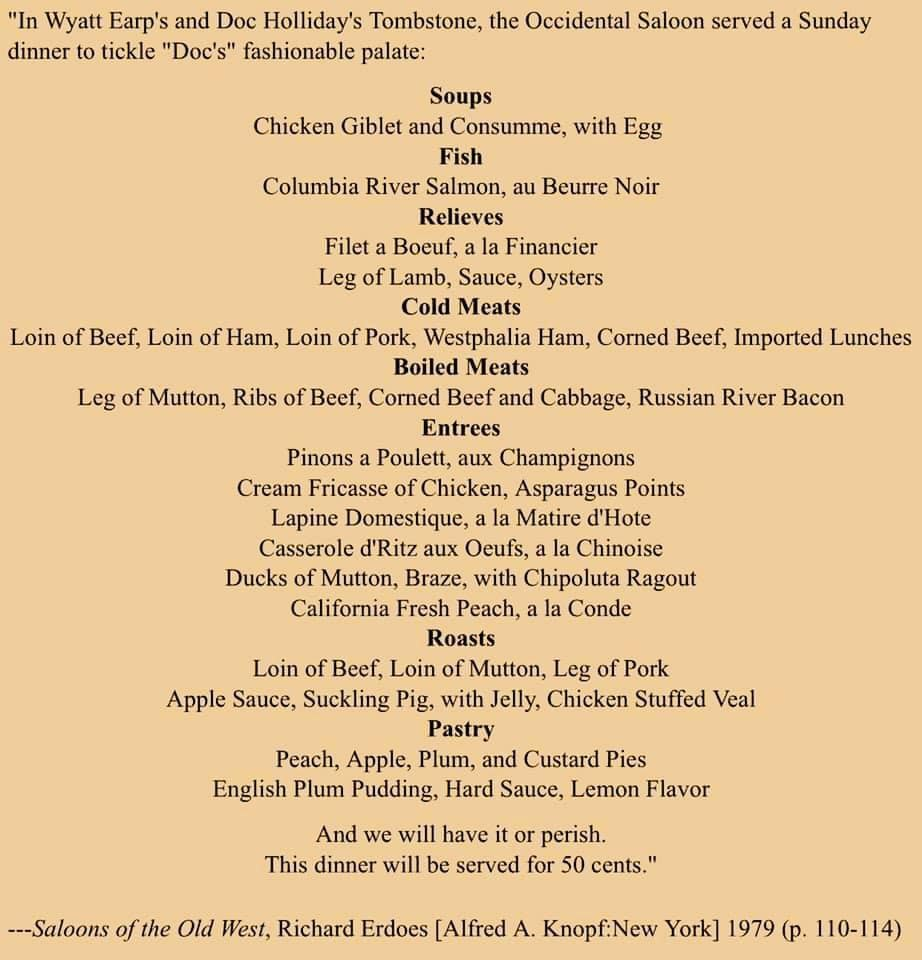
The presence of such cuisine highlights a fascinating tension in the Old West: the collision of refinement and rawness, elegance and grit. Men would walk into the saloon covered in trail dust or blood from a duel and sit down to a menu more fitting of New York or New Orleans than the Arizona desert. It speaks volumes about the aspirational culture that grew around boomtowns with everyone chasing fortune, and trying to live like they already had it.
French cooking, especially butter-based sauces, had begun to influence American cuisine by the mid-19th century, particularly among the upper class. With railroads delivering ice and preserved goods, and with silver bringing immense wealth into Tombstone, it’s not surprising that even something as delicate as salmon with black butter could make its way into the Southwest.
Tombstone, Arizona: The Wildest Town in the West
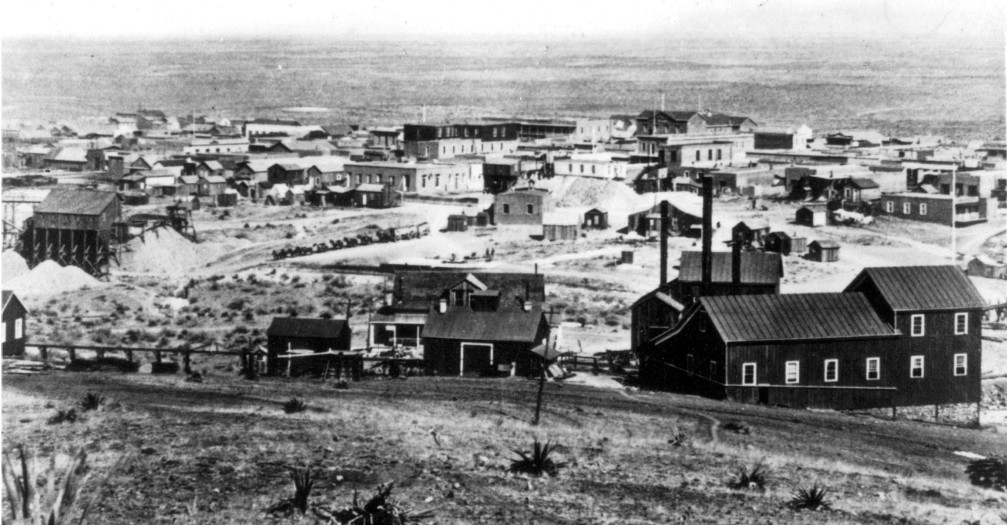
Tombstone wasn’t always destined to become legendary. When Ed Schieffelin first ventured into the surrounding Apache territory in search of silver, soldiers warned him he’d find nothing but his own grave. That warning became ironic inspiration: when he struck silver, he named his first claim “Tombstone.” By the early 1880s, it was one of the fastest-growing towns in the American Southwest.
By 1881, Tombstone had everything you’d expect in a modern city — newspapers, theaters, fine dining, hotels, schools, and a red-light district — all packed into a few dusty streets in southeastern Arizona. Its wealth was staggering. At its peak, the mines around Tombstone produced $40–85 million in silver, an immense fortune for the era. That kind of wealth attracted a mix of opportunity seekers, scoundrels, and high society.
But that boom came with volatility. Water flooded the mines, political tension simmered between lawmen and outlaws, and class divisions ran deep. You might find miners in rags sleeping on saloon floors and mine owners dining on oysters and fine wine across the room. The town was a contradiction: civilization perched precariously on lawlessness.
Still, Tombstone thrived for a time. Its short golden age was enough to etch it permanently into American memory, a sort of living symbol of the frontier spirit, both its elegance and its violence.
The Gunfight at the O.K. Corral
On October 26, 1881, the streets of Tombstone were already buzzing with tension. The Clanton and McLaury families, cattle rustlers and suspected outlaws, had long been at odds with the Earp brothers, who were trying to impose order in a town that barely tolerated it. The feud came to a head in a narrow lot next to Fly’s Photography Studio, just down the street from the O.K. Corral.
In just 30 seconds, over 30 shots were fired. Billy Clanton, Tom McLaury, and Frank McLaury were killed. Virgil and Morgan Earp were wounded. Doc Holliday, wielding a shotgun and battling tuberculosis, survived unscathed. The event became instantly legendary, not because of its scale, but because of what it symbolized: the showdown between law and chaos, between order and frontier justice.
The gunfight polarized Tombstone. Some saw the Earps as heroes, others as murderers. But over time, popular memory immortalized them as the face of righteous courage in the lawless West. Books, movies, and television transformed that dusty shootout into America’s most iconic moment of gun-slinging folklore.
At the time, though, the shootout had more to do with deep-rooted political divisions, conflicting loyalties, and economic power struggles. The cowboys weren’t just criminals, but they represented a populist class of ranchers and rustlers, while the Earps were aligned with business owners and the Republican elite. The O.K. Corral was more than a brawl, but it was a miniature civil war that cemented itself forever in Old Western Lore.
The Oriental Saloon & Doc Holliday
The Oriental Saloon stood apart in Tombstone. While many saloons were dingy and rough, the Oriental was a high-end establishment, styled to impress. Ornate chandeliers, velvet curtains, and imported liquor gave it the feel of a frontier palace. The saloon was a stage for appearances, for power plays, for gambling fortunes over a single hand of poker.
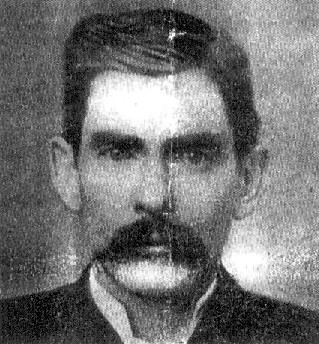
Doc Holliday, the infamous gambler and gunslinger, was a regular fixture at the Oriental. Though battling a terminal illness, he was known for his wit, cold resolve, and deadliness at the card table. His presence added a dangerous glamour to the saloon. Patrons knew that where Doc played, stakes were high both financially and physically.
The saloon’s kitchen, oddly enough, was part of its appeal. Many didn’t expect high-end fare in the Arizona territory, but the Oriental boasted dishes like green turtle soup, oysters, and the surprisingly refined salmon au beurre noir. These meals weren’t just for flavor but they were statements of wealth, elegance, and cultural sophistication of the late Victorian Era.
This duality of gritty men like Doc Holliday eating delicate French cuisine in the middle of a violent frontier town is what makes the Old West so fascinating to me. The Oriental Saloon was a place where refinement and rebellion met under the same roof, united by flickering gaslight, fine food, and the ever-present clink of poker chips.
Old Western Salmon Recipe:
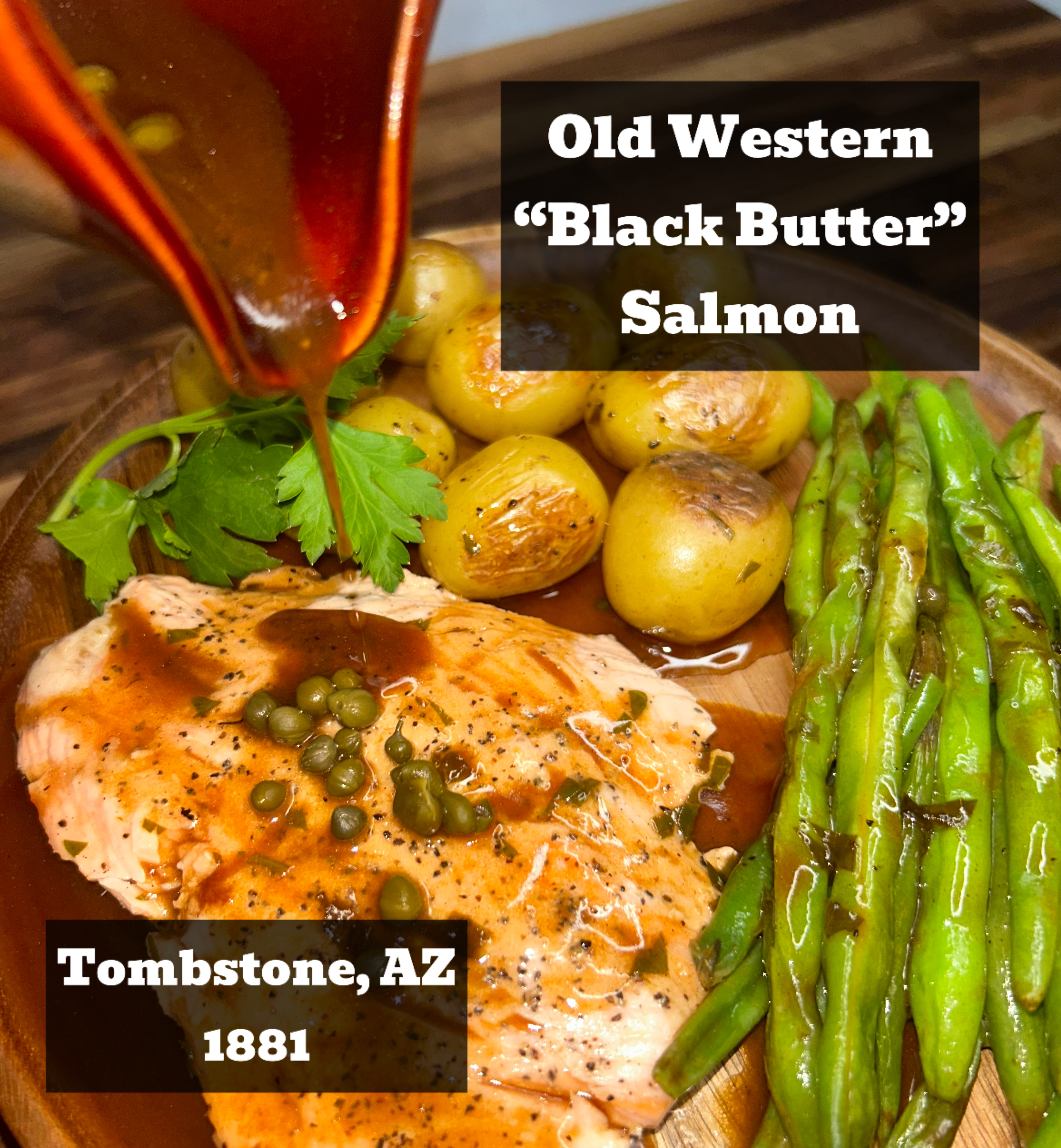
1881 Tombstone Salmon with Black Butter Sauce
Ingredients
2 salmon fillets or steaks (~6 oz each; fresh or lightly salted)
- 1 sprig of thyme for poaching
- Salt and black pepper to taste
- 5 tablespoons unsalted butter
- 1 tablespoon balsamic vinegar or cider vinegar
- 1 tablespoon chopped fresh parsley
- 1 tablespoon capers
Sides:
- 6 –8 baby yellow or red potatoes
- 2 tablespoons butter
- 1 tablespoon chopped parsley
- 1 cup green beans
- Salt to taste
Instructions
Prepare the Sides
- Boil potatoes in salted water until fork-tender (about 10–12 minutes). Drain and toss with 2 tablespoons butter, chopped parsley, and a pinch of salt.
- Steam or boil green beans until bright and just tender (about 3–5 minutes). Set aside.
Poach the Salmon (with Thyme-Infused Court Bouillon)
- In a wide, shallow pan, bring enough water to just cover the salmon. For extra flavor, add: A generous pinch of salt, A sprig or two of fresh thyme,A slice of lemon or splash of white wine (optional)
- A few black peppercorns
- Bring the liquid to a gentle simmer — not a rolling boil — to preserve the delicate texture of the fish.
- Season the salmon lightly with salt and black pepper.
- Carefully lower the salmon into the simmering liquid and poach gently for 8–10 minutes, or until just opaque and flakes easily with a fork.
- Remove salmon with a slotted spoon and let it rest briefly while you prepare the black butter sauce.
Make the Black Butter Sauce
- In a small saucepan, melt 4 tablespoons of unsalted butter over medium heat.
- Allow the butter to cook until it turns golden brown and develops a nutty aroma (watch carefully to avoid burning).
- Remove Heat, stir in 1 tablespoon balsamic vinegar, then add the capers and chopped parsley. Let it bubble briefly.
- Add 1 tablespoon butter to melt and thicken the sauce.
- Spoon the hot black butter sauce generously over the poached salmon.
Video
Notes
- Poach with Purpose: Flavor the poaching liquid with fresh thyme, salt, and lemon or wine for a delicate aromatic base that elevates the salmon.
- Mind the Butter: When making the black butter sauce, let the butter brown but not burn — it should smell nutty and rich, not acrid.
- Serve Immediately: This dish is best plated hot, with the butter sauce spooned over just before serving to preserve its velvety texture.
Sources & Further Reading
- Richard Erdoes, Saloons of the Old West
– Provides detailed accounts of saloon culture, menus, and social life in the Old West, including the Oriental Saloon’s offerings like “salmon au beurre noir.” - National Park Service – Tombstone Historic District
– Overview of Tombstone’s founding, architecture, and historical landmarks.
https://www.nps.gov/places/tombstone-historic-district.htm - Tombstone Times – Local Historical Archives
– Local reporting and archival material on the Oriental Saloon and the Earp-Clanton feud.
http://www.tombstonetimes.com - John Boessenecker, Ride the Devil’s Herd: Wyatt Earp’s Epic Battle Against the West’s Biggest Outlaw Gang (2020)
– Provides detailed, historically grounded narrative of the lead-up to the O.K. Corral gunfight. - Arizona State Library – Territorial Menus and Dining Culture
– Archival research into food service in frontier Arizona.