Few stories in history reveal the dark intersection of imperial greed and human endurance like that of the Congo under Belgian rule. In the 19th and 20th centuries, this vast, resource-rich region was transformed into a stage for unimaginable exploitation.
Behind the facade of civilization and progress lay one of the most brutal colonial regimes ever witnessed. At the heart of this story lies not only tragedy but also survival, and food became one of its most powerful symbols.
This blog post explores the colonial atrocities of King Leopold II, the forced cultural assimilation of the Congolese people, and how a humble yet tasty chicken stew called Poulet Moambé endures as a vessel of heritage and memory of Belgian Occupation.
Belgian-Occupied Congo
In the late 19th century, Europe was engaged in the “Scramble for Africa,” with nations vying for control over territories and resources. King Leopold II of Belgium secured the Congo Basin during the Berlin Conference of 1884–85 under the pretext of humanitarianism.
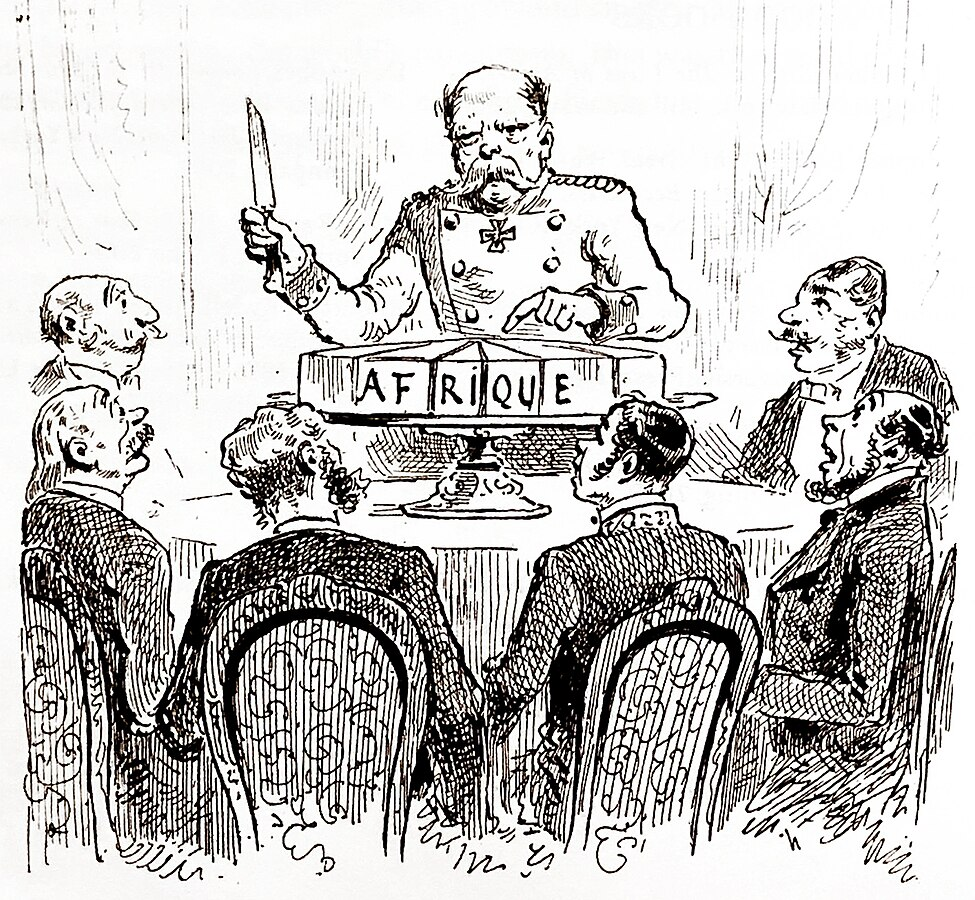
Promising to end the Arab slave trade and bring civilization to Central Africa, he was granted personal control of what became known as the Congo Free State. In reality, this “free state” was a private empire ruled with unchecked authority by Leopold, whose primary goal was profit.
The Congo was rich in ivory, rubber, and minerals. These commodities fueled industrial progress in Europe while stripping the land and its people of agency. The Belgian presence in Congo was marked by forced labor, military domination, and racial hierarchy. Local leaders were replaced with colonial officials, traditional systems were dismantled, and Congolese identity was suppressed in favor of Belgian assimilation.
King Leopold II’s “Free State”
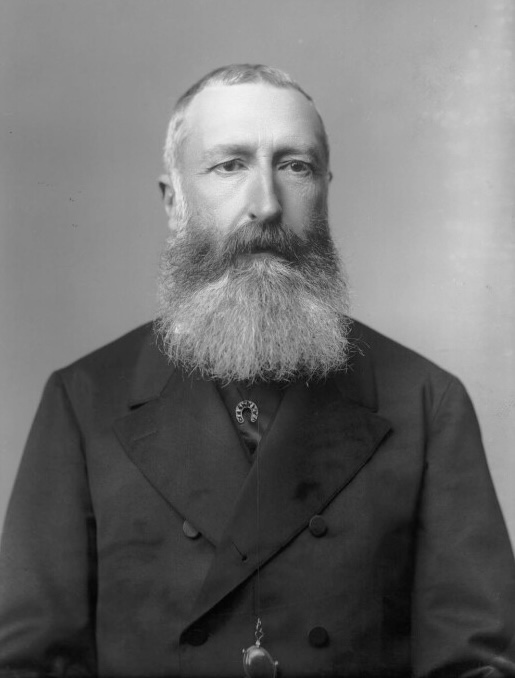
Leopold II’s rule from 1885 to 1908 has been widely condemned as one of the most violent periods of colonialism. Although he never visited the Congo himself, Leopold profited immensely from its resources.
His private army, the Force Publique, enforced rubber quotas through coercion, mutilation, and mass executions. Villagers who failed to meet demands had their homes burned and their hands severed as proof of punishment.
Two Decades of Terror
To meet rubber quotas, Congolese communities were subjected to horrific punishments. Villages that failed to meet production demands were often burned to the ground. Men, women, and children were mutilated, most infamously by having their hands cut off—either as punishment or to prove that bullets weren’t wasted.
Force Publique officers, a colonial military force commanded by white officers, enforced these quotas with terror and violence. The system relied on hostage-taking, torture, and mass killings to instill fear and maintain control.

It is estimated that 10 million Congolese died during Leopold’s rule—either from direct violence, starvation, disease, or exhaustion. Entire regions were depopulated, and cultural traditions were destroyed. International outrage eventually grew, led by missionaries, journalists like E.D. Morel and Roger Casement, and African-American activists in the United States.
By 1908, intense pressure forced the Belgian government to annex the territory, ending Leopold’s personal control. However, the damage done to the Congolese people and their society would cast a long and painful shadow that persists even today.
Integrating Congolese Cuisine with European Influence
Even after Belgium assumed control, much of the oppressive structure remained intact. Schools, churches, and institutions were built not to empower Congolese people but to mold them into obedient colonial subjects.
While urban centers developed for European settlers, rural Congo remained a site of extractive labor and limited rights. By the 1940s, a growing class of évolués (“evolved” Congolese who adopted Belgian customs) emerged, especially in cities like Leopoldville (now Kinshasa).
In these years, Congolese women were sent to foyers, government-run programs designed to teach them Belgian domesticity. They were instructed on how to cook bland, European meals, keep tidy homes, and raise children in the Belgian mold. Yet, this period also created space for cultural exchange, and it was in these kitchens that Congolese culinary traditions held firm.
Despite the efforts to impose Belgian standards, Congolese cuisine remained a defining part of family life and identity. One dish in particular, Poulet Moambé, stood out. This rich, tomato and palm nut stew became the most iconic representation of Congolese cooking. Belgian settlers often asked their Congolese cooks to prepare it, fascinated by its spicy, earthy flavor. Many likely had their first taste of pili-pili chilis through this dish.
Rather than being erased, Congolese food became an arena for subtle resistance and cultural persistence. Through Poulet Moambé, Congolese women could assert their heritage even in colonial households. This dish, prepared over open flames and shared in community, bridged generations and maintained a vital link to a pre-colonial past.
Poulet Moambé: A Modern Symbol of Cultural Endurance
Today, Poulet Moambé is the national dish of the Democratic Republic of the Congo. Its legacy goes far beyond its ingredients. It represents endurance, flavor, and the complex blend of cultures that emerged from a violent and unequal encounter. Traditionally, the dish is made with chicken simmered in a sauce of palm butter, garlic, onions, and chili, served with cassava leaves, rice, or plantains.
Its preparation is slow and intentional. The flavors deepen over time, much like the story it tells. When I make it, I use chicken thighs with the skin on for a richer texture, along with homemade chicken stock and a generous spoon of palm nut paste. The spices are simple but bold, and the stew pairs perfectly with steamed white rice.
The Scars of This Period on Modern DRC
While Leopold’s rule ended over a century ago, its effects ripple through the modern Democratic Republic of the Congo. The nation remains one of the most mineral-rich in the world, but also one of the most unstable. Conflict, especially in the eastern provinces, is driven by competition over resources, with militia groups and foreign actors vying for control.
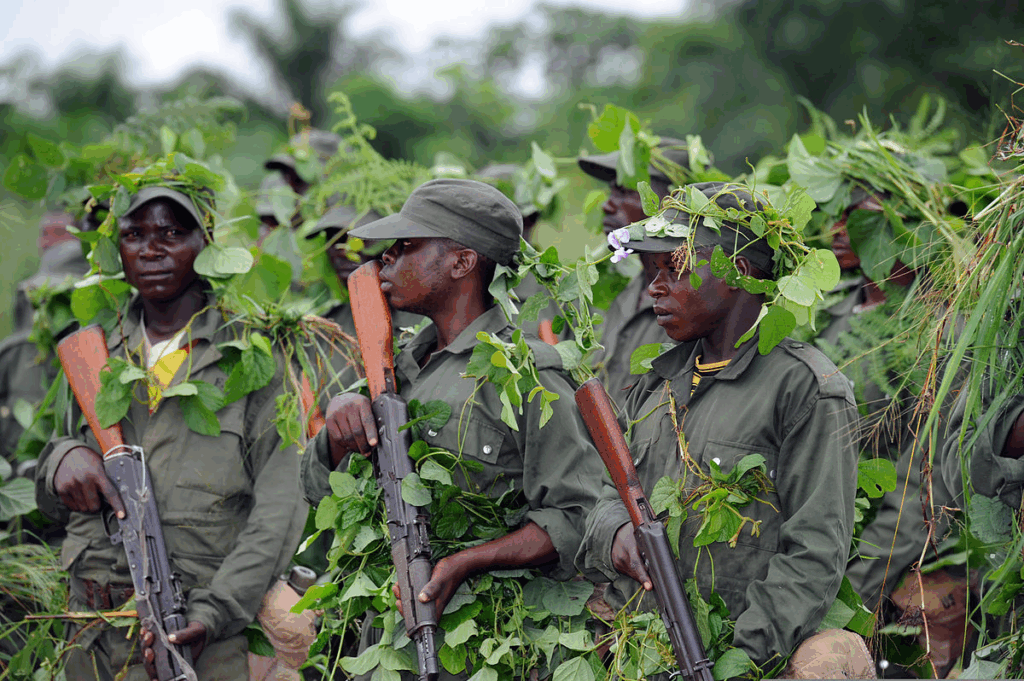
Over 7 million people are currently displaced due to violence, poverty, and political instability. The roads and infrastructure laid during colonial rule were designed to extract, not connect. Education systems were limited to control, not empower. The ghosts of rubber quotas and severed hands live on in a country that has yet to fully recover.
If you’re enjoying my work, check out Eats History Shop!
Recipe: Poulet Moambé (Chicken Moambé)
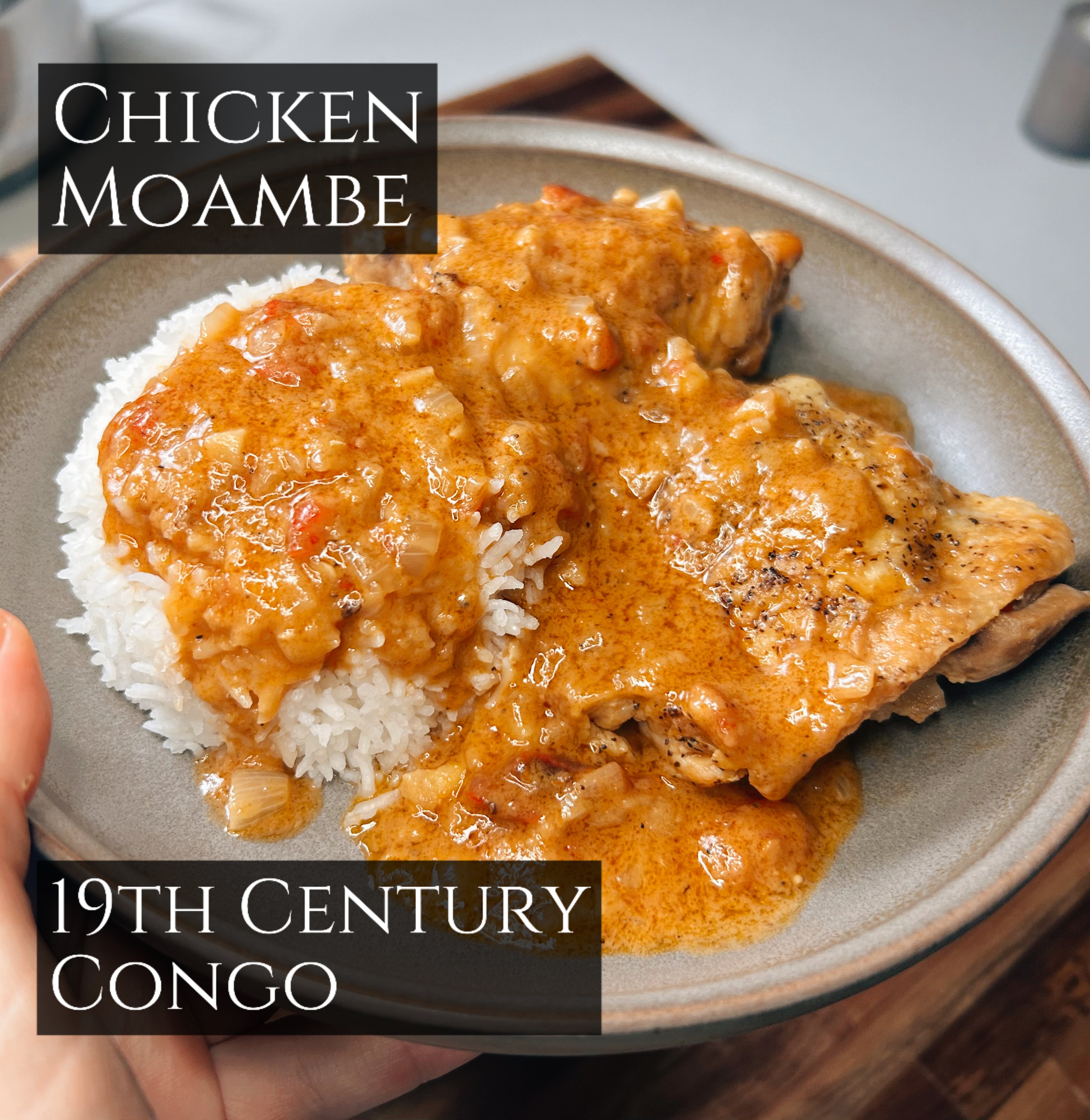
Poulet Moambé (Chicken Moambé)
Ingredients
- 4 bone-in skin-on chicken thighs
- 2 tablespoons olive oil or traditional palm oil
- 1 medium onion finely chopped
- 3 cloves garlic minced
- 1 cup chopped tomatoes fresh or canned
- Salt and black pepper to taste
- 1 teaspoon red pepper flakes or pili-pili if available
- 1.5 cups chicken stock
- 1/2 cup palm nut butter or natural peanut butter
- Steamed white rice for serving
Instructions
- Heat oil in a large pot over medium heat. Brown chicken thighs on both sides, then set aside.
- In the same pot, add chopped onion and garlic. Sauté until fragrant and translucent, then add the tamatoes.
- Return the chicken to the pot. Season with salt, black pepper, and red pepper flakes.
- Pour in chicken stock and bring to a simmer.
- Stir in palm nut butter until fully dissolved into the broth.
- Cover and simmer on low for 45 minutes to 1 hour, until the chicken is tender and the sauce is thick.
- Serve hot with steamed white rice.
Video
Notes
- Palm Nut Butter Substitute: If you cannot source palm nut butter, natural peanut butter (unsweetened) works well and mimics the dish’s creamy, earthy texture.
- Traditional Fat Choice: For a more authentic flavor, use red palm oil instead of olive oil if available—it adds a distinct color and richness to the stew.
- Customize the Heat: The amount of red pepper flakes or pili-pili can be adjusted to taste, depending on how spicy you like your stews.
Further Reading & Sources:
Hochschild, Adam. King Leopold’s Ghost: A Story of Greed, Terror, and Heroism in Colonial Africa.
This foundational book explores the atrocities committed under Leopold II’s rule, offering historical detail and survivor accounts. A must-read for understanding the full scope of the Congo Free State’s horrors.
[ISBN: 9780618001903]
Nzongola-Ntalaja, Georges. The Congo: From Leopold to Kabila – A People’s History.
This book provides a comprehensive history of the DRC from colonization through modern times, including the political and social ramifications that continue today.
[ISBN: 9781842770535]
Schalbroeck, Eva. “Season with Money, Knowledge, Civilisation, and Exchange: Culinary Herbs and Spices during Colonial Rule in the Congo (1885 to 1960).”
A peer-reviewed article exploring how food became a site of cultural negotiation and control under Belgian rule, and the culinary legacy that remains.
Wrong, Michela. Do Not Disturb: The Story of a Political Murder and an African Regime Gone Bad.
While focused on Rwanda and the Great Lakes region, this book includes valuable insights into the Congo’s post-colonial political instability and regional conflict.
[ISBN: 9781610398428]
The United Nations Group of Experts Reports on the Democratic Republic of the Congo (UNSC Reports, 2020–2024)
For recent documentation of armed conflict, mineral exploitation, and foreign influence in the DRC, these reports are invaluable primary sources.
[Available at: https://www.un.org/securitycouncil/sanctions/1533/panel-of-experts/reports]