On the evening of April 14th, 1912, the RMS Titanic glided silently across the North Atlantic under a sky full of stars. She was the pride of the White Star Line, a floating palace that many believed could never be sunk. Inside, passengers dined, laughed, and relaxed. It was a peaceful night, one filled with fine food and warm conversation. But no one could have imagined that just hours later, their lives would be changed forever.
That final dinner has become one of the most haunting moments in maritime history. It is a meal frozen in time, served in calm and elegance, just before the unthinkable occurred. Before tragedy struck, there was dinner.
Class Divisions at Sea
The Titanic was not just a feat of engineering, but a reflection of early 20th-century society. Onboard were three distinct classes of passengers, and each class offered a different experience based on social status and wealth. The ship itself was divided accordingly. First-Class passengers enjoyed luxury suites, lavish lounges, and grand salons. They lived in the height of Edwardian elegance, surrounded by fine woodwork, crystal chandeliers, and white-gloved stewards.
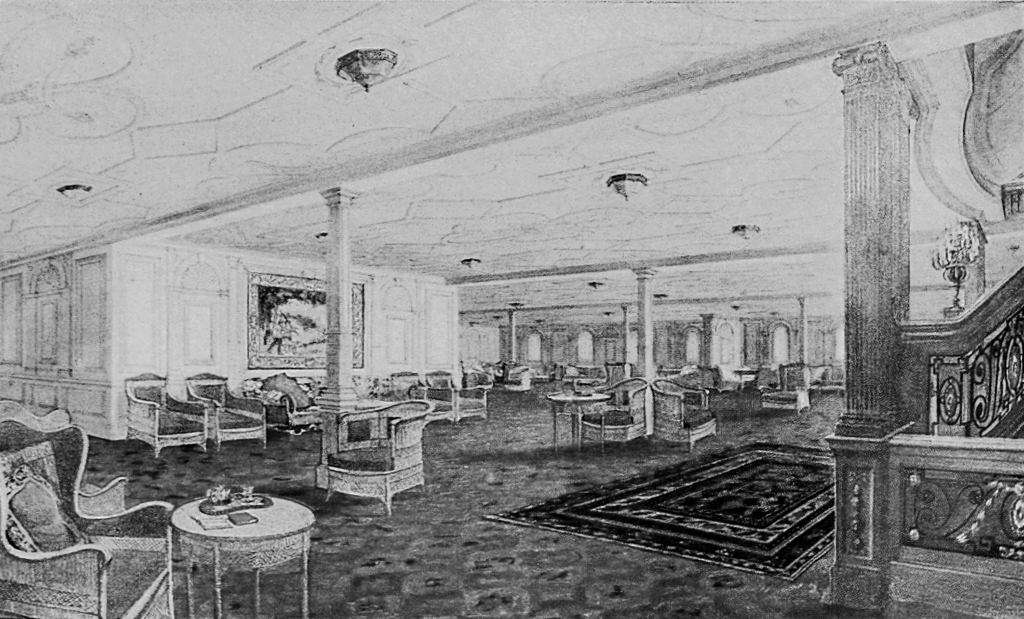
Second-Class passengers were mostly middle-class tourists and professionals. Their accommodations were still far above the norm for ocean travel at the time. They had private cabins, access to promenades, and dining rooms that served meals once reserved only for the wealthy.
Third-Class passengers, many of whom were immigrants, experienced simpler quarters, but even they were provided with hot meals, clean facilities, and more dignity than most other liners offered.
Gilded Guests and Grand Menus
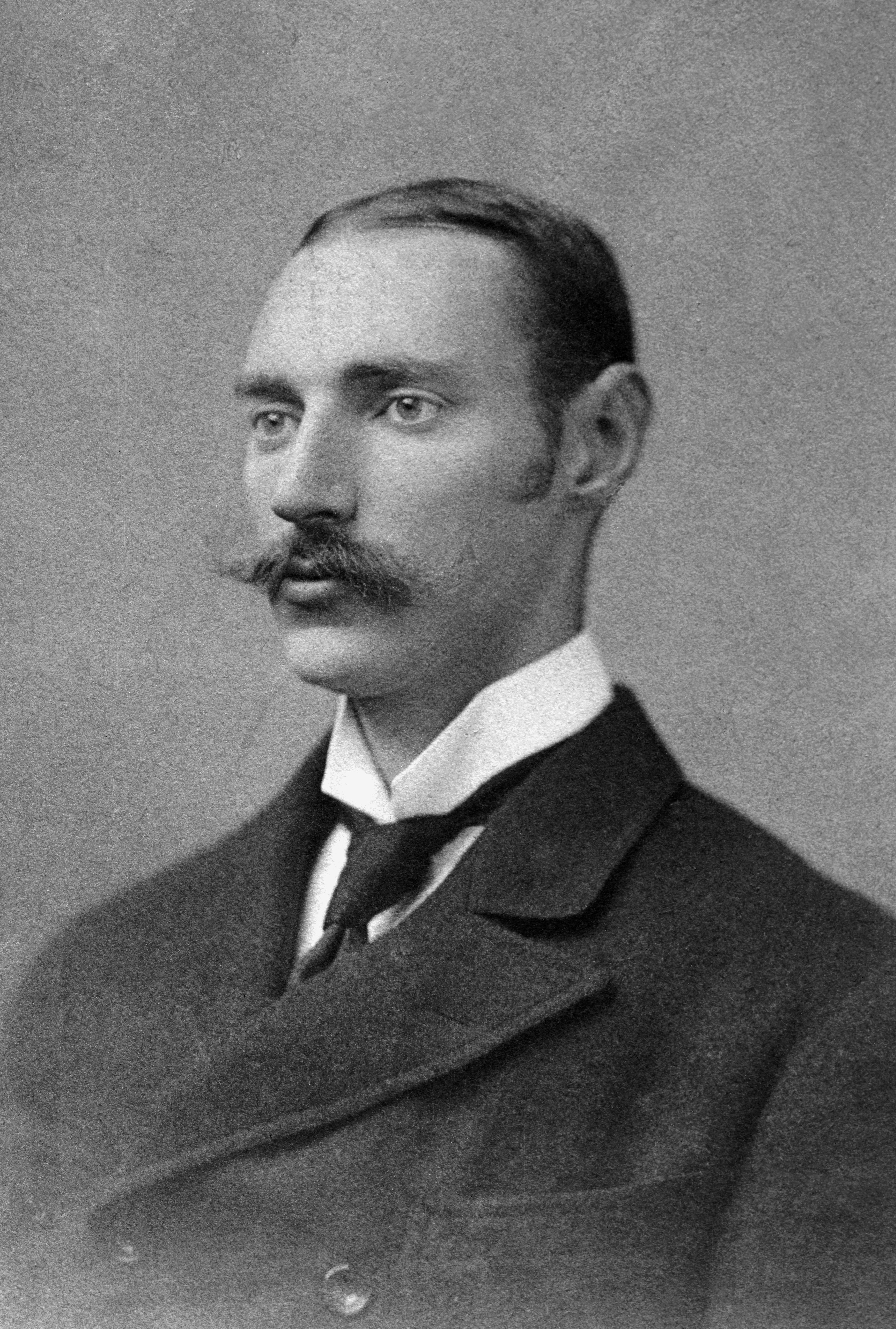
The First-Class passenger list read like a directory of Gilded Age wealth. Among them was John Jacob Astor IV, one of the richest men in the world, returning from a honeymoon. Isidor Straus, co-owner of Macy’s department store, was onboard with his wife Ida, who famously chose to stay by his side rather than take a lifeboat without him.
Benjamin Guggenheim, heir to a mining empire, dressed in his finest evening wear and prepared to face death with dignity. George Widener, a prominent banker and associate of J. P. Morgan, was also aboard. Morgan himself had canceled last minute.
Each class had its own dining saloon, kitchen, and daily menu. First-Class passengers were treated to eleven-course meals that included oysters, filet mignon, foie gras, and peaches in chartreuse jelly. Their meals reflected extreme opulence and refinement. Third-Class diners, on the other hand, ate simple fare like cabin biscuits, rice soup, and boiled potatoes. It was hearty and filling, built for practicality.
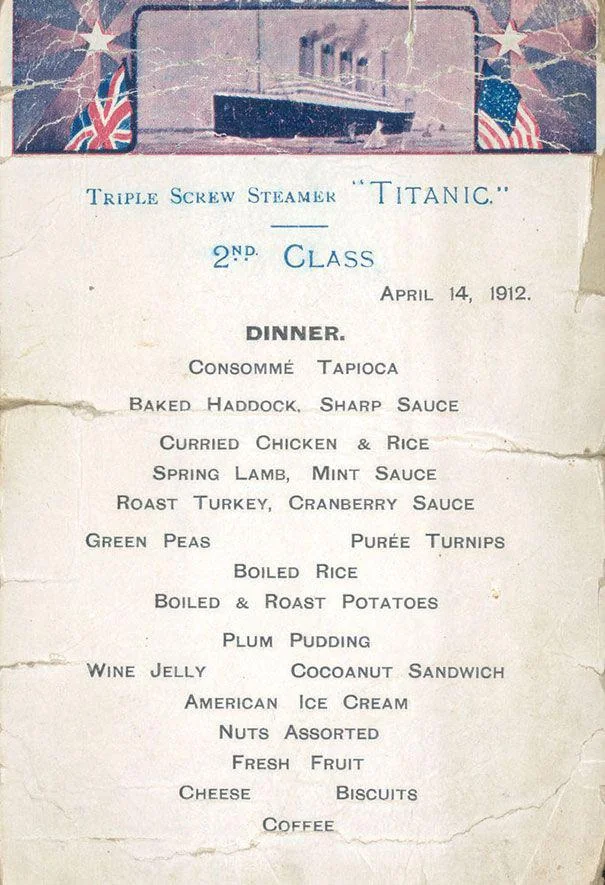
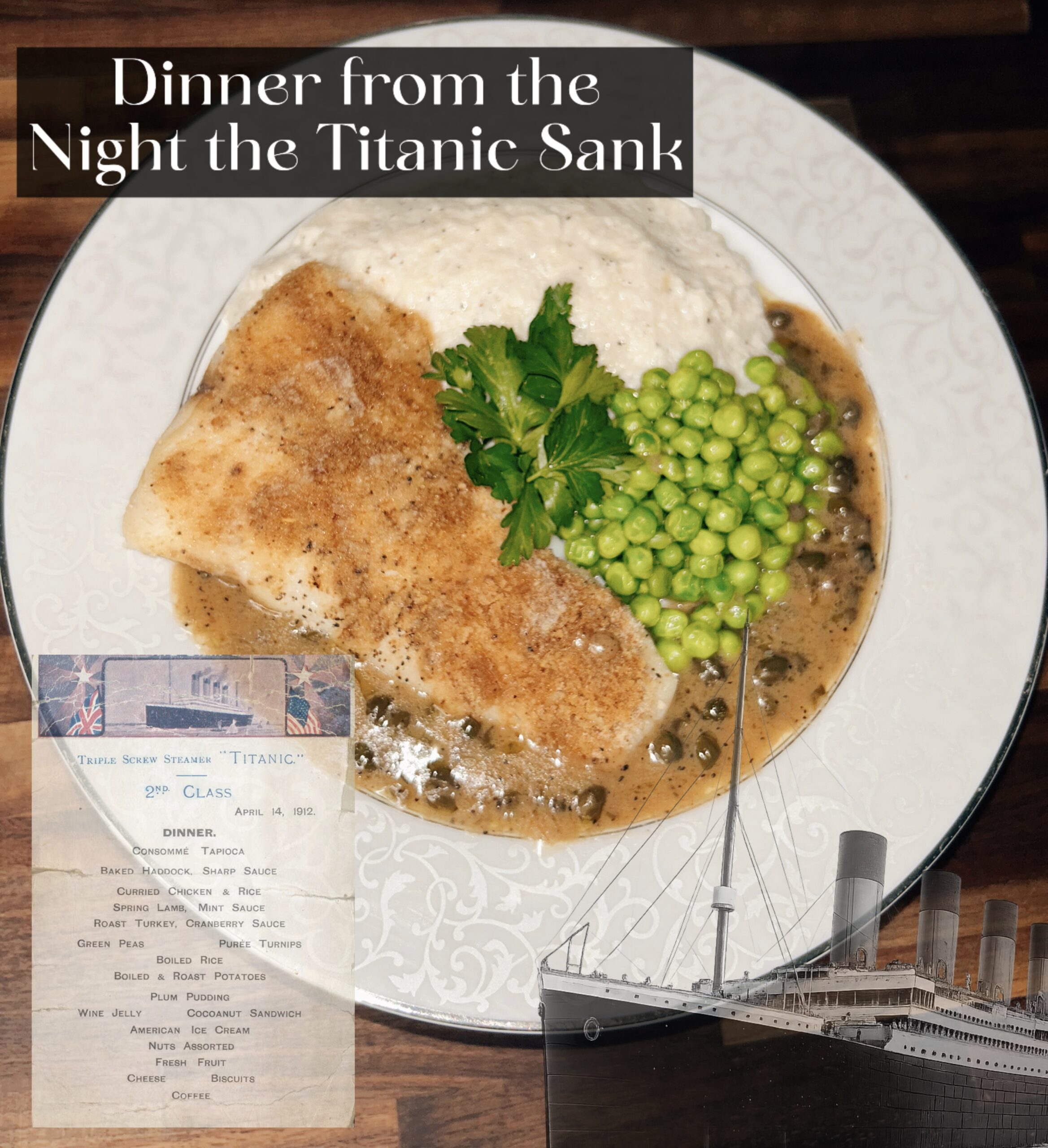
Second-Class struck a fascinating middle ground. That night, their menu included dishes like curried chicken and rice, spring lamb with mint sauce, roast turkey, plum pudding, and the meal I chose to recreate: baked haddock with sharp sauce, turnip purée, and buttered green peas. It was elegant but unpretentious, the kind of food that reflected comfort and care rather than excess.
A Second-Class Supper
The haddock was gently seasoned, topped with butter and breadcrumbs, then baked until the fish turned tender and flaky. It was simple and clean, a dish meant to nourish without overwhelming. But the sharp sauce is what elevated it. Since the menu did not specify a recipe, I turned to The Cook’s Guide by Charles Elmé Francatelli, published in 1863. He was a royal chef and his sharp sauce recipe included butter, flour, nutmeg, chopped capers, and Harvey’s Sauce, which I substituted with Worcestershire.
I was supposed to include chopped gherkins too, but I forgot to pick them up at the store. In the end, I do not think it mattered. The sauce was tangy and complex, enough to brighten the fish without overpowering it. At Eats History, I always say this is not a museum. It is about capturing the spirit of a dish, not obsessing over every detail.
For the turnip purée, I simply boiled a diced yellow turnip until soft, then mashed it with butter, half-and-half, salt, and a bit of pepper. The result was sweet and smooth. The peas were sautéed with butter until just tender. Together, the plate came alive with color and warmth. It was humble food served with intention.
The Calm Before Disaster
As dinner ended, the mood aboard the Titanic remained calm. First-Class passengers sipped wine and lingered in the lounges. In Second Class, families read, wrote letters, or returned to their cabins. The air outside had turned bitterly cold, but the ship continued steadily forward. No one suspected anything was wrong.
At 11:40 PM, the Titanic struck an iceberg off the coast of Newfoundland. The collision was not violent. Many passengers barely noticed the impact. But below the surface, seawater rushed in, flooding multiple compartments. Within minutes, the crew realized the ship could not stay afloat. Despite her massive size and advanced design, the Titanic had not been built to survive this kind of damage.
The Ship Slips Away
Panic did not come immediately. There was disbelief, then confusion. Some lifeboats were lowered half full. First-Class passengers were led up first. Second-Class passengers waited for directions. Third-Class passengers, many of whom did not speak English, struggled to understand what was happening. Chaos gradually replaced calm as the bow began to dip and the stern rose higher into the air.
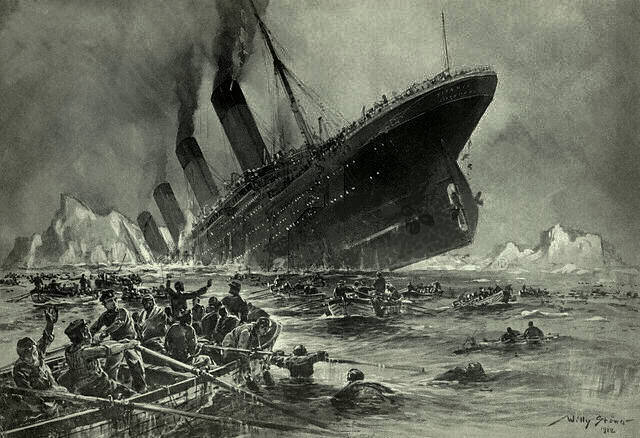
By 2:20 AM, the unthinkable happened. The ship broke apart and slipped beneath the surface. Over 1,500 people lost their lives that night. The cold was unforgiving. For many, the ocean claimed them before rescue could arrive. What was once a floating city had become a graveyard of dreams.
Remembering Through Taste
Recreating this Second-Class Titanic meal felt like stepping into history. There was something deeply moving about preparing a dish that may have been someone’s final comfort in this world. The sharp sauce was the surprise standout—punchy, bright, and full of character. The fish was soft and clean. The vegetables balanced the plate. It was not extravagant, but it was real. It was honest food for real people, cooked with care and purpose.
I would give this meal a 7.4 out of 10. It is not the kind of dish that blows you away. But that is not the point. It is the kind of food that speaks quietly, that comforts gently. And when you eat it with the story in mind, it becomes something more. You can almost hear the distant hum of engines, feel the warmth of the dining saloon, and see the candlelight flickering before everything went still.
If you’re enjoying my content, consider checking out the Eats History Shop!
Baked Haddock with Sharp Sauce, Turnip Purée, and Buttered Peas (Titanic Second-Class Dinner):
Titanic Recipe: Baked Haddock with Sharp Sauce, Turnip Purée, and Buttered Peas
Ingredients
For the Baked Haddock
- 2 haddock fillets 4–6 oz each
- Salt and black pepper to taste
- 2 tablespoons breadcrumbs
- 1 tablespoon butter for topping
- Optional: 1 tablespoon lemon juice or dry white wine
For the Sharp Sauce
- 2 tablespoons butter
- 1.5 tablespoons all-purpose flour
- Salt pepper, and a pinch of nutmeg
- 1 tablespoon capers finely chopped
- 1 tablespoon Worcestershire sauce as substitute for Harvey’s
- Optional: 2–3 gherkins finely chopped
For the Turnip Purée
- 1 medium yellow turnip about 8 oz, peeled and diced
- 1 tablespoon butter
- 2 tablespoons half-and-half or cream
- Salt and white pepper to taste
For the Buttered Peas
- 1 cup sweet peas fresh or frozen
- 1 teaspoon butter
- Salt to taste
Instructions
Bake the Haddock
- Preheat oven to 350°F. Season the haddock with salt and pepper. Place in a baking dish, top with breadcrumbs and butter. Bake for 12 to 15 minutes, until the fish flakes easily.
Make the Sharp Sauce
- In a saucepan, melt butter and stir in flour to form a roux. Add seasonings, capers, Worcestershire, and gherkins if using. Cook until thickened, adding a splash of water or stock for consistency.
Prepare the Turnip Purée
- Boil the diced turnip until soft. Drain, mash with butter and half-and-half. Season with salt and white pepper.
Cook the Peas
- Sauté peas in butter over medium heat until just tender. Season lightly with salt.
Plate and Serve
- Arrange haddock on a plate, spoon sharp sauce over the top. Serve with turnip purée and buttered peas.
Video
Notes
- Sharp Sauce Substitutions: Traditional Harvey’s Sauce is no longer widely available, but Worcestershire makes an excellent modern substitute. You can also use a splash of malt vinegar for added acidity if needed.
- Turnip Tips: Use yellow turnips (rutabagas) for a slightly sweeter and more mellow purée. Be sure to boil them until very soft to get a creamy, lump-free mash.
- Gherkin Optional: While Francatelli’s original recipe includes gherkins for acidity and texture, the sauce holds up well without them. Feel free to experiment based on taste or availability.
Sources:
- National Maritime Museum Collections – First-Class and Second-Class Titanic menus
https://www.rmg.co.uk - Titanic Belfast Exhibit Archives – Original menus, class layouts, and passenger records
https://www.titanicbelfast.com - Ulster Folk Museum Archives – Surviving Second-Class menu artifacts and Edwardian food culture
- Lawrence Beesley, The Loss of the SS Titanic (1912) – Firsthand account of life aboard Titanic from a Second-Class survivor
Public domain text available via Project Gutenberg: https://www.gutenberg.org/ebooks/24880 - Charles Elmé Francatelli, The Cook’s Guide and Housekeeper’s & Butler’s Assistant (1863) – Original recipe source for sharp sauce
Archive.org full text: https://archive.org/details/cooksguidehousek00fran - Dana McCauley, Last Dinner on the Titanic: Menus and Recipes from the Great Liner (1997) – Detailed reconstructions of Titanic menus with culinary analysis
[ISBN: 978-0786863037] - White Star Line Provisioning Logs and Third-Class Reports – Cited in Titanic: The Artifact Exhibition and historical food studies on steerage dining
- Encyclopedia Titanica – Passenger biographies, class lists, and archival research
https://www.encyclopedia-titanica.org