There’s something awe-inspiring about standing in the shadow of an ancient empire. The Byzantines, heirs to Rome and the guardians of Christendom for over a thousand years, left behind soaring domes, shining mosaics, and tales of war and glory, but also simple, hearty meals.
One dish in particular caught my attention during my research: a rustic porridge of lentils and grains that may have once fueled the empire’s most elite cavalry force—the cataphracts. I recreated it with ground lamb, pearl barley, and a garlicky yogurt inspired by Skorthaton, served with flatbread like a soldier might have eaten beside a smoldering fire. And let me tell you: it was absolutely delicious.
The Cataphract: Mounted Tank of the Medieval World
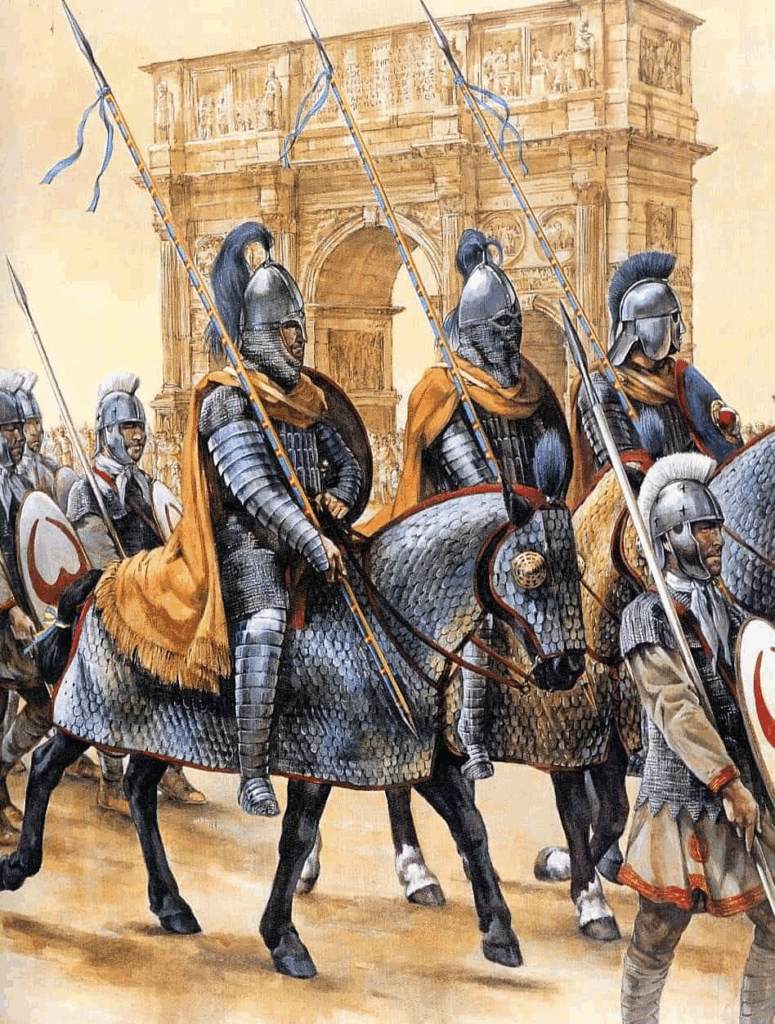
The Byzantine cataphracts were the elite heavy cavalry of their time. Imagine a fully armored rider on a fully armored horse thundering across the battlefield. These warriors were the empire’s answer to barbarian incursions, Arab raids, and the rising tide of Western knights. Their roots trace back to earlier Roman and Sassanian cavalry, but by the 10th century, cataphracts had evolved into one of the most formidable shock units in all of Europe and the Near East.
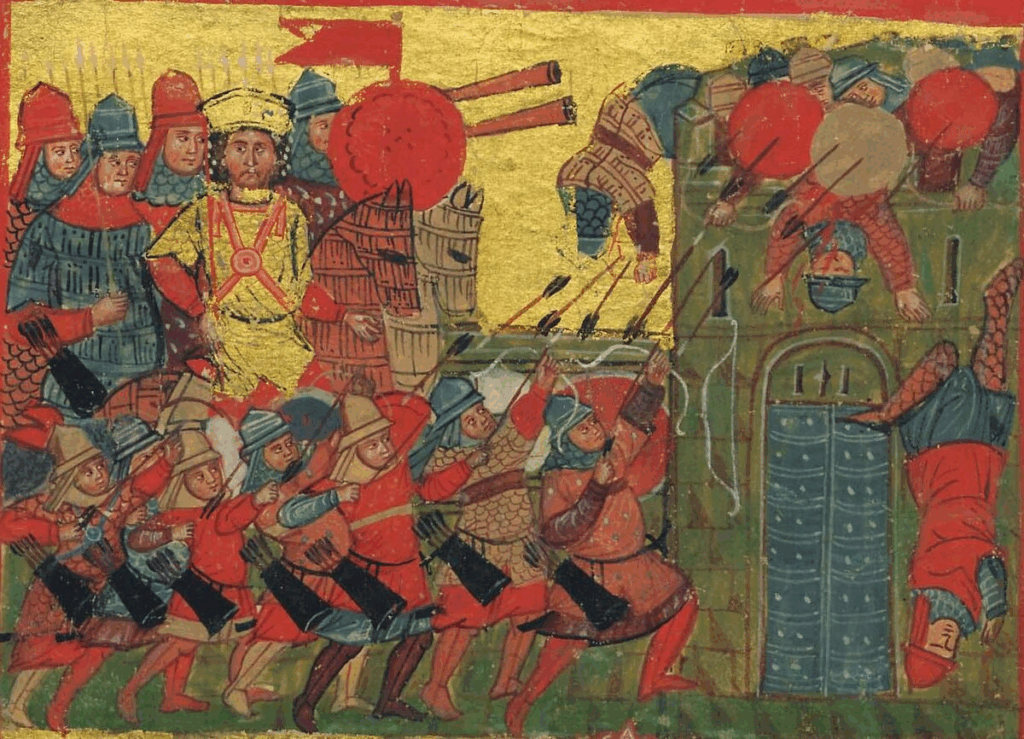
Clad in lamellar or scale armor, the cataphract didn’t just fight with brute force, but they also fought with tactics. Formations like the “wedge” and “mace-and-bow” formations allowed them to adapt to various enemies. They were not common soldiers. To become a cataphract meant years of training, specialized equipment, and often noble lineage. Emperors like Nikephoros II Phokas and Basil II trusted their legions of cataphracts to break enemy lines and tip the balance in battle.
Famous encounters like the Battle of Dorostolon in 971 or the campaigns against the Arabs under John Tzimiskes showcased the terrifying might of these armored riders. Yet despite all their grandeur, they were men like any other. And men need food, especially the kind that sustains you through long rides, cold nights, and the clamor of war.
Training, Equipment, and Elite Status
The cataphract was not an average soldier pulled from the fields. These mounted warriors were part of an elite class within the Byzantine military structure. Becoming a cataphract often meant being born into a military family or aristocratic background, where training began in early youth. They learned the art of riding, archery, spear fighting, swordsmanship, and disciplined formation tactics. Many served within professional cavalry units stationed in strategic provinces known as themata, where they were granted land in exchange for military service.
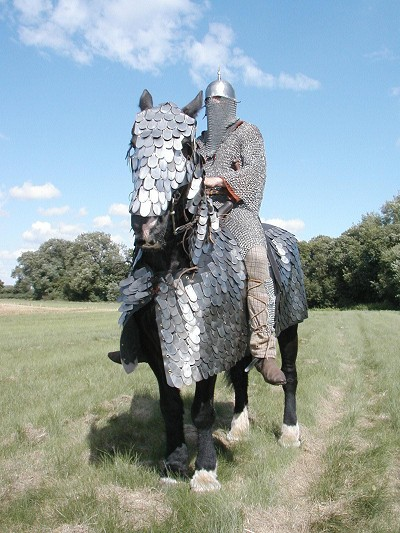
Their gear was some of the most formidable in the medieval world. A cataphract typically wore lamellar armor—overlapping iron or bronze scales sewn onto leather—which protected the torso, shoulders, and thighs. Some even wore face-covering helmets with mail veils, leaving only the eyes visible.
Their horses were also armored, sometimes with quilted or scaled barding, turning both man and mount into an almost impenetrable war machine. This combination of extensive armor, refined training, and superior breeding made them the Byzantine equivalent of a tank—slow-moving at times, but unstoppable on impact.
Tactics and Battlefield Legacy
Cataphracts weren’t simply brutes on horseback. They were part of a larger military doctrine rooted in Roman traditions and adapted to the changing threats of the medieval world. Byzantine generals like Belisarius and later Nikephoros Phokas deployed them in calculated maneuvers, using them to break enemy lines or encircle infantry in hammer-and-anvil attacks.
The famous klibanophoroi—a subcategory of even heavier cataphracts—were deployed during key campaigns against Arab armies, Bulgars, and Normans. They often used a mix of long kontos spears, swords, and even bows, depending on the phase of the battle.
One of the most significant engagements showcasing their prowess was the Byzantine counteroffensive under Basil II against the Bulgarians. In the brutal campaigns that culminated in the Battle of Kleidion in 1014, cataphracts played a pivotal role in crushing Tsar Samuel’s forces and restoring Byzantine dominance in the Balkans. These weren’t just local skirmishes—they were moments that decided the fate of empires. Their battlefield effectiveness solidified the Byzantine Empire’s ability to hold the eastern Mediterranean for centuries.
Decline and the End of the Cataphract Era
Despite their dominance, the cataphracts eventually faded from history. As gunpowder spread and Western-style heavy cavalry evolved, the heavily armored Byzantine horseman became less viable. The economic strain of outfitting and maintaining cataphract regiments also became too great for an empire constantly beset by both internal strife and foreign invasion.
By the time of the Fourth Crusade in 1204, the cataphract had all but disappeared from the battlefield. The once-feared heavy cavalry of Constantinople was replaced by mercenaries, light cavalry, and increasingly desperate defensive strategies.
What Did the Cataphracts Eat? A Glimpse into Byzantine Soldier Diets
We don’t have surviving menus of what cataphracts ate in the field, but Byzantine military manuals, historical chronicles, and agricultural texts give us clues. The Taktika of Leo VI and Constantine VII’s De Administrando Imperio outline army logistics, while authors like Columella and later monastic records show what was grown, traded, and eaten throughout the empire.
Lentils and barley were two of the most widely consumed staples of the Byzantine world. Cheap, easy to store, and full of energy, they made ideal marching food. Shepherd’s cheese or strained yogurt provided much-needed fat and protein.
Olive oil was prized, not only for flavor but as a preservative and source of calories. Garlic, mint, onions—these were all well-documented Byzantine herbs, used both for flavor and medicinal benefit. Meat was less frequent but likely more common for elite units like the cataphracts, especially when stationed near grazing lands or towns.
I based this recipe on those ingredients. I swapped bulgur for pearl barley for a heartier bite and added ground lamb sautéed with garlic and onion. The whole thing is tied together with a garlicky yogurt drizzle that makes it feel both comforting and elevated. It’s the kind of dish that feels ancient in your bones, but still tastes like home.
My Modern Recreation (9.2/10)
This dish honestly surprised me. I was expecting something humble, maybe even a bit bland, but what came out of the pot was layered, rich, and deeply satisfying. The lentils and barley form a creamy, earthy base, almost like a risotto but with a rustic chew. The lamb adds a savory punch, spiced gently with cumin and black pepper, and the garlicky yogurt adds a cooling, tangy contrast. Scoop it all up with warm flatbread and it feels like a warrior’s feast.
While I can’t say for certain this exact combination ever sat in a Byzantine mess kit, every element of the dish is rooted in the history, agriculture, and cuisine of the empire. It’s a meal born from both research and intuition, and it’s a taste of what may have once fueled the tanks of the Middle Ages.
And for a dish with so few ingredients, the balance is perfect. Protein, fiber, fat, flavor—it hits every mark. I served mine in a wide clay bowl with a glass of diluted wine, just to complete the fantasy. Definitely one of the most enjoyable and “alive” historical meals I’ve cooked this year.
If you’re enjoying my recipes, check out Eats History Shop!
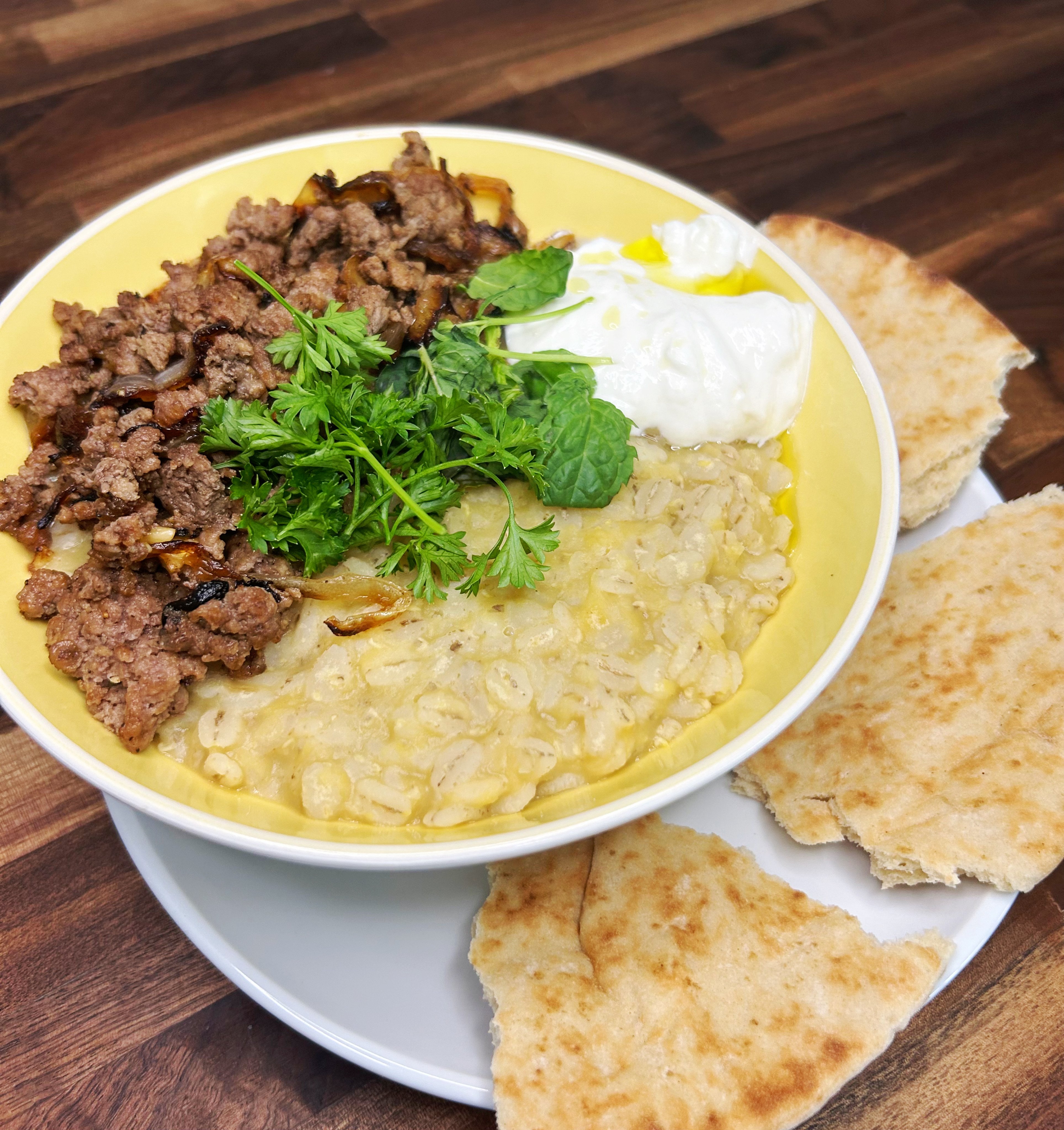
Byzantine Cataphract’s Lentil & Barley Porridge with Lamb and Yogurt
Ingredients
For the Porridge
- ½ cup red lentils
- ½ cup pearl barley
- ½ tsp salt
- 4 cups water
For the Lamb
- ½ lb ground lamb
- ½ onion finely chopped
- 2 cloves garlic minced
- ½ tsp salt
- ¼ tsp black pepper
- ½ tsp ground cumin
For the Yogurt Sauce
- ½ cup sheep’s milk yogurt or plain Greek yogurt
- ¼ tsp salt
- ½ tsp garlic powder or 1 clove garlic crushed
- 1 tbsp olive oil
Instructions
Cook the Porridge:
- In a large saucepan, combine the lentils, pearl barley, water, and salt. Bring to a boil, then reduce heat and simmer uncovered for 25–30 minutes. Stir occasionally until the grains are tender and the mixture thickens into a hearty porridge. Add more water as needed to prevent sticking.
Sauté the Lamb:
- In a separate skillet, warm a tablespoon of olive oil over medium heat. Add the chopped onion and sauté for 3–4 minutes until translucent. Stir in the garlic and cook for another minute. Add the ground lamb, breaking it apart with a spoon. Season with salt, black pepper, and cumin. Cook for 6–8 minutes, or until browned and cooked through.
Make the Yogurt Sauce:
- In a small bowl, whisk together the yogurt, garlic, salt, and olive oil. Taste and adjust seasoning. Chill until ready to serve.
Assemble the Dish:
- Spoon the lentil and barley porridge into bowls. Top with a generous scoop of spiced lamb. Drizzle the yogurt sauce over everything. Finish with fresh chopped parsley and mint.
Serve with Flatbread:
- Tear pieces of warm flatbread and use it to scoop up the stew like a true Byzantine warrior.
Video
Notes
- Barley Substitution: Pearl barley gives a chewy, rustic texture, but you can substitute it with bulgur or farro for a quicker-cooking variation.
- Lamb Alternatives: Ground lamb is traditional and richly flavorful, but ground beef or even sautéed mushrooms can be used for a lighter or vegetarian option.
- Yogurt Tip: Using sheep’s milk yogurt adds authenticity, but high-quality full-fat Greek yogurt works beautifully. Add a touch of garlic powder or fresh garlic paste to enhance the flavor.