History is rarely tidy, and the story of Grigori Rasputin’s final night alive is one of those tales where truth and myth have fused into something larger than life. Part mystic, part political player, Rasputin’s presence in the Russian imperial court both fascinated and terrified those around him. To some, he was a holy man sent by God to heal the Tsarevich Alexei. To others, he was a dangerous charlatan whose influence over Tsarina Alexandra threatened the stability of the Russian Empire.
When I began researching Rasputin’s death, I found a remarkable connection to one of Russia’s most beloved desserts, Medovik, the honey cake. According to one account from Prince Felix Yusupov, it may have been the last sweet Rasputin ever tasted on the night of December 29, 1916. Whether or not this is entirely true, the pairing of such an opulent dessert with one of history’s most notorious assassinations feels almost too poetic to ignore.
In this post, we will explore the dramatic events of that evening, the strange rumors surrounding Rasputin’s death, and the history of Medovik itself before recreating it in a scaled-down recipe perfect for one or two people.
The Night of December 29th, 1916
The final act of Rasputin’s life took place in the lavish Yusupov Palace in Petrograd. Outside, the Russian Empire was crumbling under the strain of the First World War, but inside the palace, the setting was one of elegance and refinement. Prince Felix Yusupov, heir to one of the richest families in Russia, had invited Rasputin for a private gathering. Unbeknownst to Rasputin, the invitation was a trap.

Yusupov, along with several other conspirators, had grown convinced that Rasputin’s influence over the Tsarina was endangering the country. They believed that removing him would restore the monarchy’s credibility. In their minds, this was not simply murder but an act of patriotic necessity. Rasputin arrived at the palace dressed in his usual dark robes, unaware that he would never leave alive.
The prince led him to a cozy basement room, a space staged for comfort with chairs, a gramophone, and a table laid out with food and wine. It was here, in the flicker of candlelight, that the first part of the plan began. Yusupov would later claim that the wine and cakes before Rasputin were laced with cyanide. Among these sweets, according to some accounts, was Medovik.
Rasputin’s Last Meal
Medovik was a fitting choice for the opulent setting of the Yusupov Palace. The dessert, with its thin honeyed layers and tangy sour cream filling, had long been a symbol of indulgence in Russian culinary tradition. If Rasputin did indeed eat it that night, it may have been both a genuine offering and a deadly snare.
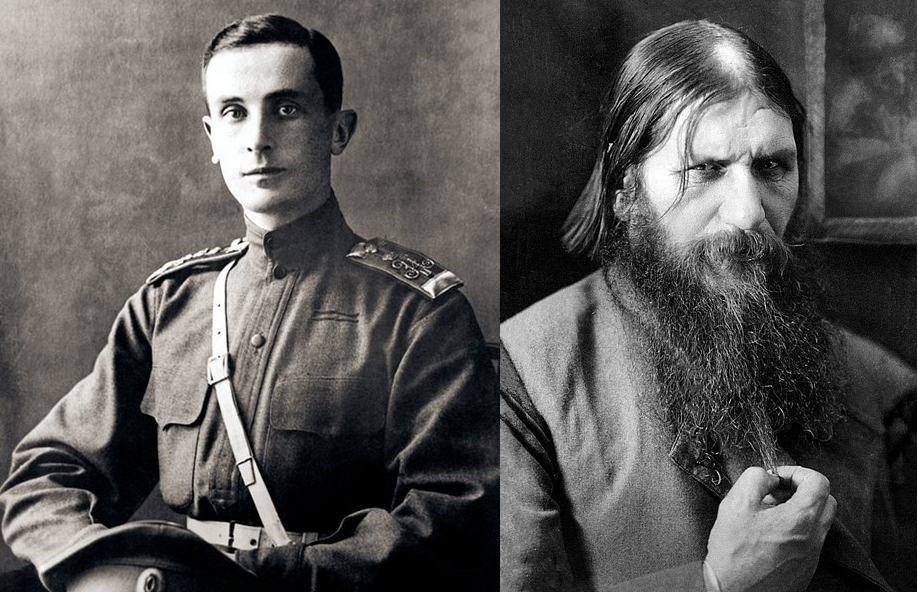
Yusupov’s memoir paints a dramatic scene. Rasputin allegedly ate the cakes and drank the wine without hesitation. The conspirators watched, expecting the poison to take effect within minutes. Yet nothing happened. Rasputin kept talking, eating, and sipping his drink. If this account is true, it must have been deeply unsettling for those who believed that cyanide would bring a swift end.
Historians continue to debate the accuracy of these details. Some argue that Yusupov embellished the story to heighten the drama, while others point to possible explanations, such as the poison being neutralized during baking. As I read through these competing accounts, it became clear that the truth may never be fully known. What remains is the striking image of the mystic, calmly eating honey cake while his killers grew more desperate by the minute.
The Conspiracy Around His Death
When the poison seemed to fail, Yusupov decided to act more directly. He retrieved a revolver and shot Rasputin in the chest. Believing the deed done, the conspirators left the room. To their shock, Rasputin soon staggered to his feet and attempted to escape through the courtyard. Accounts describe him clawing at the snow, eyes wide with either terror or fury.

They chased him down, firing again and beating him. In the end, his body was rolled into the frozen Neva River. The autopsy reports fueled further mystery. Some claimed that water in his lungs suggested he drowned rather than dying from the bullets. Others dismissed this as legend. The conflicting testimonies and sensational retellings have made it impossible to separate fact from fiction entirely.
This mix of political intrigue, superstition, and sheer brutality helped cement Rasputin’s death as one of the most infamous assassinations of the early twentieth century. It also ensured that every detail of that night, down to the food served, would be woven into the legend.
Medovik: The Russian Honey Cake
Long before it was linked to Rasputin’s death, Medovik held an important place in Russian culinary heritage. The cake’s origins are often traced to the 19th century during the reign of Emperor Alexander I, though honey-based layered cakes had been made in Eastern Europe for centuries. The defining feature of Medovik is its thin, biscuit-like layers made with honey, stacked and softened by a creamy filling—traditionally sour cream or sometimes sweetened condensed milk.
Honey has been a prized ingredient in Russia since ancient times, used not only for its sweetness but also for its symbolic associations with health and prosperity. In Medovik, it lends a warm, floral flavor that deepens over time as the cake rests. The sour cream filling is equally important, providing a tangy counterpoint to the rich honey layers. Crushed cake crumbs pressed onto the sides give the dessert its rustic charm.
Today, Medovik is enjoyed throughout Russia and beyond, far removed from the dark events of December 1916. I cannot help but think that the cake’s enduring popularity speaks to something deeper. In a country where history has often been marked by hardship, Medovik remains a reminder of moments of sweetness, however fleeting.
If you’re enjoying my work, check out Eats History shop!
Mini Medovik Recipe (Honey Cake for 1–2 People)

Medovik: Layered Honey Cake
Ingredients
For the Honey Cake Dough (Makes 4–5 thin layers)
- 2 tbsp 40g honey
- 3 tbsp 35g sugar
- 1 tbsp 15g unsalted butter
- 1/4 tsp baking soda
- 2 large egg yolks
- 3/4 cup 95g all-purpose flour
- 1/4 tsp cinnamon
- Pinch of clove optional
- Pinch of salt
For the Traditional Sour Cream Filling
- 1/2 cup 120g full-fat sour cream
- 2 tbsp powdered sugar or more, to taste
- 1/4 tsp vanilla extract
- Optional: 1–2 tsp honey for added depth
Instructions
Step 1 – Make the Dough
- In a small saucepan, combine the honey, sugar, and butter. Heat gently until melted and combined, stirring constantly.
- Remove from heat and quickly whisk in the egg yolks while the mixture is still warm but not hot.
- Add the baking soda, which will foam slightly and lighten the mixture.
- In a separate bowl, whisk together the flour, cinnamon, salt, and optional clove. Slowly mix it into the wet ingredients to form a soft, sticky dough.
- Divide the dough into 4–5 equal balls, cover, and chill for 15–20 minutes.
Step 2 – Bake the Layers
- Preheat oven to 350°F (175°C).
- Roll each dough ball into a thin circle (4–5 inches wide) between two sheets of parchment paper.
- Bake each layer for 5–6 minutes until golden brown and slightly puffed.
- Cool completely before assembling.
Step 3 – Make the Sour Cream Filling
- In a bowl, whisk the sour cream, powdered sugar, vanilla, and optional honey until smooth and thick.
- Chill for 10–15 minutes to firm up slightly.
Step 4 – Assemble the Cake
- Stack the baked layers with a generous spread of sour cream filling between each.
- Coat the top and sides, smoothing with a spatula.
- Optional: Crush one layer into crumbs and press them around the outside for a rustic look.
- Chill for at least 4 hours or overnight to let the layers soften.
Video
Notes
- Flavor Development: The cake tastes even better the next day as the honey layers fully absorb the tangy sour cream, creating a soft, melt-in-your-mouth texture.
- Scaling Up: This recipe makes a cake for 1–2 people, but you can easily double or triple the ingredients to serve more.
- Presentation Tip: For a cleaner look, use a round biscuit cutter on the baked layers before assembling to ensure perfect edges.