When we think of Albert Einstein, most of us picture the tousled hair, the mischievous smile, and the groundbreaking equations that reshaped our understanding of the universe. What is less often remembered is that Einstein was also a man with a simple palate, a few favorite indulgences, and a routine that he guarded carefully.
If you’re enjoying my recipes, all of my E-Cookbooks are currently 40% OFF in the Eats History Shop!
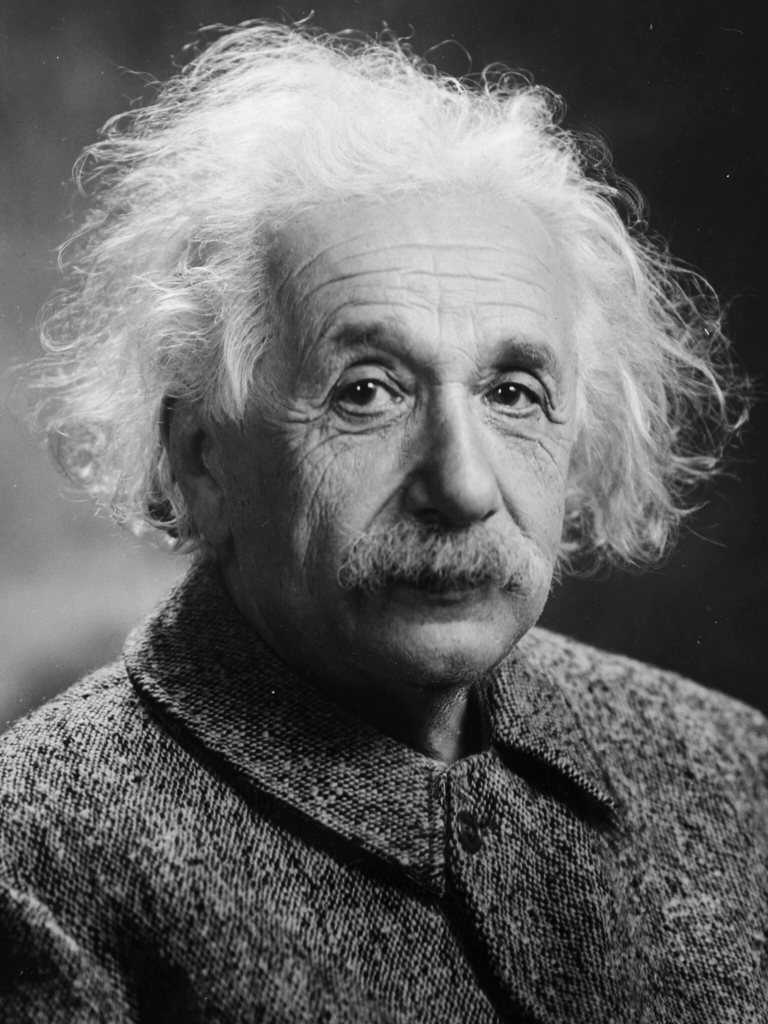
Food, for him, was not a passion to be obsessed over but a necessity that he preferred to keep uncomplicated. Yet even within his modest diet, one sweet treat stood out and left a lasting impression: orange cake. In this post, I set out to bake my own version of the cake that Einstein reportedly loved, bringing together fresh citrus flavor with a touch of old-fashioned comfort.
Cooking historical recipes is not just about following ingredients and instructions, it is about stepping into the daily life of figures we know from books and classrooms. What did they actually eat when they were not calculating theories or attending lectures? What small indulgences gave them comfort? With Einstein, the orange cake offers a glimpse of both his personality and his quirks, wrapped up in a loaf that is as fragrant as it is satisfying.
Einstein’s Legacy Beyond Physics
Albert Einstein’s name is synonymous with genius, and his theories of relativity altered the course of modern science. Yet his legacy is not confined to the blackboard. He was also a moral voice of the twentieth century, outspoken on issues ranging from nuclear weapons to civil rights. This human side of Einstein often gets overshadowed by the mathematical giant he is remembered as, but it is worth keeping in mind that he lived a very ordinary life alongside his extraordinary achievements.
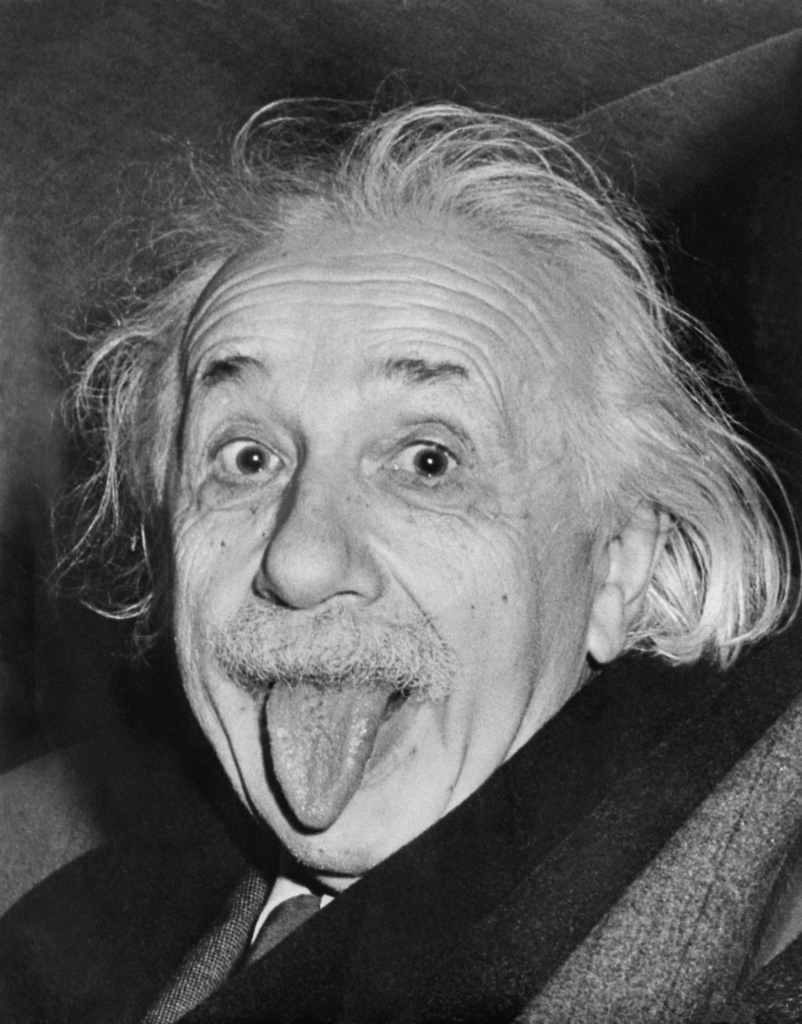
In that life, he found joy in routine. He did not care for extravagance, instead favoring simplicity. He often wore the same kinds of clothes every day, a habit not born of carelessness but of efficiency. He knew that the mind has only so much energy for decisions, so why waste it on whether to wear the gray suit or the brown one? This philosophy extended into his eating habits, where he showed little concern for lavish meals or elaborate dining.
His Quirks and Daily Habits
Einstein was famous for his quirks. He rarely wore socks, believing them unnecessary. He often carried a violin, which he would play for relaxation and joy, insisting that music and science were deeply connected. His letters show that he relished long walks, which gave him time to think through complex ideas. These small details reveal a man who valued balance: he was not just the brilliant professor at the chalkboard, but someone who nurtured hobbies and kept his life anchored in routines that worked for him.
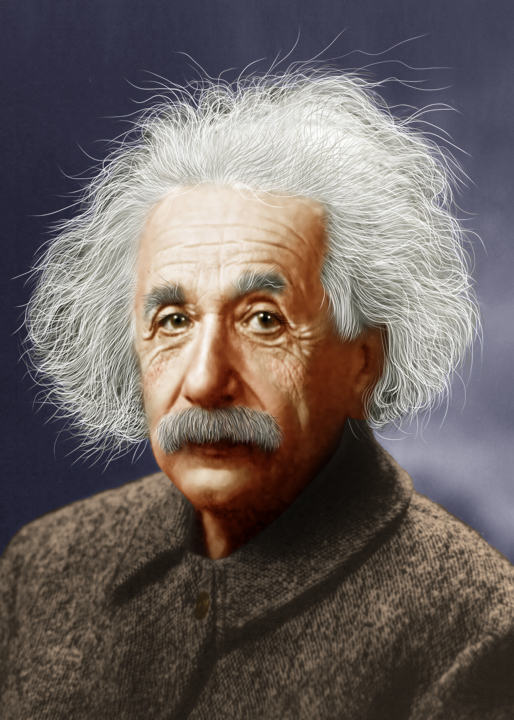
His diet was another quirk. Later in life, he leaned toward vegetarianism, believing it healthier for body and spirit. Earlier, though, he had no issue with simple meat and bread. What stands out is that he did not want food to become another problem to solve. He ate what was available, often repeating meals to avoid decision fatigue. It was in this context that sweets like orange cake slipped through as special indulgences, not daily habits, but enough to show he had a sweet tooth after all.
Limiting Mental Choices to Maximize Focus
One of Einstein’s most practical philosophies was minimizing trivial choices. He knew that the human brain has a limited capacity for daily decision-making, and he guarded his own fiercely. Choosing meals or clothing was, to him, a distraction from the problems that mattered most. His ability to filter out the unnecessary helped free up his mental energy for creativity and innovation.
This principle resonates today. In a world flooded with choices, Einstein’s practice of simplification feels almost revolutionary. He intuitively grasped that discipline and focus do not come from overcomplication but from stripping life back to its essentials. By removing the need to make dozens of small daily decisions, he kept his mind sharp for the big ones. It is a habit worth considering, especially when modern life demands so much of our attention.
Einstein’s Sweet Spot: Orange Cake
Despite his simple approach to food, Einstein had a well-documented love of sweets, particularly this moist and fragrant orange cake. It was not fancy, but it delivered everything he liked: straightforward ingredients, comforting flavor, and just enough indulgence to make the end of the day feel rewarding. The zest and juice of fresh oranges bring brightness, while a simple glaze makes it feel like something more than an everyday loaf.
Recreating Einstein’s orange cake is not just about enjoying dessert, it is about understanding a man whose life was filled with intense thought and global attention but who still found pleasure in small comforts. This recipe is my attempt to bring that piece of history back into the kitchen. Moist, flavorful, and easy to make, it carries a bit of Einstein’s personality within every bite. I give it a 9.4 out of 10.
Einstein’s Orange Cake Recipe:
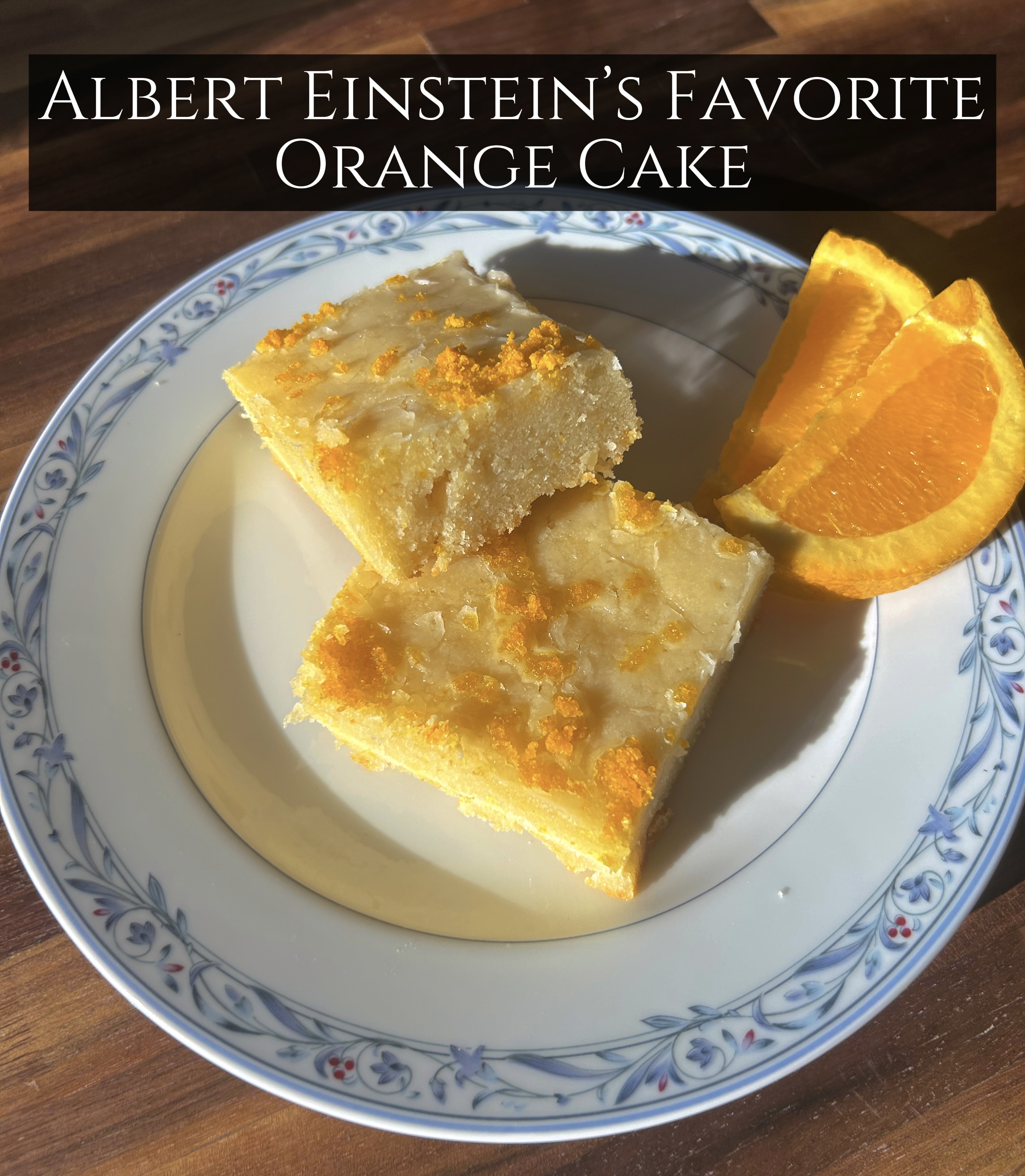
Albert Einstein’s Orange Cake
Ingredients
For the cake:
- 1 ½ cups 190 g all-purpose flour
- 1 ½ teaspoons baking powder
- ¼ teaspoon salt
- ½ cup 115 g unsalted butter, softened
- 1 cup 200 g granulated sugar
- 2 large eggs
- ½ cup 120 ml fresh orange juice (about 2 medium oranges)
- Zest of 2 oranges
- ½ cup 120 ml whole milk or buttermilk
- 1 teaspoon vanilla extract
For the glaze:
- 1 cup 120 g powdered sugar
- 2 –3 tablespoons fresh orange juice
- Extra orange zest optional, for garnish
Instructions
- Preheat oven: Heat to 350°F (175°C). Grease and line a 9×5 inch (23×13 cm) loaf pan with parchment paper.
- Mix dry ingredients: In a medium bowl, whisk together flour, baking powder, and salt. Set aside.
- Cream butter & sugar: In a large mixing bowl, cream the softened butter and sugar until light and fluffy, about 2–3 minutes.
- Add eggs & flavor: Beat in the eggs one at a time. Mix in orange juice, orange zest, and vanilla.
- Combine wet and dry: Add the dry ingredients in thirds, alternating with the milk, beginning and ending with the flour. Stir gently until just combined.
- Bake: Pour batter into the prepared loaf pan. Bake for 45–55 minutes, or until a toothpick inserted in the center comes out clean. Cool 10–15 minutes, then remove from the pan and let cool fully on a rack.
- Make glaze: Whisk powdered sugar with 2–3 tablespoons of orange juice until smooth and pourable. Adjust with more sugar or juice as needed.
- Glaze the loaf: Drizzle the glaze over the cooled cake and sprinkle with extra zest if desired. Let glaze sit for about an hour to harden into a crunchy topping.
Video
Notes
- For the best flavor, use freshly squeezed orange juice rather than bottled.
- Do not overmix the batter once you add the flour or the cake may turn dense.
- This loaf tastes even better the next day after the glaze has soaked into the crumb.