The Irish Famine of 1845–1850, also known as the Great Hunger, was one of the most devastating events in modern European history. What began as a crop disease quickly became a humanitarian catastrophe, fueled not just by blight but also by economic and political neglect.
Over one million people died, and another million emigrated, leaving scars that shaped Ireland for generations. In the midst of this suffering, a French chef named Alexis Soyer stepped in with an unlikely solution: a simple soup designed to stretch the smallest ingredients into life-saving nourishment. Paired with soda bread, his broth offered a fleeting glimpse of comfort to people living through unimaginable hardship.
Today, recreating Soyer’s “Receipt No. 1” soup is not about flavor or indulgence. It is about remembrance, about tasting, however faintly, what survival looked like for the poorest Irish families during those years.
The Beginning of the Famine
The Irish Famine began in 1845 when potato blight swept through the countryside. Caused by a water mold called Phytophthora infestans, it quickly destroyed the one crop that sustained the majority of the Irish poor. Potatoes had become the staple of the Irish diet because they were nutritious, easy to grow, and produced high yields on small plots of land. Families often depended on little else.
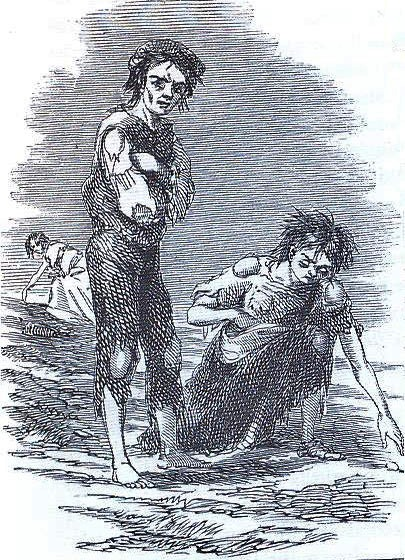
When the crop failed, it wasn’t just hunger that followed but systemic collapse. Tenant farmers, already living on the edge, suddenly had nothing to feed their families. Their landlords continued to demand rent, and many who couldn’t pay were evicted. This created waves of homelessness and displacement across rural Ireland. Other food was still grown in Ireland — wheat, oats, and livestock — but most of it was exported to Britain, leaving the Irish poor with almost nothing.
The famine was not simply the result of a natural disaster. It was the result of a society structured in a way that made the poor incredibly vulnerable. When the blight returned year after year, Ireland spiraled deeper into hunger, disease, and despair.
British Policies and Neglect
The British government’s response to the famine was deeply inadequate. At first, limited relief measures were introduced, such as importing Indian corn and creating public works programs. Yet these efforts were short-lived and often poorly managed. In 1846, the government shifted toward a harsher policy, driven by the belief that market forces should resolve the crisis.
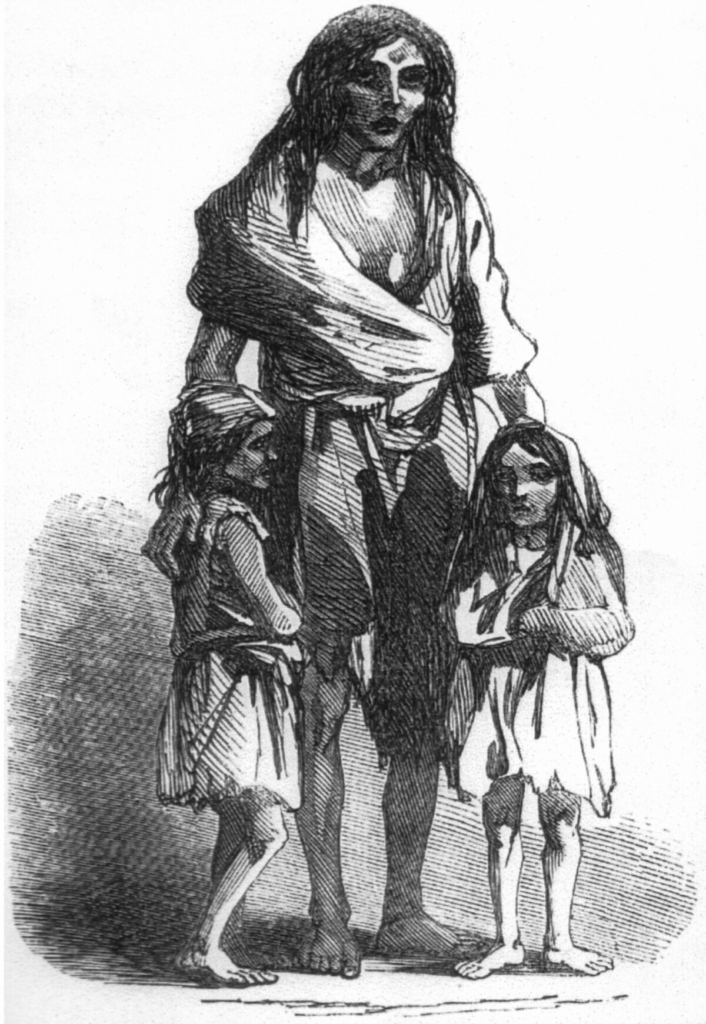
This meant relief kitchens were shut down prematurely, exports of food continued, and grain prices rose far beyond the reach of ordinary families. The philosophy of laissez-faire economics, coupled with a fear of fostering dependency, left millions to fend for themselves. Workhouses were reopened, but they were overcrowded, unsanitary, and provided little more than meager rations.
As a result, the famine deepened. Disease spread in the wake of hunger, and emigration became the only option for many. The British government may not have caused the blight, but their lack of effective intervention turned a natural disaster into a humanitarian catastrophe. For many Irish families, it felt like abandonment and an act of genocide.
Alexis Soyer and His Soup Kitchens
Amid this devastation, Alexis Soyer emerged as an unlikely figure of relief. A celebrated French-born chef in London, Soyer was famous for his innovative menus at the Reform Club. Yet in 1847, he left behind luxury kitchens to serve the starving in Dublin. He believed his culinary expertise could be put to use on a massive scale, designing a soup recipe that was both cheap and nourishing.

His “Receipt No. 1” was a carefully engineered broth. It called for only a trace of beef, a handful of vegetables, barley, flour, and water. By boiling it in massive iron cauldrons, Soyer could feed hundreds of people at once. For those who stood in line at his soup kitchens, the dish was not indulgent, but it was warm, filling, and desperately needed.
Though some criticized his efforts as a temporary fix, his soup kitchens embodied compassion during a time when so much relief was withheld. Even today, some of the iron pots used for his soup survive across Ireland, repurposed as memorials and symbols of resilience.
Eating During the Famine
To imagine eating during the famine is to imagine desperation. Families scoured hedgerows for nettles, wild greens, nuts, and berries. Some resorted to boiling grass. Against this backdrop, a bowl of Soyer’s soup and a loaf of soda bread would have seemed like a feast. Soda bread itself became popular during this era because it required only the most basic ingredients: coarse flour, oats, salt, baking soda, and soured milk or buttermilk.
Where today we think of hearty loaves pulled from the oven, famine-era bread was more austere. It was meant to stretch supplies as far as possible, giving families something filling to eat with their soup. The combination of bread and broth provided not just calories but dignity — the feeling of sitting down to a real meal in a time when such moments were rare.
Recreating this soup now is not about flavor. It is about honoring the memory of those who endured it. What might seem bland or meager to us was, for them, a blessing of survival.
Lessons from History
The Irish Famine teaches us not only about hunger but about human choices. Nature brought the blight, but political failures turned it into mass death. Food was present in Ireland, but it was not accessible to those who needed it most. Hunger, then as now, became a weapon against the weakest in society.

Today, famine memorials across Ireland — including the repurposed soup pots once used by Soyer — serve as stark reminders of this history. They ask us not only to remember the suffering of the past but to recognize hunger as an issue that still plagues vulnerable communities worldwide.
For that reason, I won’t rate this dish as I normally do. To do so would risk trivializing what it represents. Instead, I offer it as a lesson in humility and remembrance. Cooking this soup is not about taste, but about history, survival, and the reminder that food is far more than flavor.
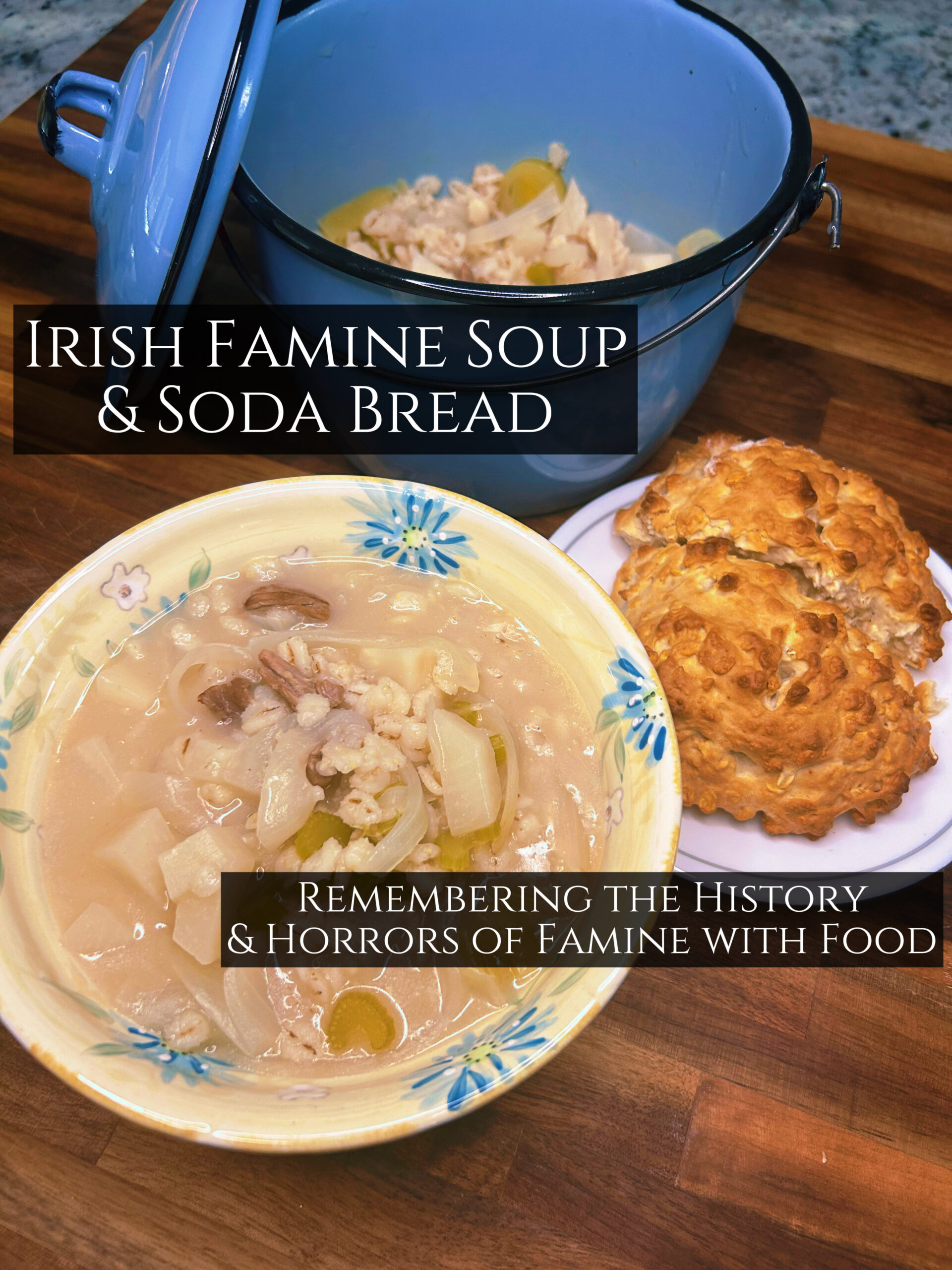
Alexis Soyer’s Famine Soup & Soda Bread
Ingredients
Soyer’s Soup
- ½ small onion chopped
- ½ medium turnip diced
- ½ leek sliced (white and light green parts)
- 2 sticks celery chopped
- 2 tbsp pearl barley
- 2 tbsp all-purpose flour
- ½ tsp salt
- Pinch of brown sugar
- ½ tsp beef drippings or butter
- 5 oz about 2 cups water
- Tiny shred of beef about ½ oz, optional, for authenticity
Soda Bread
- 1 cup coarse wholemeal flour or stone-ground whole wheat flour
- ½ cup oatmeal or rolled oats, roughly ground
- ½ tsp baking soda
- ½ tsp salt
- 1 cup buttermilk or soured milk
Instructions
Soup Instructions:
- Heat a small pot over medium heat and add the dripping or butter.
- Add onion, leek, celery, and turnip. Cook for 5–7 minutes until softened.
- Stir in the flour and cook for 1–2 minutes to form a light roux.
- Add water gradually, whisking to avoid lumps.
- Stir in barley, salt, sugar, and the small shred of beef (if using).
- Simmer for 45–60 minutes until barley is tender and soup has thickened slightly. Adjust seasoning to taste.
Soda Bread Instructions:
- Preheat oven to 400°F (200°C).
- In a bowl, combine flour, oatmeal, baking soda, and salt.
- Stir in buttermilk until a sticky dough forms.
- Shape into a small round loaf and place on a floured baking sheet.
- Cut a cross on top with a sharp knife.
- Bake for 25–30 minutes, until golden brown and hollow-sounding when tapped on the bottom.
Video
Notes
- Authenticity: Soyer used beef dripping and just a sliver of beef; feel free to omit meat entirely for the truest famine-era version.
- Stretching ingredients: Barley was a staple thickener. If unavailable, use oats for a similar texture.
- Flavor today: For a modern take, you may add herbs like parsley or thyme, but the original was intentionally austere.