At the dawn of the 20th century, American kitchens were transforming faster than ever. Electric mixers, gas stoves, and shining metal bakeware were changing the way people cooked, and cookbooks began reflecting this new modern life. For this week’s recipe, I partnered with Farberware, who sent me a beautiful set of stainless steel pans to recreate a dessert straight out of 1909: Porcupine Pudding from The Good Housewife Cookbook.
This quirky name hides something elegant beneath the surface. It’s a caramel custard baked slowly until smooth, then topped with sugar and toasted almonds that give it its “porcupine” look. The result is simple, refined, and just a little bit playful, perfectly capturing the spirit of the Edwardian kitchen.
A Thank You to Farberware
Before we get into history, I want to thank Farberware for making this project feel authentic from start to finish. Their new stainless steel cookware set handled everything perfectly, from caramelizing sugar to baking the custard in a gentle water bath.
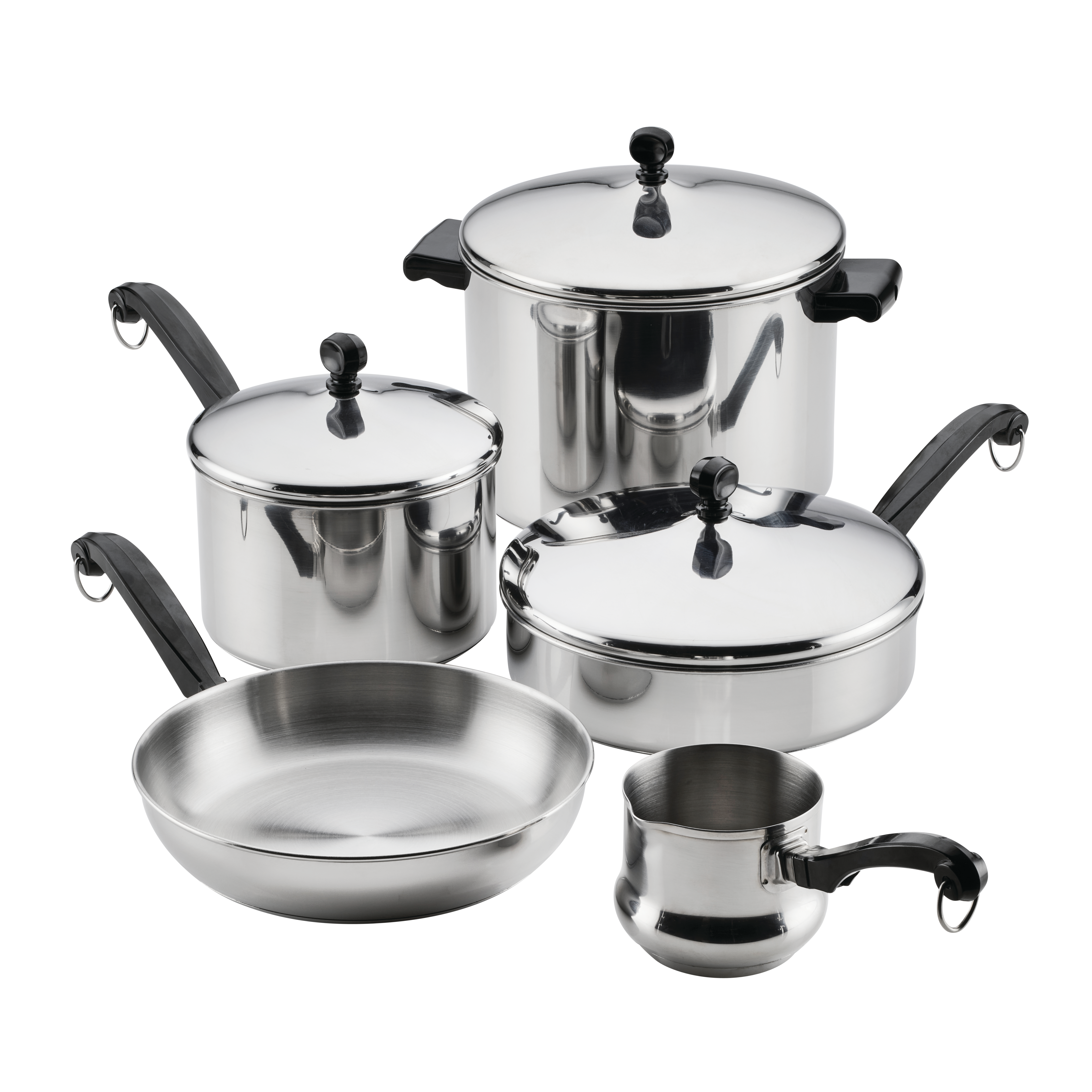
Get 10% Off All of their products with this link!
It felt especially fitting because Farberware itself was emerging during the same period this recipe was first printed. Around 1909, aluminum and steel cookware were becoming the standard for serious home cooks. It was a time when cooking was starting to feel modern, and when having polished, durable pans in your kitchen became a symbol of pride. Recreating this dish in Farberware felt like bringing that moment full circle.
The Good Housewife Cookbook and Early 1900s New York
The Good Housewife Cookbook was published in 1909, right at the heart of America’s domestic revolution. Cities like New York were growing quickly, and middle-class families were embracing new ideas of efficiency, cleanliness, and sophistication in their homes. Cookbooks like this one became guides for the modern woman who wanted to keep up with the times.
Inside, recipes were measured precisely and organized scientifically, a far cry from the loose, passed-down instructions of earlier generations. Puddings, custards, and molded desserts were especially popular. They represented the intersection of science and art, showcasing a hostess’s skill not just in cooking, but in presentation.
Among these, Porcupine Pudding stood out. It wasn’t just about taste. It was about creativity and the joy of serving something whimsical. The almond “spikes” turned an otherwise simple dessert into something that would draw smiles and admiration from guests.
New York’s Culinary Scene at the Turn of the Century
New York in 1909 was a place of constant change. Immigrant communities were bringing new ingredients and techniques, while upscale restaurants and tearooms were redefining what it meant to dine well. Middle-class home cooks, inspired by magazines like Good Housekeeping and Ladies’ Home Journal, began experimenting with the same flair.
“Puddings” of this period weren’t what we think of today. The word covered a wide range of desserts, from bread puddings to custards and flans. What made Porcupine Pudding special was its texture and visual charm. Its golden color, silky body, and toasted almond “spikes” made it look like something straight out of an Edwardian tea party.
Edwardian Creativity in the Kitchen
The early 1900s were marked by what people called “fancy cookery.” It wasn’t about complicated ingredients but about refinement. The magic was in the detail — a glaze, a garnish, or the perfect mold. Porcupine Pudding was the kind of dessert that delighted guests precisely because of its name and presentation.
It was playful but still elegant, exactly the kind of thing you’d expect from a hostess who took pride in her cooking. The caramel added a smooth sweetness, the almonds gave crunch and beauty, and the silky custard balanced it all together. It was comfort food for a time when refinement and innovation were blending in fascinating ways.
Recreating Porcupine Pudding Today
When I made this recipe, I followed the 1909 version almost exactly, just simplifying a few steps for modern equipment. The pudding baked gently in a water bath until it was set, then cooled for several hours. Before serving, I topped it with sugar and sliced almonds, then placed it under a broiler to toast the almonds and crystallize the top.
The final result looked like it came straight from a vintage dinner party. The top gleamed golden, the almonds were just crisp, and the custard had that soft, melt-in-your-mouth texture you only get from real, slow baking. It’s easy to imagine a hostess in Edwardian New York proudly setting it down on her dining table as the evening’s showpiece.
Porcupine Pudding with Caramel Sauce (1909) Recipe:
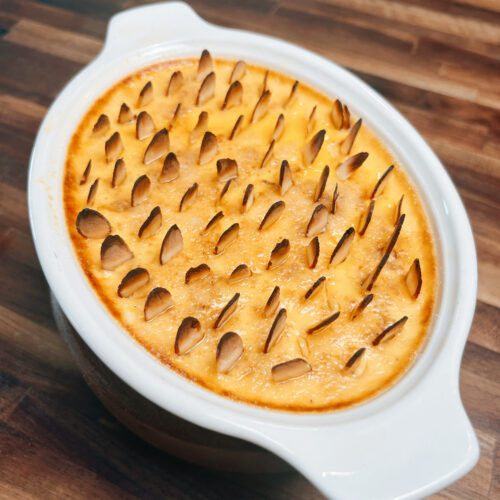
Porcupine Pudding
Ingredients
Caramel Sauce
- 1 cup granulated sugar
- 1 tablespoon water
Custard Pudding
- 2 egg whites
- 4 egg yolks
- 2 cups whole milk scalded or very hot
- Half of the prepared caramel syrup from above
- ½ teaspoon vanilla extract
- Pinch of salt
Decoration (“Porcupine Spikes”)
- ½ cup blanched sliced almonds
- Granulated sugar for crystallizing top
Instructions
Step 1: Make the Caramel
- In a heavy saucepan, add 1 cup sugar and 1 tablespoon water.
- Cook over medium heat, without stirring once dissolved, until it turns a light amber brown (about 7–10 minutes).
- Carefully add ¼ cup water — it will bubble vigorously — and stir gently until smooth. Reserve half of the sauce for later.
Step 2: Prepare the Custard
- In a bowl, lightly beat 2 egg whites and 4 yolks.
- Heat milk in a saucepan until hot but not boiling.
- Slowly pour half the caramel syrup into the milk while stirring, then gradually add this mixture to the eggs while whisking gently.
- Strain into a shallow baking dish or mold no deeper than 2 inches.
Step 3: Bake the Pudding
- Place the mold into a larger pan half-filled with hot water (a bain-marie).
- Bake at 300°F (150°C) for 30–40 minutes, until set but still trembling slightly in the center.
- Remove and let cool completely before chilling for at least 2 hours.
Step 4: Assemble and Broil
- Sprinkle granulated sugar over the cooled pudding.
- Insert almond slices upright across the surface to resemble “porcupine quills.”
- Broil briefly on high until the sugar crystallizes and the almonds turn golden.
- Let cool before serving.
Video
Notes
- For the most authentic flavor, cook the caramel just until it reaches a light amber color to avoid bitterness.
- Baking the pudding in a water bath helps maintain its creamy texture and prevents curdling.
- Chill the pudding thoroughly before adding the sugar and almond topping so the broiler heat only toasts the surface without melting the custard.