In the late 13th century, in the sunbaked hills of Extremadura, the Knights Templar held one of their southernmost commanderies: Jerez de los Caballeros, known in Latin as Xere Equitum and in Arabic as Xerixa. From here, the warrior-monks guarded the frontier between Christian Castile and Muslim Al-Andalus, balancing lives of prayer, training, and stewardship.
They were both soldiers and farmers, bound by vows of poverty but surrounded by lands rich in wine, honey, and grain. Within their kitchens, a fascinating blend of cultures unfolded, where Christian monastic cooking met the lingering Moorish influence of Andalusian cuisine.
Among the records in Spain’s Archivo Histórico Nacional lies a manuscript believed to contain the recipes of a Templar chef from this very region. One of the most intriguing dishes listed is Pan Borracho — or “Drunk Bread.” It is a simple but symbolic pudding that perfectly captures the duality of the Templar way of life: humble in appearance, rich in meaning.
If you’re enjoying my recipes, all of my e-cookbooks are 40% Off!
The Templar Diet
The Templars were strict in discipline but surprisingly refined in their diets. They observed periods of fasting and abstained from meat on Fridays, but their commanderies produced ample bread, cheese, and wine. Each meal was taken in silence, often accompanied by readings of scripture. Bread and wine were sacred symbols of faith, representing the body and blood of Christ. When combined in dishes like this, they became a kind of edible devotion.

“Drunk Bread” was likely a comfort food, perhaps served on feast days or after long nights of guard duty. Its preparation required nothing fancy, stale bread, local red wine, honey from nearby hives, and farm-fresh eggs. Yet these modest ingredients reflected a world where spiritual symbolism infused daily life. The bread stood for humility, the wine for sacrifice, and the honey for divine reward.
A Fusion of Cultures
What makes this recipe particularly fascinating is how it bridges Christian and Moorish culinary traditions. While the Templars brought northern European cooking methods like frying in cow butter, they had also absorbed the Andalusian love for sweet, wine-infused dishes. Honey was a Moorish staple, and red wine from the vineyards of Jerez — the ancestor of modern sherry — gave the dish a distinctly local character.
In essence, this dessert was a medieval dialogue in flavor: a northern monastic recipe dressed in southern luxury. The result is something that feels halfway between French toast and bread pudding, but with a distinct Iberian soul.
Life in Xere Equitum
The Templar commandery at Jerez was not only a fortress but a working farm. It had vineyards, wheat fields, olive groves, and herds of cattle — a reflection of the order’s economic power and self-sufficiency. Meals were taken communally, often after hours of riding patrol or training in the courtyard. “Drunk Bread” might have been prepared in a large iron pan over the hearth, its scent of honey and wine drifting through the hall as the brothers gathered for their evening meal.

By 1312, when Pope Clement V dissolved the Order, the knights of Jerez were among the last to surrender. Many were executed, their estates seized by rival orders. But the food — their daily bread, their modest rituals — outlived the politics. Through manuscripts like Libro de Xerixa, we can still taste a piece of that lost world.
The Recipe: Templar “Drunk Bread” Pudding
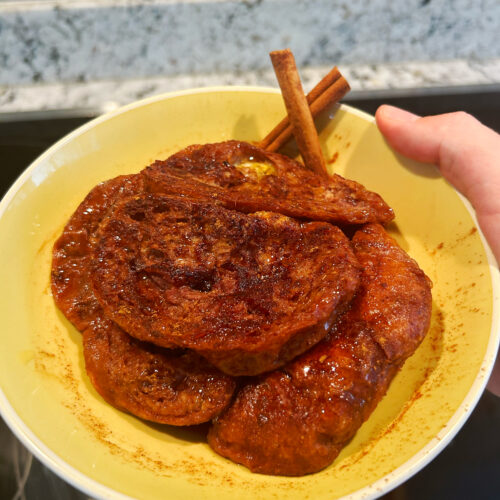
Templar “Drunk Bread” Pudding
Ingredients
- 4 –5 slices of stale bread country or sourdough-style
- 1 cup red wine dry, robust variety like Tempranillo or Garnacha
- 2 eggs
- 2 tablespoons honey
- 2 tablespoons cow butter or unsalted butter
Instructions
Prepare the Bread:
- Slice the stale bread into thick pieces and soak them in red wine until softened but not falling apart. Set aside.
Make the Egg Mixture:
- In a bowl, beat the eggs and honey together until smooth. Dip the wine-soaked bread into this mixture, coating well on both sides.
Fry the Bread:
- Heat the cow butter in a pan over medium heat. Fry each slice until golden and crisp on both sides.
Finish and Serve:
- Remove the bread from the pan and drizzle or soak lightly again with a bit more red wine. Serve warm, optionally dusted with a touch of sugar or more honey.
Video
Notes
- Use a firm, rustic bread so it doesn’t fall apart when soaked in wine.
- A dry, oaky red wine adds depth and prevents the pudding from being overly sweet.
- For authenticity, fry in butter from cow’s milk — olive oil would have been less common in northern-influenced monastic kitchens.