A deep dive into the history, folklore, and holiday magic behind one of Scandinavia’s most beloved Christmas dishes.
Julegrøt may look simple at first glance, but in Scandinavia it is one of the most meaningful dishes of the entire Christmas season. This warm, creamy rice porridge carries centuries of tradition, superstition, and family ritual. From the Viking Age to modern Norway and Sweden, julegrøt has symbolized survival in winter, domestic good fortune, and the gathering of family around the fire. Today it appears on Christmas Eve tables and holiday breakfasts across the region, but its roots stretch deep into the agricultural traditions of the north.
If you’re enjoying my recipes, all of my e-cookbooks are 40% off for the holidays!

More than anything, julegrøt represents comfort in the coldest, darkest time of year. The bowl is hot, the cinnamon is fragrant, the butter melts slowly in the center, and the sweetness is gentle and soothing. Yet beneath that warmth is an entire world of folklore, especially the famous tradition of hiding a single almond inside the porridge, a game that has delighted Scandinavian families for generations. This dish may be humble, but its story is vast and beautiful.
Origins of Scandinavian Christmas Porridge
Long before rice reached Scandinavia, the people of the north ate barley porridge as their primary winter food. Barley was hardy enough to grow in the cold climate and served as the foundation of nearly every festive meal. Norse Yule celebrations featured porridge as a sacred food tied to the gods, the harvest, and the promise of spring’s eventual return. Grain held spiritual meaning. To serve porridge during Yuletide was to honor the land and to ask for its blessings in the coming year.
Rice only arrived in the eighteenth and nineteenth centuries as global trade spread through Europe. As rice became more available, Scandinavian households slowly replaced barley with short-grain white rice, discovering that it created a richer, creamier, more luxurious porridge when simmered slowly in milk. This shift gave birth to julegrøt, the Christmas porridge that became a hallmark of winter celebrations across Norway, Sweden, and Denmark.
By the nineteenth century, julegrøt had become fully established as a Christmas Eve dish. Families saved their best milk, their precious butter, and their imported cinnamon for the occasion. What had once been an everyday food became a holiday luxury, served only when the year’s hardest work was completed and the family could gather indoors for warmth and celebration.
The Nisse: Household Spirits and the Christmas Offering
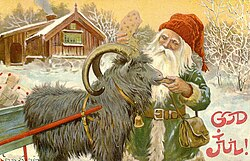
One of the most enchanting aspects of julegrøt is its connection to the nisse, the small bearded household spirit of Scandinavian folklore. The nisse was believed to protect the barn, livestock, and family throughout the year. He demanded respect and proper treatment, and in return he ensured prosperity and safety. On Christmas Eve, families set out a steaming bowl of julegrøt in the barn as an offering to him. The butter on top was crucial.
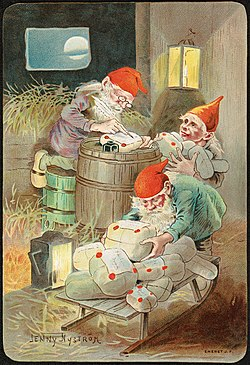
Legend says that if the nisse received his porridge without a generous pat of butter, he could become offended and cause havoc. Stories claim he might sour the milk, misplace tools, frighten the animals, or even ruin the next year’s harvest. Some tales describe nisse throwing tantrums when offered porridge without butter, flipping buckets or tying the cows’ tails together in retaliation. This ritual offering lasted well into the twentieth century, reflecting the deep cultural belief that unseen forces protected the home during winter.
Although many modern families no longer leave julegrøt in the barn, the nisse remains a beloved figure in Scandinavian Christmas iconography. Today he appears in decorations, children’s books, and holiday stories, still associated with porridge and still watching over the home during the darkest nights of the year.
The Hidden Almond Tradition
The hidden almond is the tradition that transforms julegrøt from a warm bowl of porridge into a holiday memory. During Christmas gatherings, one blanched almond is stirred into the pot before serving. Whoever finds the almond in their bowl is said to receive good luck in the year ahead. In Sweden, the winner traditionally receives a marzipan pig, a symbol of wealth and prosperity. In Norway, the almond could foretell marriage, abundance, or good fortune depending on local interpretations.
This tradition has been recorded for over a century and remains one of the most anticipated moments of Scandinavian holiday meals. Children eat slowly and carefully, hoping to find the almond. Adults join in the excitement and often pretend not to notice the almond until the moment is right. It becomes more than a game. It is a celebration of family, hospitality, and the joy of sharing a meal in winter.
The almond represents luck, longevity, and the sweetness of the year ahead. Many Scandinavian families joke that finding it means you will marry soon, win fortune, or receive blessings in the coming months. Whatever the interpretation, the moment of discovery always brings laughter.
Julegrøt in Modern Scandinavian Christmas
Though life in Scandinavia has modernized dramatically, julegrøt remains a central part of Christmas traditions. Many families serve it on Christmas Eve before the main feast, while others enjoy it on Christmas morning as a warm start to the holiday. Some turn leftover porridge into riskrem or ris à la Malta, whipped-cream rice desserts served with berry sauce.
Even with modern variations, the heart of the dish remains unchanged. It is still slow cooked, creamy, lightly sweet, and topped with a pat of butter that melts into a golden pool. Cinnamon is still sprinkled generously on top. And somewhere in the pot, the almond still hides, waiting to reveal its owner.
This continuity is part of what makes julegrøt so beloved. It is a simple food that connects generations, carrying with it the memory of ancestors, barns warmed by animals, and long winter nights softened by candlelight.
What Julegrøt Tastes Like Today
The flavor of julegrøt is soft, comforting, and deeply nostalgic. The rice becomes creamy as it breaks down in the milk, creating a texture similar to risotto but sweeter and smoother. The addition of heavy cream gives the porridge a rich holiday depth. Cinnamon adds warmth, while the melted butter on top creates a silky finish.
Modern toppings like brown butter, honey, almond slivers, or lingonberry jam complement the dish beautifully without taking away from its simplicity. Julegrøt is not meant to impress by complexity. It is meant to comfort, to warm, and to evoke memories of family gatherings and holiday rituals.
To make julegrøt is to step into a continuous chain of winter tradition. It is a dish that tastes like home, whether that home is a modern apartment or a farmhouse in the Scandinavian countryside.
JULEGRØT (Creamy Scandinavian Christmas Rice Porridge)

JULEGRØT (Creamy Scandinavian Christmas Rice Porridge)
Ingredients
- 1 cup short-grain white rice Arborio works extremely well
- 1 ¾ cups water
- 4 cups whole milk
- ½ cup heavy cream modern boost for richness
- ½ teaspoon salt
- 2 tablespoons sugar add more to taste
- 1 ½ teaspoons ground cinnamon
- 1 teaspoon vanilla extract optional but beautiful
- 2 –3 tablespoons butter for serving
- 1 blanched almond optional for the tradition
Optional toppings (modern but culturally fitting):
- Cinnamon sugar mix
- Honey drizzle
- Toasted almond slivers
- Lingonberry jam
- Brown butter drizzle
Instructions
Start the rice
- Add rice and water to a heavy-bottom pot. Bring to a simmer and cook for 10 minutes until the water is mostly absorbed.
Add milk + cream
- Pour in the milk and cream. Keep heat low to prevent scorching.
Slow cook
- Let it simmer on low for 25–30 minutes, stirring often, until thick and creamy.
Season
- Stir in:
- salt
- sugar
- cinnamon
- vanilla
- Taste and adjust sweetness.
Serve
- Spoon into bowls and top with:
- a generous pat of butter
- extra cinnamon sugar
- the hidden almond in one bowl
Video
Notes
- Stir often to prevent scorching. Milk-heavy porridges burn easily, so use a heavy-bottom pot and stir frequently, especially in the last 10 minutes when it thickens.
- Adjust the thickness to your liking. If you prefer looser porridge, add a splash of warm milk at the end. For thicker julegrøt, simmer a few minutes longer until the spoon stands up on its own.
- Do not skip the butter. The pat of butter melting in the center is not just tradition. It adds richness, balances the sweetness, and honors the ancient Scandinavian custom of leaving porridge out for the household nisse.