Skyr looks like yogurt, eats like dessert, and fuels you like a meal. Today it’s marketed as a high-protein superfood, but for over a thousand years it was something far more important: survival food. Long before macros, labels, or fitness influencers, skyr existed as a practical answer to a harsh question. How do you turn milk into something nourishing, filling, and reliable on a cold, volcanic island with long winters and short growing seasons?
If you’re enjoying my recipes, check out my e-cookbooks at Eats History Shop, now 40% Off!

Although skyr is often lumped in with yogurt, historically it belongs closer to the world of fresh cheeses. It is made from skim milk that is cultured, lightly set, and then strained until thick and spoonable. This process concentrates protein and nutrients while removing much of the liquid whey. The result is dense, tangy, and incredibly satisfying. In other words, it’s exactly the kind of food you would expect a subsistence society to develop.
The name “skyr” itself points to its deep roots in the North Atlantic world. Similar words and dairy traditions existed across Scandinavia, but Iceland is where skyr truly took hold and never let go. While many related fermented milk foods faded, transformed, or became regional curiosities elsewhere, skyr remained central to Icelandic life. It wasn’t a novelty or a treat. It was daily fuel.
To understand skyr properly, you have to stop thinking of it as a product and start thinking of it as a system. It was part of a larger strategy for turning perishable milk into long-lasting nourishment, one that fit seamlessly into the rhythms of farming, fishing, and seasonal scarcity.
Skyr in Viking-Age Iceland
When Norse settlers arrived in Iceland in the late 9th and 10th centuries, they brought more than ships and sagas. They brought animals, techniques, and knowledge that had been refined in northern Europe for generations. Dairy was central to this worldview. Cows, sheep, and goats provided milk that could be transformed into butter, cheese, and skyr, each serving a different purpose in the household economy.
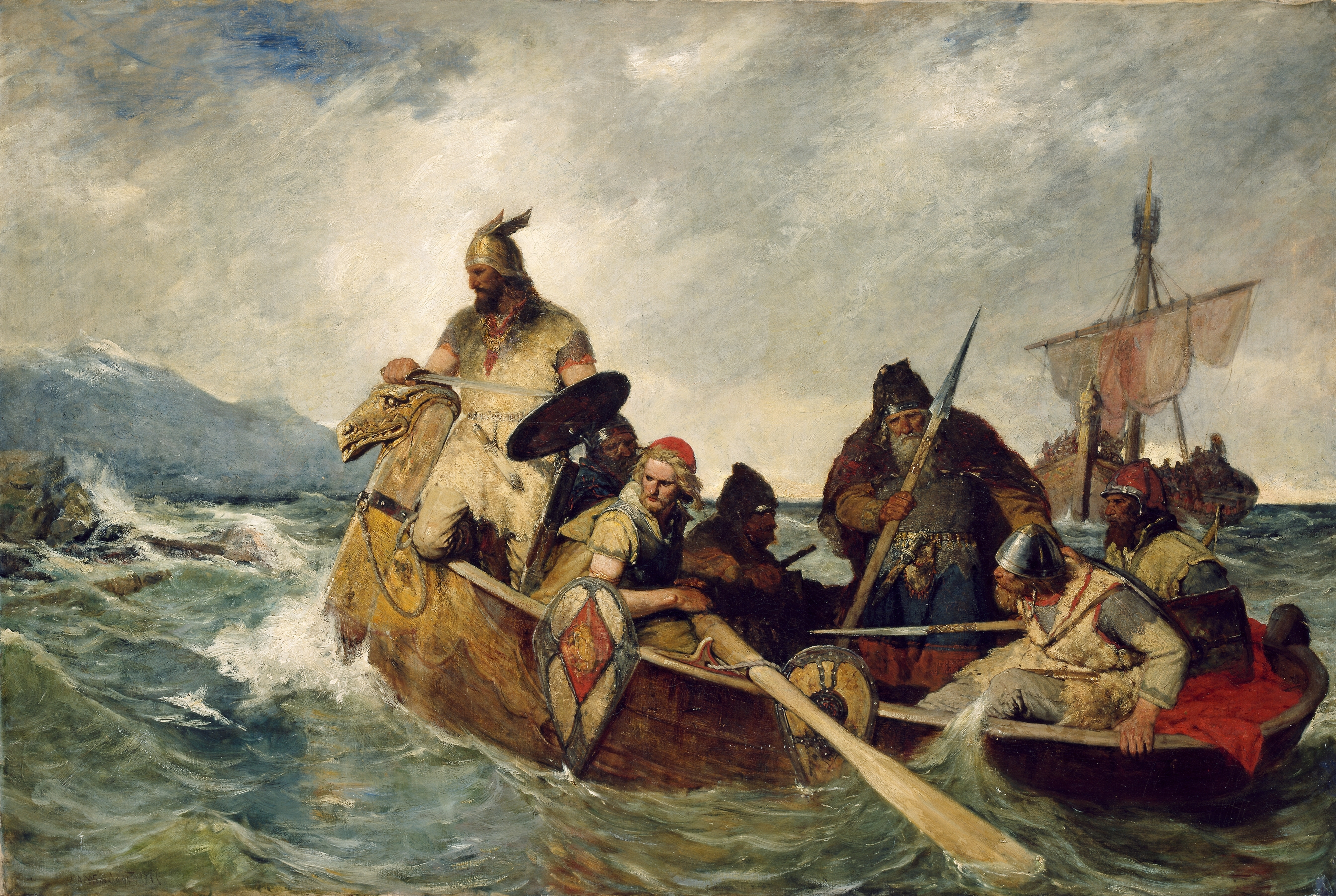
Skyr made particular sense in Iceland. Cream could be skimmed off milk to make butter, which was valuable, storable, and tradeable. What remained was skim milk, and skyr was the perfect way to use it. By culturing and straining that milk, households created a protein-rich food that could be eaten fresh or stored cold for extended periods. Nothing was wasted, and every step added value.
In saga-age Iceland, food was not separate from identity. What you ate reflected who you were, where you lived, and how you survived. Skyr appears repeatedly in descriptions of farm life, hospitality, and daily meals. It was eaten plain, mixed with water or whey, or sweetened when resources allowed. It could be filling enough to replace meat during lean times, which mattered deeply in a land where livestock had to survive the winter too.
What’s striking is how ordinary skyr was. It wasn’t ceremonial or rare. It didn’t need to be written about extensively because everyone knew it. That quiet ubiquity is often the best indicator of a food’s importance. Skyr didn’t define Icelandic life because it was special. It defined Icelandic life because it worked.
From Farmstead Staple to National Food
As centuries passed and Iceland’s political and economic situation shifted, skyr remained. Kingdoms rose and fell, trade routes changed, and technology advanced, but skyr stayed rooted in the household. While many European food traditions became professionalized or urbanized, skyr remained something people made and ate at home.
This continuity is part of why skyr became such a powerful symbol of Icelandic identity. By the 18th and 19th centuries, when Icelanders increasingly looked to their past to define themselves as a people, skyr stood out as something uniquely preserved. It connected medieval farmsteads to modern kitchens in a way few foods could.
Unlike butter or cheese, which often entered broader commercial markets, skyr remained personal. Families passed down cultures, methods, and preferences. Texture, sourness, and thickness varied from household to household. In this way, skyr functioned almost like sourdough does today: a living tradition shaped by place, habit, and care.
When skyr eventually entered industrial production in the 20th century, it did so carefully. Modern Icelandic skyr still reflects the old logic: low fat, high protein, clean flavor. Even as it became standardized, it retained its cultural weight. It wasn’t reinvented. It was preserved.
Why Skyr Is So Healthy (Without Trying to Be)
The modern fascination with skyr as a health food is almost accidental. Its nutritional profile wasn’t designed in a lab; it emerged naturally from necessity. By skimming milk for butter and straining the curd, early skyr makers concentrated protein while keeping fat low. That combination is exactly what modern nutrition science praises.
Skyr is filling without being heavy. It stabilizes blood sugar, supports muscle maintenance, and delivers calcium and beneficial bacteria when made with live cultures. For people in the past, this meant sustained energy during long days of labor. For people today, it means a breakfast or snack that actually holds you over.
What’s especially interesting is how little skyr needs to be “improved.” Unlike many modern foods that require fortification or flavor engineering, skyr works as-is. Add grain, fruit, or honey, and you have a complete, balanced meal. The ancient logic still holds.
In a world of ultra-processed protein products, skyr stands out because it doesn’t pretend to be anything else. It’s milk, time, and technique. That simplicity is its strength.
Making Skyr at Home: Modern Method, Ancient Logic
Making skyr at home feels almost suspiciously easy, which only reinforces how practical the original method was. In my version, I used skim milk, heated to about 200 degrees to eliminate unwanted bacteria, then cooled to around 110 degrees to create a friendly environment for fermentation. This mirrors the old goal, even if the tools are modern.
To start the culture, I used store-bought plain skyr. Historically, people would save a portion of the previous batch or use whey as a starter. Functionally, it’s the same idea: carry the living culture forward. I added a quarter tablet of rennet, which helps the milk set more firmly, another step that reflects traditional dairy practice.
After mixing, I covered the pot, wrapped it in a towel, and let it sit overnight. No machines, no special equipment. Just warmth, patience, and time. By morning, the milk had transformed into thick, tangy skyr, ready to be chilled and eaten.
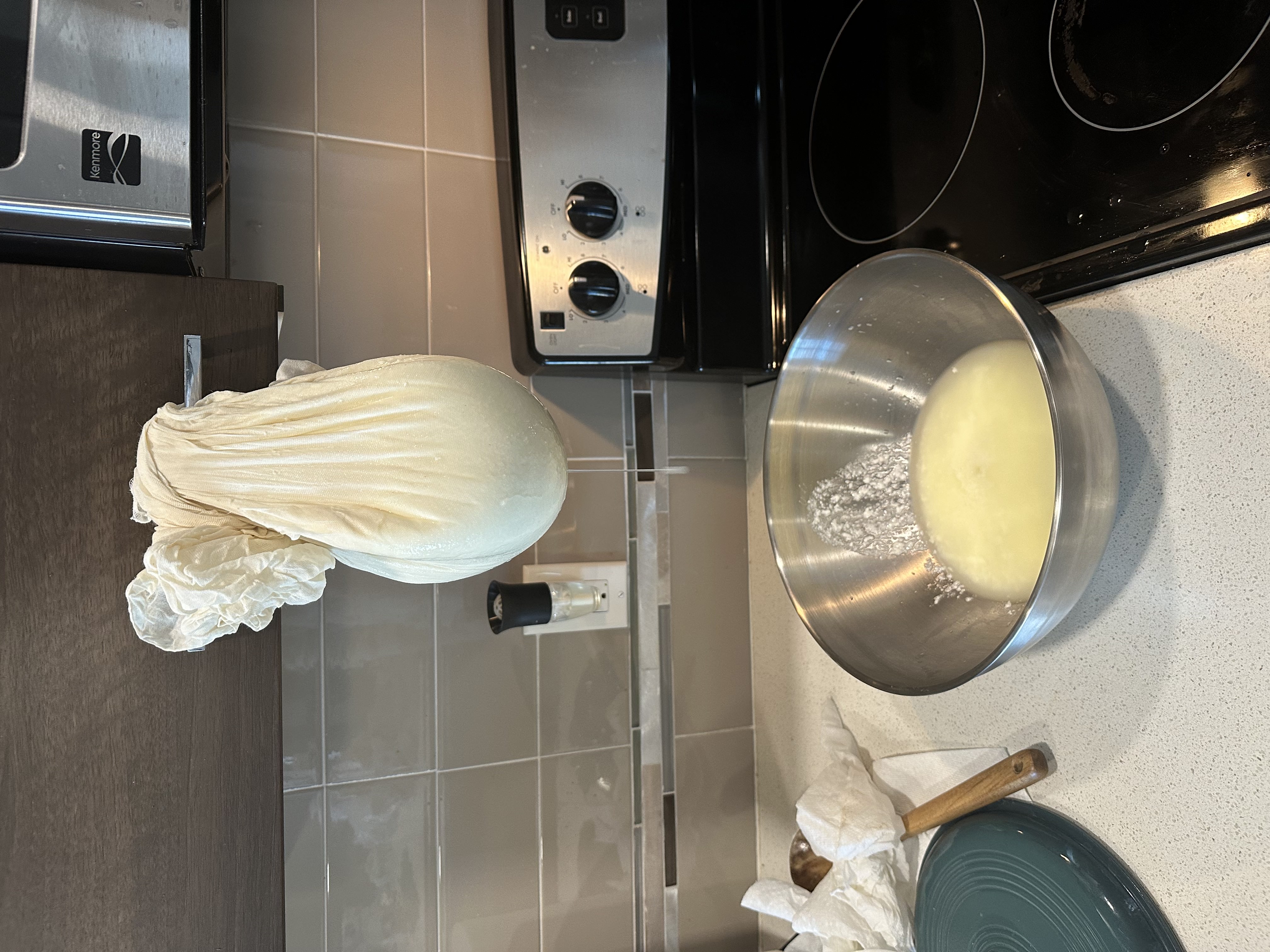
The biggest difference between my method and historical ones is control. Medieval households relied on experience and environment rather than thermometers. My version trades uncertainty for consistency, but the underlying process is the same. Milk becomes skyr by respecting biology, not forcing it.
Eating Skyr Then and Now
Historically, skyr was often eaten plain or diluted, sometimes with whey, sometimes with whatever sweetener or grain was available. It wasn’t a dessert. It was nourishment. That context matters when we think about how to eat it today.
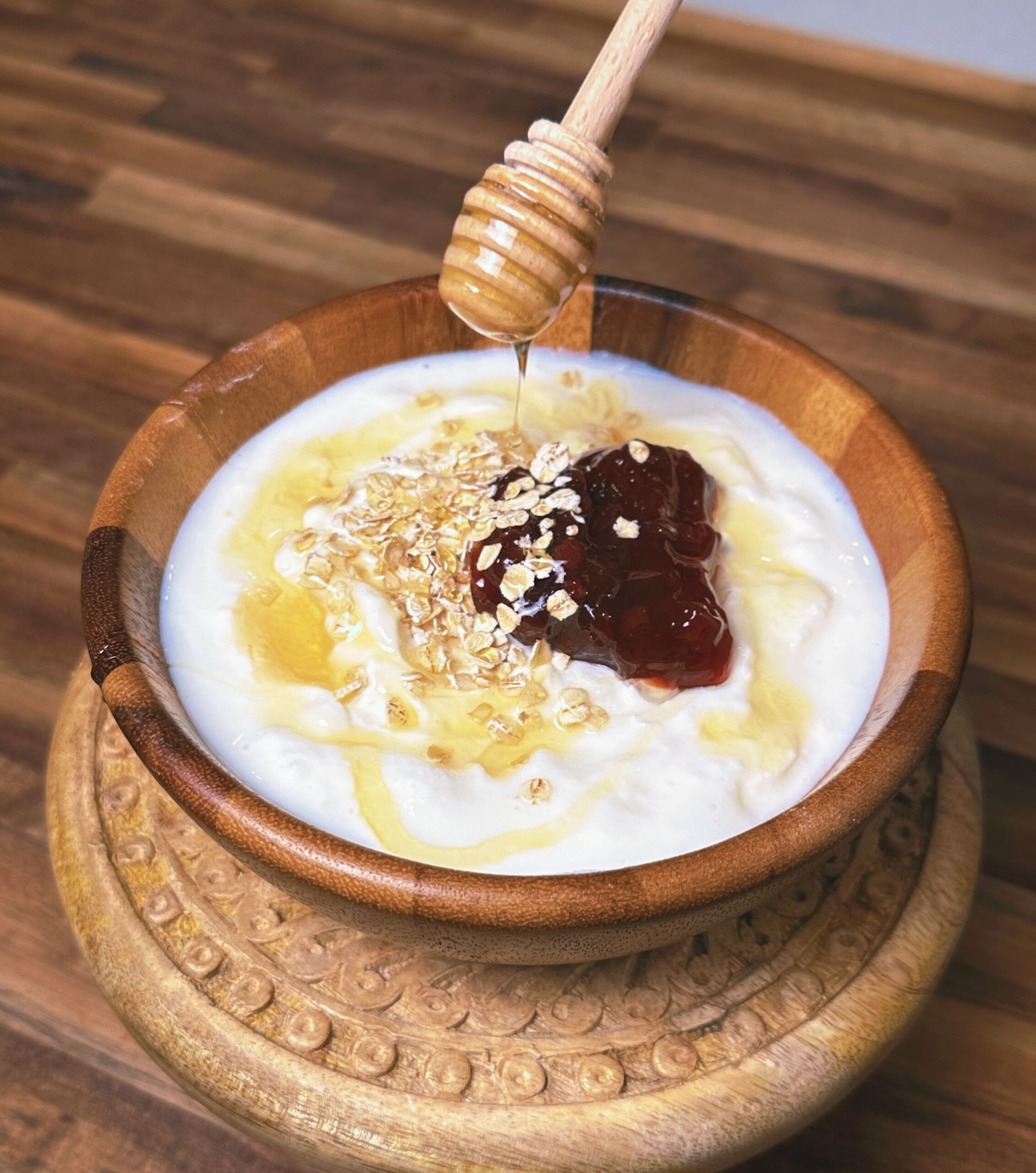
My bowl was topped with oats, lingonberry jam, and honey. Each of these choices bridges past and present. Oats were a northern staple, lingonberries a natural and historical pairing, and honey one of the oldest sweeteners available to the Norse world. The result feels indulgent, but it’s rooted in tradition.
What makes skyr special is that it scales effortlessly. It can be austere or abundant, simple or dressed up. It works as breakfast, as fuel, or as comfort food. That flexibility is why it survived when so many other foods disappeared.
Skyr isn’t just a relic of the Viking age. It’s a reminder that some of the best foods are born not from excess, but from constraint. When people are forced to be thoughtful with their resources, they often create things that last. And sometimes, those things end up being exactly what we need again a thousand years later.
Home-Made Skyr Recipe:
Skyr Recipe
Ingredients
- Skim milk amount as desired; I used enough for a batch of skyr
- Store-bought plain skyr as starter culture
- 1/4 tablet rennet
- Toppings: oats lingonberry jam, honey
Instructions
- Heat the milk: Bring skim milk to ~200°F (this helps reduce unwanted bacteria).
- Cool: Let it cool to ~110°F.
- Inoculate + set: Stir in a spoonful of store-bought skyr (your starter culture), then dissolve and add 1/4 rennet tablet. Mix well.
- Incubate: Cover the pot/jar, wrap in a towel, and let sit overnight in a warm, draft-free spot.
- Chill + serve: Once thickened, refrigerate to fully set. Spoon into a bowl and top with oats, lingonberry jam, and honey.
Video
Notes
- Skyr is closer to cheese than yogurt: Historically, skyr was made from skim milk with rennet, which is why it’s thicker and higher in protein than most yogurts. Using rennet here is not optional if you want an authentic texture.
- Temperature control matters: Heating the milk to ~200°F improves consistency and safety, while cooling to ~110°F ensures the cultures activate properly. Too hot and you kill the culture; too cool and the skyr won’t set well.
- Straining is optional but traditional: For an even thicker, more historical result, you can strain the finished skyr through cheesecloth for 1–2 hours. This mimics older methods and produces an ultra-dense, almost cheesecake-like texture.