Ottoman cuisine was built on balance. Not just balance of flavors, but balance of function and pleasure, nourishment and symbolism, refinement and practicality. Few dishes illustrate this better than mutancana, a lamb stew enriched with dried fruit, honey, vinegar, and spice. Sweet and sour, rich yet restrained, it reflects the culinary philosophy of the early Ottoman court at its height.
If you’re enjoying my recipes, check out my e-cookbooks, now 40% Off!

Mutancana is frequently associated with Sultan Mehmed II, the ruler who conquered Constantinople in 1453 and transformed the Ottoman state into an empire. While it would be a mistake to imagine one fixed personal menu for a 15th-century ruler, multiple Ottoman culinary sources and later court traditions consistently connect this dish with Mehmed’s reign and taste.
This is not peasant food elevated after the fact. Mutancana belongs to a courtly tradition that valued layered flavor, long preservation, and the ability to feed many without constant resupply. It sits comfortably at the intersection of palace cuisine and military necessity.
Recreating mutancana today offers a rare glimpse into how an expanding empire ate when logistics, luxury, and ideology were deeply intertwined.
Sultan Mehmed II and the Ottoman Table
Mehmed II ruled during a period of immense transformation. He inherited a growing state and turned it into a centralized imperial power with Constantinople as its capital. His court reflected this ambition. It drew from Turkic, Persian, Arab, Byzantine, and Balkan traditions, creating what would become classical Ottoman cuisine.

Ottoman court food was not improvised. Palace kitchens were highly organized, staffed by specialized cooks, and supplied through complex provisioning systems. Food was both sustenance and projection of power. Meals demonstrated order, abundance, and cultural sophistication.
Mehmed himself was known for intellectual curiosity, discipline, and pragmatism. Contemporary chroniclers describe him as attentive to administration and military logistics, not indulgence for its own sake. A dish like mutancana aligns with that character. It is rich but efficient, flavorful but composed.
In this context, a favorite dish does not mean daily indulgence. It means a preparation that fit the ruler’s needs, taste, and the realities of governance.
Sources and Mentions of Mutancana
Mutancana appears in early Ottoman culinary manuscripts and later compilations of palace recipes, often grouped among sweet and sour meat dishes served at court. While precise dating of individual recipes is difficult, the dish is consistently placed within the 15th-century Ottoman culinary repertoire.
Ottoman food writing was practical rather than literary. Recipes were recorded as working documents for palace kitchens, not as narrative cookbooks. This means ingredients and techniques are listed without embellishment, but repetition across manuscripts indicates established dishes rather than inventions.
Mutancana’s combination of lamb, dried fruit, honey, vinegar, and spice aligns with broader Islamic and Persianate culinary traditions already present in Anatolia. The Ottomans inherited and refined these flavors rather than inventing them outright.
The repeated association of mutancana with Mehmed’s era reflects not personal mythmaking but the dish’s suitability to the early imperial kitchen. It was already established, respected, and adaptable.
Convenience and the Ottoman Military
Ottoman expansion depended on mobility. Armies traveled long distances, sometimes for months at a time. Feeding soldiers and officers required food that could be preserved, transported, and reconstituted without losing value.
Mutancana fits this logistical reality. Dried fruits such as apricots and raisins store easily and add sweetness and acidity. Honey preserves and enriches. Vinegar stabilizes flavor and helps prevent spoilage. Lamb, when stewed, can be stretched and reheated.
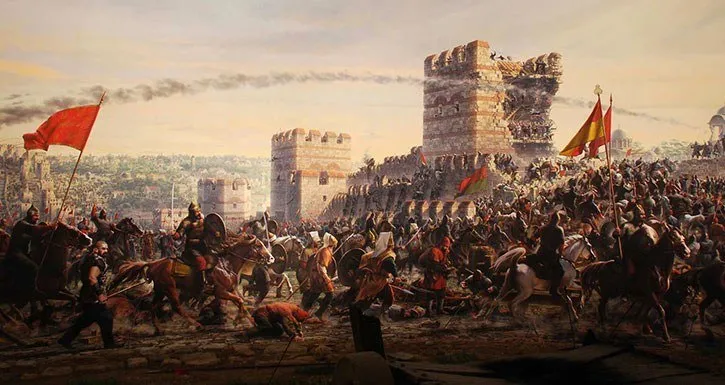
While the dish itself would have been prepared most fully in palace or encampment kitchens rather than on the march, its components mirror the kinds of ingredients that moved well through Ottoman supply lines.
This made mutancana practical for high-ranking officers and court officials accompanying campaigns. It was a dish that traveled conceptually even when prepared locally.
Origins and Culinary Lineage
Mutancana’s roots lie deeper than the Ottomans themselves. Sweet and sour meat stews appear in medieval Persian and Arab cuisines, where fruit, vinegar, and spices balanced richness. The Seljuk Turks carried these traditions into Anatolia before the Ottomans emerged.
By the 14th and 15th centuries, Anatolian kitchens had integrated Turkic meat traditions with Persian flavor profiles and Byzantine ingredients. Almonds, dried fruit, and honey were common in elite cooking.
The Ottomans did not erase these influences. They organized them. Palace cuisine standardized what had once been regional, producing dishes like mutancana that could be replicated across the empire.
This is why mutancana feels both ancient and precise. It is the product of centuries of culinary convergence rather than sudden invention.
Cooking Method, Flavor, and Reflection
The cooking method for mutancana is deliberate. Lamb is browned lightly, not aggressively. It is simmered until tender before sweet and sour elements are added. This sequencing prevents burning and allows flavors to integrate rather than compete.
As the stew reduces, the sauce becomes glossy and cohesive. Honey and vinegar balance each other. Cinnamon adds warmth without sweetness. Black pepper provides quiet heat rather than dominance.
The finished dish is rich but not heavy. The sweetness is restrained. The acidity lifts the lamb. Almonds add texture and fat. It feels composed rather than indulgent.
This is the kind of dish that reflects imperial confidence. Nothing is wasted. Nothing is rushed.
Dish Rating: 8.6 / 10
Recipe: Mutancana (Ottoman Reconstruction)
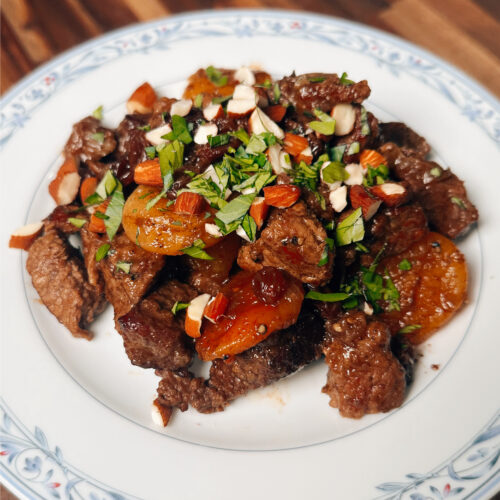
Mutancana
Ingredients
- 2 lb lamb shoulder or leg cut into chunks
- 2 tbsp butter or sheep’s tail fat
- 1 cup water or light broth
- ½ cup dried apricots
- ¼ cup raisins
- ¼ cup almonds
- 2 tbsp honey
- 2 tbsp wine vinegar
- ½ tsp cinnamon
- ½ tsp black pepper
- Salt to taste
- Parsely for garnish
Instructions
- Melt butter in a heavy pot and brown the lamb lightly.
- Add water or broth, cover, and simmer until the meat is nearly tender.
- Add dried fruits and continue cooking gently.
- Stir in honey, vinegar, cinnamon, pepper, and salt.
- Simmer uncovered until the sauce thickens into a glossy, sweet-sour glaze.
- Finish with almonds, parsley for garnish and serve warm.
Video
Notes
- Lamb Cut Matters: Shoulder or leg works best, as the long simmer allows tougher cuts to become tender and absorb the sweet-sour sauce.
- Balance the Sauce: Taste before the final reduction. Ottoman dishes aimed for harmony, so adjust honey or vinegar slightly depending on the natural sweetness of the fruit.
- Gentle Browning: The lamb should be lightly browned, not deeply seared. This keeps the final sauce clean and prevents bitterness during the long simmer.