There is a dessert that has been setting tables on fire in New Orleans since 1951 and it was invented on a dare, named after a crime commissioner, and built on the back of one of the biggest banana surpluses in American history.
If you’re enjoying my content, consider picking up an e-cookbook at Eats History Shop, now 40% Off!
Bananas Foster is one of those dishes that sounds almost too perfect as a story, and yet every detail of it is real and documented. I made it at home. I have eaten it at Brennan’s. It deserves everything it has gotten.
The Story of Brennan’s
Owen Brennan was an Irish-American kid from the Irish Channel neighborhood of New Orleans who bought a bar on Bourbon Street in 1943 and then opened a restaurant across the street three years later on a bet. The bet came from Count Arnaud Cazenave, a rival restaurateur who told Brennan that an Irishman would never know anything about good food. Brennan opened Owen Brennan’s Vieux Carré Restaurant in July 1946 to prove him wrong and brought in his younger sister Ella, then just 21 years old, to help run it.
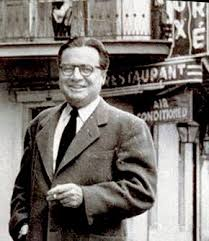
Ella Brennan would go on to become one of the most important figures in the history of American fine dining but in 1946 she was a young woman learning the business from the floor up in her brother’s French Quarter restaurant. Owen died suddenly in 1955, just before the restaurant moved to its now-famous location at 417 Royal Street, a pink 1795 building that had previously housed the first bank in Louisiana. The family opened that location in 1956 and it has been there ever since. Today Brennan’s flames 35,000 pounds of bananas every single year for one dessert.
How It Got Its Name
In 1951 Owen Brennan was serving on the New Orleans Crime Commission alongside a friend and civic leader named Richard Foster. Foster was the chairman of the commission, a well-connected New Orleans businessman, and a regular at Brennan’s. Owen decided to name a new dessert after him, partly as a gesture of friendship and partly because naming dishes after prominent local figures was exactly the kind of thing New Orleans restaurants did and still do.
The dish was created by chef Paul Blangé, a European-trained chef originally from Holland, at Owen’s request, and Ella Brennan was involved in its development as well, drawing from a memory of the way her mother used to brûlée bananas at home for breakfast. That simple childhood memory, elevated with rum and banana liqueur and a pan of caramelized brown sugar, became one of the most replicated desserts in the history of American restaurants. Richard Foster himself almost certainly had no idea his name would still be read off menus seventy-five years later.
Why the Port of New Orleans Made This Dish Possible
This is the part of the story that most people skip over and it is the part I find most interesting. In the early 1950s New Orleans was the single largest port of entry for bananas imported from Central and South America into the United States. Millions of bananas were coming through the port every year and the city was absolutely flooded with them.
They were cheap, they were everywhere, and Owen Brennan wanted to do something that promoted the fruit and kept his restaurant at the center of the city’s food conversation. Challenging his chef to build a dessert around bananas was as much a business decision as a creative one.

The irony is that the banana trade in New Orleans peaked and then collapsed within a decade of the dish being created, undermined by corporate consolidation, changing shipping routes, and the kind of exploitation of Latin American labor and governments that eventually became impossible to ignore. Bananas Foster outlasted the entire industry that made it possible and is now eaten in restaurants around the world by people who have no idea their dessert has anything to do with the port of New Orleans.
Why It Exploded
Tableside service was the reason. Bananas Foster was not just a dessert, it was a performance. The waiter comes to your table with a copper pan and a burner, builds the caramel sauce in front of you, adds the bananas, pours in the rum, and then tilts the pan toward the flame and the whole thing goes up in a burst of blue fire that lights up the dining room and turns every head in the place. In 1951 that was extraordinary.
In 2026 it still stops people cold. Seventy-five percent of all dessert sales at Brennan’s today are still Bananas Foster. Guests who have already eaten dinner somewhere else come specifically to Brennan’s just for the dessert and a drink in the courtyard. The flambé is not a gimmick, it is the whole point, and it is also functional. The flame burns off the harsh edge of the alcohol and leaves just the rum flavor behind in the sauce, which is why the finished dish tastes rich and complex rather than boozy.
My Review
I have eaten this at Brennan’s and I have made it at home and the honest answer is that the tableside version at the restaurant is a fundamentally different experience from the home version even though the recipe is identical. Watching someone build that sauce three feet from your face in a copper pan while the rest of the dining room goes quiet is something a home kitchen cannot replicate.
But the home version is still extraordinary and it takes about eight minutes start to finish. The sauce is deep and butterscotch-rich from the brown sugar and cinnamon, the bananas hold their shape but go completely soft inside, and when that rum flame goes out and you spoon the whole thing over cold vanilla ice cream and watch the ice cream start to melt into the warm sauce it is genuinely one of the best things you can put in front of someone at the end of a dinner.
9.6 out of 10. Make it for someone you want to impress.
The Recipe: Make It At Home
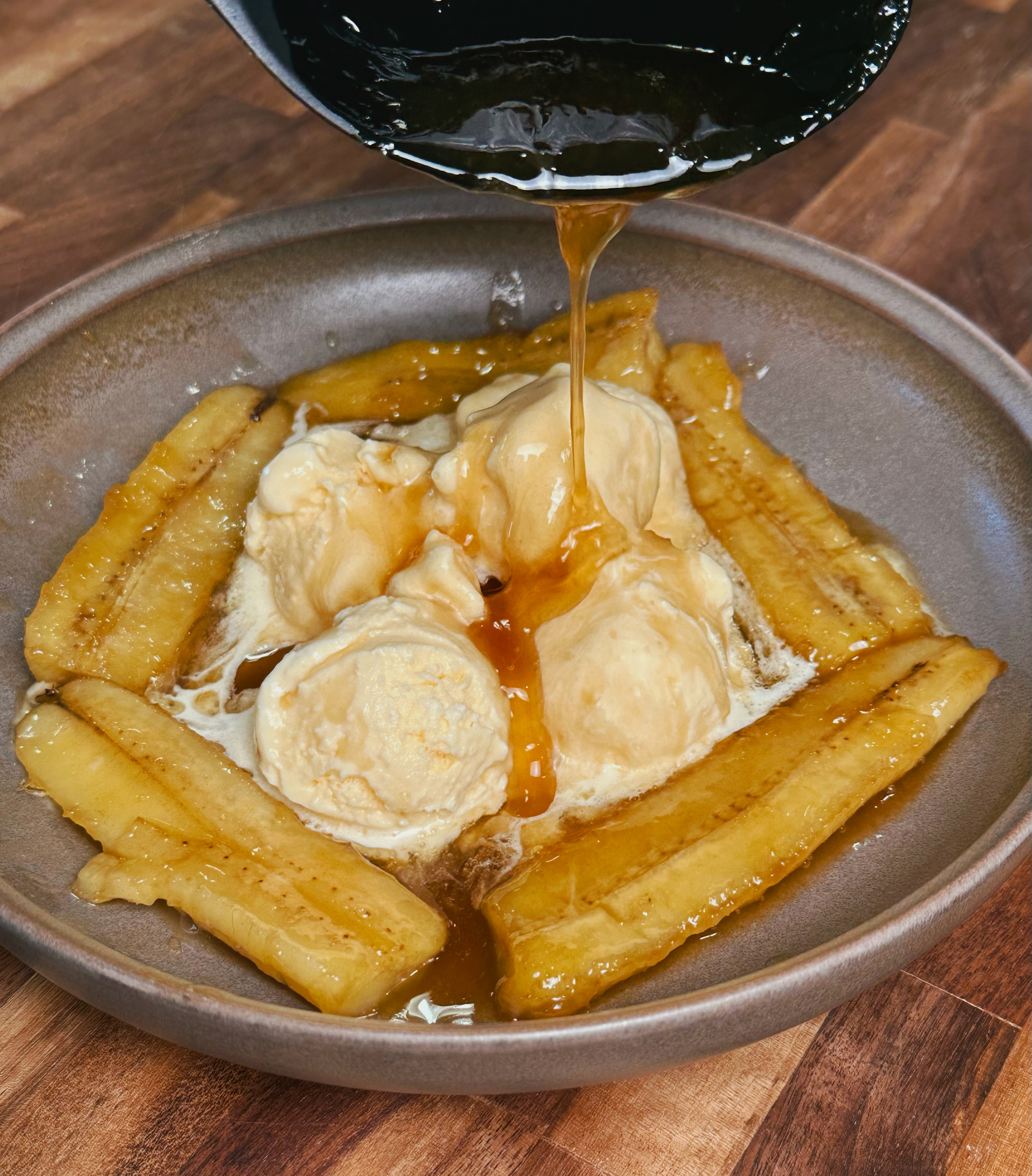
Bananas Foster
Ingredients
- 1/4 cup unsalted butter
- 1 cup brown sugar
- 1/2 tsp cinnamon
- 1/4 cup banana liqueur
- 4 bananas peeled, halved lengthwise then crosswise
- 1/4 cup dark rum
- 4 scoops vanilla ice cream
Instructions
- Melt butter, brown sugar, and cinnamon in a heavy skillet over low heat, stirring until the sugar fully dissolves and the mixture bubbles gently, 3 to 4 minutes
- Stir in banana liqueur, then add bananas cut side down and cook 1 to 2 minutes per side, spooning the sauce over the top as they cook
- Remove from heat, pour in the rum, let it warm 30 seconds, then tilt toward flame or use a long match to ignite. Flames will subside in 30 to 45 seconds
- Plate bananas over ice cream and spoon the sauce generously over the top. Serve immediately
Video
Notes
- Use Myers’s dark rum. Light rum will technically work but the sauce will be noticeably thinner in flavor. The dark rum is what gives Bananas Foster its depth and the original Brennan’s recipe has always called for it.
- Your bananas need to be ripe but still firm. Overripe bananas will collapse in the pan and turn to mush before the sauce has time to develop. You want them to hold their shape through the flambé and still have some structure when they hit the ice cream.
- Never pour rum directly from the bottle near an open flame and always remove the pan from a gas burner before adding the rum. The flame rises fast and dramatically. That is the point, but it needs to be on your terms, not the stove’s.