There is a drink with a two-thousand-year track record, endorsed by Roman generals, issued to legions who conquered most of the known world, and mentioned in the Bible at one of the most documented moments in human history. It costs about forty cents to make, takes thirty seconds to prepare, and contains exactly two ingredients. It is called posca, and it is either the most underrated drink in history or proof that the Romans would put up with almost anything if it kept them marching.
Posca is red wine vinegar diluted with water. That is the whole recipe. Two tablespoons of vinegar, one cup of cold water, and depending on who was making it, a pinch of salt or a handful of herbs thrown in for flavor. It was the daily ration drink of the Roman military for centuries, the preferred beverage of the poor and the working class, and the drink that a handful of serious historians believe was on the sponge offered to Jesus Christ as he was dying on the cross. It is sour, bracingly sharp, and oddly refreshing in a way that takes about three sips to appreciate.
I made it. I reviewed it. I did not love it, but I understood it completely. And the more I dug into the history, the more I came to think that posca might be one of the most quietly important drinks in Western history.
The Primary Sources: Who Wrote About Posca and What Did They Say
The paper trail on posca is unusually good for something this old, which tells you something about how widely it was drunk and how seriously it was taken.
The widespread use of posca is attested by numerous mentions across ancient sources ranging from the Natural History of Pliny the Elder to the comedies of Plautus. Pliny, writing in the first century AD, discussed posca in his encyclopedic Natural History, describing its preparation and potential medicinal uses. Plautus, the Roman playwright writing two centuries earlier, was already referencing it as a known commodity of lower-class Roman life. When a comedian is making jokes about your drink, it has entered the culture.
Vegetius, in Concerning Military Matters, confirms that soldiers were given a vinegar ration, and Celsus, in On Medicine, records that this vinegar could be mixed with water and drunk. Hadrian is recorded in the Historia Augusta as drinking posca to show solidarity with his troops, and Suetonius records it being sold on the streets. This gives us four separate Roman sources confirming the same drink across a span of several centuries.
Plutarch records what Cato the Elder, who served as an officer during the Second Punic War, drank on campaign: water was what he drank, except that once in a while, in a raging thirst, he would call for vinegar, or when his strength was failing, would add a little wine. That quote from Plutarch’s Lives is perhaps the most human description of posca in the entire historical record. A soldier so devoted to austerity that he drank plain water, but even he kept vinegar on hand for when things got serious.
Why the Roman Military Ran on Vinegar Water
The practical case for posca as a military drink is straightforward once you understand the conditions Roman soldiers were operating in. The army relied on posca during long campaigns and at frontier outposts. Its acidic nature helped purify the water mixed with it, making it safer to drink. Posca was also valued for its ability to stay fresh during extended periods, unlike other perishable liquids.
Water safety was not a theoretical concern on campaign. Armies throughout history have been devastated more by waterborne illness than by enemy action, and the Romans were operating across climates and regions where local water sources ranged from acceptable to genuinely dangerous. A splash of wine vinegar in a canteen was not going to sterilize the water completely, but the acidity would have killed a meaningful range of bacteria and made the water significantly safer than drinking it plain.
Diluting vinegar with water to make posca effectively doubled the volume of liquid ration given to soldiers at a very low cost. For military logistics this mattered enormously. Wine was produced across the empire in quantity, and off wine that had turned to vinegar was cheap and abundant. Stretching it with water and issuing the result as a daily ration was economically efficient in a way that grape juice or good wine never could have been.
There was also something to the acidity beyond water safety. The sharp taste of the vinegar likely kept legionaries alert through days of arduous marching, and it reportedly helped drive away thirst, a benefit valued by Cato the Elder who drank it even after his days in the army were finished. An electrolyte-acid drink that kept you alert and hydrated was exactly what a soldier covering twenty miles a day in full armor needed, and the Romans figured this out empirically centuries before anyone had the vocabulary to explain why it worked.
What Modern Science Actually Says About Vinegar
The Romans believed posca had health benefits. For once, the ancient world was largely right, and modern research has quietly caught up to what legionaries were figuring out through trial and error on campaign.
Research suggests that wine vinegar, and its close modern equivalent apple cider vinegar, may have genuine antimicrobial and antioxidant effects. Hippocrates himself, considered the father of modern medicine, used vinegar to clean wounds more than two thousand years ago, and modern research confirms it inhibits bacteria like E. coli from growing and spoiling food. The antibacterial properties the Romans were relying on to make their water safer are real and documented.
Studies published in peer-reviewed journals have found that vinegar can significantly lower post-meal blood glucose levels. Research from the Journal of the American Association of Diabetes found that twenty grams of vinegar consumed with a meal significantly lowered blood glucose levels at both thirty and sixty minutes after eating, with several other studies reporting similar findings. For soldiers eating a diet heavy in bread, grains, and dried legumes, stable blood sugar over the course of a long march would have had a meaningful effect on sustained energy and performance.
The American Heart Association notes that consuming diluted vinegar daily may moderately reduce fasting blood glucose and that diluting it with water rather than drinking it straight protects the esophagus and tooth enamel. Which is, notably, exactly how the Romans drank it. Diluting vinegar with water was not just about palatability — it was the medically correct approach, and the Romans arrived at this conclusion two thousand years before anyone understood why.
The one thing the Romans got wrong was believing vinegar prevented scurvy. It does not. The US Army was still rationing apple cider vinegar to troops in the mid-1800s under the same mistaken belief. Two thousand years of incorrectly trusted antiscorbutic properties. The Romans were not alone in that particular error.
The Sponge at the Crucifixion: What Was Actually Offered to Jesus
This is the detail that stops most people cold when they first encounter it, and it is worth handling carefully because the historical and textual evidence is genuinely interesting.
Because the Greeks lacked a specific word for posca, sources written in Greek, including the Bible and Plutarch, use the word oxos, meaning vinegar, in its place, translated as acetum in the Vulgate Bible. This linguistic detail is important because it means that when the Gospel texts describe a sponge soaked in oxos being offered to Jesus on the cross, the word being used was the standard Greek term for the drink Roman soldiers carried as their daily ration.
The Gospel of John records: after this, Jesus, knowing that all was now finished, said to fulfill the Scripture, I thirst. A jar full of sour wine stood there, so they put a sponge full of the sour wine on a hyssop branch and held it to his mouth. When Jesus had received the sour wine, he said, it is finished, and he bowed his head and gave up his spirit.
This act, often misinterpreted as mockery, was most likely an act of mercy, or simply a soldier sharing what he had. The jar standing nearby was almost certainly a standard military issue container of posca — the same drink those soldiers had been carrying and drinking all day. The soldier who offered it was not reaching for something special. He was offering what he had.
The four Gospel accounts do vary slightly in their details, which is worth noting. Matthew describes the event happening before the crucifixion itself, with gall added. Mark records someone offering it on a reed without specifying who. Luke explicitly names soldiers offering vinegar. John gives the most detailed account, naming hyssop as the branch used, which several scholars note was itself an aromatic herb that would have been added to flavor the posca. The consistency across multiple independent accounts of the same basic act (Roman soldiers with a container of vinegar-water and a sponge) is precisely what you would expect if this was simply a description of standard military equipment being used in a moment of informal mercy.
The Review: 5.5 out of 10, and Here Is Why You Should Still Make It
Rating: 5.5 out of 10.
Here is the honest version: posca is sour. It is immediately, bracingly, uncompromisingly sour in a way that the first sip genuinely startles you. The red wine vinegar hits the back of your throat and the whole thing tastes like salad dressing that has lost its way. Without any addition it is difficult to find pleasant by modern standards, and I say this as someone who routinely eats fermented things for a living.
A small amount of honey changes the picture substantially. A teaspoon stirred in rounds off the acidity, adds a gentle sweetness that balances the vinegar without hiding it, and produces something that is genuinely refreshing rather than just survivable. Cold water matters too. Served over ice or with very cold water it becomes something you could imagine wanting on a hot day, which is exactly the context in which most Roman soldiers were drinking it.
What I came away with from this one is a genuine respect for the drink as a piece of functional design. It was cheap, practical, antibacterial, energizing, and shelf-stable. It kept a million-man army marching for centuries. It shows up in the most documented moment in Western religious history. And it costs forty cents and thirty seconds to make in your own kitchen right now.
The Recipe
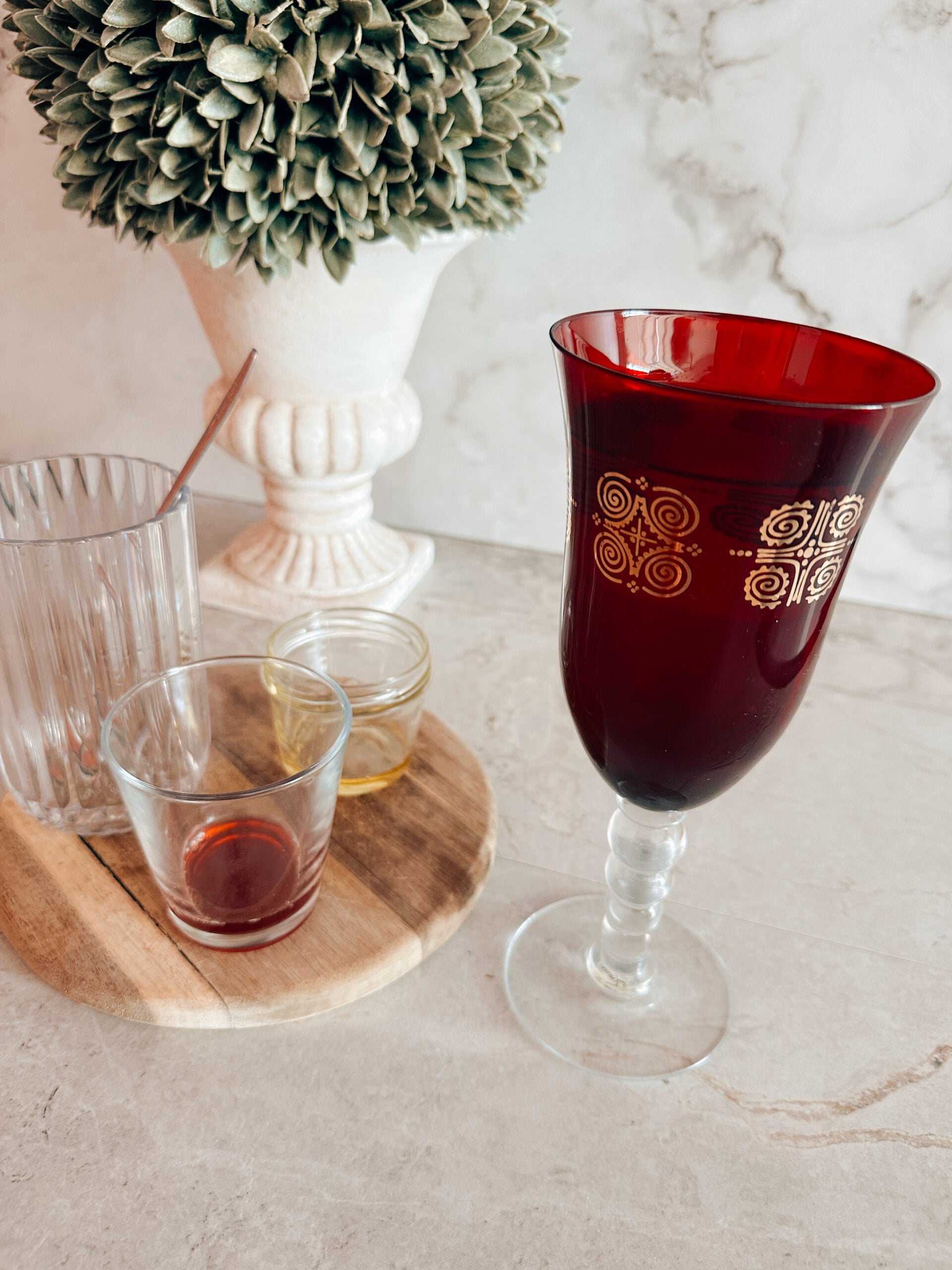
Posca — Ancient Roman Soldier’s Drink
Ingredients
- 2 tbsp red wine vinegar
- 1 cup cold water
- 1 tsp honey optional but recommended
- Fresh mint or a pinch of ground coriander optional, period-accurate additions
Instructions
- Combine the red wine vinegar and cold water in a cup and stir. Taste it. That is the base recipe and it is exactly what a Roman legionary carried in his canteen.
- If you want a more palatable version, add the honey and stir until dissolved. Add fresh mint leaves or a pinch of coriander if you want to approximate the herbed versions documented in Byzantine medical texts.
- Serve cold. Ice is not historically accurate but it helps.
Notes
- Use brewed red wine vinegar, not distilled white vinegar. The flavor profile is completely different and distilled vinegar was not available in the ancient world. The red wine base gives it a depth that white vinegar cannot replicate.
- If you want the full military experience, skip the honey, add a pinch of salt, and drink it warm. This is the version Cato the Elder was reaching for on a hot campaign day and it is an interesting exercise in understanding why honey was a valued addition.
- The drink improves significantly with quality vinegar. A good aged red wine vinegar will produce something almost pleasant. Cheap distilled vinegar will produce something that tastes like a mistake.