A few months ago I received a message from a Cambodian follower of Eats History. She told me about her family, about the food her grandmother had cooked before the war, and about what it meant to her to see Cambodian cuisine represented on a food history channel. She asked if I would ever cover Cambodia. She specifically mentioned Beef Lok Lak.
I sat with this episode for a long time before making it. Covering the Khmer Rouge is not something I took lightly. This is not a comfortable piece of food history. It is one of the darkest chapters of the 20th century and it deserves to be treated with the weight it carries.
What I hope this post does is tell the story of what was destroyed, what survived, and what has been rebuilt, and to use food as the lens through which to understand all three of those things. If you came here for the Lok Lak recipe it is at the bottom of this post and it is one of the best things I have made for this channel. But I hope you will read the history first.
A Note on Hope for Cambodian Children
Before we go into the history, I want to tell you about an organisation called Hope for Cambodian Children at hopeforcambodianchildren.org. All ad revenue generated by this video and blog will go directly to them.
Hope for Cambodian Children works to provide education, healthcare and support to children and families in Cambodia who are still living with the intergenerational consequences of what happened in the 1970s. The trauma of the Khmer Rouge did not end in 1979. It is carried in families, in communities, and in a country that lost somewhere between a quarter and a third of its entire population in four years. The work of rebuilding that continues today and organisations like this one are part of it.
If you are in a position to make a donation, however small, I would encourage you to visit hopeforcambodianchildren.org. If it is not financially feasible for you right now, watching this video and sharing it with someone who might is genuinely helpful. Every view contributes to the ad revenue going to them. Thank you for being part of this.
The Takeover: How Pol Pot Came to Power
To understand what happened to Cambodia between 1975 and 1979 you need to understand what Cambodia was before it.
Phnom Penh in the early 1960s was a city of wide French colonial boulevards, riverside restaurants, and a food culture built on centuries of Khmer cooking. Cambodia had been part of French Indochina since 1863 and the French colonial period, for all its violence and exploitation, had layered European ingredients into Khmer cooking in ways that produced some of the most distinctive cuisine in Southeast Asia. Beef Lok Lak itself is one of those dishes, a stir-fried beef salad that emerged from the intersection of Chinese cooking technique, Khmer flavour tradition, and French-influenced beef consumption. It was the kind of dish you ate at a restaurant in Phnom Penh on a warm evening, sitting near the river, with a cold beer.
Cambodia’s neutrality during the early years of the Vietnam War was complicated and ultimately impossible to maintain. The country became a transit route for North Vietnamese supply lines. In 1969 the United States began secretly bombing Cambodian territory, killing an estimated 100,000 civilians and destabilising the country’s government. In 1970 a US-backed coup removed the ruling Prince Sihanouk. The resulting civil war between the new government and the Khmer Rouge, a radical Maoist guerrilla movement led by the French-educated intellectual Saloth Sar, who called himself Pol Pot, consumed the country for five years.
On April 17, 1975, the Khmer Rouge entered Phnom Penh. They were initially greeted by some with cautious hope that the civil war was finally over. Within hours it became clear what kind of peace this was going to be. The entire population of Phnom Penh, roughly two million people, was ordered to leave the city immediately. They were told it would be temporary, that the Americans were going to bomb the city. It was not temporary.
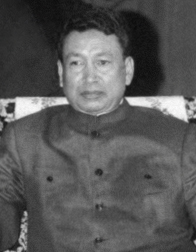
The cities of Cambodia were being emptied to create what Pol Pot called Year Zero. The past was to be abolished. The future was to be built from nothing. The new Cambodia was to be an agrarian utopia of rice fields and revolutionary purity. Everyone who represented the old Cambodia, doctors, teachers, civil servants, restaurant owners, anyone who wore glasses, anyone who spoke a foreign language, was an enemy of the revolution.
Four Years of Terror: 1975 to 1979
What followed was one of the most concentrated mass killings in human history. In four years, the Khmer Rouge killed between 1.5 and 3 million people, somewhere between a quarter and a third of Cambodia’s entire population. The numbers are still debated because record-keeping was deliberately destroyed and because the scale of what happened made precise documentation nearly impossible. The Documentation Center of Cambodia and the Yale Cambodian Genocide Program have spent decades reconstructing what occurred, and the picture that has emerged is of a systematic attempt to erase an entire civilisation and rebuild it from the ground up.
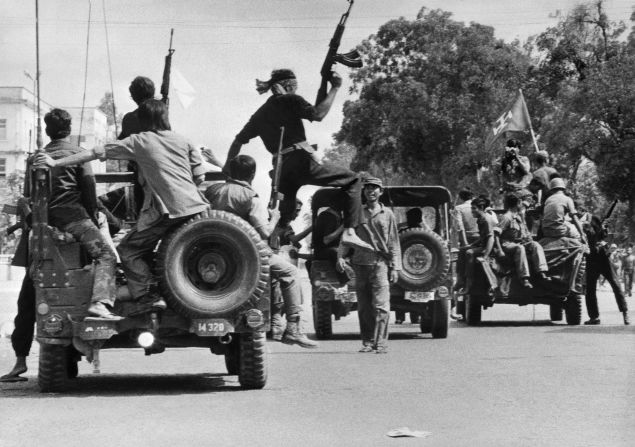
The cities were emptied. Money was abolished. Religion was banned. Buddhism, which had been the spiritual heart of Cambodian culture for centuries, was outlawed and monks were executed or forced to disrobe. Schools were closed. Hospitals were closed. The entire educated and professional class was targeted for execution. The Tuol Sleng Security Centre, known as S-21, was established in a former Phnom Penh high school as an interrogation and torture facility. An estimated 17,000 people passed through its gates. Seven survived.
Food was weaponised as a tool of political control in a way that was total and deliberate. The Khmer Rouge collectivised all agriculture and controlled all food distribution. The daily ration in the worst periods was two ladles of rice gruel, barely enough to sustain life. The gruel, called borbor, was made from a few tablespoons of broken rice boiled in several cups of water with a pinch of salt when salt was available. This was eaten once or twice a day. People died of starvation while working in the rice fields that Pol Pot believed would feed the revolutionary state. The country was exporting rice while its own people starved.
Survivors of the period describe what they thought about in the rice fields and labour camps. Food. Specifically the food they had eaten before. The restaurants of Phnom Penh. Their mothers’ cooking. Dishes like Lok Lak, like fish amok, like nom banh chok. Food became memory became resistance. You cannot eat memory but you can hold onto it. Many survivors say that thinking about specific dishes was a way of preserving an identity that the Khmer Rouge was trying to eliminate.
The Fall of the Regime and the Long Road Back
On December 25, 1978, Vietnam invaded Cambodia. By January 7, 1979, Vietnamese forces had captured Phnom Penh. The Khmer Rouge fled into the jungle. Pol Pot would not be brought to justice for nearly two decades and the Khmer Rouge tribunal, the Extraordinary Chambers in the Courts of Cambodia, did not begin proceedings until 2006. Pol Pot himself died under house arrest in 1998 having never faced a court. The senior Khmer Rouge leader Nuon Chea, known as Brother Number Two, was convicted of genocide in 2018. He was 92 years old.
The immediate aftermath of liberation was almost as difficult as what had come before. Cambodia was devastated. The educated class had been systematically killed. There were almost no doctors, almost no teachers, almost no civil servants. The infrastructure of the country had been deliberately dismantled. International aid was complicated by Cold War politics, with several Western governments continuing to recognise the Khmer Rouge as the legitimate government of Cambodia until 1993 partly because Vietnam, which had liberated Cambodia, was considered an enemy. Cambodians were rebuilding a country with almost nothing to rebuild with.
What came back first, as it often does, was food. Survivors returning to Phnom Penh found markets re-establishing themselves within days of liberation. Women set up cooking fires in the streets and began making the dishes they had been forbidden to cook for four years. The fishing communities on the Tonle Sap lake rebuilt their practices. Farmers replanted what they could. The Kampot pepper farmers began the slow process of re-establishing their fields, a process that took decades and is still ongoing. The knowledge had survived inside the people who carried it, even when the fields, the kitchens, the restaurants, and the written records had been destroyed.
A New Day Forward: Cambodian Culture and the Food That Endured
Cambodia in 2026 is a different country from the one the Khmer Rouge tried to build and a different country from the devastated state that emerged from the liberation in 1979. It is not a country without wounds. The trauma of the genocide is intergenerational in ways that psychologists and social scientists are still documenting. The loss of nearly an entire educated generation left gaps in institutions, in families, and in cultural memory that have taken decades to begin filling. But Cambodia has filled them, with a determination and creativity that is genuinely remarkable.
Cambodian cuisine has undergone a renaissance. Chefs in Phnom Penh and Siem Reap are cooking with ingredients and techniques that draw simultaneously on ancient Khmer culinary tradition, the French colonial legacy, the Chinese and Vietnamese influences that have shaped the country’s food culture for centuries, and their own contemporary creativity. Kampot pepper, which was almost wiped out, now holds Protected Geographical Indication status, the same kind of international recognition given to Champagne and Parmigiano-Reggiano. It is considered one of the finest peppercorns in the world and is sold in specialty food shops from London to New York. Its recovery is one of the more quietly extraordinary stories in modern food history.
Beef Lok Lak sits at the centre of this story. It is a dish that documents Cambodia’s history in its ingredients. The oyster sauce and soy sauce speak to centuries of Chinese influence. The fish sauce is ancient Khmer. The lettuce and tomato salad base comes from the French colonial period. The beef itself became part of Cambodian cuisine partly because the French, who ate beef in ways that traditional Khmer cuisine did not, created a demand for cattle that slowly became part of the Phnom Penh food culture. The Kampot pepper dipping sauce, the soul of the dish, is pure Cambodia, irreplaceable and unlike anything else in Southeast Asian cooking.
This is why that Cambodian follower’s message mattered to me. She was not just asking me to cover a recipe. She was asking me to remember something that deserved to be remembered. I hope this post and recipe does some justice to that.
Beef Lok Lak Recipe
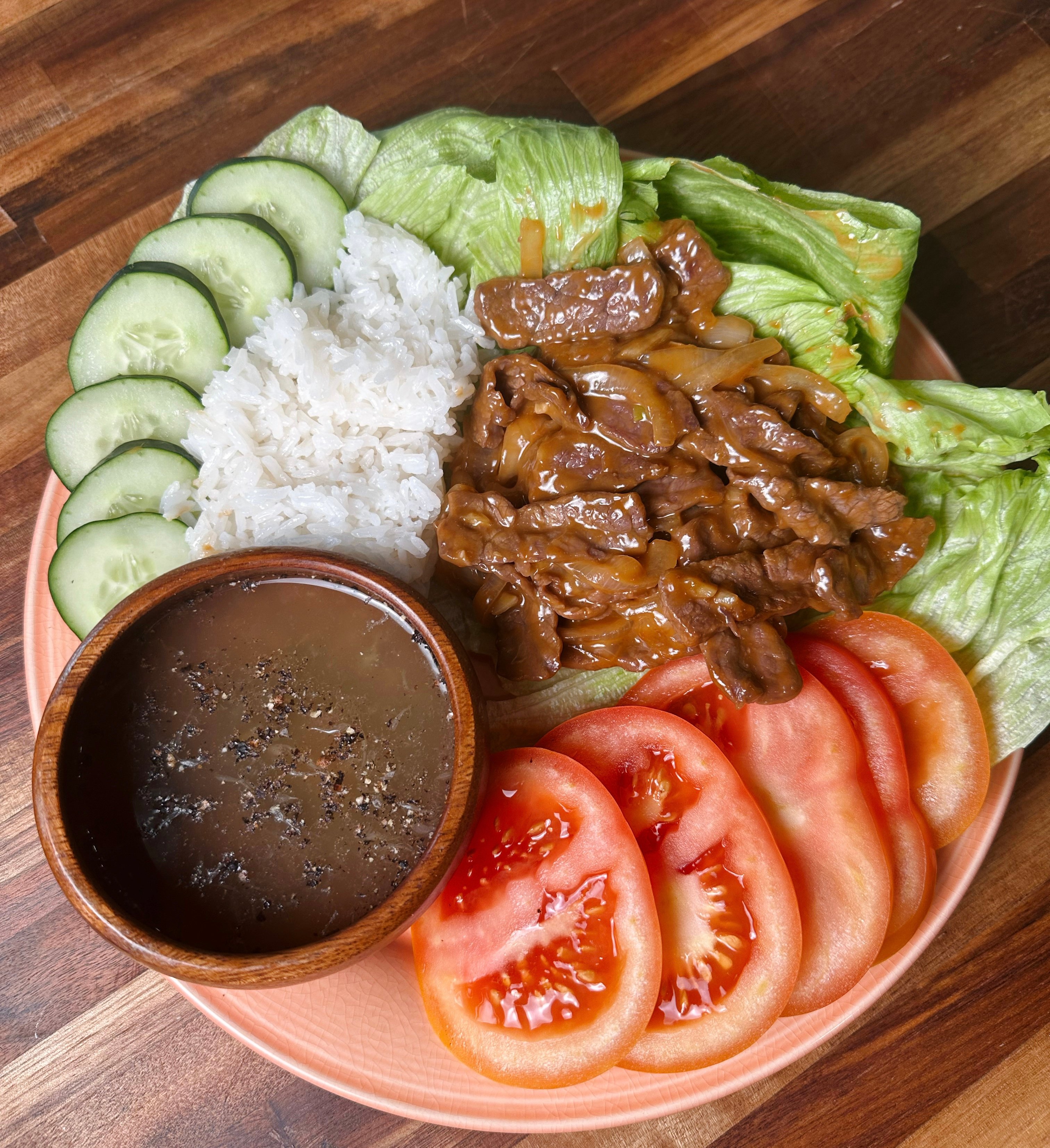
Beef Lok Lak
Ingredients
For the beef and marinade:
- 1 lb sirloin flank steak or beef tenderloin, thinly sliced against the grain into strips or cut into small cubes
- 2 tbsp oyster sauce
- 2 tbsp soy sauce
- 1 tsp fish sauce
- 1 tsp sugar
- 3 cloves garlic minced
- ½ tsp freshly ground black pepper
- 1 tsp cornstarch
- 2 tbsp neutral oil for frying
For the stir fry:
- 1 small white onion thinly sliced into rings
- 2 tbsp neutral oil
For the plate:
- 4 to 6 large lettuce leaves washed and dried
- 2 ripe tomatoes thickly sliced
- ½ cucumber sliced
- 2 cups steamed jasmine rice
- 2 fried eggs one per plate, optional but traditional
For the Kampot pepper dipping sauce:
- Juice of 2 fresh limes
- 1 tsp freshly ground black pepper coarsely ground — Kampot pepper if you can find it, standard black pepper if not
- ½ tsp sea salt or flaky salt
- Optional: small pinch of sugar to balance
Instructions
Marinate the beef
- Combine the oyster sauce, soy sauce, fish sauce, sugar, minced garlic, black pepper and cornstarch in a bowl. Add the beef and toss to coat thoroughly. Leave to marinate for at least 30 minutes in the fridge, or up to one hour. The longer the better. Do not skip the cornstarch — it creates the glossy coating that defines the dish.
Make the dipping sauce
- Combine the lime juice, coarsely ground black pepper and salt in a small bowl. Stir and taste. It should be sharp, salty, and intensely peppery with the lime cutting through everything. This sauce is not a garnish — it is the centrepiece of the dish. Set aside at room temperature.
Prepare the plates
- Lay the lettuce leaves across one side of each plate. Arrange the sliced tomatoes and cucumber alongside. Set the steamed rice in a mound on the other side. This is the traditional presentation and it matters.
Cook the beef
- Heat a wok or wide heavy pan over the highest heat your stove produces. Lok Lak requires genuinely high heat to sear rather than steam the meat. Add the oil and let it get smoking hot. Add the marinated beef in a single layer, do not crowd the pan, and leave it completely undisturbed for 30 to 45 seconds to develop a char on the bottom. Then toss aggressively for another 30 seconds. The name Lok Lak, derived from the Vietnamese bo luc lac, literally means shaking beef, and the shaking motion in the wok is the technique. Add the sliced onion rings and toss for a further 30 seconds. The total cooking time should be under 2 minutes. Remove from heat immediately.
Assemble
- Spoon the beef directly over the lettuce and tomatoes. If using a fried egg, place it on top of the beef. The fried egg is said to represent the sun in Cambodian tradition. Serve the dipping sauce in a small bowl alongside.
- To eat: the traditional method is to pick up a piece of beef wrapped in a lettuce leaf, dip the whole bundle in the lime pepper sauce, and eat it by hand. Then eat the rice and salad alongside, dousing everything in more of the dipping sauce.
Video
Notes
- Kampot pepper is worth seeking out if you want the authentic flavour. It has a mild, floral, aromatic quality that standard black pepper does not replicate. It is available online and the difference in the dipping sauce is significant. The Kampot pepper fields were almost entirely destroyed by the Khmer Rouge between 1975 and 1979 when they were converted to rice fields. The pepper’s recovery after 1979 is itself a small but meaningful piece of Cambodian food history.
- Do not overcook the beef. Lok Lak at its best is medium at most. Overcooked beef in this dish loses everything that makes it worth eating.
- The dipping sauce must be made fresh. It does not keep and it cannot be made in advance. Squeeze the limes immediately before serving.