There is a specific category of historical figure that Eats History was built for. Not just the powerful, not just the famous, but the ones whose lives are so improbable, so full of contradiction and sheer audacity, that when you find out they had a favourite dish, you immediately want to make it.
Josip Broz Tito is that figure. He was a peasant who became a marshal. A Cold War leader who refused to take sides. A man who kept six nations, three religions, two alphabets, and one extraordinarily complicated set of ethnic tensions together for 35 years through a combination of genuine charisma, political brilliance, and a willingness to imprison anyone who disagreed with him.
If you’re enjoying my recipes, check out my e-cookbooks at Eats History Shop!
His favourite dish was Zagorski Štrukli. A pulled dough filled with fresh cheese and sour cream, baked in cream until golden and puffed, from the exact region of Croatia where he was born. A peasant dish elevated to the table of a head of state. I made it. Here is what I found.
The Man: Josip Broz Tito
Josip Broz was born on May 7, 1892, in Kumrovec, a small village in the Zagorje region of northern Croatia, then part of the Austro-Hungarian Empire. He was the seventh of fifteen children born to a Croat father and a Slovene mother, a detail that would later prove quietly symbolic for the man who would spend his life insisting on the unity of peoples who often preferred to remain apart. His father was a blacksmith. Tito failed the first grade of school and left formal education entirely at age 13 to apprentice with a locksmith.
He spent his early adult years as a journeyman metalworker moving around Central Europe. He was conscripted into the Austro-Hungarian army in 1913, proved himself good enough with a sword to win a silver medal at a military fencing competition in 1914, and was sent to the Eastern Front at the outbreak of the First World War. In 1915 his unit was overrun by a Russian cavalry charge. He was wounded by a lance and left for dead, captured, and eventually sent to a labour camp in the Ural Mountains. He was 22 years old, barely literate, thousands of miles from home, and in a Russian prisoner of war camp. Most people in that situation do not go on to become one of the most consequential political figures of the 20th century. Tito did.
He witnessed the Russian Revolution of 1917 from the inside. He joined the Bolsheviks. He fought in the Russian Civil War. He returned to Yugoslavia in 1920 and spent the next two decades as a Communist organiser, enduring repeated arrests and a five-year prison sentence, surviving Stalin’s purges of the late 1930s when most of his contemporaries in the Yugoslav Communist Party were executed, and eventually emerging in 1939 as the party’s secretary-general. He adopted the pseudonym Tito sometime in the mid-1930s, one of many he had used in underground party work, and the name stuck.
World War II: The Partisan Leader
When the Axis powers invaded and partitioned Yugoslavia in April 1941, Tito formed the Yugoslav Partisans, a resistance movement that would become the most effective guerrilla force in occupied Europe. This is not a debatable claim. The Partisans tied down Axis divisions that were desperately needed elsewhere, liberated substantial Yugoslav territory through their own military efforts, and were the only resistance movement in occupied Europe to build a functioning parallel government while simultaneously fighting. Tito commanded them through a series of brutal Axis offensives designed specifically to destroy his headquarters and capture him personally.
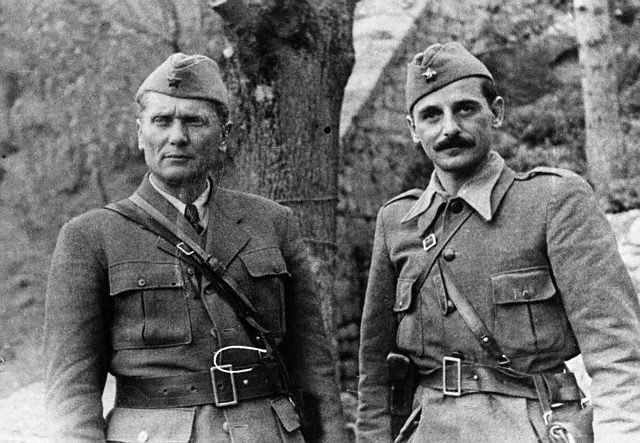
In 1943, after it became clear that the Partisans were the most militarily effective resistance force in Yugoslavia, Winston Churchill switched British support from the Serbian Royalist Chetniks to Tito. British liaison officers parachuted into his headquarters in the mountains of Bosnia. Churchill’s son Randolph was among them. The Allies recognised Tito as the legitimate leader of the Yugoslav resistance and the basis of whatever government would emerge after the war. In November 1943, Tito convened the Anti-Fascist Council of National Liberation of Yugoslavia in Jajce, declared it the legitimate government, and conferred upon himself the rank of Marshal of Yugoslavia.
By the end of the war Tito controlled Yugoslavia. The Red Army helped liberate Belgrade in October 1944 but, as had been agreed with Stalin, swung northward and left the final subjugation of the country to Tito’s own forces. This was critical. Unlike every other Eastern European country liberated by the Red Army, Yugoslavia had liberated itself. Tito owed Stalin nothing and had the military force and popular legitimacy to prove it.
The Cold War: The Man Who Said No to Stalin
In 1948, Stalin attempted to purge the Yugoslav Communist leadership and bring Yugoslavia into line as a Soviet satellite state. Tito refused. He expelled Soviet advisers, maintained control of the Yugoslav army and secret police, and sent Stalin a letter whose reported content has passed into Cold War legend: if Stalin did not stop sending agents to assassinate him, Tito would send one of his own to Moscow and he would not need to send a second. Whether the exact wording is accurate, the sentiment was genuine. Yugoslavia was expelled from the Cominform, the Soviet-sponsored organisation of European communist parties.
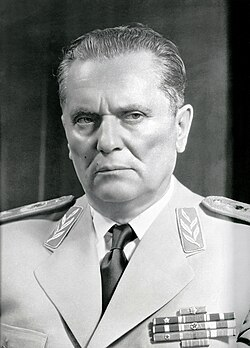
He was the first Communist leader in power to successfully defy Soviet hegemony. The precedent he set, that a communist state could pursue an independent path without being destroyed by Moscow, echoed through the Cold War for decades. He then did something even more extraordinary. Rather than simply align with the West, as the Americans hoped and expected, he refused that alignment too. He co-founded the Non-Aligned Movement in 1956 alongside India’s Nehru and Egypt’s Nasser, a coalition of nations that refused to take sides in the Cold War and insisted on an independent path for the developing world.
The result was that Yugoslavia in the 1960s and 1970s was unlike any other communist country in Europe. Yugoslavs could travel abroad. Western tourists flooded the Adriatic coast. Shops had goods that were unavailable anywhere else in the communist world. Yugoslav workers went to Germany and sent money home. The economy was not thriving but it was functioning in a way that made Yugoslavia genuinely different from the grey uniformity of the Soviet bloc.
Tito died in Ljubljana on May 4, 1980, three days before his 88th birthday. At his state funeral, representatives from 128 countries attended, including four kings, six princes, 31 presidents, 22 prime ministers, and 47 foreign ministers. It remains one of the most heavily attended state funerals in history. The six-nation federation he had held together by force of personality began coming apart within a decade. The wars of Yugoslav succession in the 1990s killed over 100,000 people and produced the first genocide on European soil since the Second World War.
What Tito Actually Ate
Given the extraordinary glamour of his public life, Tito’s eating habits were surprisingly modest. His last butler, Joze Oseli, documented them in detail in his memoir. Tito started each day with a short espresso without sugar. He liked beef, preferring it on the bone. He was particularly fond of the cuisine of Zagorje, the region of his birth. He drank Chivas Regal whisky and smoked Havana cigars. When North Korea gave him ginseng tea as a diplomatic gift he began drinking it nightly. He reportedly tried to hide his fondness for milk from Hitler during their wartime period of nominal alliance on the grounds that it seemed insufficiently fascist.
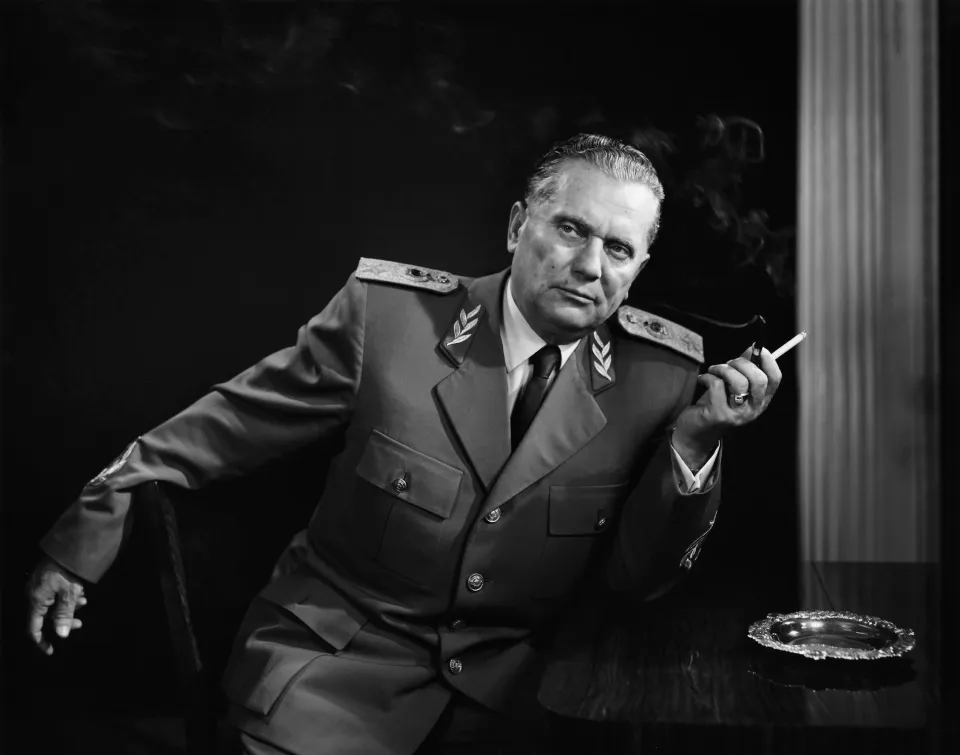
His personal cookbook, compiled by Anja Drulović and published in Belgrade in 2006, documents the menus from state dinners with the world’s most powerful figures alongside his personal favourites. Among them, consistently, is Zagorski Štrukli. The dish of his childhood. The dish of the Zagorje farmhouses where he grew up. A dish that had nothing to do with international diplomacy or Cold War maneuvering and everything to do with a peasant boy from a village in northern Croatia who happened to become one of the most consequential figures of the 20th century.
Why I Made Štrukli
Zagorski Štrukli is Croatian intangible cultural heritage, protected by the Ministry of Culture since 2007 and awarded EU Protected Geographical Indication status in 2022. Its earliest written documentation dates to 19th century Croatian literature. It has been made continuously in the farmhouses of Zagorje for at least two centuries and almost certainly much longer.
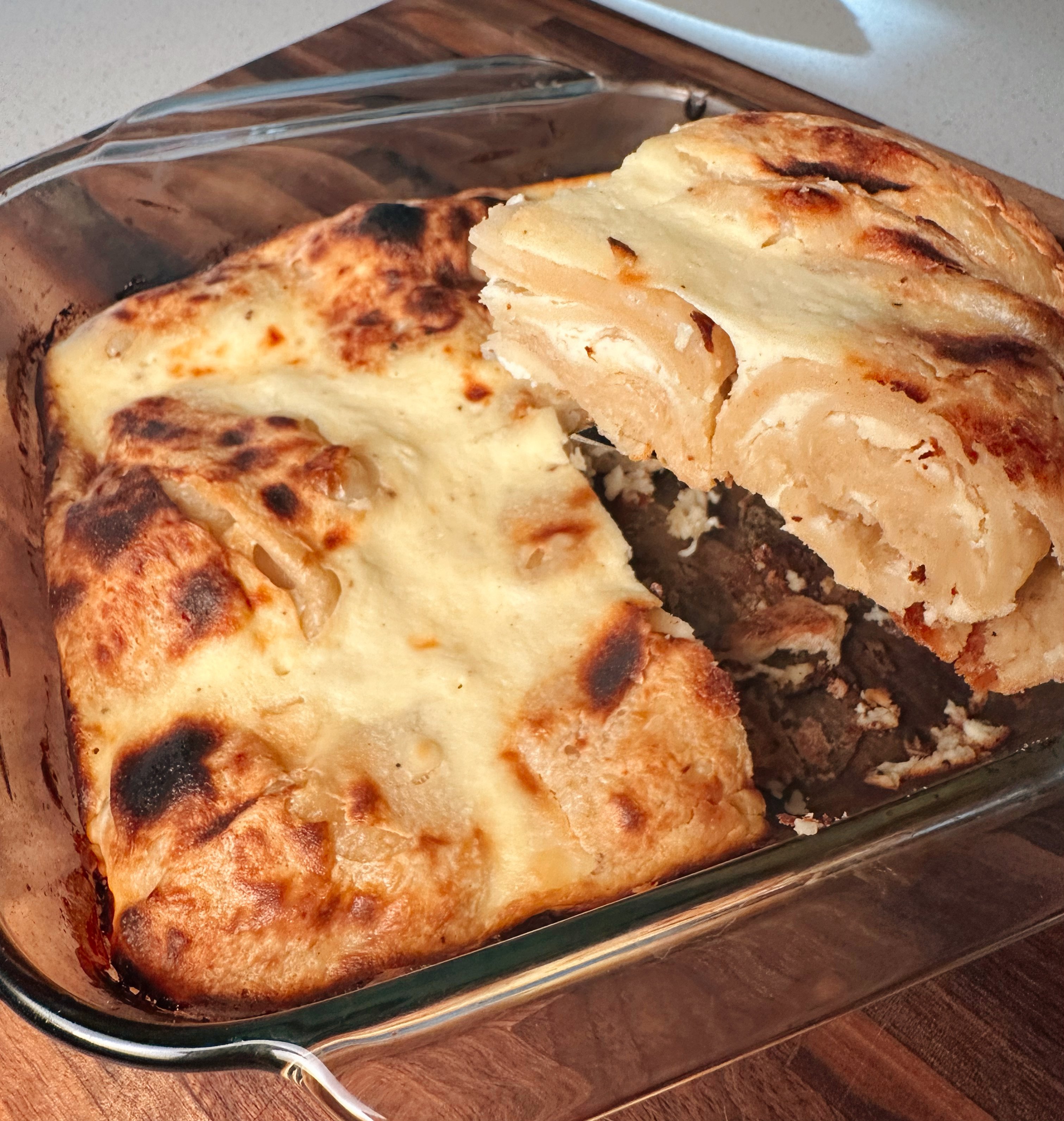
It represents something specific and important in food history: the peasant dish that survived the rise of its most famous champion to the tables of power and came back to the farmhouse table unchanged. Tito moved from a Zagorje village to a Topkapı-level existence of state dinners and diplomatic yachts and celebrity guests. He still wanted Štrukli. There is something deeply human in that and it is exactly the kind of food history moment that this channel was built to find.
It is also, practically speaking, one of the most beautiful things to pull out of an oven. Puffed and golden and smelling of butter and cream, with the cheese filling still hot and yielding inside. Pure Central European comfort food at its finest.
My Rating
Zagorski Štrukli is deeply, genuinely good. The pulled dough is satisfying to make, the filling is rich and creamy and savoury, and the baked cream topping produces a result that sits somewhere between a custard and a gratin in the best possible way. It is comforting in exactly the way that food from cold mountain regions with long winters should be comforting. It is rich, filling, and completely unpretentious.
My honest thought on eating it is that a sweet version would be even better. The savory version is excellent but the dough and the cheese filling have a natural affinity with sweetness that the savoury preparation does not fully exploit. A version with a little sugar in the filling, perhaps some vanilla, and a handful of cherries or plums incorporated into the filling before rolling would be extraordinary. The Zagorje tradition does include sweet štrukli and I think it would score higher for me personally. The savoury version as made here is an 8.1 out of 10. The sweet version I am imagining is probably pushing a 9.
My Rating: 8.1 / 10
The Recipe: Zagorski Štrukli (Baked)
Zagorski Štrukli (Baked)
Ingredients
For the dough:
- 2 cups plain flour
- 1 egg
- ½ tsp salt
- 1 tbsp neutral oil plus more for coating
- ½ to ⅔ cup warm water added gradually
- 1 tsp white wine vinegar helps the gluten relax for stretching
For the filling:
- 2 cups fresh cottage cheese or ricotta well drained
- 2 eggs
- ½ cup sour cream
- ½ tsp salt
- Pinch of black pepper
For the topping:
- 1 cup sour cream
- 2 eggs
- Pinch of salt
- 2 tbsp unsalted butter cut into small cubes
Instructions
Make the dough
- Combine flour and salt in a large bowl. Make a well in the centre and add the egg, oil, vinegar and warm water gradually, mixing as you go. Knead for 8 to 10 minutes until very smooth, soft and elastic. The dough should not stick to your hands. Coat the surface with oil, cover with a clean cloth and rest for 30 minutes at room temperature. This rest is essential — it relaxes the gluten enough to allow the dough to be stretched paper thin without tearing.
Make the filling
- Combine the drained cottage cheese, eggs, sour cream, salt and pepper in a bowl. Mix until smooth. Set aside.
Stretch and fill
- This is the most important and most rewarding step. Lay a clean tablecloth or large piece of parchment on your table and dust generously with flour. Place the rested dough in the centre and roll it out with a rolling pin as thin as you can. Then, using the backs of your hands and your fingertips, begin stretching it from the centre outward, working around the dough slowly. The goal is to stretch it until it is almost translucent, thin enough to read through. If it tears slightly do not panic — you will be rolling it up and the tears will disappear inside. Traditional Zagorje housewives stretched štrukli dough so thin you could read a newspaper through it.
- Once stretched to roughly 60x40cm (about 24×16 inches), spread the cheese filling evenly over the surface, leaving a small border around the edges.
- Using the tablecloth to help you, roll the dough from the long side into a tight log like a strudel. Seal the edges by pressing firmly. Cut the log into pieces about 10cm (4 inches) long.
Bake
- Preheat oven to 400°F. Butter a large baking dish generously. Arrange the štrukli pieces cut side up in the dish with a little space between each one and brush each with melted butter.
- Whisk together the sour cream, eggs and a pinch of salt and pour over the štrukli, making sure each piece is coated. Dot the tops with the small cubes of butter.
- Bake for 35 to 40 minutes until puffed, deeply golden on top and the cream has set into a light custard around each piece. The tops should be genuinely golden brown, not pale.
- Serve immediately, straight from the baking dish. Štrukli must be eaten hot. They do not improve with reheating.
Video
Notes
- The vinegar in the dough is traditional and important. It helps the gluten relax without affecting the flavour, which is what allows the dough to be stretched to translucency without tearing.
- Use the best fresh cottage cheese you can find and drain it overnight if it seems wet. In Croatia the traditional cheese is svježi sir, a fresh curd cheese with more body than standard supermarket cottage cheese. Well-drained ricotta is an excellent substitute.
- A note on the sweet version: If you want to try the sweet štrukli that I think takes this dish to another level, add 2 tablespoons of sugar and ½ teaspoon of vanilla to the cheese filling, and fold a handful of pitted cherries or sliced plums into the filling before spreading. Everything else stays the same.