There is a specific table at Patsy’s Italian Restaurant on West 56th Street in Manhattan that has not changed since the 1940s. Table number upstairs, reserved, always the same. Frank Sinatra sat there more times than anyone has counted. He came after performances at Carnegie Hall. He came when he was lonely. He came on Thanksgiving in the early 1950s when his career was in freefall and he had nowhere else to go, and founder Pasquale Scognamillo opened the restaurant on a holiday, gathered his family and staff, and made sure Frank did not sit alone. Sinatra ate at Patsy’s over a thousand times across five decades. He had food flown from their kitchen to concert venues in other cities. He begged Patsy to open a second location in Miami Beach and was refused every time.

The meal almost always ended the same way. Veal Milanese, arugula salad alongside, Jack Daniel’s throughout, and for dessert, the lemon ricotta torte. A cake made from three pounds of whole-milk ricotta with lemon juice, lemon zest, eggs and butter, baked slowly on the bottom rack of the oven until set. Light enough to finish after a full Italian dinner. Rich enough to be worth finishing. Sinatra never skipped it.
I made it. It reminded me completely of a lemon cheesecake, and that is not a criticism. It is one of the better things I have made for this channel.
The Restaurant That Frank Sinatra Made Famous
Patsy’s opened in 1944, founded by Pasquale Scognamillo, a Neapolitan immigrant who had shortened his name to Patsy at Ellis Island in 1923. The restaurant has had exactly three chefs in its entire history: Patsy himself, his son Joe, and Joe’s son Sal, who has run the kitchen since 1985 and published the Patsy’s Cookbook in 2002 with a foreword written by Nancy Sinatra. That foreword is worth noting as a primary source. Nancy Sinatra confirming her father’s relationship with the restaurant and his favourite dishes in the official cookbook is the most direct possible documentation of what Sinatra actually ate there.
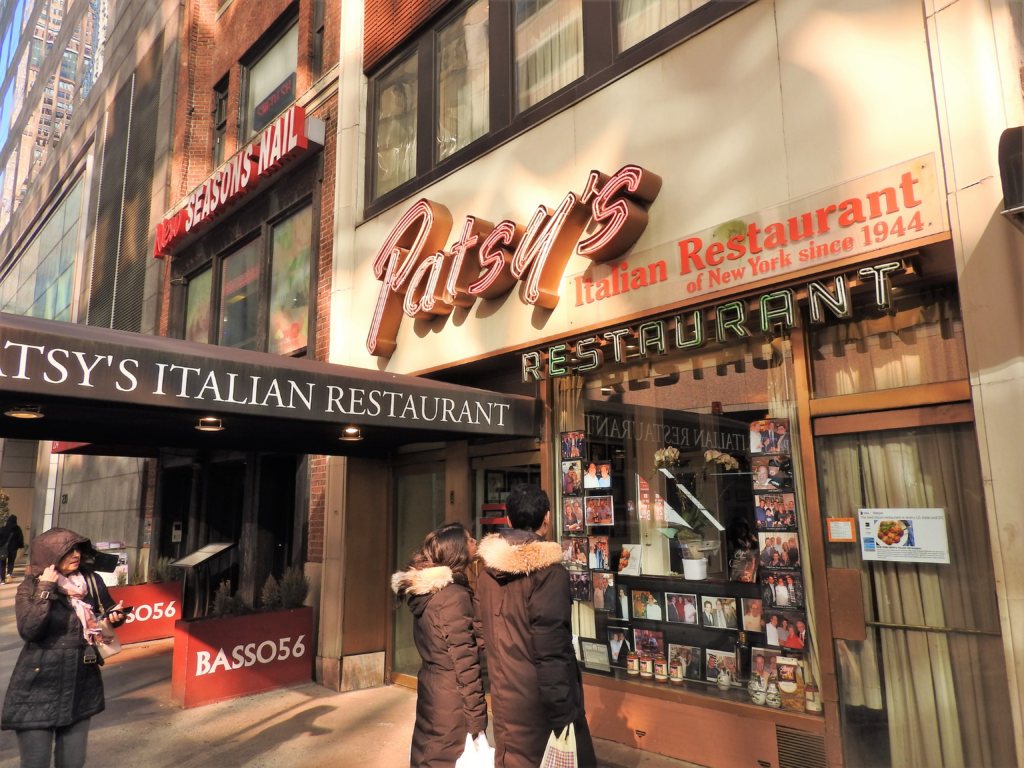
Sinatra first met Patsy in 1942, two years before the restaurant officially opened, and the friendship that followed lasted the rest of both their lives. The Thanksgiving story is the one that defines the relationship. In the early 1950s Sinatra’s career was in genuine trouble. His recording contract with Columbia had been dropped. His film career had stalled. His marriage to Ava Gardner was collapsing publicly and painfully. He found himself alone on Thanksgiving with nowhere to go. Patsy heard about it, opened his closed restaurant, gathered his family and workers on a day’s notice, and made sure his friend had a table full of people around him. Sinatra never forgot it. He spent the next four decades sending everyone he knew to Patsy’s and making the restaurant one of the most famous Italian tables in New York.
The lemon ricotta torte appears in both the 2002 Patsy’s Cookbook and the 2015 Patsy’s Italian Family Cookbook as a documented house dessert. It is also among the dishes served at Patsy’s annual December 12 commemorative dinner honouring Sinatra’s birthday alongside the veal Milanese, stuffed artichokes and clams Posillipo. That the restaurant still serves it specifically to honour Sinatra on his birthday every year is the clearest possible signal of how closely associated the dish was with him personally.
The Torte: What It Is and Why It Worked for Sinatra
The lemon ricotta torte sits in a specific culinary category that does not have a clean English name. It is not quite a cheesecake, though it behaves like one. It is not quite a tart, though it is baked in a pan. It is not quite a flourless cake, though the flour content is minimal. It is a specifically Italian-American preparation that sits between all of those things and belongs entirely to the southern Italian immigrant cooking tradition that produced the Neapolitan cuisine Patsy’s was built on.
Ricotta cakes have been made in southern Italy and Sicily for centuries. The combination of fresh sheep or cow’s milk ricotta with sugar, eggs and citrus is documented in Sicilian and Neapolitan baking going back to at least the medieval period and forms the basis of pastiera napoletana, the Easter cake of Naples, and cassata siciliana among other preparations. When southern Italian immigrants came to New York in the late 19th and early 20th centuries they brought those traditions with them, adapting them to American ingredients and American kitchens. The lemon ricotta torte at Patsy’s is the direct descendant of that tradition. It is Neapolitan home baking refined for a New York restaurant table.
For Sinatra specifically the appeal makes complete sense. His parents were both Italian immigrants, his father from Sicily, his mother from Genoa. He grew up in Hoboken, New Jersey surrounded by Italian-American food culture and ate Italian food for the rest of his life. The ricotta torte was not an exotic restaurant discovery for him. It was a version of something he had been eating since childhood, made better than anywhere else by a family that had been making it the same way for three generations.
My Rating and Honest Assessment
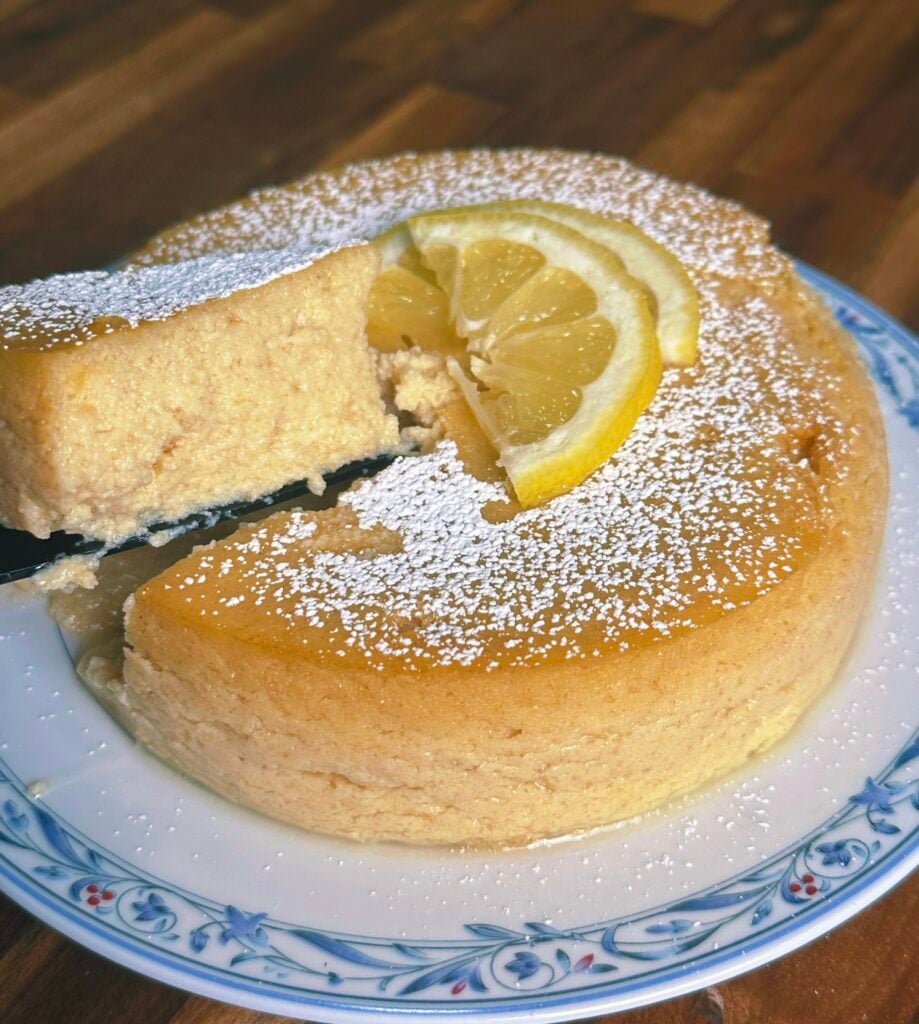
The closest modern comparison is a lemon cheesecake and that is not meant as a diminishment. If you enjoy lemon cheesecake, this is a version of that experience made with ricotta instead of cream cheese, which produces a lighter, slightly grainier texture and a cleaner, less cloying sweetness. The lemon is genuinely present throughout rather than being a background note. The ricotta keeps it from being heavy in the way that a dense cream cheese cheesecake can be.
The bottom rack instruction from the Patsy’s recipe matters more than you might expect. Baking it on the bottom rack produces a gently set, evenly baked result without the aggressively browned top you sometimes get from a cheesecake. The texture when cold is dense and creamy and holds its slice cleanly. It is better on day two than on day one, which is the mark of a good ricotta cake.
I made this scaled to a 7-inch pan rather than the full Patsy’s 10-inch version and the proportions worked well. It is a generous dessert for four people or a light dessert for six.
Rating: 8.6 / 10
The Recipe: Frank Sinatra’s Lemon Ricotta Torte
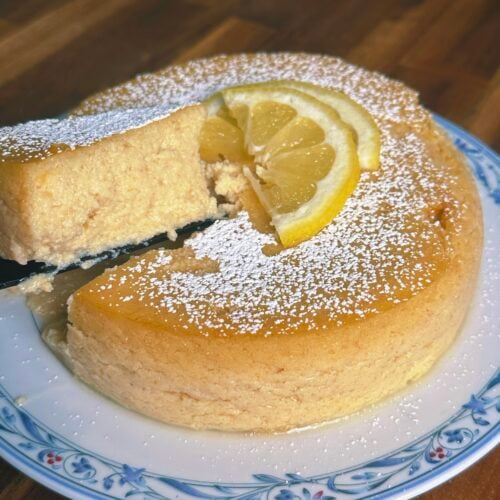
Frank Sinatra’s Favorite Lemon Ricotta Torte
Ingredients
- 2 cups whole-milk ricotta — drain overnight in a cheesecloth-lined strainer in the fridge if your ricotta seems wet or loose. Excess moisture will prevent the torte from setting cleanly
- ½ cup sugar
- 2 large eggs
- 1½ tbsp unsalted butter softened
- 1½ tbsp plain flour
- Juice of 1 lemon freshly squeezed
- Zest of 1 lemon finely grated
- ½ tsp vanilla extract
- Pinch of salt
- Butter and flour for the pan
Instructions
Prepare the pan
- Preheat your oven to 325°F. Butter a 7-inch springform pan generously and dust with flour, tapping out the excess. If using a fixed pan, line the bottom with a circle of parchment and butter the sides very generously. A springform is strongly preferred here as getting a ricotta torte out of a fixed pan cleanly is difficult.
Make the batter
- Beat the softened butter and sugar together in a large bowl until combined and slightly lightened. Add the eggs one at a time, beating well after each. Add the ricotta and beat until completely smooth with no lumps remaining. If your ricotta is grainy pass it through a fine mesh strainer before adding. The texture of the finished torte depends entirely on the smoothness of the ricotta at this stage.
- Add the flour, lemon juice, lemon zest, vanilla and salt. Mix until everything is fully incorporated and the batter is smooth and pourable.
Bake
- Pour the batter into the prepared pan. Fill no more than ¾ full. Place the pan on the bottom rack of the oven. This is the documented Patsy’s instruction and produces a gently, evenly set torte without aggressively browning the top. Place a small baking sheet on the rack below to catch any overflow.
- Bake for 45 to 55 minutes. The top should be set and very lightly golden. The centre may have a very slight wobble when you nudge the pan gently. That is correct and it will firm as it cools. Do not overbake. A dry ricotta torte is a disappointing ricotta torte.
Cool and chill
- Remove from the oven and allow to cool completely at room temperature before touching the springform latch. Once fully cooled, refrigerate for a minimum of 3 hours. Overnight is better. The torte must be served cold. The texture when cold is completely different from when warm, firmer, creamier and more sliceable.
- Run a thin knife carefully around the edge of the pan before releasing the springform. Serve in slices. Dust with a little powdered sugar before serving if you want a cleaner presentation.
Notes
- Do not substitute part-skim ricotta. The whole-milk ricotta is what produces the rich, creamy density. Part-skim produces a drier, slightly grainier result.
- The overnight drain is essential if your ricotta is at all wet. Place it in a cheesecloth-lined fine mesh strainer set over a bowl and refrigerate overnight. You will be surprised how much liquid drains off even from ricotta that looks dry in the container.
- This torte keeps well for three days refrigerated and is genuinely better on day two as the lemon flavour intensifies and the texture settles.