Abraham Lincoln ate dinner on the evening of April 14, 1865, at the White House with his wife Mary. The Civil War was effectively over. General Lee had surrendered to Grant at Appomattox just five days earlier. Lincoln was in better spirits than he had been in years, buoyant and relieved in ways that everyone around him remarked upon.
He ate, he laughed, he read from a humorous book aloud to friends, and then he put on his coat and went to Ford’s Theatre to see a comedy called Our American Cousin. He was shot at approximately 10:15 that night during the third act. He never regained consciousness. He died the following morning at 7:22 AM on April 15, 1865, at the age of 56.
I made his last meal. It is an 8.5 out of 10 and genuinely one of the more moving food history recreations I have done for this channel.
The Source: How We Know What Lincoln Ate
Before going any further, full transparency on the sourcing is important, because this is a channel that takes historical accuracy seriously and the sourcing for Lincoln’s last meal is more complicated than most people expect.
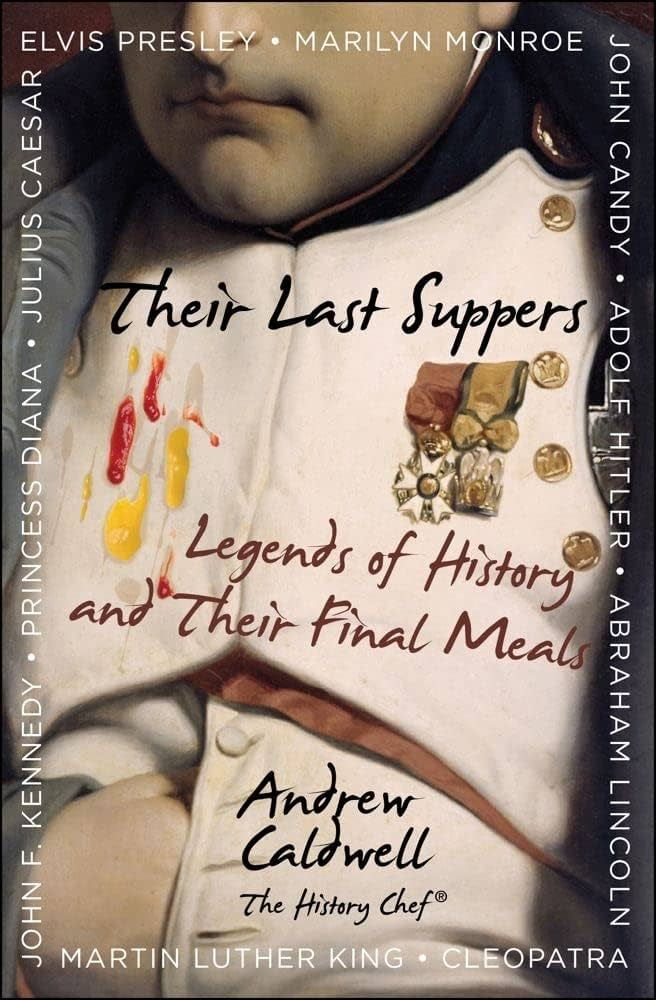
The specific menu that is most widely cited, mock turtle soup, roast Virginia fowl with chestnut stuffing, baked yams and cauliflower with cheese sauce, comes primarily from Andrew Caldwell’s book Their Last Suppers: Legends of History and Their Final Meals. It is the most detailed and most consistently cited account of what was served at the White House that evening. However it is important to note that Caldwell’s book is a popular history work rather than a rigorous primary source document, and the meal he describes has not been independently verified against a White House kitchen record or a contemporaneous account from a household staff member who was present.
What is independently documented is the context of the meal. Lincoln and Mary dined essentially alone at the White House on the evening of April 14, with Lincoln already running late for the theatre. His law partner William Herndon and his White House staff both documented that Lincoln was a notoriously abstemious eater who barely paid attention to food under normal circumstances. His private secretary John Hay wrote that Lincoln was one of the most abstemious of men and that the pleasures of the table had few attractions for him. A typical Lincoln breakfast was coffee and a single egg. He frequently forgot to eat entirely when absorbed in work and had to be reminded by staff. On campaign he had eaten hardtack and whatever the army had available without complaint or apparent interest.
The menu attributed to his last dinner is therefore considerably more formal and elaborate than Lincoln’s documented personal preferences would suggest. It reads more like a standard White House dinner menu appropriate for the occasion than like a meal Lincoln would have specifically requested for himself. I am making the three most recreatable dishes from the Caldwell menu, the roast chicken with chestnut stuffing, the baked yam and the cauliflower with cheese sauce, and being transparent about the sourcing throughout. The historical interest of the meal does not depend on the menu being definitively verified. It depends on the context. And the context is extraordinarily well documented.
Abraham Lincoln: A Man Who Did Not Care About Food
To understand the significance of Lincoln’s last meal it helps to understand his relationship with food across his entire life, which was one of the more unusual documented relationships between a major historical figure and the act of eating.
Lincoln grew up in genuine poverty on the Kentucky and Indiana frontier. His mother Nancy died when he was nine. His family subsisted on whatever the land and the hunt could provide. Cornbread, salt pork, whatever game Lincoln’s father Thomas could shoot, whatever vegetables they could grow in the thin frontier soil. Lincoln was tall and extraordinarily thin throughout his life, 6 feet 4 inches and rarely more than 180 pounds despite his height, and contemporaries frequently commented on how little he seemed to eat and how rarely food seemed to give him visible pleasure.
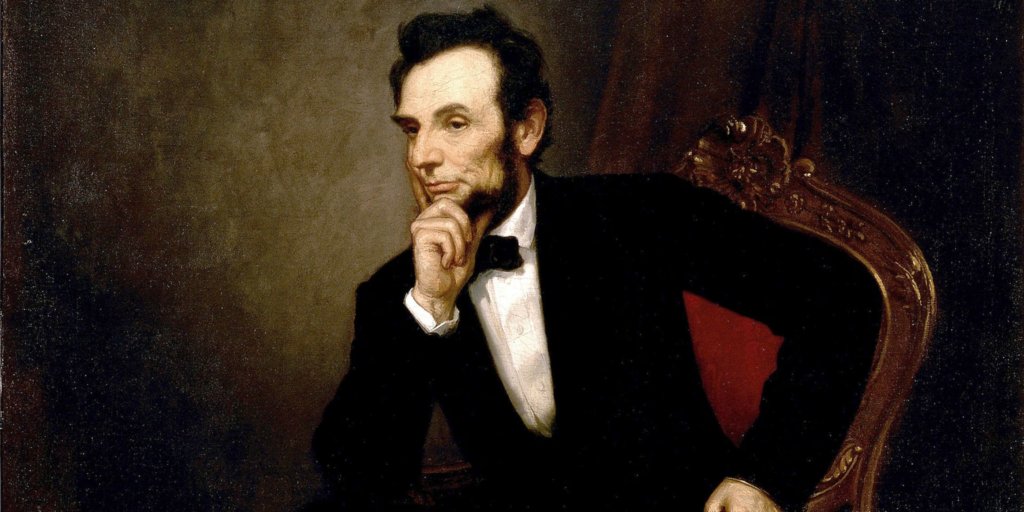
His preferred food, documented consistently by the people who knew him best, was corn, milk corn soup and gingerbread. Simple, humble frontier food. The food of his childhood. His law partner Herndon documented that Lincoln could go entire days absorbed in a legal case or a speech without eating at all and seem to feel no particular inconvenience from it. Mary Lincoln, by contrast, ran the White House kitchen with considerable attention to detail and hosted state dinners that were documented as lavish and well-considered. The tension between Mary’s elaborate entertaining instincts and Lincoln’s complete personal indifference to food is one of the more quietly amusing domestic details of the Lincoln presidency.
At the White House Lincoln’s weight became a source of concern to his staff and his physician. The war years were visibly consuming him. The photographs of Lincoln from 1861 and those from 1865 show a man who aged thirty years in four. He ate irregularly, slept poorly and worked continuously. Mary and the household staff made sustained efforts to get food in front of him at regular intervals because left to his own devices he would simply forget.
The evening of April 14, 1865 was therefore notable in part because Lincoln was in unusually good spirits and apparently willing to sit down for a proper dinner. The relief of Lee’s surrender, the sense that the war was finally concluding, had lifted something from him that had been pressing down for four years. He was in a good enough mood to eat dinner like a human being rather than a man who had forgotten that meals existed. Within two hours of sitting down at that table he was in a box at Ford’s Theatre.
The Final Hours: April 14, 1865
The day of April 14, 1865 is one of the most thoroughly documented days in American presidential history. Lincoln rose early, as was his habit, and told Mary over breakfast that he had dreamed the previous night of a ship sailing rapidly toward a dark and indefinite shore. He had had this dream before, he told her, before several significant events of the war. He took it as a good omen.
He spent the morning in meetings, including a Cabinet meeting at which General Grant was present. At the Cabinet meeting Lincoln was notably cheerful and expansive. Secretary of War Edwin Stanton, who had been trying for weeks to persuade Lincoln to cancel or reduce his public appearances on security grounds, made another attempt that morning. Lincoln declined. He had promised Mary they would go to the theatre and he did not like to disappoint her.
The afternoon brought more meetings, more correspondence, and a stream of visitors seeking appointments, pardons and positions. Lincoln moved through them all with the particular combination of patience, self-deprecating humour and quiet firmness that characterised his presidency. He received a request from an old friend for a government appointment and wrote a note supporting it. He met with some old Illinois acquaintances. He discussed reconstruction policy with Congressional leaders.
Dinner was served at the White House in the early evening. Lincoln and Mary ate together, largely alone, in the family dining room. Lincoln was already late for the theatre by the time dinner was finished. He read aloud from a book of humorous writings by the American humorist David Ross Locke, who wrote under the name Petroleum V. Nasby, and laughed so much that he read passages again to anyone who would listen. He was reluctant to stop. He was in a genuinely good mood for the first time in years and the prospect of sitting in a darkened theatre watching a comedy he had already been told the plot of was not as appealing as reading aloud to friends.
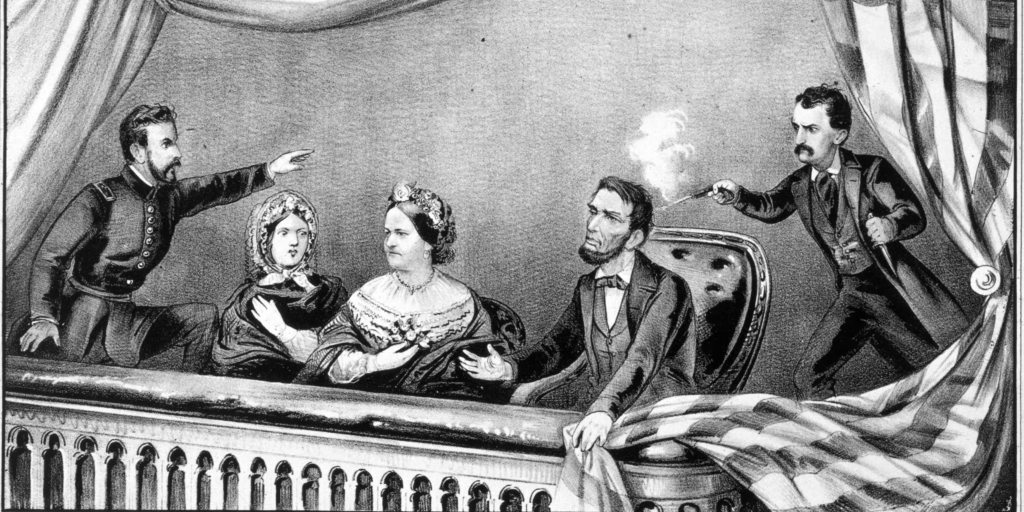
He and Mary left the White House by carriage at approximately 8:00 PM, stopping to pick up their guests Major Henry Rathbone and his fiancée Clara Harris. They arrived at Ford’s Theatre late, during the first act. The audience gave the President a standing ovation. Lincoln bowed and took his seat in the presidential box. He was shot by John Wilkes Booth at 10:15 PM during the third act while laughing at something in the play. He was carried across the street to the Petersen House, a boarding house, where he was laid on a bed too short for his extraordinary height and never regained consciousness.
Secretary of War Stanton, who had been trying to prevent Lincoln from attending public events for weeks, stood at the bedside of the dying president and said when Lincoln finally died at 7:22 AM: now he belongs to the ages.
The Meal: Uncharacteristically Lincoln
The menu that Caldwell attributes to Lincoln’s last dinner is worth examining against Lincoln’s documented personal food preferences because the contrast is striking. Roast Virginia fowl with chestnut stuffing is an elaborate preparation requiring significant kitchen labour. Mock turtle soup is a formal, time-intensive preparation traditionally served at the highest level of American dinner-party cuisine in the 1860s. Cauliflower with cheese sauce and baked yams are more modest and closer to Lincoln’s documented preferences for simple, filling food without much ceremony.
The honest interpretation is probably that the White House kitchen prepared a standard formal dinner appropriate to a Good Friday evening, and that Lincoln ate it with the same mild indifference he brought to most meals. The reconstruction, whether or not every dish is perfectly documented, gives us something historically authentic in its general character. A formal White House dinner in 1865, prepared by kitchen staff working from the Virginia-influenced Southern cooking tradition that dominated Washington DC dining, served to a man who was in unusually good spirits and probably barely noticed what was on the plate.
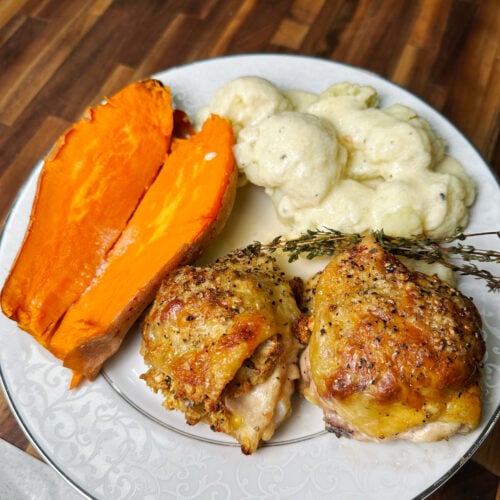
I made three dishes from the attributed menu. The chicken with chestnut stuffing because it represents the roast fowl that is the most consistently cited centrepiece of the meal. The baked yam because it is the dish most consistent with Lincoln’s documented preference for simple, filling food and with the White House kitchen’s documented reliance on Virginia-style cooking. The cauliflower with cheese sauce because it represents the kind of English-influenced side dish that appeared on formal American tables throughout the mid-19th century.
Eaten together they are a genuinely excellent meal. The chestnut stuffing under the crispy chicken skin is extraordinary. The baked yam with butter is exactly as good as it sounds and as simple as Lincoln would have preferred. The cauliflower cheese is rich and warming and the kind of dish that makes complete sense at a formal dinner in April in Washington DC. It is a well-constructed, well-flavoured meal. I rated it 8.5 out of 10 and would make it again without hesitation.
What stays with me is not the rating. It is the knowledge of what happened two hours after this food was eaten. A man in the best mood he had been in for four years, laughing at a book of humorous writing, finally allowing himself to feel that something terrible might be ending, sat down to dinner and then went to the theatre. The meal is ordinary. The context is not.
Rating: 8.5 / 10
The Recipes: Abraham Lincoln’s Last Dinner
Abraham Lincoln’s Last Dinner
Ingredients
For the chicken:
- 2 bone-in skin-on chicken thighs
- 1 tbsp butter softened
- Salt and black pepper
- Fresh thyme
For the chestnut stuffing:
- ¼ cup cooked chestnuts roughly chopped
- ½ cup fresh white breadcrumbs
- ¼ small onion finely chopped and softened in butter
- 1 tsp butter
- 1 small egg beaten
- Pinch of dried sage
- Pinch of dried thyme
- Salt and black pepper
- 1 tbsp chicken stock to moisten
For the baked yam:
- 1 medium sweet potato or yam
- Butter to serve a generous knob
- Salt
For the cauliflower with cheese sauce:
- ½ small head cauliflower broken into florets
- 1 tbsp butter
- 1 tbsp plain flour
- ¾ cup whole milk
- ½ cup sharp cheddar grated
- ¼ tsp dry mustard
- Salt and white pepper
- Pinch of ground mace
Instructions
Start the yam first
- Preheat oven to 400°F. Scrub the sweet potato thoroughly and prick the skin all over with a fork at least 8 to 10 times. Place directly on the upper oven rack without any wrapping or foil. Bake for 45 to 55 minutes until completely tender when pierced with a knife and the skin is slightly caramelised. Once done, cut open immediately, add a generous knob of butter and a pinch of salt and serve in the skin.
Make the stuffing and prepare the chicken
- While the yam bakes, make the chestnut stuffing. Combine the chopped chestnuts, fresh white breadcrumbs, softened onion, butter, beaten egg, sage, thyme, salt and pepper in a bowl. Add the chicken stock and mix until the stuffing just holds together when pressed. It should be moist but not wet.
- Loosen the skin on each chicken thigh by running your finger carefully underneath it from the wide end without tearing. Push a generous spoonful of stuffing into the pocket under the skin of each thigh, pressing it flat so it covers the meat evenly. Press the skin back down firmly.
- Rub the outside of each thigh generously with softened butter. Season with salt, black pepper and fresh thyme. Place in a small baking dish or cast iron pan.
Roast the chicken
- Approximately 10 minutes after putting the yam in, reduce the oven to 375°F and place the chicken on the lower rack. Roast for 35 to 40 minutes until the skin is deeply golden and completely crispy and the juices run clear when the thickest part is pierced. Rest for 5 minutes before serving.
Make the cauliflower and cheese sauce
- In the final 20 minutes while the chicken finishes, bring a pot of well-salted water to a rolling boil. Add the cauliflower florets and boil for 5 to 7 minutes until just tender. Drain well and transfer to a small baking dish.
- In a small heavy saucepan melt the butter over medium heat until foaming. Add the flour and stir continuously for one minute. Reduce heat to medium low. Add the milk a small amount at a time, whisking vigorously after each addition until completely smooth before adding more. Once all the milk is incorporated, increase heat to medium and simmer gently for 4 to 5 minutes stirring regularly until the sauce coats the back of a spoon.
- Remove from heat. Add the grated cheddar, dry mustard, salt, white pepper and mace. Stir until the cheese is completely melted and the sauce is glossy and smooth. Pour evenly over the cauliflower florets. Serve immediately or place under a hot broiler for 3 to 5 minutes until the top is bubbling and lightly golden.
Serve everything together
- The yam, chicken and cauliflower cheese should all be ready within 5 minutes of each other. Serve the chicken thighs from the baking dish, the yam in its skin on the plate alongside, and the cauliflower cheese directly from its baking dish.
Video
Notes
- The baked yam is the dish most consistent with Lincoln’s documented personal food preferences. Sweet potatoes and yams were a staple of Virginia-influenced Washington DC cooking in the 1860s and represent the kind of plain, filling food Lincoln actually chose when left to his own devices.
- The mace in the cheese sauce is not optional if you are aiming for historical accuracy. Ground mace was a standard seasoning in mid-19th century American white sauces and cheese sauces and its absence produces a flatter, more modern-tasting sauce. It is available in the spice section of most supermarkets.
- The timing note for cooking everything simultaneously: start the yam first as it takes the longest. Put the chicken in 10 minutes after the yam. Make the cheese sauce and boil the cauliflower in the final 20 minutes while the chicken finishes. Everything comes out within 5 minutes of each other.