“An army marches on its stomach” – Napoleon Bonaparte
There is a reasonable argument that World War II was won as much in the supply chain as on the battlefield. The Allied powers did not simply outfight the Axis. They out-fed them, out-supplied them, and out-produced them on a scale that German and Japanese military planners had not fully anticipated. Understanding what an American soldier actually ate day to day tells you something real about how that war was fought and won.
I made a representative meal this week. Spam and eggs. SOS on toast. Canned peaches. M&Ms. Instant coffee. It is not the most nutritious spread in the world by modern standards, but to a hungry soldier burning thousands of calories a day in combat conditions, it gets the job done and is genuinely tasty. I rated it 7.4 out of 10. Here is the full story behind every component on that plate.
Why Food Won the War: The Logistics Behind the Front Line
The scale of American food production and distribution during World War II is one of the most underappreciated achievements of the entire conflict. Frozen orange juice concentrate by the precursor company to Minute Maid began using equipment originally built to develop penicillin during the war, and another staple of the K-ration, the fruit bar, became the precursor for granola and energy bars found in stores today. The American military was not simply feeding soldiers. It was running a continuous research and development operation that reshaped the entire food industry, the effects of which are still on supermarket shelves today.
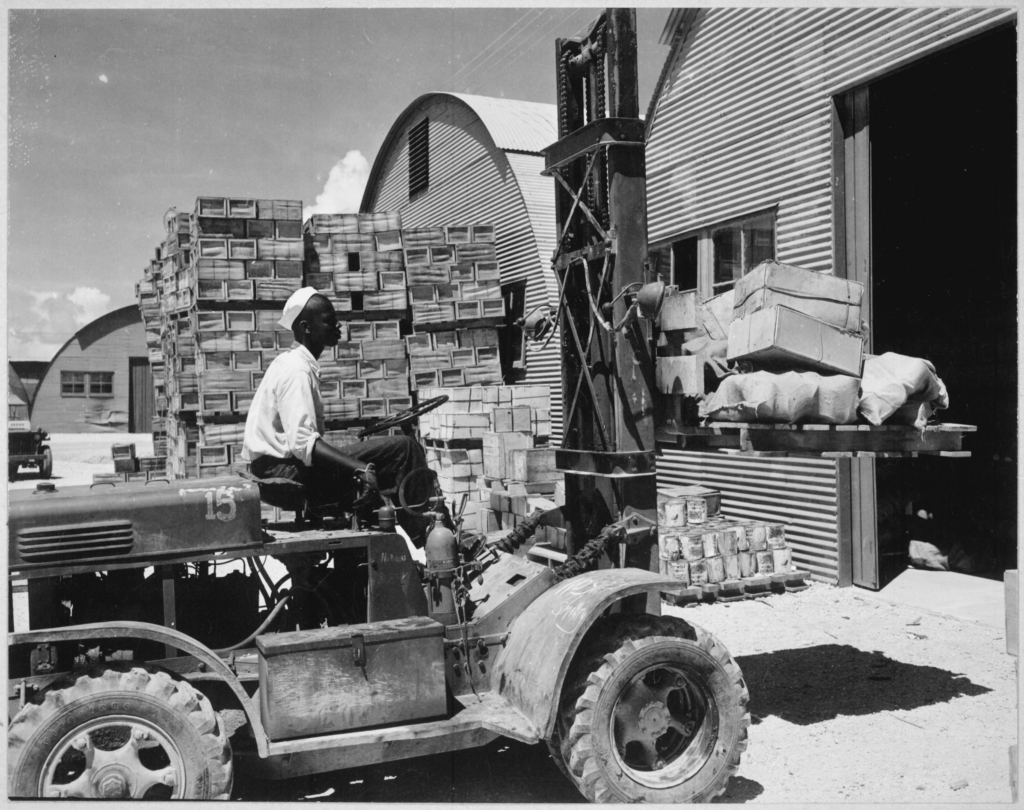
Perhaps the most extraordinary and least known example of this logistical commitment is the ice cream barge. The US Navy commissioned a concrete barge with no engines, requiring it to be towed by tugboats, specifically to produce ice cream for the fleet in the Pacific. The barge could churn out 500 gallons of ice cream every day and had refrigerated storage capacity for nearly 2,000 gallons. The Army’s Quartermaster Corps provided American troops with the machinery and ingredients to manufacture some 80 million gallons of ice cream every year, shipping 135 million pounds of dehydrated ice cream mix to the front lines in 1943 alone. Soldiers with access to refrigeration could combine the dehydrated mix with water and powdered milk to produce ice cream essentially anywhere in the world the military operated. This was not a minor morale gesture. It was a deliberate, resourced, industrial-scale operation built specifically to keep American servicemen happy with frozen dessert in the middle of a global war. Nobody else in that conflict was doing anything remotely similar.
The contrast with the other side is instructive. Nikita Khrushchev, the former premier of the Soviet Union, credited Spam with feeding the Soviet Army in World War II and said without it they could not have been fed. American food production was not simply feeding the American military. It was propping up the entire Allied war effort through Lend-Lease and direct supply, at a scale that no other combatant nation could replicate.
The Legend of SOS: America’s Most Notoriously Named Meal
Every American soldier in World War II knew what SOS meant, even if officers preferred not to say it out loud. The first published recipe for SOS is the Army version, which calls for chipped beef, a dried meat product perfectly designed for the battlefield, appearing in the 1910 edition of the Manual for Army Cooks. The term shingle for a slice of toast had some use in the US Army from around 1935, mostly in the expression that gave the dish its nickname, and it saw wide use throughout World War II.
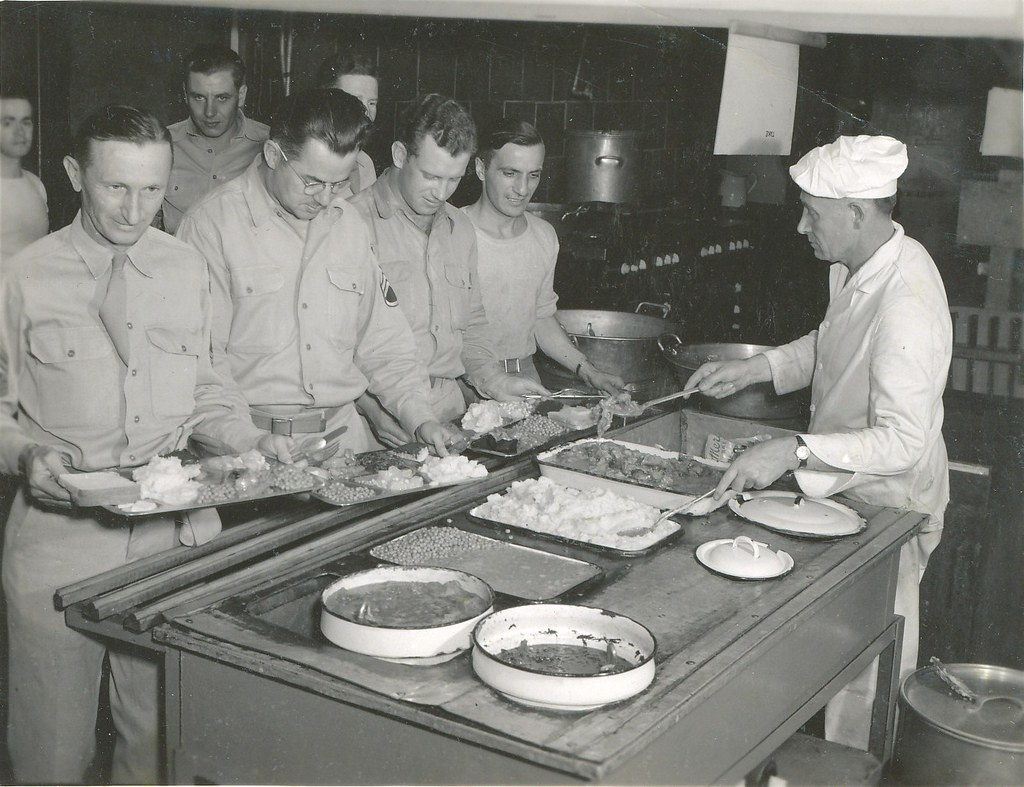
The dish itself is straightforward. The earliest versions called for six quarts of beef stock and two cans of evaporated milk, thickened with flour browned in butter and seasoned with chopped parsley and ground black pepper. Dried, salted, chipped beef simmered into a thick white gravy and poured over toast. For American soldiers in WWII, six cooks in a field kitchen served a company of 150 to 200 men, with menus designed by nutritionists in Washington. Because of supply difficulties, cooks often had to make do with the ingredients they had. By the later stages of the war and into subsequent conflicts, ground beef increasingly replaced chipped beef in the field kitchen version, producing the more accessible creamed ground beef preparation most home cooks recognise today.
I have already covered SOS in full depth on this channel with its own dedicated recipe and history. For this complete ration recreation I am including a simplified version as one component of the larger plate, because no representative WWII soldier’s meal is complete without it. The name has outlived the war by eighty years for a reason. The dish, regardless of what you call it, is genuinely good.
How M&Ms Became the War’s Favourite Candy
Candy maker Forrest Edward Mars Sr. took off for England after a fight with his father and made his own chocolate bars for British soldiers. Late in the 1930s he noticed that British volunteers fighting in the Spanish Civil War packed small sugar-coated chocolate candies into their mess kits, the coating keeping the chocolate from melting, which mattered enormously when summer heat ruined ordinary chocolate.
Forrest E. Mars Sr. created the first version of M&Ms in 1941, distributed in small cardboard tubes, with a hard outer shell that made the candy easy to produce and distribute in yellow, red, brown, violet and green colours. The idea came directly from Smarties, a non-melting chocolate candy consumed by British soldiers, which inspired Mars to create something similar. Back in the United States, Mars invited fellow candy maker Bruce Murrie to join the venture, combining their names into M&Ms. During WWII they sold exclusively to the US military.
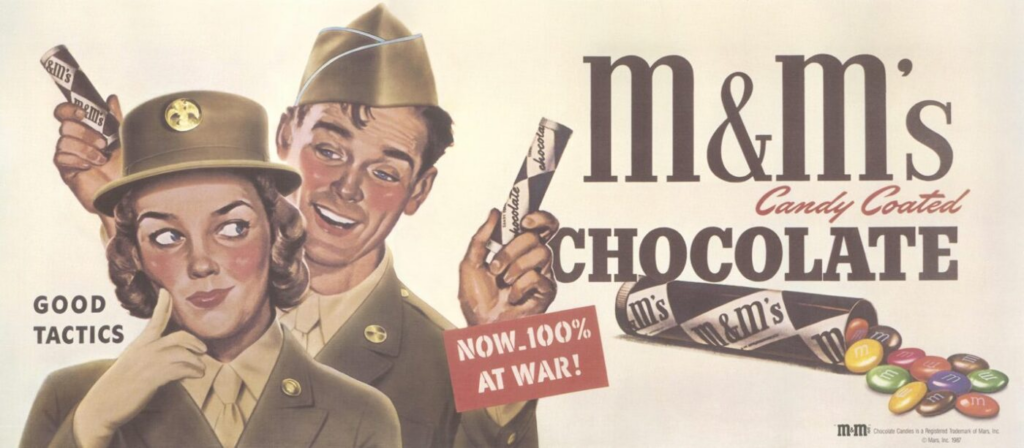
The result was a candy engineered specifically for combat conditions, heat-resistant, lightweight, calorie-dense and morale-boosting in exactly the way the military understood morale needed boosting. Among the wartime food innovations that went on to become some of America’s most ubiquitous brands and products were Cheerios, Reddi-Whip and M&Ms. A candy invented to survive the climate of the Spanish Civil War became, within a few years, one of the most successful confectionery brands in American history, built entirely on a contract supplying chocolate to soldiers who needed something that would not melt in their pockets.
Spam: The Meat That Soldiers Loved to Hate
When Spam was created in 1937 by Hormel Foods Corporation, it was seen as a way to increase sales of unprofitable pork shoulder, which was then considered an undesirable cut. Initial sales were poor, partly because people had doubts about canned meat being safe for consumption. Then World War II began, and the US military saw Spam as a perfect addition to its soldiers’ rations, being affordable, filling, easily portable and shelf stable. Spam accompanied US troops all over the world, with 100 million cans shipped to the Pacific theatre alone.
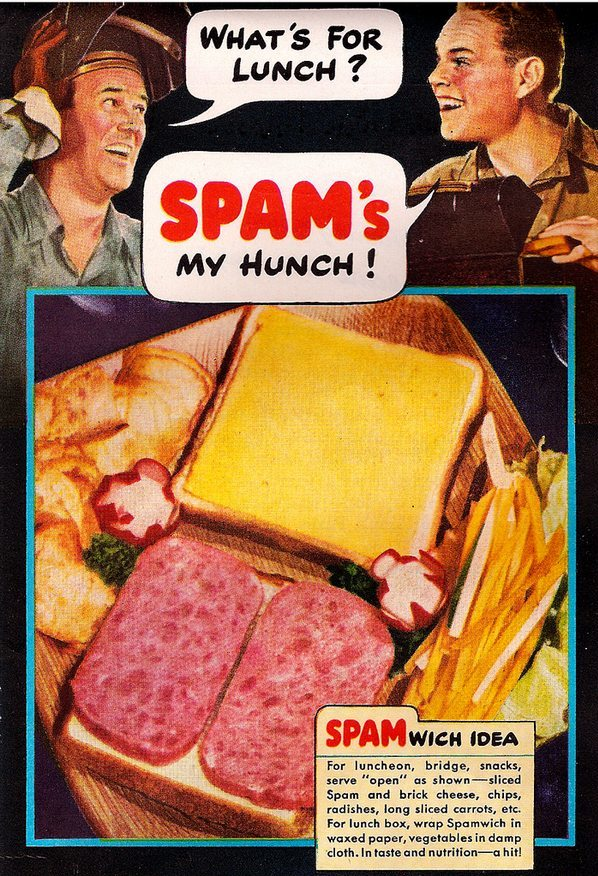
Soldiers in the Pacific ate Spam the most frequently, largely due to environmental factors, as the Pacific Theatre’s climate caused food to spoil at a much quicker rate, which led to food sent there being heavily processed to have a longer shelf life. The relationship soldiers had with Spam was complicated. It kept men fed reliably in conditions where almost nothing else would survive transport and storage. It also became, almost immediately, the subject of every soldier’s complaints and jokes about military food. Both things were true simultaneously, and Spam’s postwar success as a civilian pantry staple owes everything to the sheer volume of exposure American servicemen had to it during the war.
Instant Coffee and the Caffeine That Ran the War
Japanese-American chemist Satori Kato developed water-soluble coffee powder in 1901, and by World War II the Army was purchasing 37,000 pounds of it a day to keep soldiers caffeinated in front-line foxholes. That is an extraordinary daily quantity and it tells you everything about how essential coffee was considered to be for sustaining alertness and morale under combat conditions. Instant coffee was lightweight, required no specialist preparation, and could be made with whatever hot water a soldier could produce in the field. It was, alongside the cigarette, one of the small comforts that the American military went to considerable lengths to keep consistently available.
My Rating
This meal is exactly what it sounds like and exactly what it should be. Diced Spam fried with eggs cracked directly into the pan produces a salty, savoury, genuinely satisfying breakfast that requires almost no skill and uses ingredients that would survive a transatlantic crossing without refrigeration. The SOS on toast is rich, creamy and comforting in a way that completely explains why so many veterans report genuine nostalgic affection for a dish with such an unfortunate name. The canned peaches provide a sweet, syrupy contrast that cuts through the richness of everything else on the plate. The M&Ms are M&Ms, and they have not changed meaningfully since 1941, which is itself a small piece of edible history. The instant coffee is instant coffee, bitter and functional and exactly what it needed to be for a soldier who needed to stay alert rather than enjoy a leisurely cup.
It is not nutritionally balanced by any modern standard. It is heavy in sodium, fat and refined carbohydrate and light in anything resembling fresh produce. But context matters enormously here. This is food designed for a young man burning several thousand calories a day under extreme physical and psychological stress, food that had to survive shipping across oceans without spoiling, and food that had to be prepared quickly by a handful of cooks feeding hundreds of men. Evaluated against that brief, it is a genuine success. It tastes better than its reputation suggests and considerably better than the jokes about it would have you believe.
Rating: 7.4 / 10
The Recipe: A WWII American Soldier’s Ration Meal
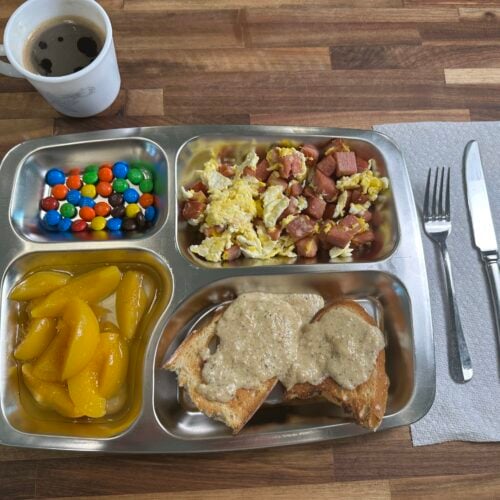
A WWII American Soldier’s Meal
Ingredients
For the Spam and eggs:
- 4 to 6 slices of Spam diced
- 2 eggs
- Salt and pepper to taste
For the SOS on toast:
- ½ lb ground beef or dried chipped beef
- 4 tbsp flour
- 1 cup evaporated milk
- 1 cup water
- 2 tbsp butter
- Salt and pepper to taste
- 2 slices of toast
For serving:
- 1 small can of peaches in syrup
- A small handful of M&Ms
- 1 cup of instant coffee prepared
Instructions
Make the Spam and eggs
- Heat a skillet over medium-high heat. Add the diced Spam and fry until browned and slightly crisp on the edges, about 4 to 5 minutes. Crack the eggs directly into the pan with the Spam. Season with salt and pepper. Cook, stirring occasionally, until the eggs are fully set to your preference. Remove from heat.
Make the SOS
- In a separate pan, brown the ground beef or chipped beef over medium heat. If using ground beef, drain excess fat and reserve 2 tablespoons. Stir the flour into the beef and reserved fat to make a roux, cooking for about a minute without browning. Combine the evaporated milk and water and add gradually, whisking continuously to avoid lumps. Add the butter and cook, stirring, for 5 to 10 minutes until the sauce thickens to a gravy consistency. Season with salt and pepper. Toast the bread and spoon the creamed beef generously over the top.
Assemble and serve
- Plate the Spam and eggs alongside the SOS on toast. Serve with a portion of canned peaches, a small handful of M&Ms and a cup of prepared instant coffee. Eat it the way a soldier would have, quickly, gratefully, and without too much concern for presentation.
Video
Notes
- If using dried chipped beef rather than ground beef, soak it briefly in warm water to reduce excess saltiness before cooking, then proceed with the same roux and gravy method.
- This meal is calorically dense by design. It was built to sustain extreme physical exertion under combat conditions and is not intended as a model for everyday nutrition. Context is everything with military ration food.
- For the most historically accurate experience, drink the coffee black and unsweetened, exactly as it would have been issued in the field.