Ancient Persia left behind palaces, reliefs, inscriptions, administrative tablets, and poetry. What it did not leave behind were cookbooks. Unlike Rome or later medieval Europe, Persia’s culinary knowledge survives indirectly, scattered across archaeology, agricultural records, travelers’ accounts, and ritual texts. To cook Persian food from antiquity is therefore an act of reconstruction rather than replication.
If you’re enjoying my recipes, check out my e-cookbooks at Eats History Shop, now 40% Off!
Persian cuisine was already sophisticated long before the Islamic period. It prized balance, fragrance, texture, and contrast. Sweet and sour flavors existed side by side. Herbs were not garnish but substance. Meat was respected, stretched, and paired thoughtfully rather than consumed in excess. This dish aims to reflect that worldview. It is restrained, layered, and intentional. Every component is justified by what we know Persia produced, traded, and valued.
The World of Ancient Persian Foodways
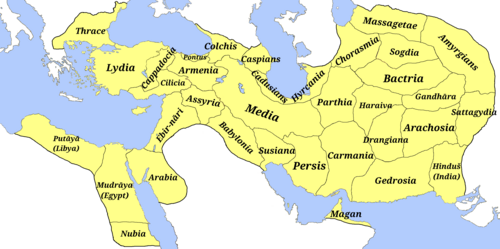
Ancient Persia, particularly under the Achaemenid Empire, governed an enormous territory stretching from Anatolia to the Indus Valley. Feeding that empire required agricultural organization on a massive scale. Administrative tablets from Persepolis record rations of grain, wine, meat, and fruit distributed to workers, officials, and travelers.
From these records, we know Persians consumed wheat and barley as staples, produced wine in large quantities, raised sheep and goats, and cultivated fruits such as pomegranates, dates, and grapes. Herbs and aromatics were integral, grown locally and traded across regions. Food was both sustenance and symbol, tied to hospitality, hierarchy, and ritual.
Persian elites ate differently than common laborers, but the core ingredients overlapped. What changed was refinement. Meat was prepared with care. Sauces were balanced. Herbs were abundant. Even simple meals reflected a cultural preference for harmony rather than heaviness.
The absence of cookbooks does not indicate culinary simplicity. It reflects a tradition transmitted orally and practically, rooted in household and court kitchens rather than written manuals.
Sources for What Persians Ate
Our understanding of Persian cuisine comes from several overlapping sources. Archaeological remains reveal animal bones, grain residues, and fruit pits. Administrative tablets, particularly the Persepolis Fortification Tablets, document food distribution and production. Classical Greek writers such as Herodotus and Xenophon describe Persian banquets and customs, albeit through an outsider’s lens.
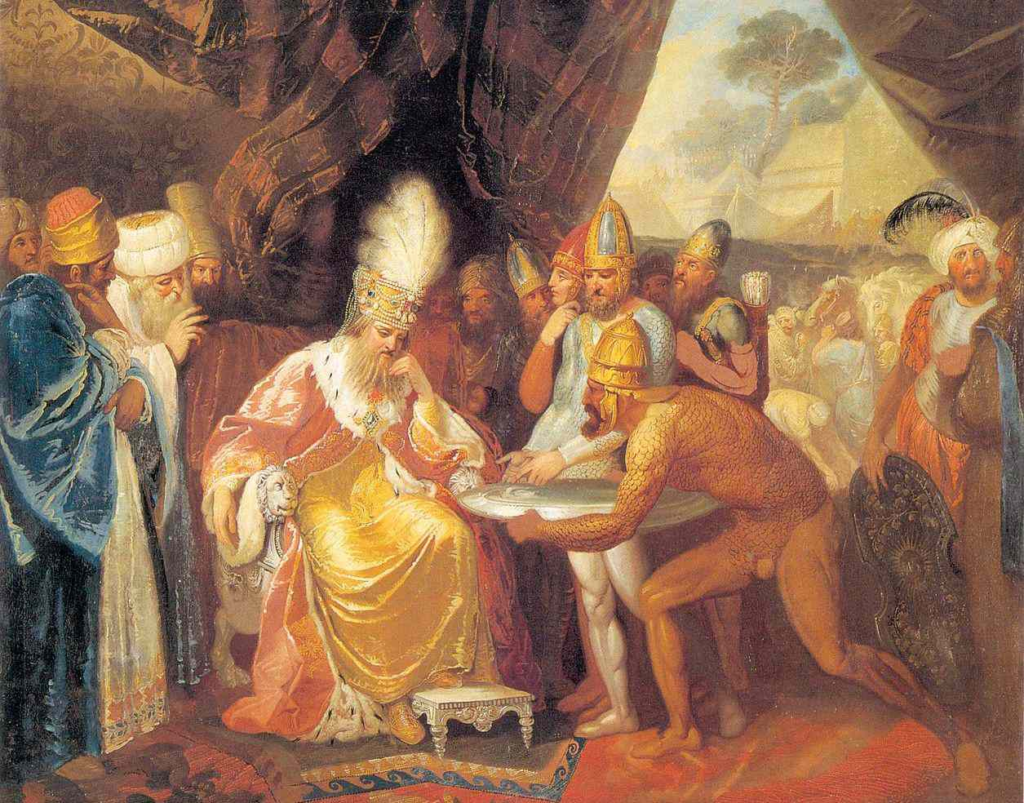
These Greek accounts note Persian fondness for meat, bread, wine, and layered courses. They also remark on the Persian habit of discussing serious matters after drinking, implying structured meals and social ritual. While biased, these descriptions align with material evidence.
Later continuity matters as well. Persian cuisine shows remarkable consistency across centuries. Ingredients such as lamb, flatbread, herbs, onions, garlic, cumin, and pomegranate persist into medieval and modern Iranian cooking. This continuity allows careful inference without romantic speculation.
Taken together, these sources allow us to construct plausible dishes that reflect Persian taste and practice even when no explicit recipe survives.
Eating Like King Darius: Why This Flatbread Works
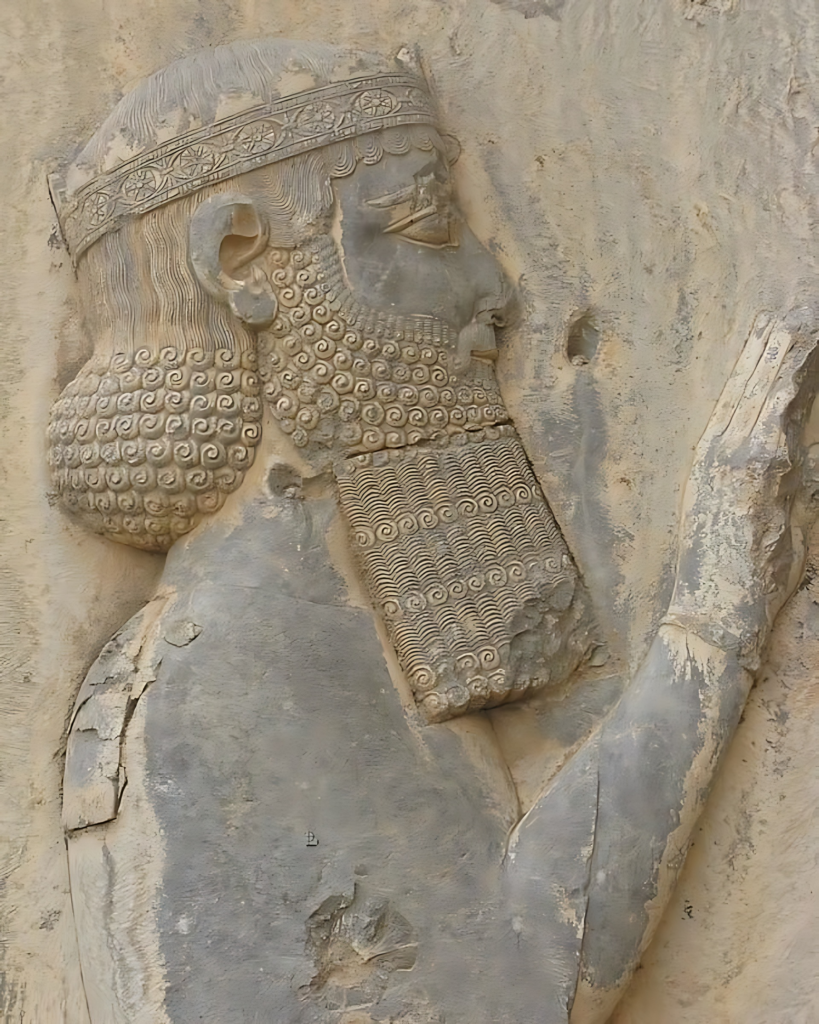
To eat like King Darius is not to imagine excess for its own sake, but order, balance, and intention. Darius I ruled at the height of the Achaemenid Empire, overseeing a vast administrative system that carefully recorded food production, storage, and distribution. The Persepolis Fortification Tablets show that grain, wine, livestock, fruit, and herbs flowed steadily through royal and provincial centers. Meals at court were expected to nourish, impress, and reinforce hierarchy without waste.
A flatbread-based dish makes sense in this context. Bread was the foundation of Persian eating across all classes, but at elite tables it became a refined vehicle rather than mere sustenance. Flatbread allowed meat and sauces to be stretched, shared, and eaten communally. It also functioned practically, serving as both plate and utensil, which aligned with ancient dining customs.
Lamb fits naturally into a royal Persian meal. Sheep were widely raised across the empire and lamb appears consistently in administrative and archaeological evidence. Braising the meat reflects an understanding of efficiency and refinement, turning tougher cuts into something tender and rich while preserving valuable fat and flavor. This method would have been ideal in a palace kitchen where time and fuel were available but waste was discouraged.
The pomegranate sauce elevates the dish into something unmistakably Persian. Pomegranates were cultivated extensively and held symbolic meaning tied to abundance and prosperity. Their sweet and sour profile aligns with Persian preferences for balance rather than intensity. Combined with fresh herbs and nuts, the dish reflects a cuisine that valued contrast, aroma, and completeness.
Why Lamb, Bread, and Pomegranate Belong Together
Lamb was central to Persian animal husbandry. Sheep thrived in Iran’s varied landscapes, providing meat, milk, and wool. Cumin, one of the earliest cultivated spices in the region, pairs naturally with lamb and appears frequently in Persian flavor profiles.
Flatbread provided structure and portability. It functioned as plate, utensil, and starch. Baking the bread separately while the lamb braises mirrors ancient kitchen rhythms, where multiple preparations occurred simultaneously over hearths and ovens.
Pomegranate holds deep cultural significance in Persia. It symbolized fertility, abundance, and life. Its juice provides acidity and sweetness without sugar, ideal for balancing rich meat. Thickening the sauce with flour creates body using techniques available in antiquity.
Together, these elements form a dish that feels unmistakably Persian in spirit even if it is not preserved by name.
Reconstructing the Cooking Process
The cooking method is grounded in practicality. Browning lamb in a heavy pot builds flavor. Cooking onions and garlic in the drippings creates a base without waste. Braising with wine and water reflects documented Persian wine production and the common use of liquids to tenderize meat.
Long, slow cooking transforms tougher cuts into something rich and cohesive. Shredding the lamb allows it to absorb sauce and stretch across the flatbread, making the dish communal and efficient.
The final sauce is built from the braising liquid, enriched with pomegranate juice and thickened lightly. This avoids separation between meat and sauce, keeping the dish unified.
The herb slaw introduces freshness, bitterness, and texture. Herbs were eaten in quantity in Persian culture, not as decoration. Nuts add fat and crunch, grounding the dish and reinforcing its ancient character.
Taste, Balance, and Reflection
The finished dish is deeply satisfying without being heavy. The lamb is tender and savory, the sauce bright and complex, the herbs cooling and aromatic. Each bite balances richness and freshness, sweetness and acidity.
This is not a loud dish. It does not rely on spice intensity. Instead, it rewards attention. The flavors unfold slowly, much like the history behind them.
What stands out most is how familiar it feels. Many modern Persian dishes echo this structure, confirming that the reconstruction is not only plausible but culturally coherent.
This is the kind of food that sustains empires. Nourishing, adaptable, and deeply rooted in place.
Recipe: Ancient Persian–Inspired Braised Lamb Flatbread
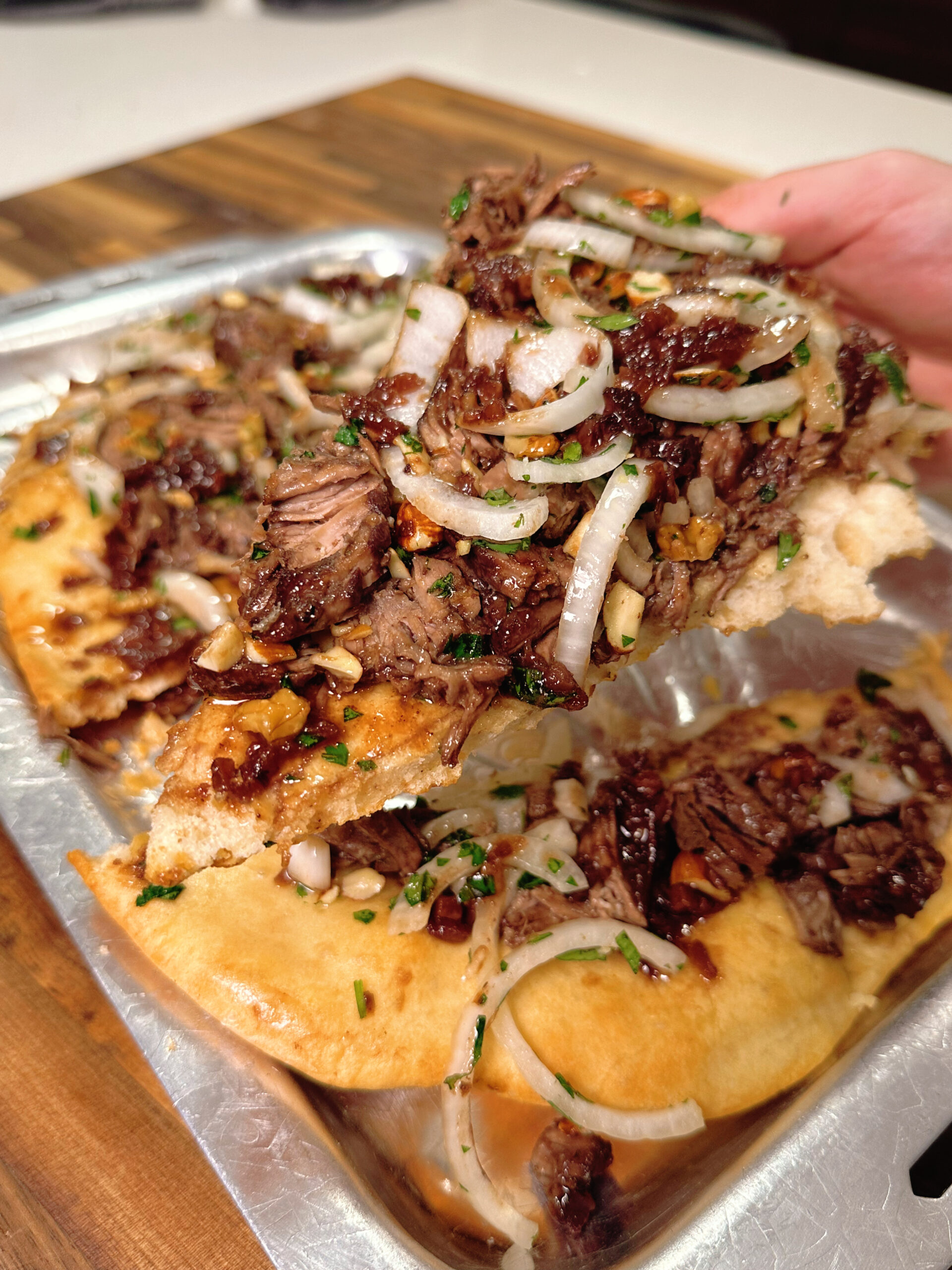
Ancient Persian Lamb Flatbread
Ingredients
Flatbread
- 2 cups Flour
- 2 tbsp Yeast
- 1/2 cup Water
- Olive oil
- Salt
Braised Lamb
- 3 lamb loin chops or similar cut
- 1 tsp Salt
- 1 tsp Ground cumin
- 1 tsp Olive oil
Braising Sauce
- 1 onion sliced
- 3 cloves garlic minced
- 1 cup Red wine
- 1 cup Water
- 1/2 cup Pomegranate juice
- 1 tbsp Flour
Persian Herb Slaw
- Fresh mint
- Parsley
- Cilantro
- Onion thinly sliced
- Chopped walnuts
- Chopped almonds
- Olive oil
Instructions
- Prepare flatbread dough and allow to rise.
- Season lamb with salt and cumin. Brown in olive oil in a Dutch oven. Remove and set aside.
- Add onion and garlic to the drippings and cook until softened.
- Return lamb to the pot. Add red wine and water until partially submerged.
- Cover and braise gently for 1–2 hours until tender.
- When lamb is nearly done, bake flatbread at 400°F until cooked and lightly browned.
- Remove lamb and shred.
- Add pomegranate juice to the braising liquid and whisk in a small amount of flour, stirring aggressively until thickened.
- Combine herbs, onions, nuts, and olive oil to make the slaw.
- Assemble flatbread with shredded lamb, herb slaw, and pomegranate sauce.
Notes
- Lamb Cuts: Lamb loin chops work well, but shoulder or leg can be substituted. Tougher cuts benefit most from the long braise and develop deeper flavor.
- Sauce Balance: Taste the pomegranate sauce before thickening. If the juice is very tart, add a splash more wine or water to soften the acidity.
- Herb Slaw Freshness: Add the herbs and nuts just before serving to preserve their brightness and prevent wilting or bitterness.