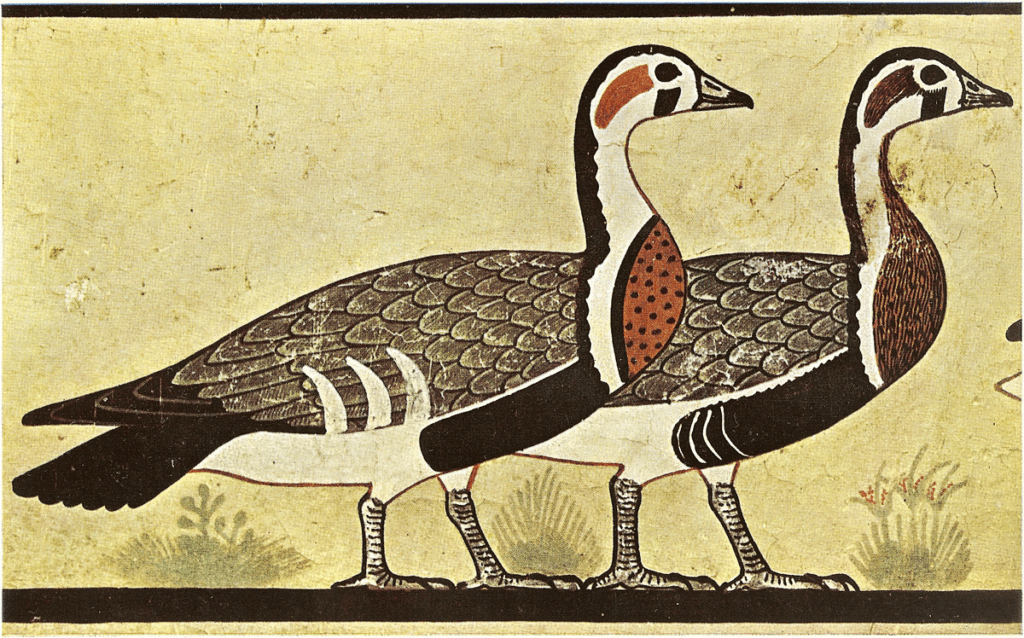
If there is one dish that captures the wealth and power of ancient Egypt, it is roasted goose. On the tomb walls of the Old Kingdom, we find scenes of geese lined up like treasures, their feathers painted with painstaking precision. Goose was not simply food; it was a sign of abundance and luxury, a bird that marked the feast as something beyond the ordinary. Pairing this prized meat with honey, dates, and pomegranate creates a glaze that is not only delicious, but also firmly rooted in the ingredients the Egyptians celebrated in life and death.
The combination of crisp goose skin and a glossy, sweet-tart sauce would have been understood as the height of refinement. Honey was liquid gold, dates the everyday fruit of the desert garden, and pomegranates a luxury imported from abroad. Beer and wine, ever-present at feasts, added depth and ritual symbolism. When combined into one dish, these elements become more than a meal. They are a story of Egyptian taste, wealth, and even theology.
This recipe is not a fanciful invention. Each ingredient has evidence in the archaeological record and in the art and texts of Egypt. Goose bones have been found in elite feasting contexts. Tomb paintings show honey being harvested. Dates were packed into tombs as provisions for eternity. Pomegranate-shaped vessels were buried with kings. Every bite connects us to what was once a real, lived flavor at the banquets of the Nile.
If you’re enjoying my recipes, all my e-cookbooks are currently 40% off in the Eats History Shop!
Geese on the walls, Geese on the table
One of the most striking pieces of Egyptian art is the “Meidum Geese” scene from the 4th Dynasty, showing three pairs of geese painted with such attention to detail that ornithologists can identify the species. It is a scene that highlights both the Egyptians’ closeness to the natural world and their reverence for these birds as offerings. The fact that geese were chosen for such a prominent place in a tomb tells us they mattered deeply in diet, in religion, and in memory.
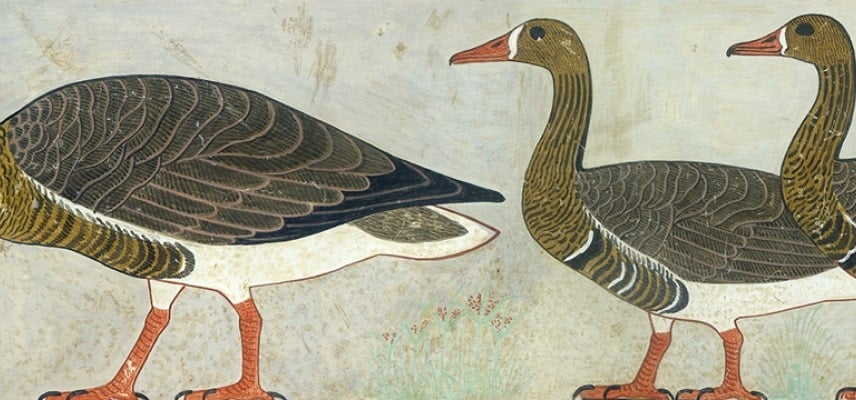
For the Egyptian elite, goose was more than nourishment. It was a symbol of plenty. In temples and tombs, lists of food offerings often include geese alongside beef, bread, and beer, the staples of a noble banquet. Goose meat appears to have been served roasted, boiled, and even preserved in fat. The animal was part of a broader economy of feasting, hunting, and ritual slaughter that kept the upper classes in touch with both earthly pleasures and the promise of divine favor.
There is also evidence that goose herding and waterfowl keeping were widespread. Egyptians captured, bred, and fattened geese, turning them into reliable food stores. Feasts could not be imagined without birds, and the goose stood proudly at the center. When you roast goose today, you are not only recreating a flavor profile but reanimating an entire cultural tradition of how Egyptians saw wealth and joy expressed on the table.
The Egyptian pantry: honey, dates, beer, wine, and spices
Honey was the queen of sweeteners in Egypt, depicted in vivid detail in the tomb of the vizier Rekhmire, where men are shown harvesting honeycomb, smoking hives, and pouring golden liquid into jars. Egyptians used honey in bread, cakes, sauces, and even medicine. It was a food of the gods, often offered in temple rituals. Using honey in a glaze for goose continues a pattern that stretches back thousands of years.
Dates were no less central. Palm trees lined gardens, shaded canals, and dropped clusters of fruit that sustained both the poor and the powerful. Dates sweetened beer, provided portable energy for travelers, and filled breads served at feasts. Archaeologists have found dried dates packed into tombs as food for the afterlife. They are both practical and symbolic, a perfect embodiment of how Egyptians fused everyday food with eternity.
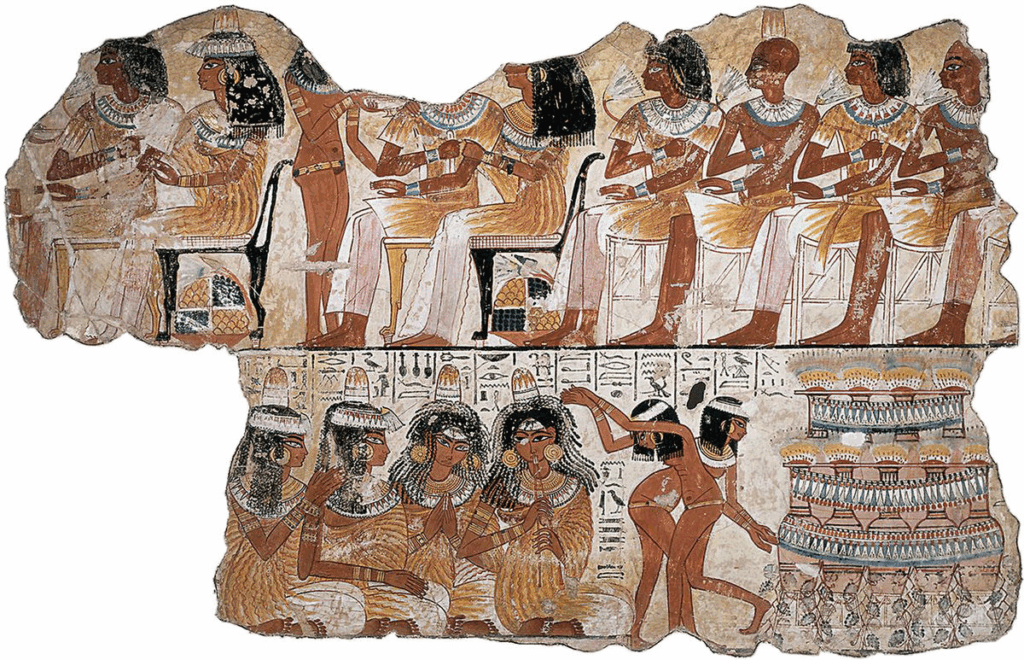
Beer and wine were the lifeblood of feasting. Beer was consumed daily by workers and nobles alike, while wine was reserved for elites and rituals. When added to cooking, both acted as flavor builders, giving dishes depth and aroma. Alongside them came the spices that gave Egyptian food its particular fragrance: cumin, coriander, and fenugreek. Seeds of these spices have been found in tombs, proving their use in both kitchen and ritual. When blended into a goose glaze, they provide not just taste but authenticity.
Fruit for gods and kings: pomegranates and dates in symbol and ceremony
Pomegranates arrived in Egypt from the Near East during the New Kingdom and were immediately adopted by the upper classes. The fruit’s many seeds made it a natural symbol of fertility, renewal, and abundance. It appeared in paintings, in tombs, and in burial goods. Pomegranate-shaped jars were found among Tutankhamun’s treasures, showing how far the fruit’s symbolic power traveled into the realm of eternity.
In Egyptian life, pomegranates were more than exotic novelties. They were used in medicine, in ritual, and in food. Their juice provided tartness and vibrancy to dishes. Their seeds were beautiful, a visual delight as much as a culinary one. Serving goose lacquered with a glaze of honey, dates, and pomegranate juice is not just plausible but deeply tied to the imagery and values of elite dining.
Dates, in contrast, were a native staple. If pomegranates spoke of imported luxury, dates spoke of Egypt itself. They represented life in the desert, resilience, and sweetness in the harshest of climates. Combining dates and pomegranates in one glaze brings together the local and the exotic, echoing the way Egyptian tables blended what was near with what was rare.
Theology on the plate: the goose that laid the world
Goose is not only a feast food but a mythic animal. In Hermopolitan creation stories, the world is said to have emerged from a cosmic egg laid by a goose known as “the Great Cackler.” The goose, then, was not only a meal but a being tied to creation itself. Eating goose at a banquet may have carried echoes of these cosmic connections, whether consciously or simply as part of the cultural background.
Pomegranates, too, had mythic associations. Their countless seeds made them symbols of fertility and eternal life. Later Egyptian and Mediterranean traditions often tied pomegranates to goddesses of love, fertility, and renewal. To place pomegranates beside goose in a dish is to echo a story where food is never just food but a reflection of divine order and promise.
By bringing these ingredients together, you are in effect cooking a dish that tells the story of life, creation, and abundance. Goose represents the great cosmic beginning. Honey and dates embody sweetness, sustenance, and eternity. Pomegranate embodies renewal. To sit down with such a plate is to sit, in a small way, at a feast where myth and meal are one.
Technique: how an Egyptian kitchen would build this flavor
The Egyptian kitchen had the tools to make this dish possible. Roasting was a common method of preparing meat, whether over open flames, in clay ovens, or on spits. Fat was plentiful from animals and from oils like sesame or castor, used for cooking and for medicine. A goose could be plucked, rubbed with spices, basted with fat, and roasted until golden.
A glaze made of honey, mashed dates, and pomegranate juice reduced over heat would have been well within the skills of an Egyptian cook. Beer or wine could be added as liquid for simmering. Vinegar or sour fruit provided balance. These were not modern tricks but ancient techniques, grounded in the everyday tools of the kitchen and the feast.
The end result would have been rich, fragrant, and visually striking. Goose skin bronzed and crisp, coated with a shiny layer of sweet and sour glaze, garnished with ruby-red pomegranate seeds. It would not only taste good but look like something worthy of offering to the gods.
The dish: what it tastes like and why it matters
The flavor is bold and balanced. Goose is richer than chicken, closer to duck, and it carries that gamey, deep flavor that pairs so well with sweet and sour notes. Honey and dates coat the meat in warmth, while pomegranate juice cuts through with sharp brightness. The seeds add a fresh crunch, breaking up the richness.
When you eat it, you taste both the everyday and the divine. It is a dish that feels comforting but also ceremonial. The kind of thing that could have been eaten at a wedding, a festival, or placed on a funerary altar. A dish that links the present table to the Nile of three thousand years ago.
Cooking goose in this way is not simply about taste. It is about connection. It is about honoring a culture that left behind its ingredients in tombs, its recipes in murals, its tastes in myth. Each bite is a reminder that food has always been more than survival. It is memory, symbol, and story.
Recipe: Ancient Egyptian Goose Drumsticks with Honey, Date, and Pomegranate Glaze
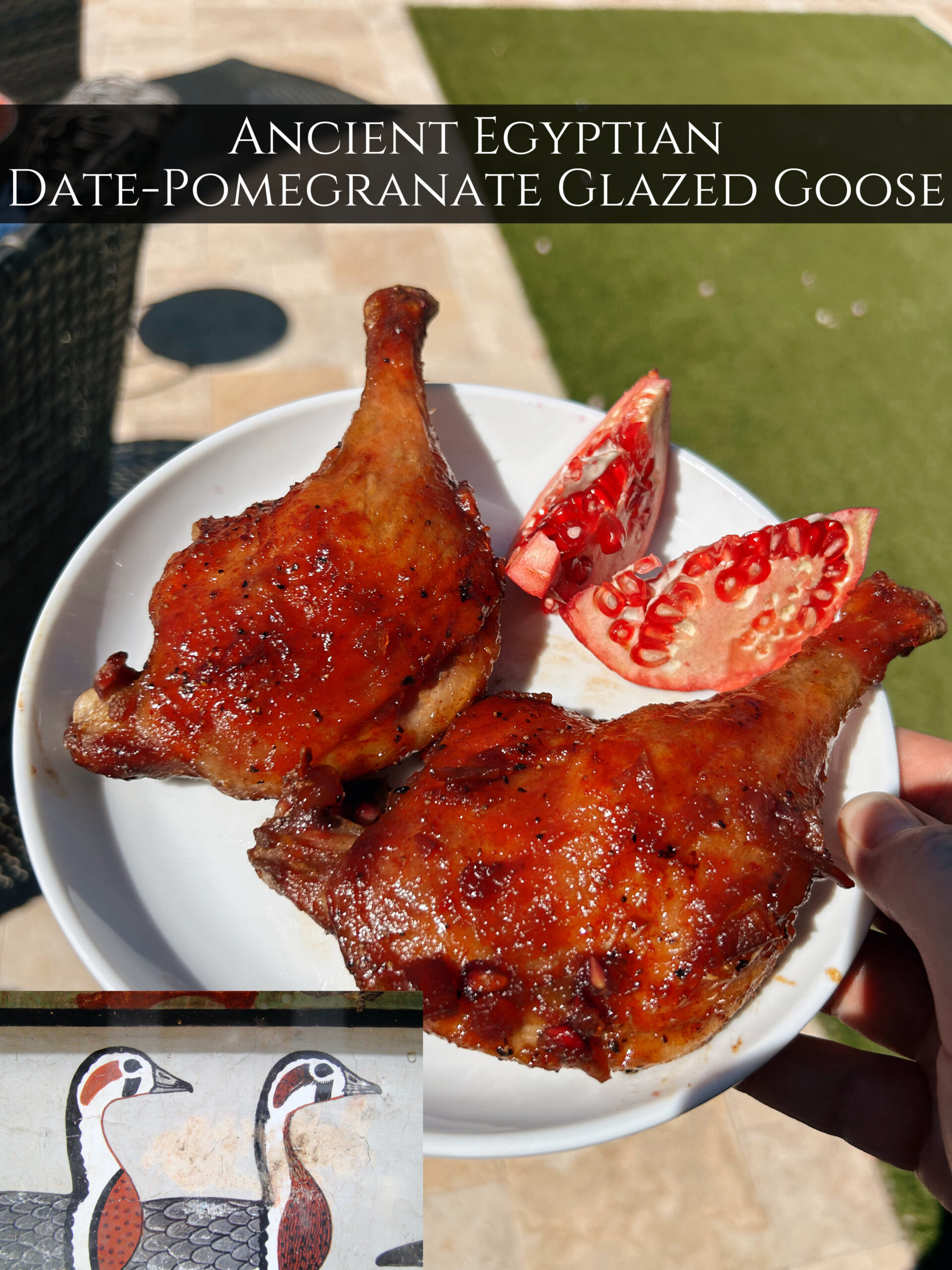
Ancient Egyptian Goose Drumsticks with Honey, Date, and Pomegranate Glaze
Ingredients
- 2 goose drumsticks
- 2 tbsp goose fat or olive oil
- 1 tsp coarse salt
- 1 tsp ground cumin
- 1 tsp ground coriander
- ½ tsp ground fenugreek optional
- ½ tsp ground black pepper or long pepper
- 2 tbsp honey
- 3 –4 dates pitted and finely chopped (plus 2 extra halves for garnish)
- ¼ cup pomegranate juice fresh if possible
- 2 tbsp wine or beer
- 1 –2 tsp vinegar or extra pomegranate juice for tartness
- Seeds from ½ pomegranate for finishing
Instructions
- Pat the goose dry. Rub with fat or oil, then season with salt and spices. Rest 30 minutes or overnight in the fridge.
- Roast at 400°F (200°C) for 20 minutes. Lower heat to 350°F (175°C) and roast for another 40–50 minutes, basting once with fat.
- While roasting, simmer honey, chopped dates, pomegranate juice, and wine or beer until thickened, about 7–10 minutes. Balance with vinegar.
- Brush glaze onto goose in the last 10 minutes of cooking so it caramelizes.
- Serve with extra glaze, scatter pomegranate seeds, and add softened date halves alongside.
Video
Notes
- Goose Substitute: If goose is hard to find, duck legs or chicken thighs can be used, though goose offers the most authentic flavor.
- Balance the Glaze: Taste the glaze as it reduces — add extra pomegranate juice for tartness or more dates for body, depending on your preference.
- Serving Suggestion: Pair with flatbread or emmer-style bread and a fresh cucumber-herb salad for a complete ancient-inspired meal.