Socrates lived in an age when philosophy was as natural as breathing, when conversation was a form of worship, and when food served as both sustenance and symbol. He wandered the streets of Athens barefoot, asking questions that stirred the minds of men and angered those in power.
His life was marked by simplicity. He owned little, desired little, and ate what was necessary to keep the body in service of the soul. To eat like Socrates is to taste moderation itself, to rediscover a time when wisdom mattered more than wealth, and when sharing bread and olives meant sharing truth.
If you’re enjoying my work, all of my e-cookbooks are currently 40% Off in the Eats History Shop!
The Life of the Philosopher
Born around 470 BCE, Socrates came from humble beginnings. His father was a stonemason and his mother a midwife, yet his legacy would shape the foundations of Western thought. Unlike the sophists of his time who charged fees for their teachings, Socrates walked the markets and gymnasiums of Athens, speaking freely to anyone willing to engage in dialogue.
Next week
I cook these before I write them. Some of it never makes the post.
The failures, the source documents, the version that actually tasted good. That part goes out by email, and next week’s is already on the stove.
 Written and cooked by Donnie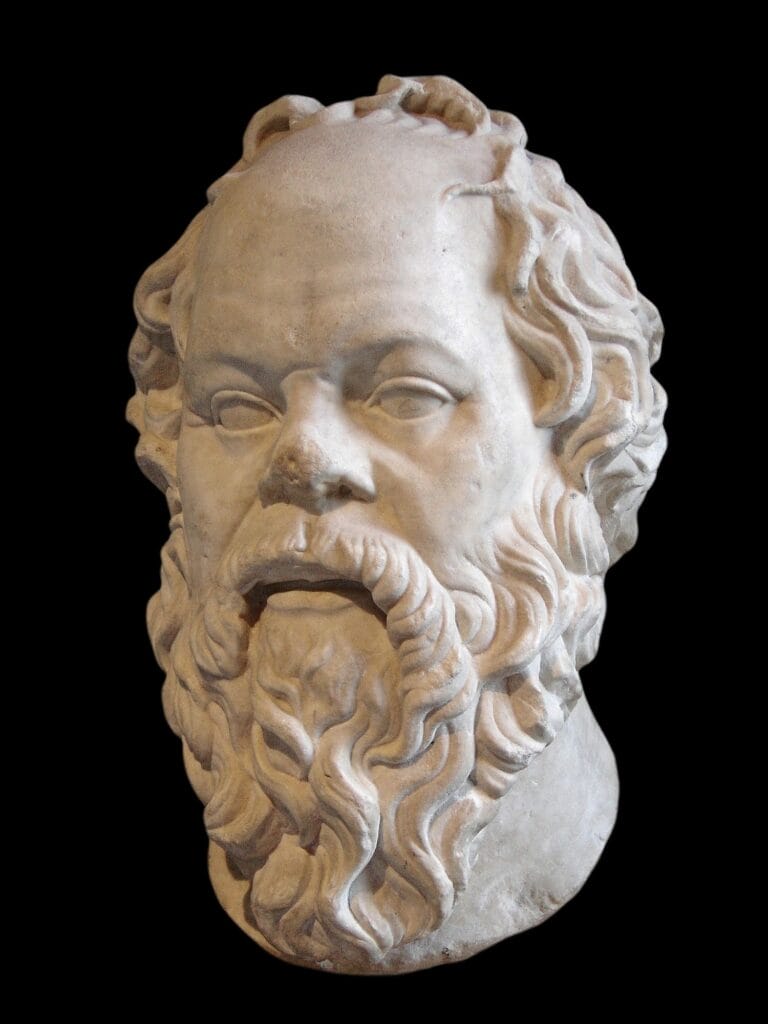
He saw philosophy not as a profession but as a duty to the gods, a way to examine life and purify the soul. His students, including Plato and Xenophon, would later immortalize his words in their dialogues, ensuring that the simple man from Athens would never be forgotten.
The Athenian Table
Food in ancient Athens reflected the values of the people. It was modest, mostly drawn from the soil and the sea, and seasoned by necessity rather than extravagance. Barley bread, olives, figs, cheese, and wine formed the core of the Athenian diet. Socrates believed indulgence dulled the mind, so he ate only what nature provided and avoided luxury.
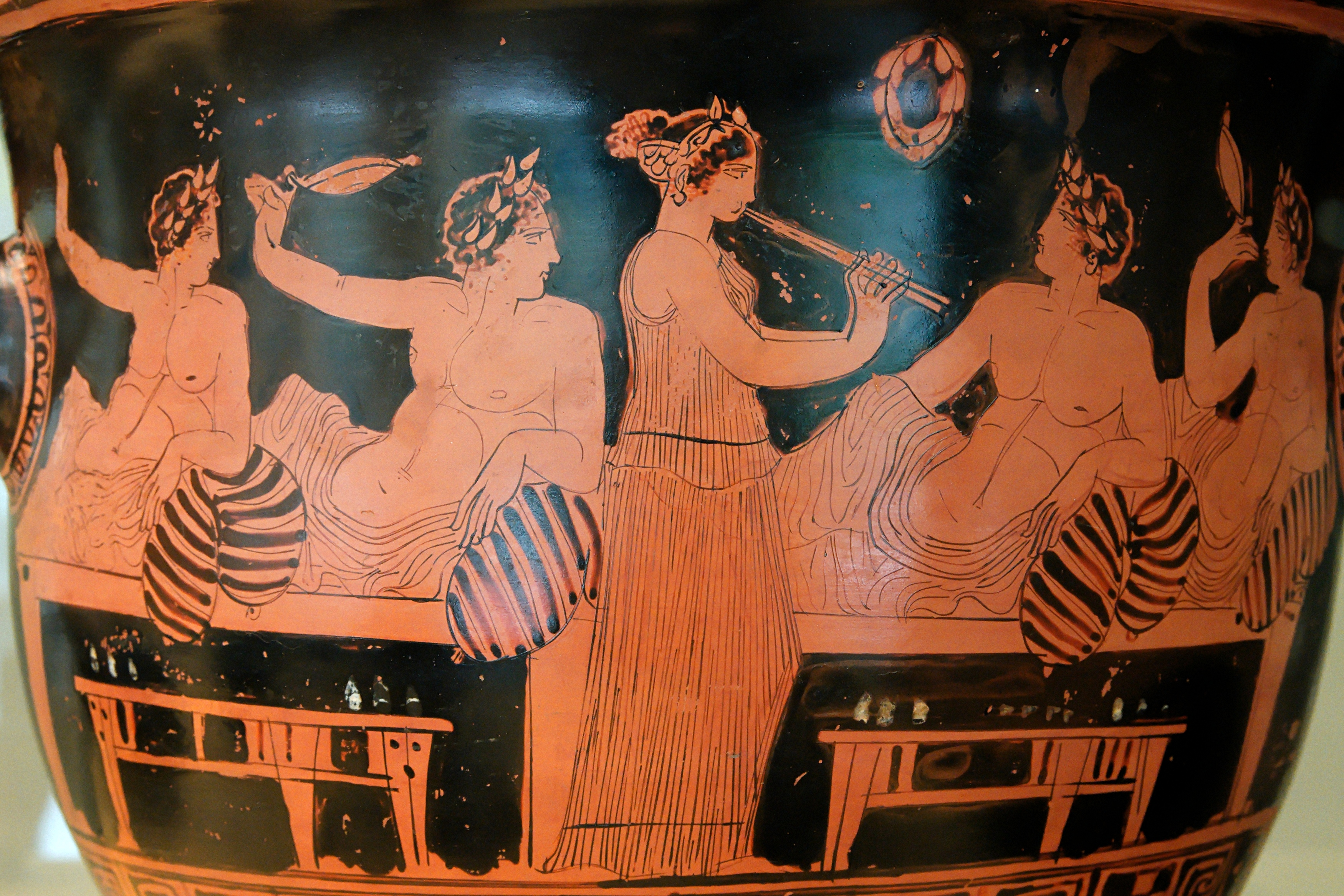
At symposia, the famous Greek drinking parties, he was often the last man awake, still reasoning clearly while others grew loud and unsteady. For him, the feast was not the goal; it was the conversation that followed, where minds met and ideas became nourishment for the soul.
Recreating the Symposium
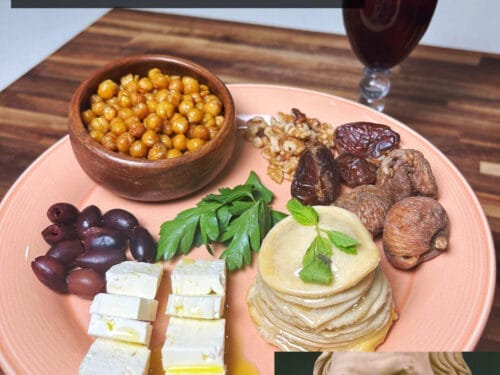
To imagine what might have been set before Socrates, I recreated a Socratic Snackboard, a spread that honors both his philosophy and his simplicity. It includes roasted chickpeas tossed in olive oil and herbs, briny olives and feta, figs and dates for sweetness, and a centerpiece of plakous—an ancient layered cheesecake made with dough, honey, and soft cheese.
The table is completed with dried fruit and nuts, the colors of the Mediterranean brought to life. It is not a lavish banquet, but it embodies harmony, balance, and beauty in restraint. It is the kind of meal that invites conversation rather than consumption.
The Daimon Within
My favorite takeaway from Socrates is his teaching of the daimon—his inner voice or divine guide. He said it never told him what to do, only what not to do, acting as a quiet compass steering him toward the good.
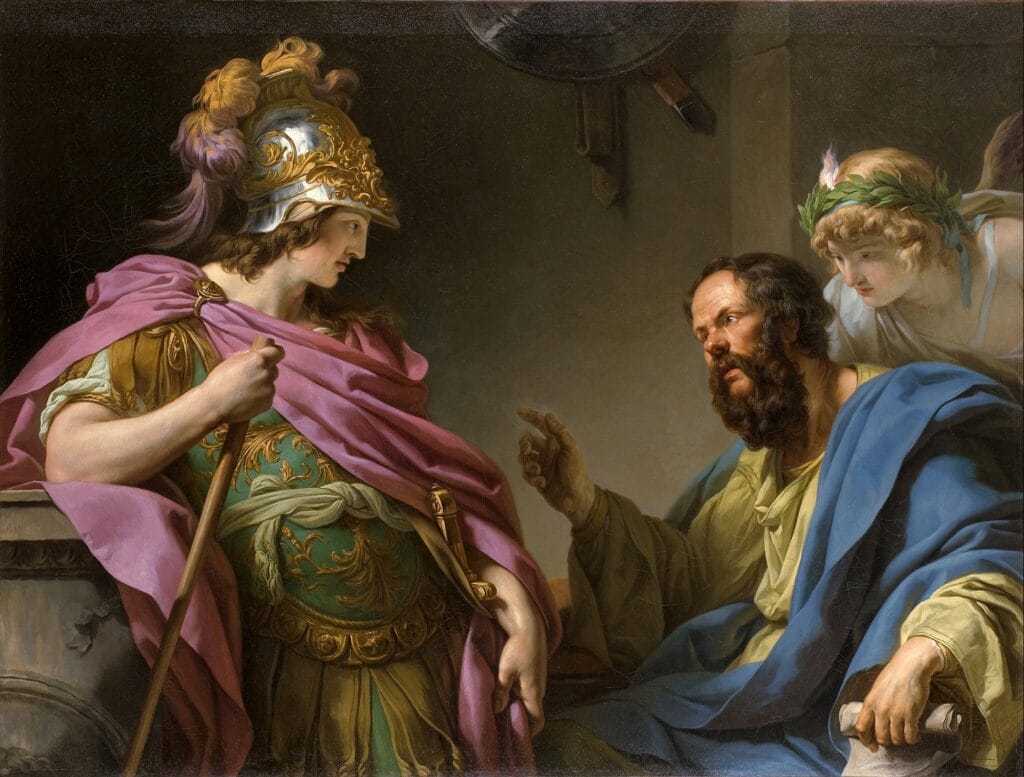
To him, the daimon was the link between man and the divine, a reminder that wisdom is already within us, waiting to be heard. When I think about that concept, it feels much like the act of cooking itself. The ingredients know what they are meant to become. The olive, the cheese, the honey—they each carry their purpose. All that is required is listening closely enough to bring it to harmony.
Legacy of a Simple Feast
Socrates was sentenced to death for “corrupting the youth,” yet his ideas became immortal. His last act was to drink a cup of hemlock calmly, unafraid of what lay beyond. To eat as he might have is to touch a fragment of that courage and clarity. There is no pretense in this food, only honesty.
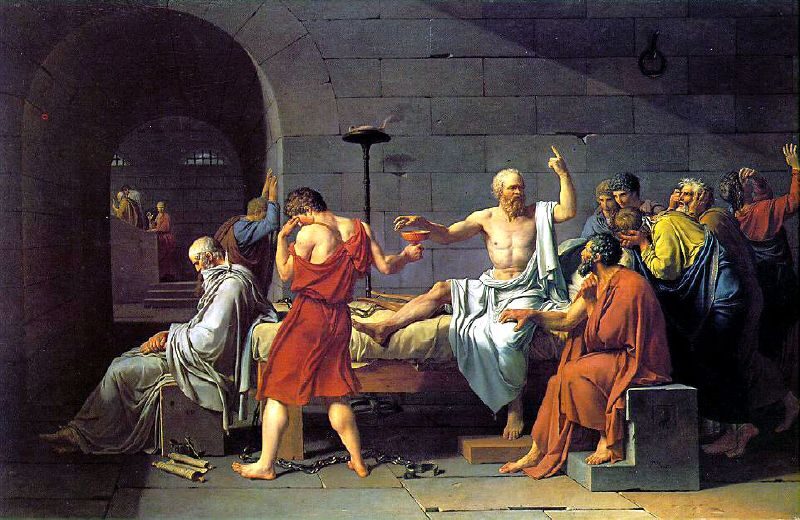
The symposium table was more than a place to eat; it was a space to think, to question, and to connect. Through this snackboard, we can still feel that spirit, that philosophy is served not only in books, but in the breaking of bread and the sharing of truth.
Recipe: Socrates’ Snackboard – The Philosopher’s Platter of Ancient Athens
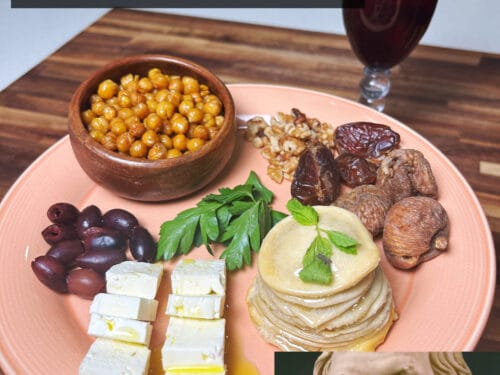
Socrates’ Snackboard – The Philosopher’s Platter of Ancient Athens

Don’t lose this one.
I’ll email it to you so it’s waiting when you’re ready to cook.
Ingredients
Instructions
Notes
- Authentic texture: Roll the dough thin but not paper-thin—about the thickness of a tortilla—to maintain the rustic chew typical of early Greek pastries.
- Best flavor balance: Use fresh goat cheese for a sharper, tangier taste that contrasts beautifully with honey, mirroring the sweet-salty harmony of Greek cuisine.
- Serving tip: Drizzle the finished plakous with honey while still warm and pair with diluted red wine or pomegranate juice to recreate the true symposium experience.