Few dishes are as closely tied to Christmas in Britain as figgy pudding. Dense, dark, rich with dried fruit and spice, and traditionally steamed for hours, this iconic dessert represents more than just a holiday sweet. It is a symbol of endurance, preservation, and celebration in the depths of winter.
If you’re enjoying my recipes, check out The Eats History Shop, now 40% Off!

Despite its name, figgy pudding rarely contained figs by the time it reached royal and upper-class tables. Instead, it evolved into a luxurious suet-based pudding filled with imported fruits, warming spices, and alcohol, all markers of wealth and global trade.
Today, figgy pudding is remembered through Victorian imagery, flaming brandy, and a famous Christmas carol. But its roots stretch back centuries earlier, and its transformation tells a broader story about British food, empire, and tradition. To understand figgy pudding is to understand how a medieval survival dish became a royal Christmas centerpiece.
The History of Figgy Pudding
The dish we now call figgy pudding began its life as something far more practical than festive. In medieval England, “plum pudding” was a boiled mixture of grains, dried fruits, spices, and often meat. The word “plum” referred broadly to any dried fruit, not the fruit we recognize today. These early puddings were designed to be filling, shelf-stable, and nourishing during the cold months.
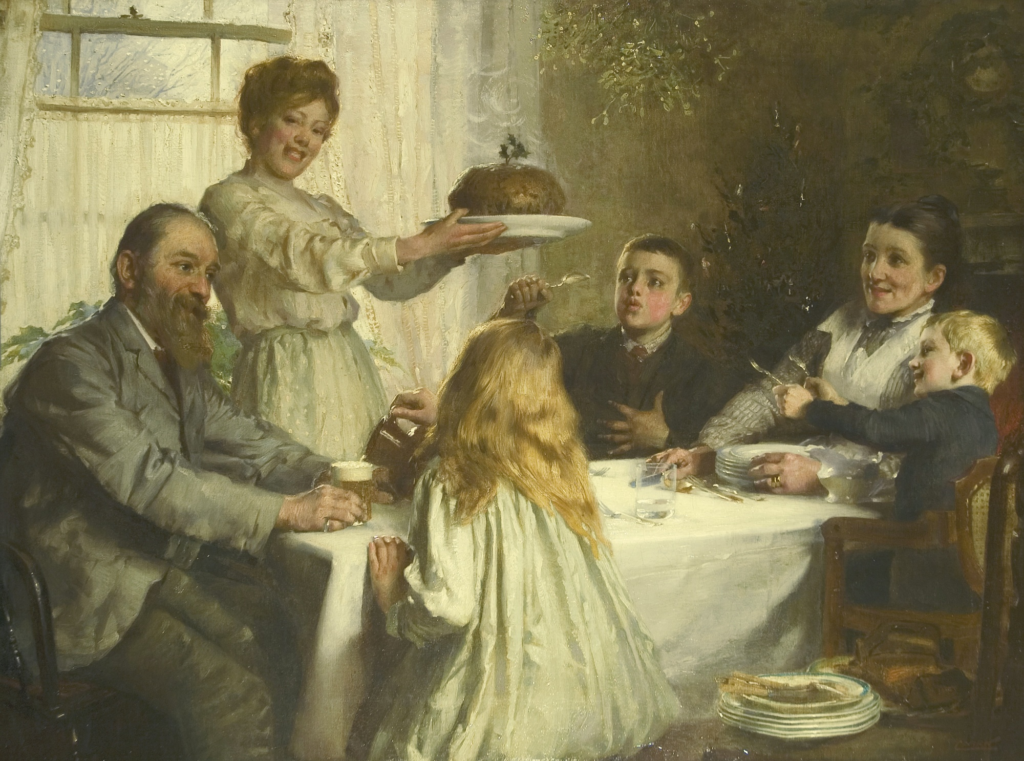
Figs were occasionally used in earlier versions, particularly in wealthy households with access to Mediterranean imports. However, by the seventeenth and eighteenth centuries, figs became less common in English puddings. Raisins, currants, and sultanas were cheaper, more available, and better suited to long storage. Despite the name lingering on, “figgy pudding” became a symbolic term rather than a literal ingredient list.
As sugar became more affordable and trade expanded, puddings grew sweeter and richer. Suet replaced meat, spices became more refined, and alcohol was added both for flavor and preservation. By the eighteenth century, figgy pudding had begun its transition from everyday sustenance to celebratory food.
From Survival Food to Status Symbol
By the late eighteenth century, figgy pudding had taken on a new role in British society. In upper-class and royal households, the pudding became an expression of wealth and refinement. Imported dried fruits, citrus zest, sugar, and spices all carried economic and imperial significance. The longer a pudding was aged and the more alcohol it contained, the more prestigious it was considered.
This version of figgy pudding was not eaten casually. It was prepared weeks in advance, wrapped carefully, and stored to mature. Steaming the pudding for several hours required fuel, time, and labor, all of which reinforced its association with status. While working-class families still made simpler puddings, the royal and aristocratic versions became increasingly elaborate.
By the turn of the nineteenth century, this rich, suet-based pudding was firmly associated with Christmas. It was no longer just food. It was ritual.
Victorian Britain and the Christmas Pudding
The Victorian era was responsible for fixing figgy pudding permanently into Britain’s Christmas tradition. Under Queen Victoria and Prince Albert, Christmas became a highly sentimentalized family holiday. Decorations, gift-giving, Christmas trees, and elaborate meals were emphasized as moral and cultural ideals.
Cookbooks such as Mrs Beeton’s Book of Household Management codified recipes for Christmas pudding that closely resemble what we recognize today. These puddings were dark, dense, filled with dried fruit, suet, breadcrumbs, spice, and alcohol. They were often steamed twice, once to cook and again to reheat on Christmas Day.
The dramatic flourish of flambéing the pudding with warm brandy became popular during this period, turning dessert into a theatrical event. In Victorian Britain, figgy pudding was no longer optional. It was expected.
“Oh Bring Us Some Figgy Pudding”
The dish’s cultural immortality was sealed through song. The traditional English carol We Wish You a Merry Christmas dates to the sixteenth century, but its modern lyrics were widely popularized in the nineteenth century. The line demanding figgy pudding reflects a time when Christmas treats were valuable, scarce, and deeply associated with hospitality.

The song hints at a social dynamic where carolers expected food or drink in return for their performance. Figgy pudding, rich and filling, represented generosity. To refuse it was to refuse the spirit of Christmas itself.
Through this song, figgy pudding moved beyond the table and into the cultural imagination. Even for people who never tasted it, the dish became inseparable from Christmas imagery.
My Review: Making Figgy Pudding Today
Making figgy pudding today is an exercise in patience. The batter is heavy and fragrant, the steaming time long, and the result far removed from modern cakes or desserts. This is not a light dish, and it is not meant to be. Each slice is dense, deeply spiced, and intensely fruity, with warmth from the alcohol and richness from the suet.
The flavor is complex but restrained. There is sweetness, but not excess. The citrus brightens the dried fruit, and the spices linger rather than overwhelm. Served hot with a pour of warm brandy or custard, it feels like a dish designed to be eaten slowly, ideally at the end of a long winter meal.
What surprised me most is how intentional the pudding feels. It demands time and care, and in return it offers something comforting and timeless. You can understand why generations treated it as more than dessert.
British Royal Figgy Pudding Recipe
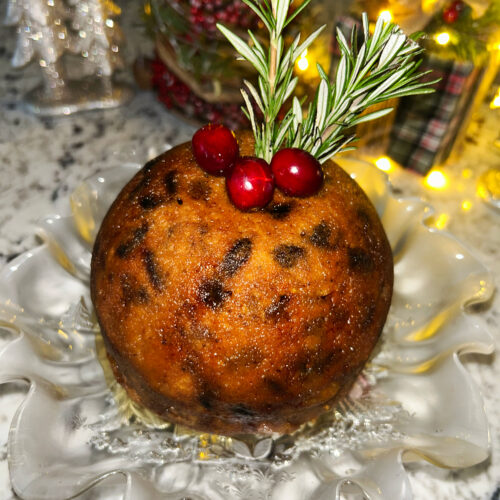
British Royal Figgy Pudding Recipe
Ingredients
Figgy Pudding
- 1 cup raisins
- 1 cup currants
- ½ cup sultanas
- Zest and juice of ½–⅔ orange
- 1 cup finely shredded beef suet
- ⅓ cup all-purpose flour
- 1 tablespoon mixed spice
- 1½ cups breadcrumbs or panko
- ⅓ –½ cup packed brown sugar
- 1 large egg
- ½ cup ale or stout
- 2 tablespoons rum
- 2 tablespoons brandy
Brandy Cream Sauce
- 1 cup heavy cream
- 2 tablespoons granulated sugar
- 2 tablespoons brown sugar
- ¼ teaspoon ground cinnamon
- 1 teaspoon vanilla extract
- 2 tablespoons brandy
- Pinch of salt
Instructions
Figgy Pudding
- In a large mixing bowl, combine the raisins, currants, and sultanas. Add the orange zest and juice. Stir and let soak for 10–15 minutes.
- Add the suet, flour, mixed spice, breadcrumbs, and brown sugar to the fruit. Mix thoroughly.
- Beat the egg lightly and stir it into the mixture. Pour in the ale, rum, and brandy. Mix into a thick, heavy batter.
- Grease a pudding basin or stainless steel mixing bowl generously with butter. Spoon in the mixture, pressing gently to remove air pockets.
- Cover the basin with foil, securing tightly with string or a rubber band.
- Place in a pot with simmering water reaching halfway up the sides of the basin. Steam gently for 3–4 hours, topping up the water as needed.
- Remove from the water and allow to cool completely. The pudding may be eaten immediately or wrapped and stored in a cool place for 2–4 weeks to mature.
- To serve, reheat by steaming for 1–2 hours, then turn out onto a plate. Optionally flambé with warm brandy before serving.
Brandy Cream Sauce
- Add the heavy cream to a small saucepan over medium-low heat.
- Stir in the granulated sugar, brown sugar, cinnamon, and salt.
- Heat gently, stirring often, until the sugars dissolve and the cream is hot but not boiling.
- Lower the heat and simmer gently for 5–8 minutes, until slightly thickened.
- Remove from heat and stir in the vanilla extract and brandy.
- Serve warm over the hot figgy pudding.
Video
Notes
- Texture Expectation: This pudding will not rise or crumb like a cake. A firm, sliceable texture is correct and historically accurate.
- Aging Improves Flavor: If time allows, wrap and store the pudding for 2–4 weeks before serving. The flavors deepen and mellow significantly.
- Alcohol Balance: The alcohol is essential for flavor and preservation. For a drier, more Victorian profile, reduce the sugar slightly rather than the spirits.