In the bustling heart of the Aztec Empire, food was never just fuel. It was medicine, ritual, and a sacred bond between humans and the divine. Among the many dishes that carried both nourishment and spiritual weight, one stands out as a sweet treat with serious meaning. Tzoalli, an amaranth-based candy, was crunchy, lightly sweet, and easy to make, yet it was revered as an offering to the gods. Imagine a snack with the health benefits of a modern superfood bar but the religious significance of communion bread. That is what this humble candy represented to the people of Tenochtitlan.
If you’re enjoying my recipes, check out Eats History shop for my e-cookbooks & merch!
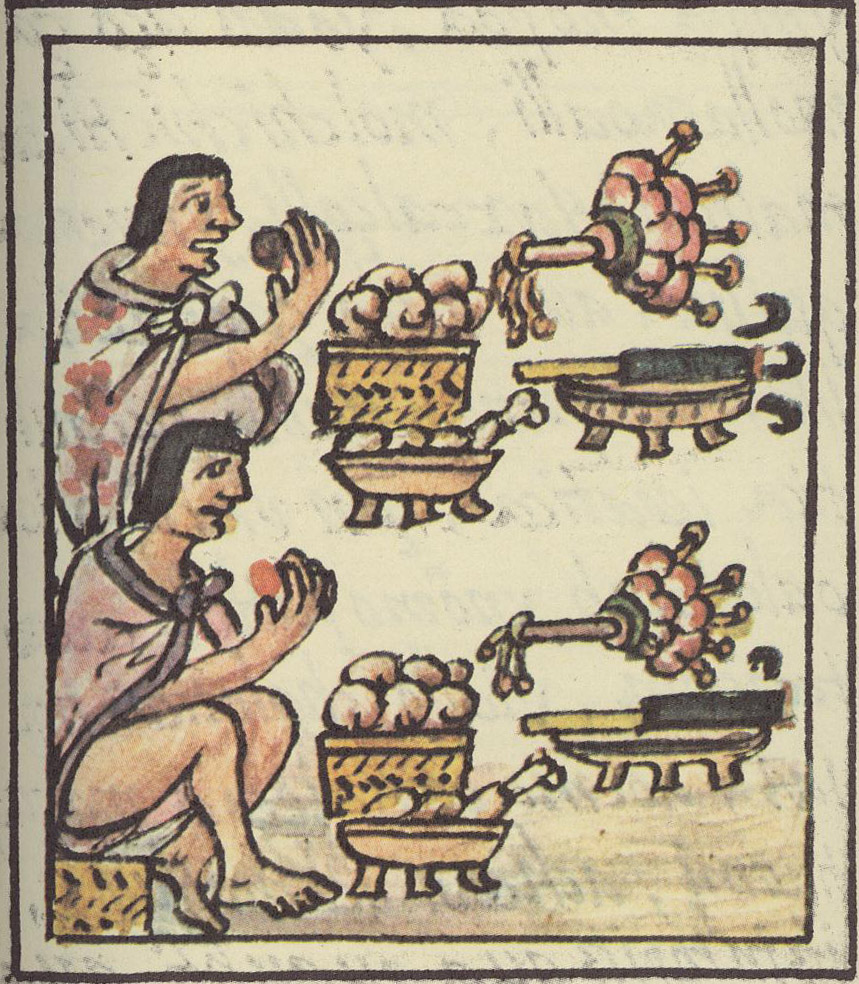
Today, when we look at puffed amaranth bound with honey and studded with pumpkin seeds, we may see nothing more than a healthier cousin of a Rice Krispy treat. Yet for the Aztecs, this was food for the gods. It connected them to Huitzilopochtli, their powerful deity of sun and war, and gave them a ritual of both sustenance and faith. In every bite, they tasted not only grain and honey but also devotion.
Tzoalli has survived the centuries, though not without struggle. Spanish colonizers tried to eradicate its ritual use, destroying fields of amaranth and labeling its consumption as idolatry. Yet the grain never disappeared. It lingered in secret plots, in memory, and in hidden recipes, eventually resurfacing as alegría, a cheerful snack still enjoyed across Mexico.
Huauhtli, the Sacred Grain
The Aztecs called amaranth huauhtli, a word that stands out in Nahuatl because it does not share roots with other terms. It feels as if the grain had its own linguistic identity, set apart from the everyday crops of maize and beans. This uniqueness was reflected in its role in Aztec society. Unlike maize, which formed the base of daily life, huauhtli was tied directly to ritual and ceremony. It was the grain of gods rather than the grain of farmers.
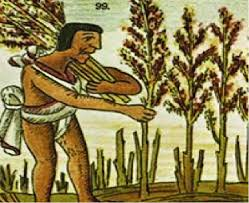
Amaranth was more than symbolic. Nutritionally, it was one of the most powerful foods the Aztecs had. Packed with protein, calcium, iron, and fiber, huauhtli offered sustenance that could sustain warriors and workers alike. Its ability to grow in difficult conditions made it a resilient crop, well suited to the varied climates of the empire. To the Aztecs, its strength in the field mirrored its strength in the body, and that gave it added spiritual resonance.
In festivals dedicated to Huitzilopochtli, huauhtli was transformed into dough mixed with honey or maguey syrup. This dough was molded into figurines of the god himself, carried through rituals, and then consumed by the faithful. Eating huauhtli in this form was more than nutrition. It was communion with the divine, a way of drawing the god’s strength into one’s own body.
Huauhtli became inseparable from identity. To eat it was to take part in an ancient covenant with the gods, a reminder that food can be both sacred and practical. In every toasted seed was the echo of ritual, belief, and survival.
Huitzilopochtli and the Candy of the Sun
Huitzilopochtli, the great sun god, was both a protector and a fearsome force. He was the one who carried the sun across the sky each day, ensuring life continued, and he demanded loyalty in return. The Aztecs honored him with festivals filled with music, dance, and offerings. Among those offerings was tzoalli, made from his sacred grain.
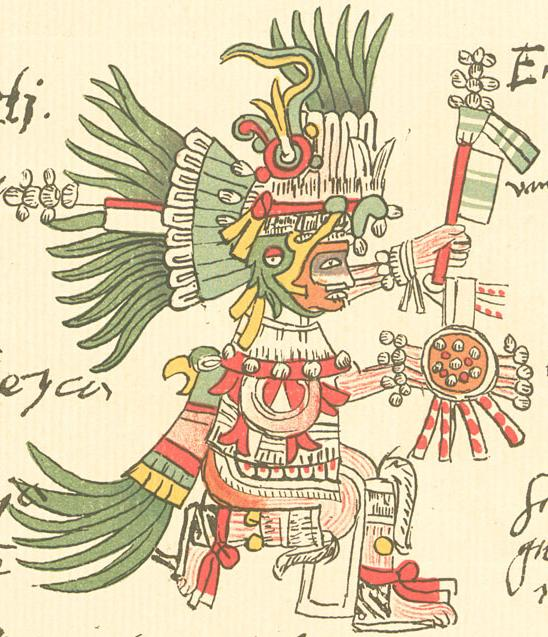
By associating huauhtli with Huitzilopochtli, the Aztecs reinforced the connection between earthly food and cosmic order. Every seed toasted and sweetened carried within it a spark of sunlight. To eat tzoalli was to take in that light and renew one’s place within the divine cycle of day and night. It was food that made cosmic sense.
The crafting of edible idols was a striking practice. Amaranth dough was shaped into detailed figures of Huitzilopochtli, sometimes painted or decorated, and presented in ritual ceremonies. These figures were not merely admired. They were consumed in a sacred act that paralleled communion in Christian practice. To the Aztecs, this was a direct channel to the god, a way of absorbing his strength and continuing his cycle of power.
What may seem to us like a simple candy bar was for the Aztecs a portal between worlds. Tzoalli was proof that the everyday act of eating could carry divine meaning, a truth that still resonates when we look at food traditions today.
Spanish Accounts and Outlawing Idol Worship
When Spanish chroniclers arrived in the Valley of Mexico, they recorded what they saw with a mixture of fascination and horror. Bernardino de Sahagún described the use of amaranth in his Florentine Codex, noting how it was shaped into idols and eaten by worshipers. Diego Durán also detailed the festivals where huauhtli played a central role. For the Spaniards, the practice was unsettling, both because of its religious intensity and its resemblance to their own Eucharist.
To Spanish eyes, the consumption of edible idols looked dangerously similar to Christian communion, but directed toward a god they considered false. This blurred line made them react harshly. They labeled the rituals pagan and dangerous, equating the food with idolatry that had to be stamped out.
In the aftermath of conquest, the Spanish outlawed the cultivation and ritual use of amaranth. Fields were burned, farmers punished, and a once-thriving crop was nearly erased from agriculture. For centuries, amaranth survived only in hidden corners, tended quietly by indigenous communities who refused to let it disappear completely.
The story of tzoalli thus became one of resilience. What had been outlawed as paganism lived on as memory and secret practice. When you bite into modern alegría, you are tasting not only sweetness but also centuries of resistance.
Tradition Lives On: The Joy of Alegría
Despite Spanish suppression, huauhtli never fully vanished. Its nutritional value was too important, and its cultural significance too deep. Indigenous communities continued to grow it quietly, and over time it reemerged in a new form. Today, Mexicans know it as alegría, meaning “joy.” This candy of puffed amaranth bound with syrup or honey is sold in markets across the country, a cheerful treat that carries history in every crunch.
Alegría reflects both continuity and transformation. It preserves the essential technique of toasting amaranth and binding it with sweetness, but it has shed the overtly religious context. What was once food for Huitzilopochtli is now food for everyone, children and adults alike, enjoyed on streets and in homes without fear of punishment.
The health benefits remain. Amaranth is still considered a superfood, rich in nutrients that modern science praises as much as Aztec farmers once did. Eating alegría connects past and present, showing that traditions suppressed can return in new and surprising forms.
For me, there is something poetic about the name. Joy is exactly the right word. It is joy that this grain survived, joy that ancient wisdom outlasted colonial bans, and joy that we can still taste what once belonged to the gods.
Making Tzoalli at Home
One of the most appealing things about tzoalli is its simplicity. While its cultural meaning is layered and complex, the actual cooking process could not be easier. All it takes is a pan, a steady hand, and a few basic ingredients. With amaranth, honey, and pumpkin seeds, you can recreate a candy that ties you directly to Aztec tradition.
The first step is to toast the amaranth seeds. As they heat, they pop lightly, giving off a nutty aroma that fills the kitchen. Next, lower the heat and clear a small space in the pot for your honey. Pour it in and let it warm until it flows smoothly without burning. Mix the seeds into the honey until every grain glistens. Fold in the pumpkin seeds for added crunch and flavor.
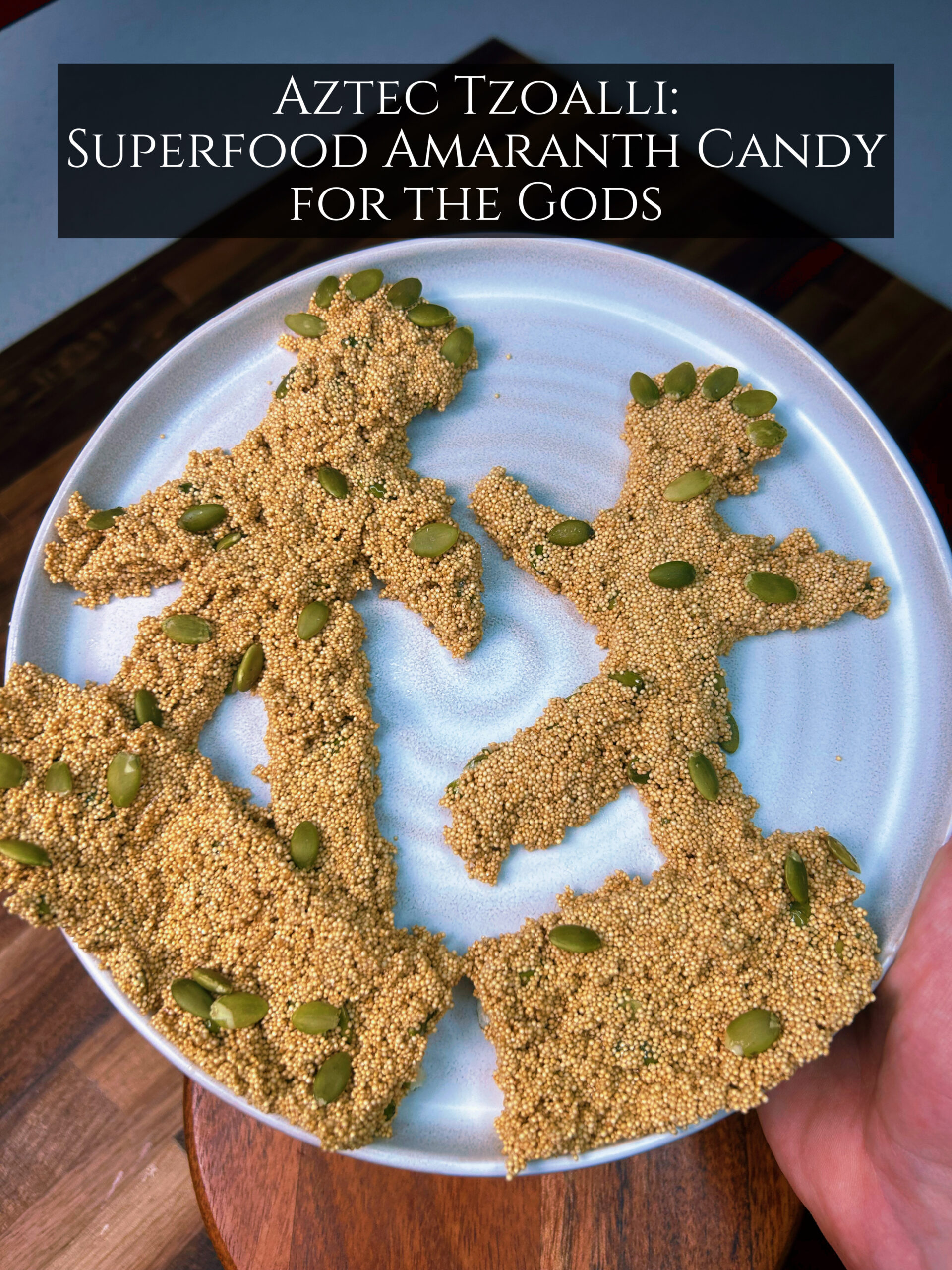
Pour the mixture into a greased pan, press it flat, and allow it to cool or freeze. Once firm, cut it into bars or, if you are feeling authentic, shape it into figurines. The process is as enjoyable as the eating, and there is something deeply satisfying about holding in your hands the same style of candy that Aztec priests once crafted centuries ago.
The result is a snack that bridges time. It is healthy, lightly sweet, and rich with history. On taste alone, I would give it an 8.8 out of 10. But when you add the story, it becomes priceless.
Recipe: Aztec Tzoalli (Amaranth Candy)
Aztec Tzoalli (Amaranth Candy)
Ingredients
- 2 cups amaranth seeds
- 1/2 cup honey
- 1/2 cup pumpkin seeds
Instructions
- Toast the amaranth seeds in a dry pan over medium heat until they pop and release a nutty aroma.
- Reduce heat to low. Make a small space in the center of the pan and pour in the honey. Let it warm gently.
- Mix the toasted amaranth into the honey until all seeds are evenly coated.
- Stir in the pumpkin seeds for extra crunch.
- Pour the mixture into a greased pan, press flat, and let cool or freeze until firm.
- Cut into bars or shape into figurines. Enjoy immediately or store in an airtight container.
Video
Notes
- Toast carefully. Amaranth seeds pop quickly and can burn in seconds. Keep the pan moving and remove them from heat as soon as most have popped.
- Work fast. Once the honey and amaranth are mixed, the candy sets quickly. Have your pan greased and ready to pour before you begin.
- Get creative. Shape the mixture into bars, balls, or even figurines to echo the way the Aztecs crafted edible idols during festivals.