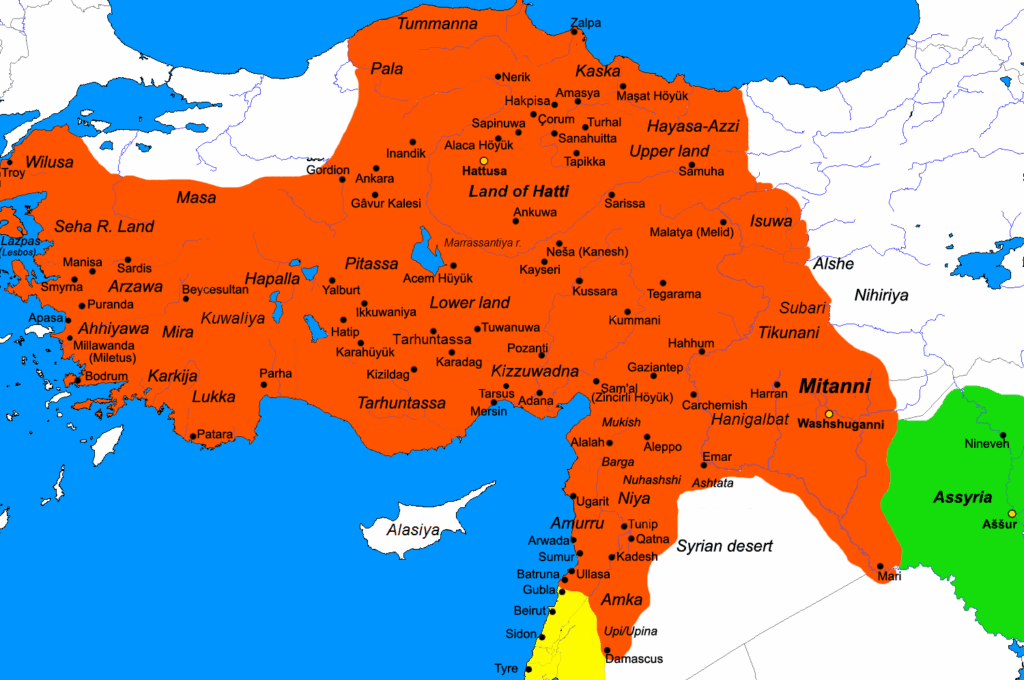
The Hittite Empire was one of the great powers of the Late Bronze Age, ruling much of central Anatolia between 1650 and 1200 BCE. From their fortified capital of Hattusa, they commanded armies, forged treaties, and controlled vital trade routes linking the Aegean, Mesopotamia, and Levant.
Their political might was matched by a deeply ritualized religion, in which every feast, offering, and festival was designed to keep the gods content and the natural world in balance. For the Hittites, agriculture was not simply an economic activity; it was the foundation of life, the rhythm of the seasons, and the medium through which humans could communicate with the divine.
Food held symbolic power. The Hittite kings were not only rulers but also high priests responsible for ensuring the fertility of the land. This meant participating in elaborate offerings to the storm god Tarḫunna, the sun goddess of Arinna, and countless other deities. Bread, beer, wine, fruits, and meat all featured in these ceremonies, and the quality of these offerings was believed to have a direct impact on the prosperity of the realm.
By weaving together emmer wheat, orchard fruits, nuts, and honey, we are not just making a rustic snack; we are recreating an edible fragment of Hittite life. While the exact combination of these ingredients in one bread is speculative, each element is historically grounded in the Hittite world and its wider Near Eastern context.
The Hittites: Empire and Agriculture
At its peak, the Hittite Empire stretched from the Aegean coast deep into Syria, with influence reaching even into northern Mesopotamia. This position gave them access to a vast range of climates and agricultural zones. Central Anatolia’s fertile valleys produced wheat, barley, legumes, and fruits, while trade networks brought in luxury goods like cedar from Lebanon, tin from the east, and exotic spices from far-off lands. Agriculture, however, remained the backbone of the empire.
Excavations at Hattusa have uncovered massive granaries capable of storing hundreds of tons of grain. Such infrastructure ensured food stability for the capital and provided a safety net in times of drought or siege. Emmer wheat, the most common cereal of the Bronze Age Near East, was a hardy crop well-suited to Anatolia’s climate. It had a lower gluten content than modern bread wheats, producing dense, chewy loaves that could be eaten fresh or dried for long storage. Archaeobotanical studies confirm emmer’s dominance in the Hittite grain economy, though barley was also widely grown and used for beer brewing.
Hittite law codes even regulated agricultural duties, with specific penalties for damaging orchards, stealing grain, or neglecting farmland. These laws underscore the centrality of food production to social order. The empire’s survival was quite literally baked into the land, and every harvest was both an economic event and a religious one. Grain from the fields was ground into flour not only for daily meals but also for the hundreds of ritual breads listed in the Hittite festival texts.
This agricultural focus created a culture in which bread was more than sustenance—it was the currency of divine communication. Each loaf placed on an altar was a symbolic link between farmer, king, and god. In that sense, the flatbread we bake today in tribute to the Hittites is not just food history—it’s a reenactment of the role bread played in their cosmology.
Bread and the Hittite Table
The Hittite word for bread, ninda, appears hundreds of times in their surviving texts. Yet “bread” to them encompassed a wide variety of forms, from thin unleavened sheets to thick loaves and stuffed pastries. Some were made for everyday consumption; others were shaped and decorated for ceremonial use. The famous ninda.šuhal, for example, was a large, possibly round loaf offered during religious festivals.
Archaeological evidence and textual descriptions suggest that many breads were baked on hot stones, in clay ovens, or directly on hearth embers. Without yeast as we know it today, leavening was minimal, and the texture was dense and hearty. Ingredients like oil, honey, or fruit could be worked into the dough or used as toppings, creating richer, more festive breads. This variety reflected not just culinary creativity but also the adaptability of bread to different social and ritual contexts.
Festivals often required dozens of distinct bread types, each destined for a particular deity or ceremony. Some breads were even dyed or sprinkled with herbs, seeds, or spices, creating both a visual and aromatic offering. While no surviving recipe combines apples, walnuts, and honey exactly as in our modern version, the individual components are all attested in the Hittite or wider Near Eastern repertoire, making this flatbread a plausible composite for a celebratory or temple-bound loaf.
The Hittite attitude toward bread was profoundly reverential. To break bread was to participate in a web of relationships: between humans and the gods, between king and subject, and between past and present harvests. Our apple-honey-walnut flatbread, therefore, channels not just the taste of an ancient grain, but the weight of its cultural meaning.
Apples in Anatolia
Apples are not specifically named in surviving Hittite food texts, but archaeobotanical evidence tells us they were present in Bronze Age Anatolia. Wild apple species grew in the region, and Anatolia sits along the ancient migration route of Malus domestica from Central Asia toward Europe. Genetic studies suggest that cultivated apples were already spreading westward by the late Bronze Age, and Anatolia’s climate was ideal for their growth.
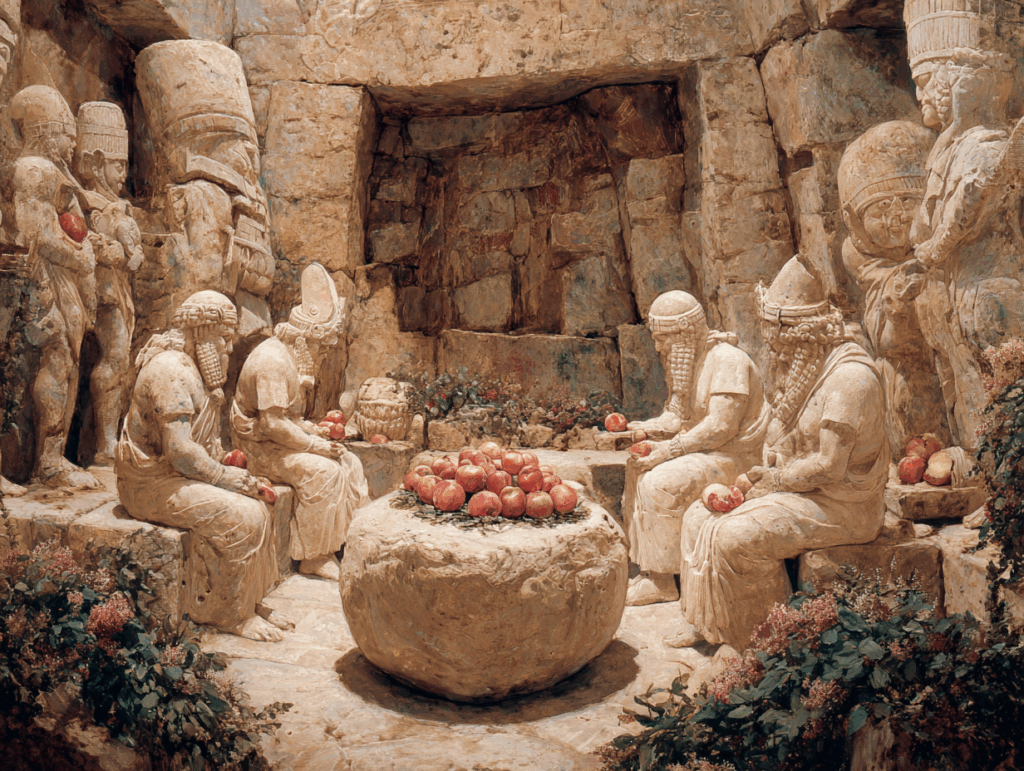
The Hittites valued orchards enough to protect them through law. Damaging a fruit tree could incur heavy fines or even corporal punishment, reflecting the long-term investment required to cultivate them. While figs, grapes, and pomegranates are more frequently mentioned in textual sources, apples would have been part of the seasonal abundance that marked late summer and autumn. In a ritual context, fruit symbolized fertility, renewal, and divine favor.
The tartness of an ancient apple—likely smaller and more astringent than modern varieties—would have provided a vivid contrast to sweet honey. Such a pairing fits within the flavor sensibilities of the ancient Near East, where sweet-and-tart combinations were common in both savory and sweet dishes.
In our recipe, apples bring both a botanical authenticity and a seasonal connection to harvest time, when offerings to the gods would have been richest and most plentiful. Their inclusion invites us to imagine a Hittite baker incorporating freshly gathered orchard fruit into a special bread for a feast or temple rite.
Walnuts, Coriander, and the Bronze Age Pantry
Walnuts (Juglans regia) are native to regions stretching from the Balkans through Central Asia, and their presence in Anatolia is well-attested in Bronze Age archaeobotanical remains. These nuts were prized for their rich, oily flesh and could be eaten raw, roasted, or ground into pastes. In a culture where fats were less accessible than today, walnuts would have been a valuable calorie source, as well as a symbol of abundance.
Coriander (Coriandrum sativum), on the other hand, is one of the oldest known culinary herbs, with seeds found in archaeological sites across the Near East dating back to the third millennium BCE. Its citrusy, slightly floral flavor pairs naturally with both savory and sweet preparations. Coriander seeds have been found in Egypt, the Levant, and Mesopotamia—regions that traded with the Hittites—making it plausible that coriander was part of the Hittite spice repertoire, at least for elite or ceremonial cooking.
In combining walnuts and coriander with apples and honey, our flatbread brings together multiple strands of the Hittite larder: the cultivated grain from the fields, the fruit from the orchard, the nuts from the hillsides, and the spice from the trade routes. This layering of ingredients echoes the Hittite empire itself—a meeting point of cultures and resources, unified under a shared table.
By using these ingredients today, we not only recreate a plausible flavor profile of the Late Bronze Age but also highlight the interconnectedness of ancient trade and cuisine. Every bite becomes a reminder that even 3,000 years ago, Anatolian kitchens were influenced by goods and ideas from far beyond their own valleys.
Religion, Ritual, and the Sacred Loaf
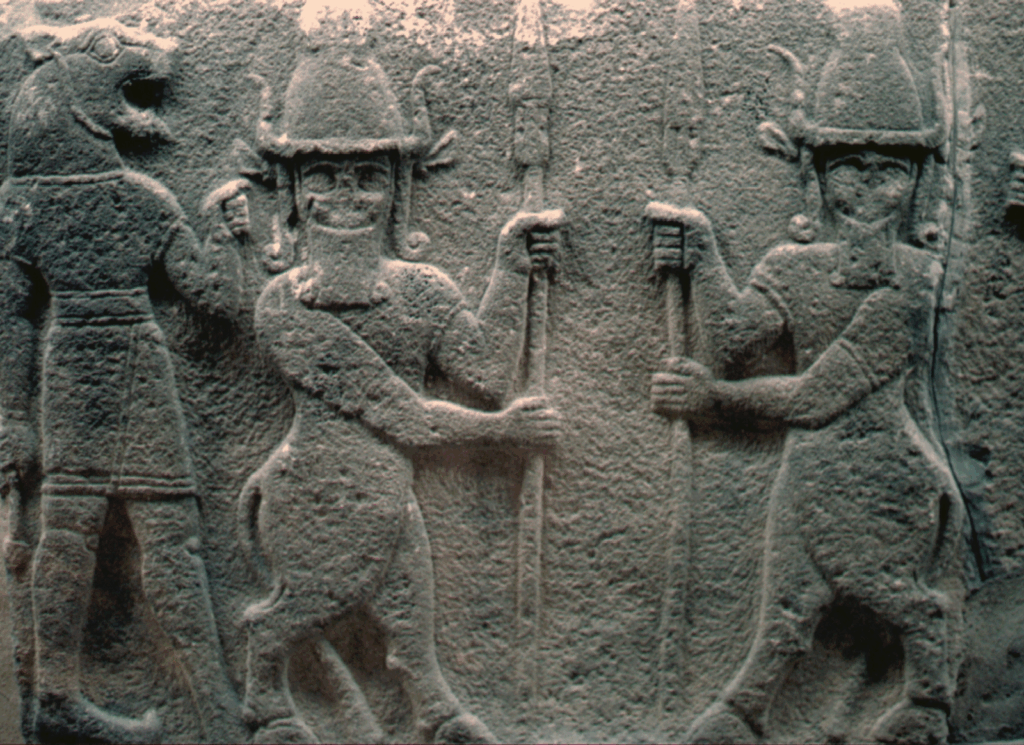
The Hittites practiced a polytheistic religion with hundreds of deities, many of them local or borrowed from neighboring cultures. Rituals often included food offerings, and bread was among the most frequent gifts to the gods. The act of offering bread was accompanied by libations of wine or beer, the burning of incense, and the recitation of hymns and prayers.
Temple kitchens in major cities would have been busy during festivals, producing large numbers of ritual loaves. Some breads were offered whole; others were broken and shared among priests and participants. The shape, size, and decoration of a bread could signal which god it was for and what the offering intended to convey—be it thanks, supplication, or appeasement.
Honey’s presence in these offerings is well documented. Ritual texts describe honey being poured over breads or mixed into the dough, perhaps as a way to make the offering more appealing to the gods. This aligns with a widespread ancient Near Eastern belief that sweetness could “delight” the divine palate.
Our apple-honey-walnut flatbread can be imagined as a seasonal temple bread—baked after the apple harvest, enriched with honey to honor the gods, garnished with walnuts and coriander to mark it as a luxury. Even if no surviving tablet records this exact combination, every element is grounded in the Hittite world, making the recipe a faithful act of culinary archaeology.
If you’re enjoying my recipes, check out Eats History shop!
Recipe: Hittite Apple-Honey-Walnut Flatbread (Single Serving)
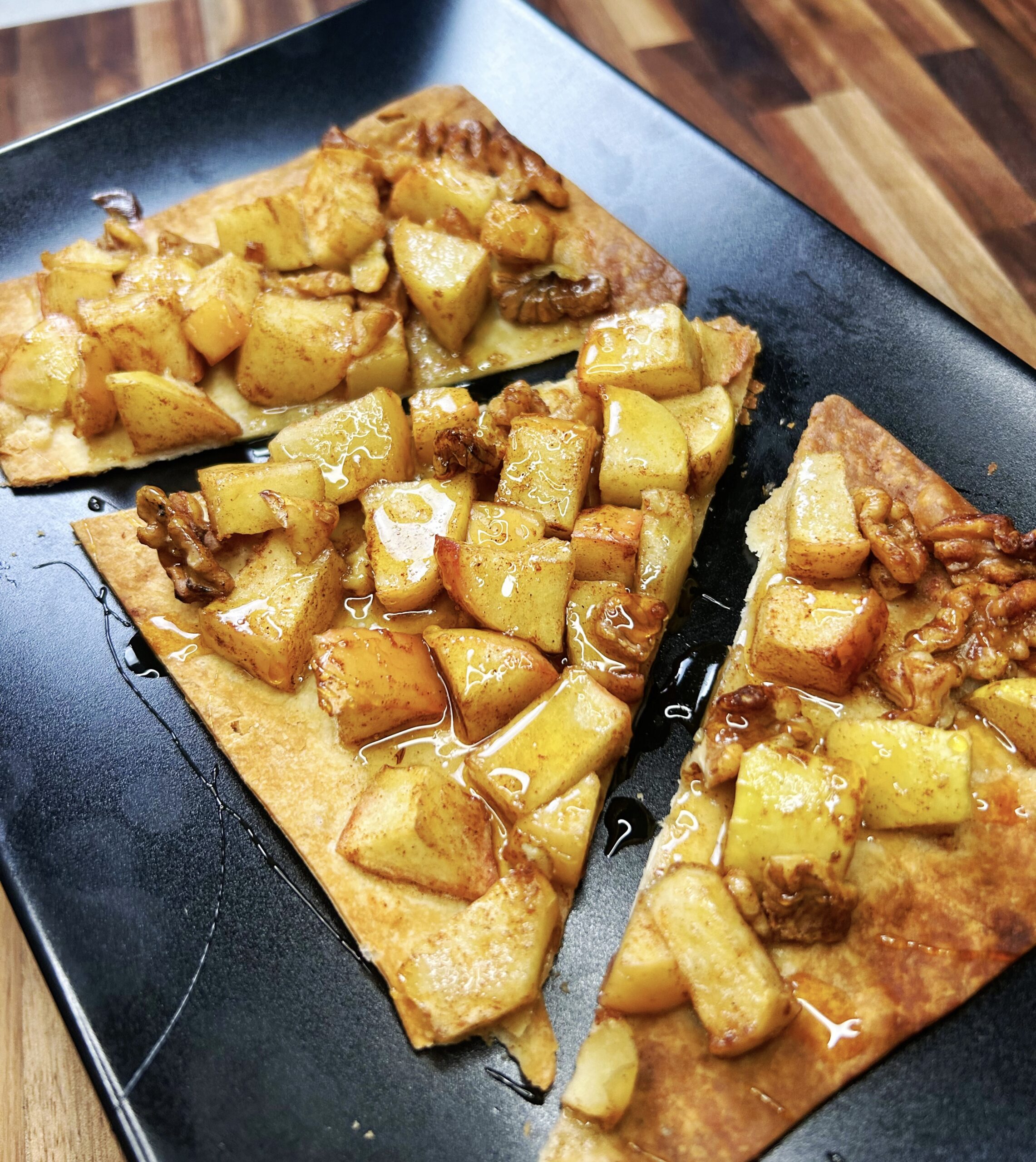
Hittite Apple-Honey-Walnut Flatbread
Ingredients
- ½ cup emmer flour or whole wheat as substitute
- Pinch of salt
- 1 tbsp olive oil or sheep’s butter
- 2 –3 tbsp water
- ½ small tart apple finely chopped
- 1 tbsp honey
- 1 tbsp crushed walnuts
- Pinch of crushed coriander seed
Instructions
- Make the dough – Mix emmer flour, salt, and oil in a bowl. Slowly add water until a smooth, slightly sticky dough forms. Rest for 10–15 minutes.
- Prepare the topping – Combine apple, honey, walnuts, and coriander in a bowl. Let sit to blend flavors.
- Assemble – Preheat oven to 400 °F (205 °C). Roll dough into a 4–6″ round about ¼″ thick. Spoon topping in the center.
- Bake – On a hot stone or baking sheet, bake 12–15 minutes until golden and apples soften. Optionally broil for 1 minute to caramelize nuts and honey.
- Serve – Enjoy warm, imagining a Hittite baker doing much the same over 3,000 years ago.
Video
Notes
- Emmer flour was the primary grain of the Hittite world; whole wheat flour works well as a substitute if emmer is unavailable.
- Use a tart, firm apple for the best flavor balance with the honey’s sweetness.
- Lightly toasting the walnuts before adding them will deepen their flavor and give the flatbread a richer aroma.