Bibingka is not just a dessert in the Philippines. It is a season, a memory, and a ritual. For many Filipinos, the smell of bibingka signals the arrival of Christmas long before decorations go up or gifts are wrapped. It is the scent of warm rice, coconut, and banana leaf drifting through the early morning air after Simbang Gabi, the nine-day series of dawn masses leading up to Christmas.
If you’re enjoying my recipes, all of my cookbooks are currently 40% Off in the Eats History Shop!
Unlike many holiday desserts that rely on sugar and spectacle, bibingka’s power lies in restraint. Its ingredients are humble, its preparation direct, and its appeal deeply emotional. This is food shaped by climate, agriculture, and centuries of adaptation. It exists not because it is flashy, but because it endures.
This cast iron version is inspired by those traditions. While it uses modern tools and ingredients available in most kitchens today, it preserves the spirit of historical bibingka. Rice flour, coconut milk, banana leaf, and high heat remain the soul of the dish. The result is something familiar yet timeless, a bridge between old-world technique and contemporary home cooking.
Bibingka and the World of Kakanin
Bibingka belongs to a broad family of Filipino rice delicacies known as kakanin. The word comes from kanin, meaning cooked rice, and refers to the many rice-based cakes and sweets that formed the backbone of precolonial Filipino cuisine. Long before wheat flour or refined sugar arrived in the archipelago, rice was transformed into food through soaking, grinding, fermenting, and steaming.
These rice cakes were not merely snacks. They were deeply embedded in daily life, ritual, and spirituality. Kakanin were prepared for communal gatherings, agricultural festivals, and offerings to deities and ancestral spirits. Their shapes, textures, and preparation methods carried symbolic meaning tied to abundance, gratitude, and continuity.
Bibingka emerged within this world as a baked rice cake distinguished by its cooking method. While many kakanin were steamed, bibingka relied on dry heat from above and below. This technique produced a toasted exterior and a soft, aromatic interior. It was a practical innovation that also happened to create one of the most beloved textures in Filipino food.
Precolonial Roots and Early Accounts
The foundations of bibingka predate Spanish colonization. Rice cultivation was already highly developed in the Philippines, and early Filipinos possessed sophisticated techniques for processing grain into flour and batter. Traditional bibingka batter was made by soaking rice, grinding it on stone mills, and allowing it to ferment naturally. Wild yeasts in the tropical air leavened the cake slowly, much like sourdough traditions elsewhere in the world.
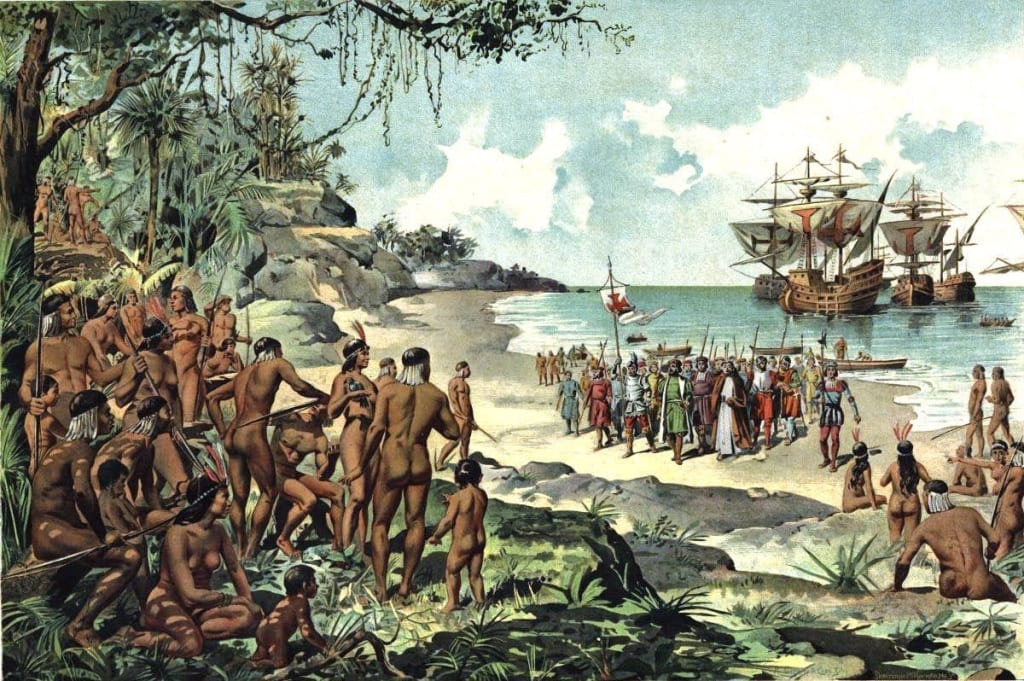
One of the earliest written references to Filipino rice cakes appears in the sixteenth century. When Spanish explorers arrived, the king of Palawan presented them with kakanin wrapped in banana leaves. Chronicler Antonio Pigafetta described these foods as resembling sugar loaves and tarts made with eggs and honey. This account confirms that rice cakes were already ceremonial foods, valued enough to be given as diplomatic gifts.
These early forms of bibingka were denser and less sweet than modern versions. They relied on fermentation rather than chemical leavening and used minimal enrichment. What they lacked in softness, they made up for in depth of flavor and connection to place.
Fire, Banana Leaves, and the Traditional Method
What truly defines bibingka is how it is cooked. Traditionally, the batter is poured into a terracotta pot lined with banana leaves. Charcoal or dried coconut husks provide heat from below, while additional embers are placed on a metal lid above the cake. This dual-fire system cooks the bibingka evenly while creating a lightly charred top and bottom.
The banana leaf plays a crucial role. When heated, it releases oils that perfume the cake and prevent sticking. It also protects the batter from direct contact with the vessel, allowing the rice cake to cook gently while absorbing a subtle vegetal aroma. The leaf itself often chars slightly, adding another layer of flavor.
This method requires attention and intuition. Heat must be managed carefully, and timing is learned through experience rather than measurement. Bibingka was traditionally made early in the morning, eaten fresh, and rarely stored. Its fleeting nature is part of its charm.
Colonial Influence and Modern Evolution
As Spanish and later American influences reshaped Filipino cuisine, bibingka evolved alongside them. Eggs, milk, butter, and refined sugar entered the batter, making the cake softer and richer. During the American colonial period, home economics programs introduced standardized measurements, baking powder, and modern ovens to Filipino households.
These changes made bibingka more accessible and consistent, particularly in urban areas. The dense, fermented versions gradually gave way to lighter, fluffier cakes with even crumbs. While purists may mourn the loss of wild fermentation, these adaptations allowed bibingka to thrive in a changing world.
Today’s bibingka often includes toppings like salted egg, cheese, or grated coconut. These additions reflect both regional variation and modern taste. Yet even with these changes, the essence of bibingka remains intact. Rice, coconut, heat, and ritual still define the dish.
Bibingka and the Filipino Christmas
Bibingka’s association with Christmas is inseparable from Filipino religious and cultural life. During Simbang Gabi, worshippers rise before dawn to attend mass for nine consecutive days. Afterward, church courtyards fill with vendors selling bibingka and puto bumbong. The warmth of the cakes contrasts with the cool early morning air.
Eating bibingka at this time is not just about hunger. It is a moment of reward, reflection, and community. Families share plates, conversations linger, and traditions are reinforced. Over generations, this ritual transformed bibingka into a symbol of Christmas itself.
Even as bibingka is now available year-round in malls and online shops, its emotional weight remains strongest during the holiday season. It is a dessert that carries memory as much as flavor.
Rating and Reflection
This single-pan cast iron bibingka stays true to the spirit of the original while adapting it for the modern kitchen. The banana leaf lining, high heat, and rice-forward batter honor tradition, while baking powder and enriched ingredients ensure reliability.
Rating: 9.1/10
It captures the aroma, texture, and warmth that make bibingka timeless. While it cannot fully replicate the charcoal-fired intensity of traditional methods, it comes remarkably close, especially when eaten warm with butter melting across the surface.
Single-Pan Cast Iron Bibingka Recipe
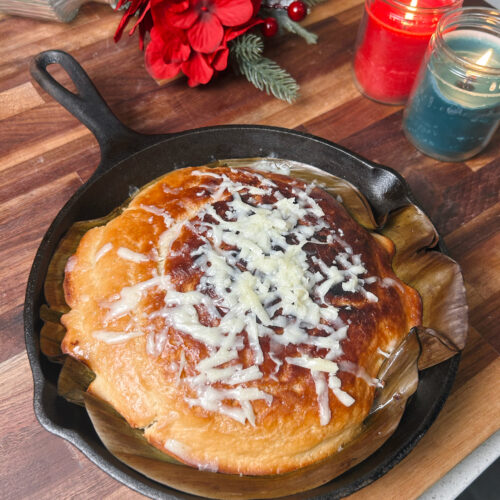
Single-Pan Cast Iron Bibingka Recipe
Ingredients
Pan and Lining
- 1 banana leaf lightly passed over a flame to soften, optional but traditional
- 3 tablespoons unsalted butter melted, plus more for finishing
Dry Ingredients
- 1 cup white rice flour
- ¼ cup all-purpose flour
- 1½ teaspoons baking powder
- ¼ teaspoon salt
Wet Ingredients
- 3/4 cup full-fat coconut milk
- 1 large egg
- ⅓ cup granulated sugar
- 1 teaspoon vanilla extract optional
Optional Traditional Toppings
- Salted butter for finishing
- A small sprinkle of sugar before baking
- Grated coconut or Cheddar Cheese
- Sliced Salted Duck Egg
Instructions
- Preheat your oven to 375°F. Place the cast iron skillet inside the oven to preheat as well.
- Prepare the banana leaf by briefly passing it over a flame until pliable. Line the hot skillet carefully with the leaf, allowing excess to hang over the edges. Brush the leaf generously with melted butter.
- In a bowl, whisk together the rice flour, all-purpose flour, baking powder, and salt.
- In a separate bowl, whisk the coconut milk, egg, sugar, and vanilla until smooth.
- Add the wet ingredients to the dry and stir until just combined. The batter should be pourable but thick.
- Carefully pour the batter into the prepared skillet. Sprinkle a small amount of sugar over the top if desired.
- Bake for 25 to 30 minutes until puffed, deeply golden on top, and set in the center.
- Remove from the oven and immediately brush with salted butter. Let cool slightly before slicing. Serve warm.
Video
Notes
- Banana Leaf Matters: While optional, the banana leaf adds a subtle grassy aroma and prevents sticking. Passing it briefly over a flame softens the leaf and releases its natural oils, making it easier to line the pan.
- High Heat Is Key: Preheating the cast iron skillet ensures the bibingka begins cooking immediately upon contact, mimicking the traditional charcoal-fired method and helping create its characteristic browned top.
- Serve Immediately: Bibingka is at its best fresh from the oven. As it cools, the texture firms and the aroma fades, so plan to serve it warm with butter melting into the surface.