Few dishes carry the weight of history as gracefully as Çılbır, Turkey’s beloved combination of poached eggs, yogurt, and spiced oil or butter. Today, it is often thought of as a rustic breakfast or brunch dish, but its roots lie deep in the royal kitchens of the Ottoman sultans. For centuries, this dish has appeared in palace records, travel accounts, and cookbooks, evolving as new flavors and ingredients arrived from abroad.
Tracing the development of Çılbır reveals more than just the story of a recipe. It shows us how a humble combination of eggs and yogurt became tied to imperial tastes, how trade and discovery altered its flavor profile, and how it survived into the modern age as one of Turkey’s most comforting and enduring foods.
Medieval Ottoman Roots
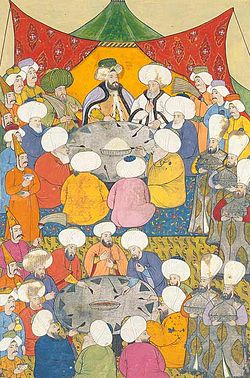
The first mentions of the early version of Çılbır appear in the 15th century, during the rise of the Ottoman Empire. Food was central to the power and prestige of the sultans, and the palace kitchens of Topkapı Palace became some of the most elaborate in the world. In these kitchens, eggs and yogurt were combined into dishes that were both nourishing and refined, suitable for a ruler’s table.
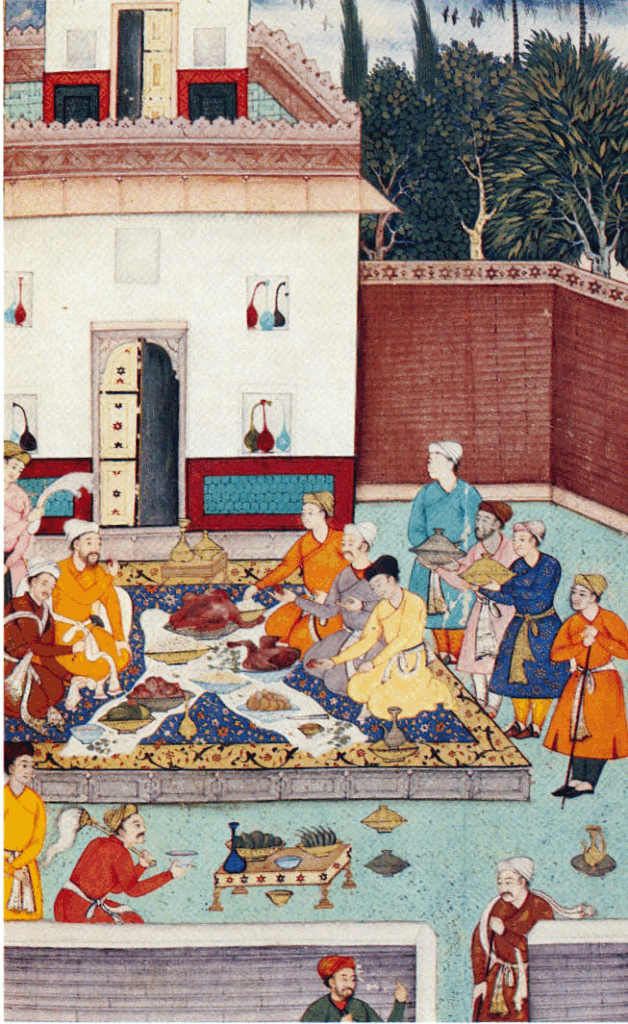
Eggs had long been a versatile and symbolic food across cultures, valued for their simplicity and ability to take on flavor. Yogurt, on the other hand, was deeply tied to the Turkic pastoral traditions that stretched back centuries before the Ottomans. By combining the two, the Ottoman chefs were creating a dish that connected the empire’s nomadic past with its imperial present. It is recorded that sultans from Mehmed the Conqueror onward enjoyed versions of Çılbır, and over time it became a staple of court cuisine.
The Early Modern Era: Eggs, Yogurt, and Garlic
By the 16th and 17th centuries, Çılbır had moved beyond the court and into the wider Ottoman domains. Accounts from travelers such as Evliya Çelebi, whose 17th-century Seyahatnâme described the food culture of the empire, show that egg dishes with yogurt were widely known across Anatolia and the Balkans.

In these centuries, the defining character of the dish was garlic. Yogurt was often blended with crushed cloves to give it a sharp bite, which contrasted beautifully with the delicacy of a poached egg. At this stage, the dish was still relatively plain, typically finished with melted butter for richness rather than the colorful spiced oils of today. It was a food that balanced nourishment with accessibility, making it a bridge between common households and the refined tastes of the court.
The 18th Century: Codifying Tradition
The 18th century marked a turning point in Ottoman culinary culture. This was when recipes began to be codified in manuscripts and cookbooks rather than being handed down only by oral tradition. One of the key sources is Ali Esref Dede’s Mevlevi cookbook, which documented the foods eaten in the dervish lodges of the Mevlevi order. In these records, egg dishes that closely resemble Çılbır appear, showing that what had once been a palace delicacy had now spread into religious, mercantile, and everyday life.
By this period, Çılbır had also gained a reputation for its restorative qualities. Because it was high in protein and paired with the probiotic benefits of yogurt, it was often served to the sick or the weak as a nourishing dish. This reputation for health only helped cement its role as a dish that crossed class and context, appearing in the homes of both the wealthy and the modest.
The 19th Century and the New World Influence
The 19th century transformed Çılbır through the influence of global trade. The Ottoman Empire had long been a crossroads between Europe, Asia, and Africa, but by this time the foods of the New World were fully integrated into its markets. Chief among these was the chili pepper, brought from the Americas and gradually adopted into Ottoman cooking.
As paprika and chili peppers became more widely used, cooks began to infuse melted butter or olive oil with these spices to pour over the eggs and yogurt. The result was a dazzling contrast of colors and flavors: the white yogurt base, the tender eggs, and the vivid orange-red oil shimmering across the surface. What had once been a monochrome dish of garlic and butter was now both visually striking and powerfully flavored, with a smoky, spicy edge.
This development coincided with the rise of printed cookbooks aimed at an increasingly literate middle class. Works like Türabi Efendi’s Turkish Cookery Book (1864), one of the earliest English-language Ottoman cookbooks, included egg-and-yogurt recipes that mirrored the spiced form of Çılbır. By the late 19th century, this dish was firmly established as one of the defining tastes of Ottoman and Turkish cuisine.
Çılbır in the Modern Kitchen
In the 20th and 21st centuries, Çılbır continued to thrive as both a traditional recipe and a canvas for innovation. While it retains its historic core—poached eggs over garlicky yogurt finished with spiced oil—modern cooks often add their own twists, from fresh herbs like dill to serving it with bread for dipping. The dish is found in households across Turkey, enjoyed as a simple comfort food, but it also appears on the menus of cafés and restaurants in Istanbul, where it is often presented with an elegant flair that would not look out of place in the palace kitchens of centuries past.
What makes Çılbır remarkable is how little it has changed. Its basic elements remain the same as they were when sultans first enjoyed it. Unlike many dishes that drift far from their roots, Çılbır demonstrates the endurance of good ideas in cooking. Eggs, yogurt, garlic, and spiced oil remain as perfect a combination today as they were five hundred years ago.
If you’re enjoying my recipes, all of my e-cookbooks are 40% off in the Eats History Shop!
Tradtional Çılbır Recipe:
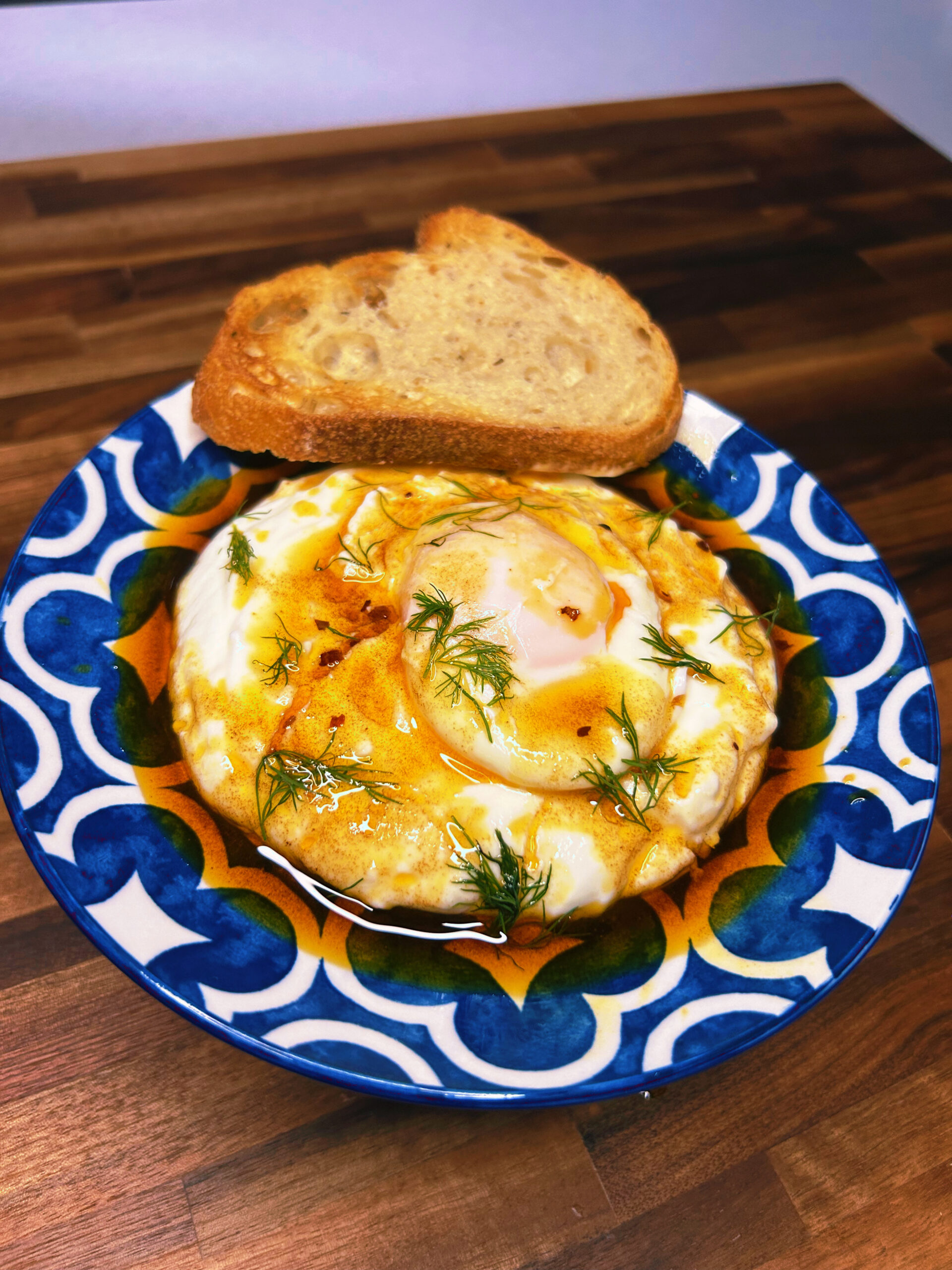
Çılbır: Turkish Poached Eggs Recipe
Ingredients
- 2 eggs poached
- 1 cup whole milk yogurt
- 4 cloves garlic finely diced
- Pinch of salt
- 2 tablespoons olive oil
- 1 teaspoon paprika
- ½ teaspoon crushed red pepper
- Fresh dill for garnish
- Toast for serving
Instructions
- In a bowl, mix yogurt with diced garlic and salt until smooth. Spread onto a plate.
- Poach 2 eggs until whites are set but yolks remain runny. Place them gently on top of the yogurt.
- In a small pan, warm olive oil and add paprika and crushed red pepper. Simmer briefly until fragrant.
- Drizzle the spiced oil over the eggs and yogurt.
- Garnish with fresh dill and serve immediately with toast.
Video
Notes
- Perfect Poaching: For tender eggs with runny yolks, poach in barely simmering water with a splash of vinegar to help the whites set cleanly.
- Garlic Intensity: Raw garlic in yogurt packs a punch. If you want a milder flavor, sauté the diced garlic briefly in olive oil before mixing it into the yogurt.
- Spiced Oil Variations: Traditional Turkish versions often use butter instead of olive oil and Aleppo pepper for a milder, smoky heat. Adjust the fat and spice blend to your taste.