There are few moments in history more dramatic and defining than the Crusades. In 1095, Pope Urban II called upon Christian Europe to reclaim the Holy Land from Muslim control. What followed was a sweeping, bloody, and deeply complex series of campaigns that reshaped the religious and cultural makeup of Europe and the Middle East.
But alongside the tales of conquest and conflict came another legacy, one of culinary exchange. One humble yet powerful example of that is Panforte, the dense and spiced fruit-and-nut confection from Italy whose roots can be traced back to the influence of the First Crusade.
I first came across Panforte while researching medieval recipes and was struck by its intense flavor and longevity. It was strong bread indeed, as its name translates. This recipe has traveled centuries, bearing the marks of the cultural collisions of the Crusader era. Making it today with figs, dates, nuts, spices, and honey is like biting into history itself.
The First Crusade and the Birth of a New Exchange
The First Crusade began in 1096 following Pope Urban II’s fiery sermon at the Council of Clermont. He urged European nobles to take up arms, promising forgiveness of sins for those who fought to reclaim Jerusalem. Leaders like Raymond of Toulouse, Godfrey of Bouillon, and Bohemond of Taranto answered the call, leading a massive force of knights and peasants across Europe and into the Levant.
Next week
I cook these before I write them. Some of it never makes the post.
The failures, the source documents, the version that actually tasted good. That part goes out by email, and next week’s is already on the stove.
 Written and cooked by Donnie
While the goal of religious conquest dominated the Crusaders’ mindset, what they encountered along the way profoundly changed them. They marched through the Byzantine Empire and into the Muslim-held territories of the Middle East, encountering ingredients and food practices they had never seen before. The bazaars of Antioch and Jerusalem were full of dried fruits, aromatic spices, and sweet preserves.
Though the Crusades were brutal and left devastation in their wake, they also cracked open Europe to centuries of Eastern influence. The returning Crusaders brought home not only relics and stories but also tastes that would shape European cooking forever. Spices like cinnamon, pepper, and cloves became prized goods. Dried fruits like figs and dates, once rare luxuries, began appearing more regularly in noble kitchens.
Panforte: Strong Bread with Strong Origins
Panforte, meaning “strong bread,” hails from Siena, Italy. This dense sweet was born in medieval kitchens and became a popular treat among soldiers and pilgrims due to its long shelf life and energy-packed ingredients. The earliest versions were likely more savory than sweet, thick with nuts, spices, and preserved fruit.
The development of Panforte is directly linked to the culinary exchanges from the Crusades. The use of cinnamon, cloves, nutmeg, and pepper—common in Panforte—mirrors the spice blends brought back by Crusaders. These spices were not just flavorings but were also seen as medicinal, adding to the value of this robust bread.
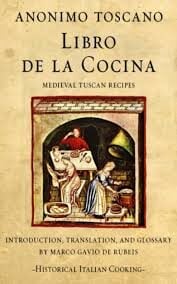
One of the earliest known references to Panforte comes from Siena around 1205, when the monks at the Montecelso Monastery recorded giving it as a tithe to the local clergy. Over the centuries, the recipe evolved but kept its essential structure: dried fruit, toasted nuts, warm spices, flour, and honey. The manuscript “Anonimo Toscano,” a 14th-century Tuscan cookbook, lists a similar fruit and spice bread that closely resembles early Panforte.
The Role of Sienese Merchants and the Silk Road
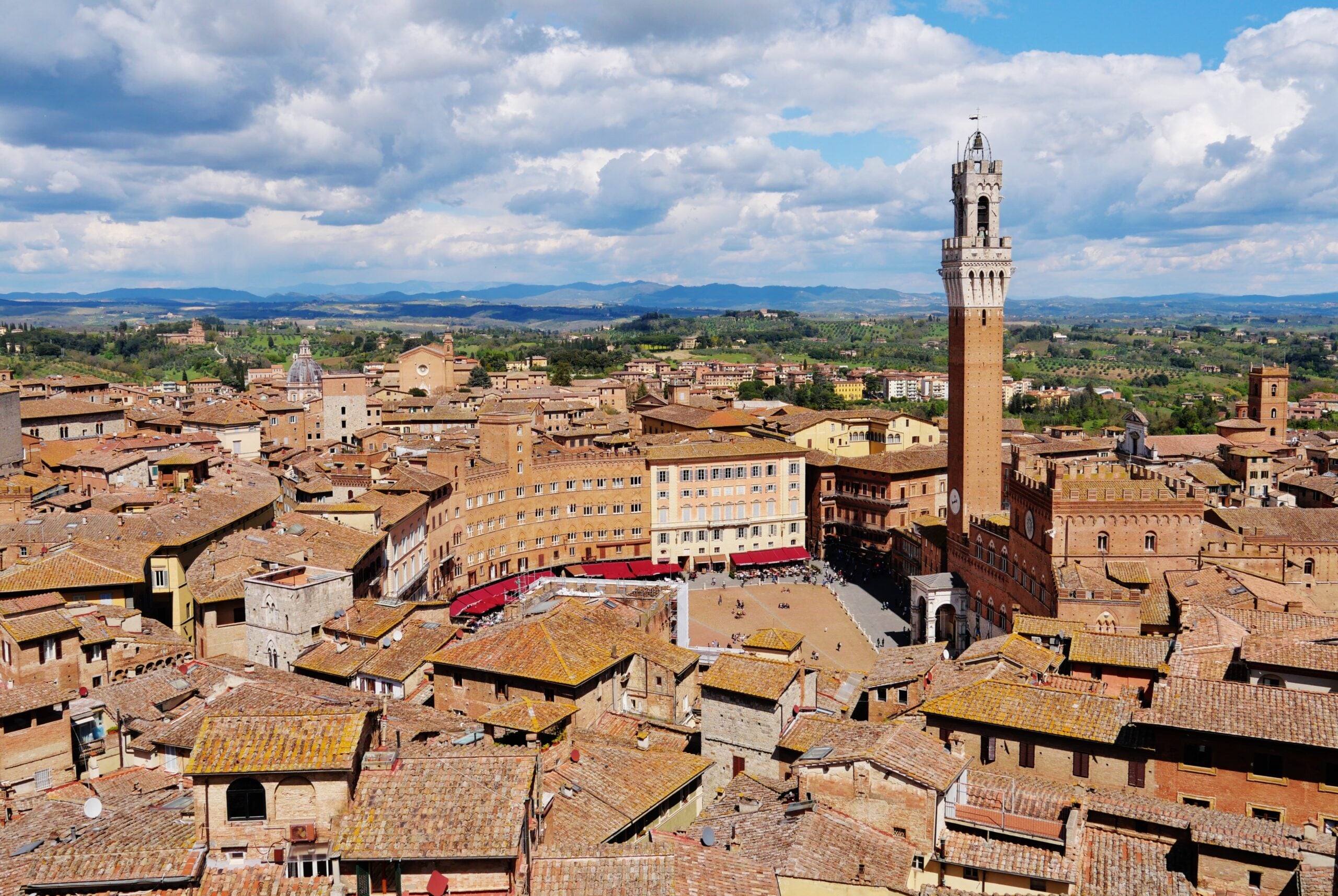
Siena played a crucial role in the spread and refinement of Panforte. It was a thriving trade hub during the late Middle Ages and Renaissance, connected by land and sea routes to the rest of Europe and the Near East. Merchants brought back goods from the East, including spices that were then integrated into regional foods.
Panforte was particularly embraced during festivals and religious holidays. It was often made in monasteries and gifted to nobility and clergy. Its ingredients were expensive, and the recipe symbolized both wealth and piety. The spice trade, bolstered by the Crusades and later the Silk Road, ensured these ingredients continued flowing into Europe.
As sugar became more available in later centuries, the recipe adapted again. While the original Panforte did not contain cocoa powder or powdered sugar, later versions—especially those popularized in the 19th and 20th centuries—added those ingredients for sweetness and presentation. Still, the core of the recipe remained unchanged.
Making the Medieval Recipe
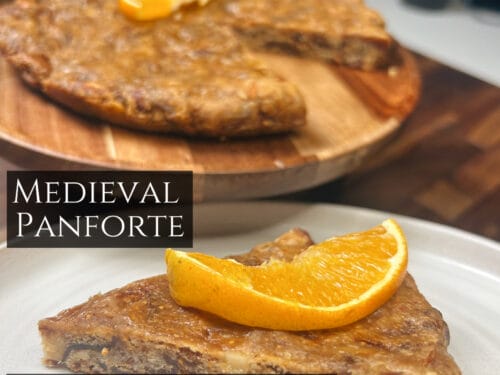
For my own recreation, I went back to basics. I used no cocoa powder or icing sugar. Instead, I leaned into the robust flavors of dried figs and dates, almonds and walnuts, flour, cinnamon, cloves, coriander, black pepper, honey, and orange zest. After forming a thick paste by melting honey and sugar together, I mixed it all and baked it low and slow.
The texture came out dense but chewy, and the aroma was hauntingly rich. The orange slices on top gave it a festive finish. This version mirrors what a medieval Sienese traveler or Crusader might have packed for the road.
Making it in 2025 felt like reaching across time. I imagined what it must have been like to bite into this “strong bread” in a stone kitchen surrounded by candlelight, the scent of spice and honey mingling with the memories of war, pilgrimage, and survival.
My Taste Test and Reflections
The first bite was bold. The pepper and cloves added heat, while the honey balanced it with smooth sweetness. The figs and dates added a sticky richness, and the orange zest kept everything fragrant and bright. It tasted ancient, strong, and deeply satisfying. I’m giving it a solid 7.6/10.
This dish felt less like dessert and more like a meal in itself. It’s easy to see why it became a staple in long travels. The fact that this could last weeks without spoiling shows the brilliance of medieval food culture, especially in regions like Tuscany that were steeped in monastic and mercantile traditions.
If you’re enjoying my work, consider checking out the Eats History Shop!
Recipe: Medieval Panforte
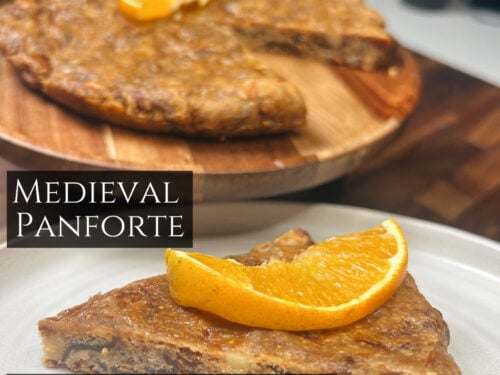
Medieval Panforte (Crusader Style)

Don’t lose this one.
I’ll email it to you so it’s waiting when you’re ready to cook.
Ingredients
Instructions
Notes
- Use a springform or parchment-lined pan: The sticky dough can be difficult to remove once baked, so make sure to line your baking dish well to prevent sticking and preserve the round shape.
- Adjust spice levels to taste: While traditional Panforte uses strong spices like black pepper and cloves, you can adjust the amounts depending on your preference. Just don’t skip them, they’re key to its historic flavor.
- Let it sit overnight: Panforte tastes even better after a day of rest. The flavors mellow and the texture firms up, making it ideal for slicing and storing as a long-lasting treat just like it was during the Crusades.
Further Reading for Those Curious:
- “Church Supper and Monastic Kitchen in Medieval Siena,” Journal of Medieval History
- “Anonimo Toscano” (14th-century Tuscan Cookbook)
- Eva March Tappan, “When Knights Were Bold”
- Helena Attlee, The Land Where Lemons Grow: The Story of Italy and Its Citrus Fruit (for culinary influences)
- Crusades primary texts: Fulcher of Chartres, Historia Hierosolymitana