Nicholas II was the final ruler of Imperial Russia, and history has not been kind to him. Nor should it be. He presided over one of the largest empires on earth as it fractured under the pressures of modernization, war, and mass political awakening. He was deeply unprepared for the responsibility placed upon him, clinging to absolute monarchy while the world around him demanded reform. By any fair assessment, Nicholas II was an incompetent ruler.
If you’re enjoying my recipes, all of my e-cookbooks are currently 40% Off in the Eats History Shop!

Yet incompetence is not the same as cruelty. Unlike many autocrats remembered for brutality or ambition, Nicholas comes across in private records as a gentle, family-oriented man who loved his wife and children deeply. He preferred quiet domestic life to the spectacle of court politics. Unfortunately for Russia, affection and personal decency were not enough to govern a collapsing wartime empire.
This contrast between the man and the monarch is what makes Nicholas II so haunting. He was not a villain forged by tyranny but a figure overwhelmed by events he did not understand and could not control. Nowhere is this divide clearer than at the dinner table, where his tastes reveal a man who sought comfort in simplicity rather than indulgence in power.
An Empire Collapsing Under His Feet
Nicholas II inherited the throne in 1894 at just twenty-six years old, following the sudden death of his father Alexander III. From the start, he lacked political instinct, confidence, and adaptability. Russia at the turn of the twentieth century was already a powder keg. Rapid industrialization had created an urban working class living in harsh conditions, while peasants remained impoverished and land-hungry.
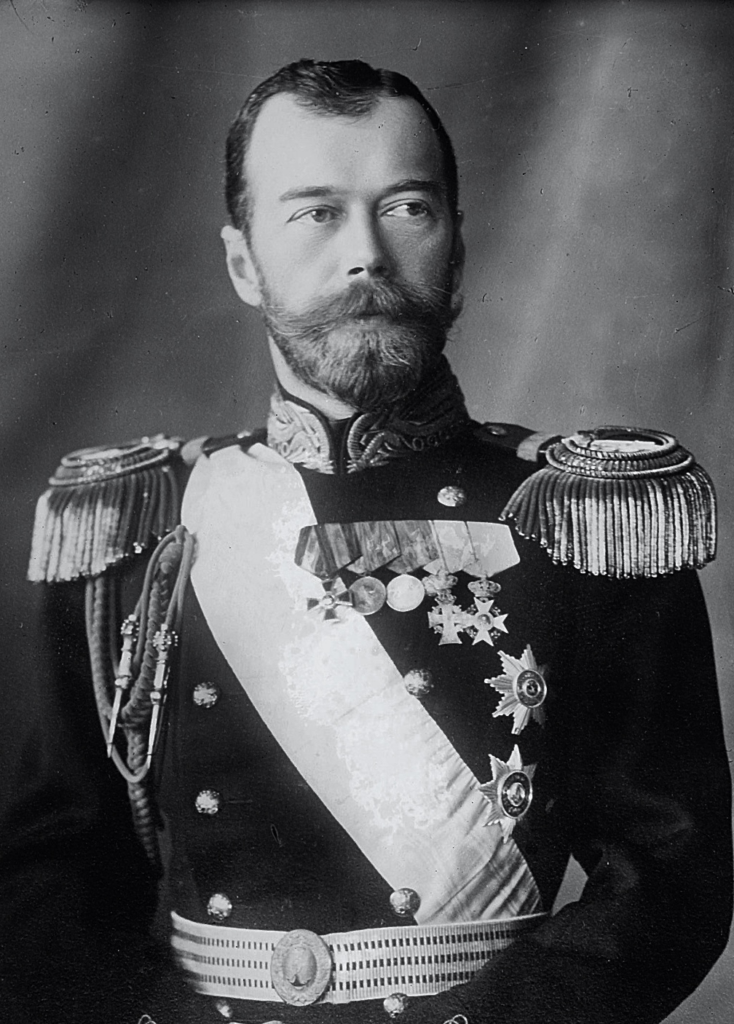
Instead of embracing constitutional reform or meaningful representation, Nicholas doubled down on autocracy. He believed his authority came directly from God and that compromise weakened divine order. This belief blinded him to the reality that Russia could no longer be governed as it had been in the past. Each crisis was met with delay, denial, or repression.
The Russo-Japanese War humiliated Russia on the world stage, while the 1905 Revolution exposed widespread dissatisfaction. Although Nicholas reluctantly agreed to limited reforms, including the creation of the Duma, he undermined them at every turn. By the time the First World War began, Russia was economically strained, politically unstable, and militarily unprepared.
When Nicholas personally assumed command of the army in 1915, it proved disastrous. Military failures mounted, supplies dwindled, and millions died. The tsar’s absence from the capital left governance in disarray. By 1917, revolution was inevitable. The empire collapsed, and with it, the Romanov dynasty.
A Private Man Behind a Public Crown
Despite his failures as a ruler, Nicholas II was deeply devoted to his family. His letters to his wife Alexandra are tender and emotionally open, filled with affection rather than political calculation. He adored his children and took an active role in their upbringing, something unusual for monarchs of his time.
Nicholas disliked public appearances and formal court life. He preferred routine, structure, and predictability. Long walks, reading, church services, and meals with family were sources of comfort. This desire for domestic normalcy stands in sharp contrast to the scale of the empire he was expected to command.
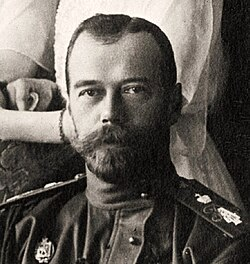
Food played a role in this retreat into the familiar. While imperial banquets followed French culinary traditions meant to impress foreign dignitaries, Nicholas’s personal tastes leaned toward plain Russian fare. He was known for eating modestly and avoiding excess even when luxury surrounded him.
This tension between the grandeur of empire and the simplicity Nicholas craved is central to understanding him. He was a man shaped more for a quiet provincial life than for ruling a multinational empire on the brink of revolution.
The Tsar Who Hated Caviar
One of the most telling details about Nicholas II’s eating habits is his well-documented dislike of caviar. While caviar symbolized Russian wealth and aristocratic indulgence to the outside world, Nicholas reportedly avoided it whenever possible. He found it unpleasant and preferred foods that felt ordinary and nourishing.
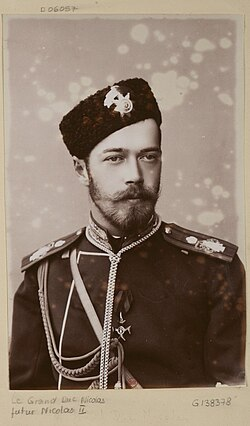
This preference is revealing. Nicholas did not revel in the excesses associated with his position. He was not drawn to elaborate sauces, rare delicacies, or ostentatious displays of wealth. Instead, he favored dishes that could just as easily appear on the table of a middle-class household.
In a court staffed with French chefs and influenced by European haute cuisine, this preference marked him as an anomaly. Nicholas tolerated the trappings of imperial dining when necessary but gravitated back to Russian staples in private.
Pelmeni and the Russian Soul
Pelmeni are small dumplings filled with minced meat, traditionally associated with Siberia and the Ural region. Their origins lie in practicality. They could be prepared in large quantities, frozen in winter, and cooked quickly when needed. Over time, pelmeni spread across Russia and became a beloved staple.
By the late nineteenth and early twentieth centuries, pelmeni were eaten by all classes. Peasants valued them for sustenance, while nobles appreciated their comfort and familiarity. They were especially common during cold months, when hearty, warming food was essential.
For Nicholas II, pelmeni represented something deeply personal. They were not ceremonial or political. They belonged to the private sphere of family meals and domestic life. Eating pelmeni allowed him to step away from the expectations of monarchy, if only briefly.
This dish captures the contradiction at the heart of Nicholas’s life. An autocrat ruling millions who found solace in a food defined by humility and practicality. Pelmeni are small, unassuming, and repetitive. They require patience and care rather than grandeur. In many ways, they reflect the life Nicholas wished he could lead.
Potatoes, Comfort, and Stability
Potatoes had become central to Russian cuisine by the nineteenth century, despite initial resistance when they were first introduced. By Nicholas II’s time, they were a cornerstone of daily meals, valued for their affordability, versatility, and ability to feed large populations.
Roasted or boiled potatoes often accompanied meat dishes, providing balance and substance. They were filling without being extravagant, dependable in times of abundance and scarcity alike. In a nation frequently plagued by famine, potatoes represented stability.
Serving pelmeni with potatoes creates a complete and deeply Russian meal. It is practical, warming, and grounded. For Nicholas II, such a pairing would have felt reassuring in a world increasingly defined by chaos.
This side dish reinforces the central theme of the meal. Nothing here seeks to impress. Everything exists to nourish and comfort. It is food designed for endurance rather than spectacle.
A Human Meal in an Inhuman Moment
Imagining Nicholas II sitting down to a plate of pelmeni and roasted potatoes is a sobering exercise. It is easy to view historical figures only through their political failures or crimes. Food reminds us that even deeply flawed rulers were still human.
This meal does not excuse Nicholas’s incompetence or absolve him of responsibility for the suffering that unfolded under his reign. It does, however, provide context. He was not driven by cruelty or ambition but by fear, indecision, and an inability to adapt.
Pelmeni and potatoes feel like the perfect representation of his life. Simple, comforting, and tragically insufficient for the challenges he faced. A meal suited for a man who longed for stability but could not create it.
In the end, this dinner tells a story not of power, but of retreat. A tsar who failed to rule, clinging to the ordinary as his extraordinary world collapsed around him.
Recipe: Nicholas II’s Pelmeni & Roasted Potatoes
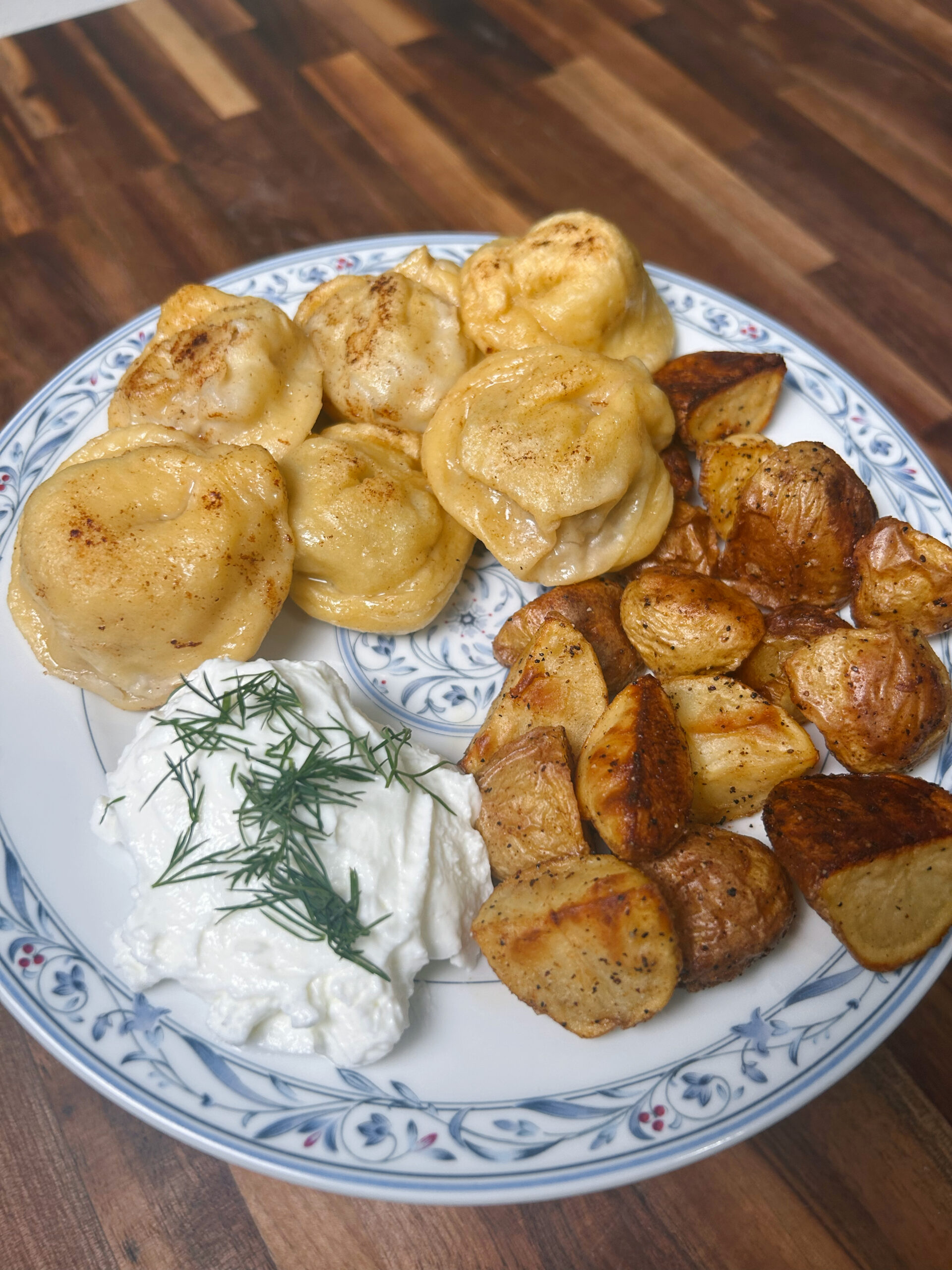
Pelmeni Recipe
Ingredients
Pelmeni & Potatoes (Serves 2)
- 2 cups all-purpose flour
- 1 egg
- ½ tsp salt
- Water as needed
- 250 g ground pork
- 1 small onion very finely minced
- 1 clove garlic finely minced
- Black pepper to taste
- 1 lb small gold potatoes diced
- Olive oil
- Paprika
- Additional salt and black pepper
- Butter for frying
- To Serve
- Sour cream
- Fresh dill
Instructions
- In a bowl, mix flour, salt, and egg. Add water gradually and knead into a firm, smooth dough. Cover and rest for 30 minutes.
- In a separate bowl, combine ground pork, onion, garlic, salt, and black pepper until cohesive and slightly sticky.
- Roll the dough thin and cut into small circles. Place a teaspoon of filling in each, fold into half moons, and seal the edges. Bring the corners together to form pelmeni.
- Bring a pot of salted water to a gentle boil. Add pelmeni and cook until they float, then continue cooking for 1 to 2 minutes more. Remove and drain.
- Heat butter in a skillet over medium heat. Add the boiled pelmeni and pan fry until golden and crisp on both sides.
- Meanwhile, toss diced potatoes with olive oil, salt, black pepper, and paprika. Roast at 400°F until golden and tender, about 30 to 35 minutes.
- Serve the pelmeni and potatoes together with a dollop of sour cream and a sprinkle of fresh dill.
Video
Notes
- Boiling the pelmeni before frying is essential. This ensures the pork filling is fully cooked while allowing the exterior to crisp in butter without drying out.
- Keep the seasoning restrained. Traditional Russian home cooking relies on simplicity rather than heavy spice or sauce.
- This dish improves with good butter and quality sour cream. These were central flavors in Russian domestic cooking.