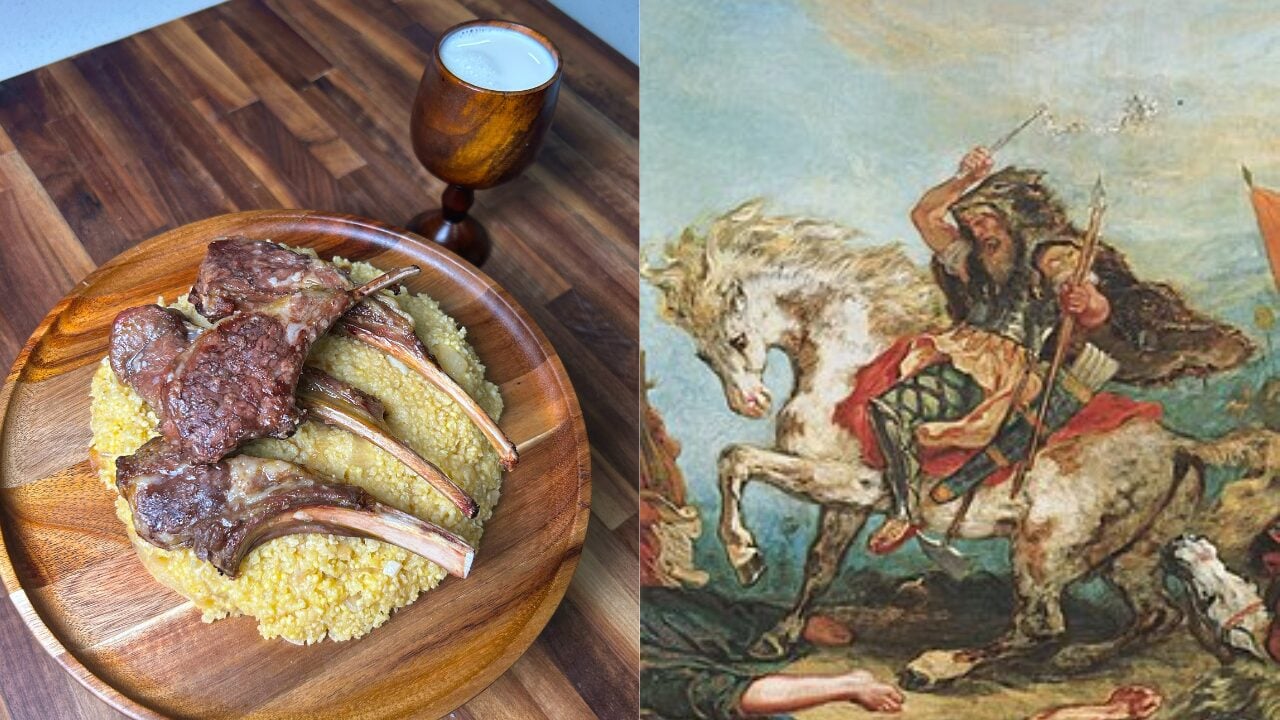
Attila the Hun stands at the crossroads of myth and history. His name has echoed across continents for more than fifteen hundred years, carried in the writings of terrified Roman chroniclers who described him with awe and dread. To the Western world he became “the Scourge of God,” a ruler whose cavalry swept across Europe with speed that seemed almost supernatural.
If you’re enjoying my recipes, all of my e-cookbooks are currently 40% Off!
Yet when we strip away the dramatic language and look at the sources that actually met him, we find something far more grounded. Attila was not a decadent king reclining in luxury. He was a hardened steppe warlord who lived and ate with striking simplicity.
His food was an extension of his authority. It rejected excess and reminded those around him that his strength came from discipline rather than glittering courts. This meal tries to capture the spirit of that world by returning to the same basic ingredients that fueled him and the riders who followed him.
Next week
I cook these before I write them. Some of it never makes the post.
The failures, the source documents, the version that actually tasted good. That part goes out by email, and next week’s is already on the stove.
 Written and cooked by Donnie
Attila the Hun and the World of the Steppe
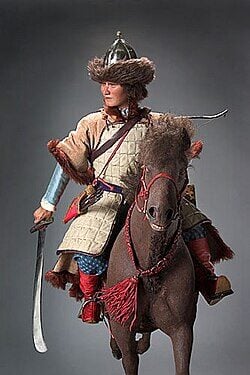
The Huns emerged from the vast, sweeping grasslands of Central Asia, where survival relied on skill with horses, mastery of the bow, and the ability to travel immense distances without slowing. They were not a single tribe but a confederation of nomadic peoples bound together through warfare, alliance, and shared culture.
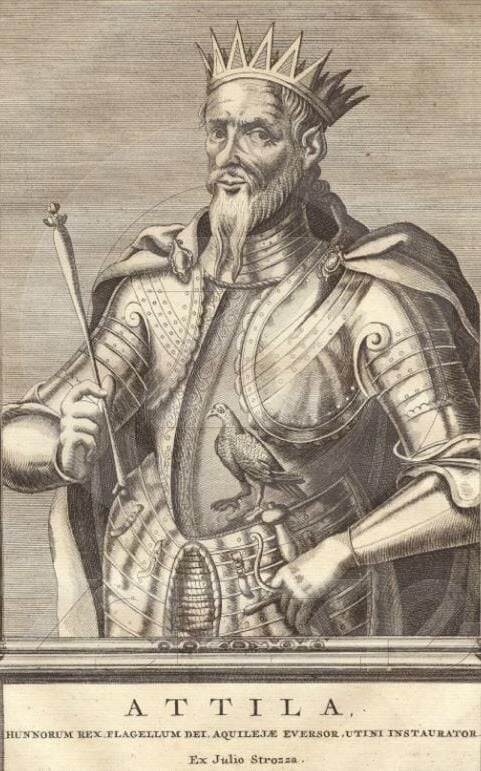
Attila ruled this world with a combination of charisma, fear, and total loyalty from his warriors. His power came from the mobility of his armies. They could appear anywhere, strike with devastating force, and disappear into the horizon before Rome knew what had happened. A ruler living this kind of life did not need golden tables or perfumed dishes. He needed food that came from the land, food that kept men strong, and food that symbolized unity with the riders who fought for him.
Priscus and the Most Important Dinner in Ancient Eurasia
Our clearest picture of Attila’s personal habits comes from the diplomat Priscus of Panium, who visited his camp in 449 AD. Priscus was used to Roman banquets where guests lounged on couches while being served extravagant dishes seasoned with spices from across the empire.
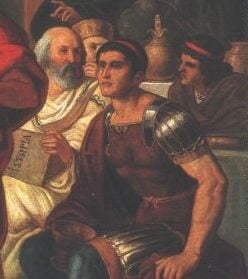
When he entered Attila’s great hall, he expected something similar, especially since Attila was one of the most powerful men of the age. Instead he saw a long wooden table where Roman ambassadors were given lavish meats, fine breads, and ornate drinking vessels, while Attila sat at the head with nothing but a piece of roasted meat on a simple wooden plank.
He drank from a plain cup while his guests drank from silver. Priscus recorded this contrast carefully because it was intentional. Attila used simplicity as a political language. He showed his guests that he did not need luxury to demonstrate power. In fact, rejecting luxury made him seem stronger, because it aligned him with the values of the steppe and the warriors who rode with him.
The Food Culture of the Huns
The Huns lived in a world where food had to be practical, portable, and fuel rich. Their diet revolved around sheep, goats, and horses, animals that could thrive on the open steppe. Meat was often roasted over open fires or boiled in large cauldrons, a method archaeologists have confirmed by uncovering bronze and iron cooking pots across former Hunnic territories.
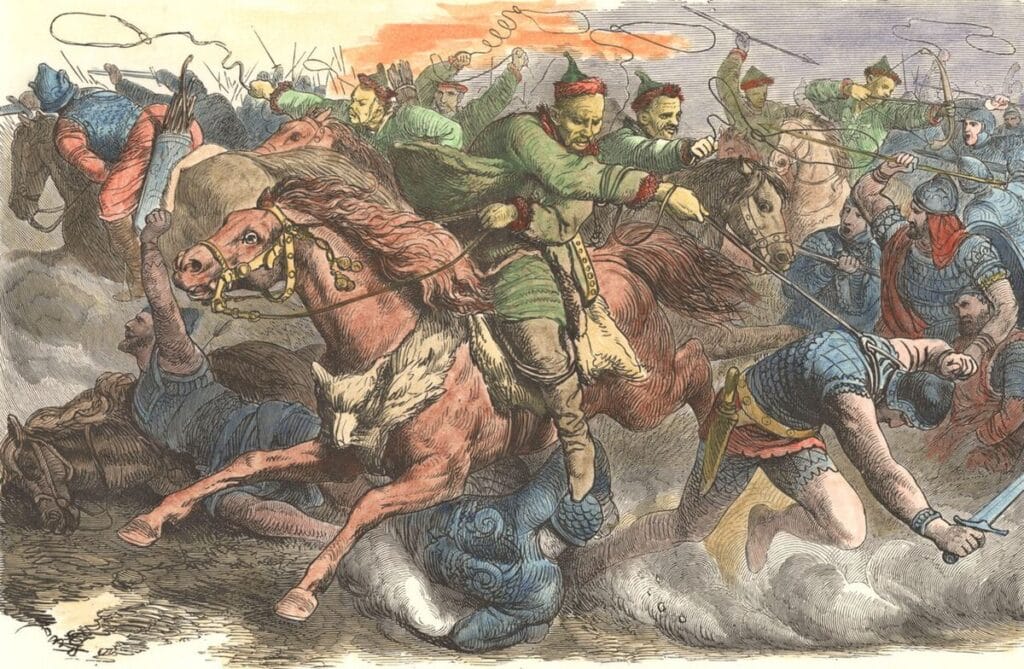
Dairy played a major role as well. Mare’s milk was fermented into kumis, a drink that provided calories and mild alcohol, perfect for long rides. Meat could be dried and preserved, while grains like millet served as the primary source of carbohydrates. Millet was especially important. It grows fast, stores easily, and can be cooked into porridge with minimal fuel.
Together these foods formed a complete nutritional picture. They gave Hunnic riders endurance and strength in a harsh environment that required constant movement.
Why Millet and Lamb Define the Steppe Warrior’s Meal
Millet porridge may seem humble, but it was one of the cornerstones of steppe cuisine. Many Central Asian cultures, from the Xiongnu to the early Turks, relied heavily on millet as their foundational grain. It carried the same symbolic power that bread carried for Romans or rice for East Asian empires.
Combined with animal fat, it became a warming base that steadied the stomach and fueled long journeys across the grasslands. Lamb, on the other hand, represented both sustenance and status. Sheep herding was central to the steppe economy, and roasted lamb was often served during gatherings, negotiations, and celebrations. A meal of roasted lamb and millet would have been both practical and meaningful for a leader like Attila.
Recreating a Meal in Attila’s Style
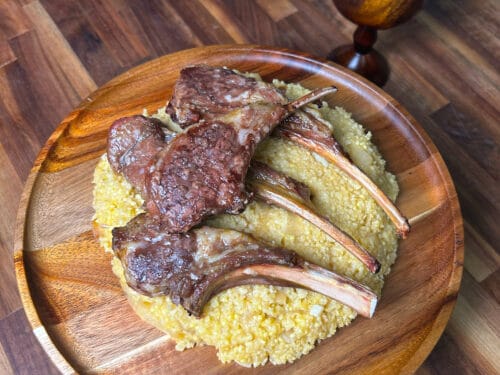
To honor this history, I built a plate that reflects what Attila might have eaten on a typical day. I kept the lamb as plain as possible because that is exactly how Priscus describes Attila’s dinner. Five to six lamb rib chops seasoned only with salt and roasted at 375 degrees develop a deep, fire kissed flavor that requires no additional seasoning. As they cook, the fat renders and crisps along the edges, creating the kind of primal simplicity that dominated Hunnic cooking. This method mirrors steppe food perfectly. It is straightforward, fuel efficient, and centered on the natural richness of the meat.
The millet porridge draws from both historical accuracy and modern technique. Sautéing onions and garlic in ghee adds warmth and depth while still keeping the flavors rustic. Once the aromatics soften, the washed millet absorbs their richness and begins to bloom into a soft, fluffy base. The result is comforting and earthy. It grounds the plate and contrasts beautifully with the richness of the lamb. A cup of milk completes the meal, nodding to the dairy traditions that shaped Hunnic life. True kumis requires mare’s milk and fermentation, but plain milk keeps the spirit intact.
The Meaning Behind Eating This Way
What struck me most about this meal is how it reveals the values of a society. The Huns prized mobility, unity, toughness, and simplicity, and their food reflects all of those qualities. There is no decoration on the plate.
There is no ornament or luxury. Instead there is meat, grain, and milk, arranged in a way that nourishes both body and identity. When Attila chose to eat this way in front of Roman ambassadors, he was not showing poverty. He was showing strength. He wanted his guests to understand that his authority came from shared hardship and warrior culture, not from gold or spices.
My Review
Eating this meal gives you a brief window into a world that no longer exists. The lamb is rich and deeply satisfying, the millet is warming and filling, and the milk ties everything together with clarity. The flavors are ancient and honest.
They remind you that powerful empires often survive on simple foundations. For a few minutes, you sit at Attila’s wooden table rather than Rome’s gilded triclinium. It is one of the simplest historical meals you will ever make and one of the most revealing. 8.7/10!
Recipe: Attila the Hun’s Roasted Lamb with Millet and Milk
Attila the Hun’s Roasted Lamb with Millet and Milk

Don’t lose this one.
I’ll email it to you so it’s waiting when you’re ready to cook.