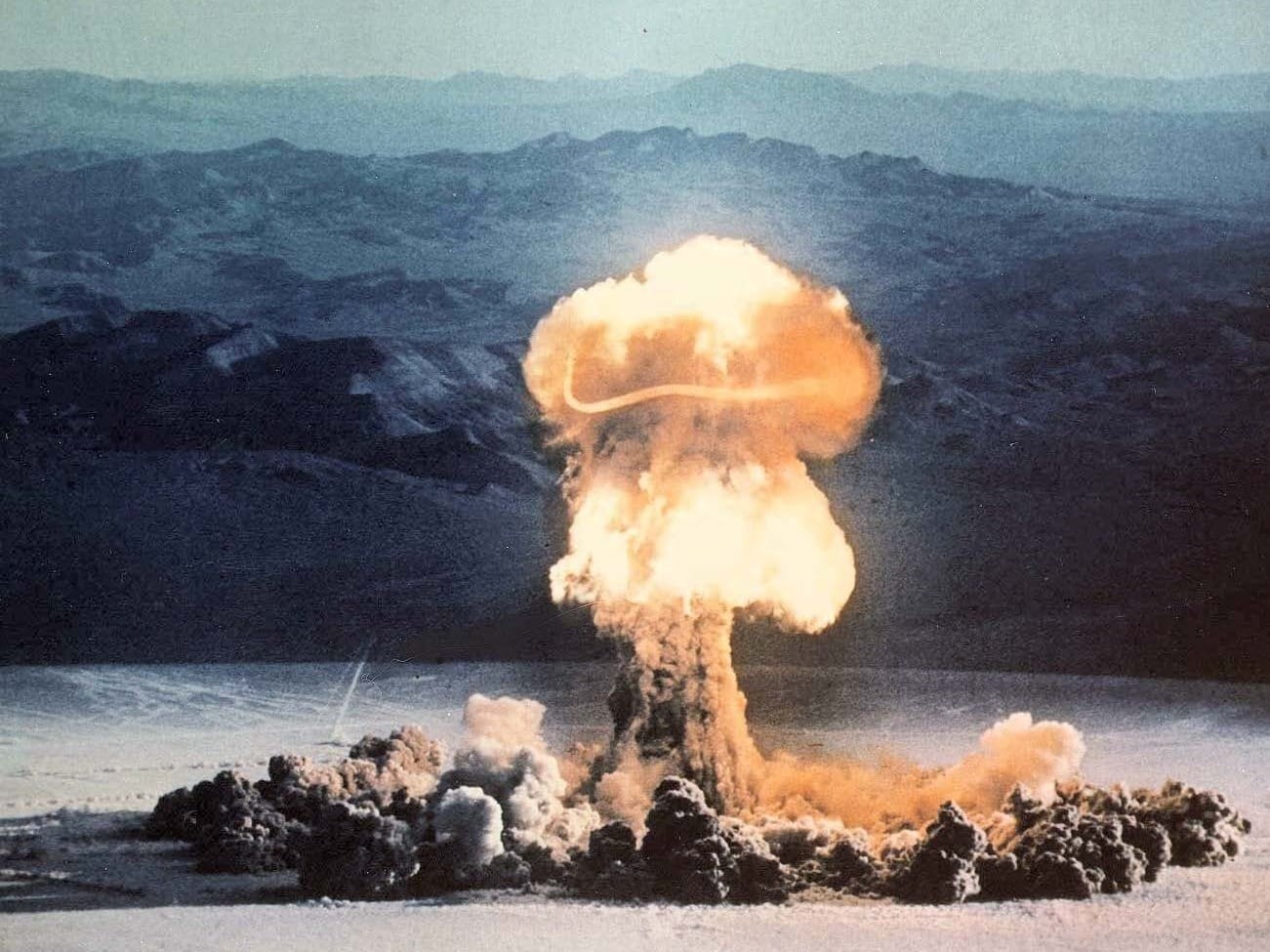
In the chilling shadow of the Cold War, when mushroom clouds haunted the American imagination and backyard fallout shelters were becoming as common as barbecue pits, one woman asked a simple question: What’s for dinner underground?
Marie Adams, food editor of the Charlotte News, didn’t think nuclear war should stop a dedicated homemaker from keeping her family well-fed (even in a concrete bunker).
In her September 7, 1961 column, she offered a set of recipes tailored for the “fallout shelter housewife,” including shelf-stable staples like deviled ham, Swedish fruit soup, and a canned version of vichyssoise. It was equal parts domestic optimism and culinary survival guide.
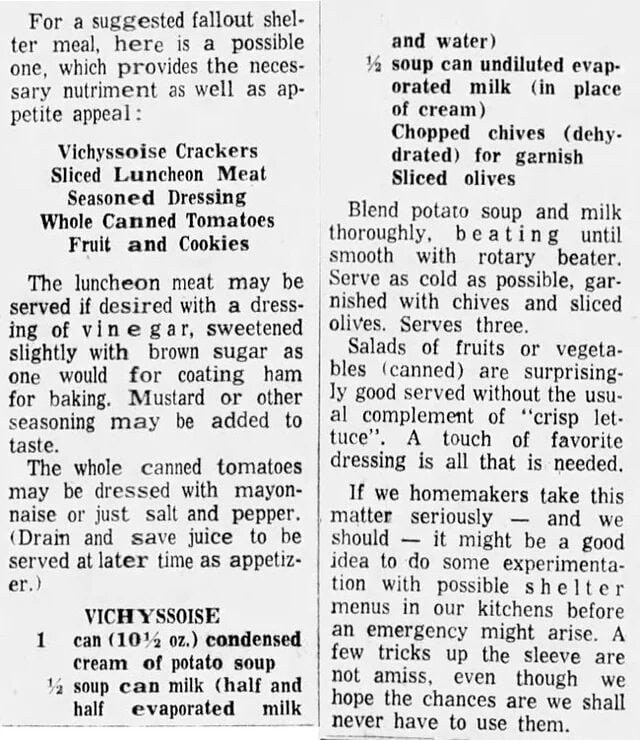
Life in a Fallout Shelter: Dining in the Doomsday Era
Fallout shelters became a defining symbol of Cold War-era domestic anxiety. During the 1950s and 60s, as tensions with the Soviet Union escalated and the threat of nuclear war loomed, the U.S. government encouraged families to construct underground bunkers stocked with nonperishable food, water, first-aid kits, and Geiger counters. Civil Defense pamphlets, school drills, and public service announcements made the apocalypse feel not just plausible, but survivable.
Next week
I cook these before I write them. Some of it never makes the post.
The failures, the source documents, the version that actually tasted good. That part goes out by email, and next week’s is already on the stove.
 Written and cooked by Donnie
But surviving wasn’t enough. Americans, particularly women, were expected to thrive underground. Fallout shelters were to be orderly, well-stocked, and even—somehow—homey. And that’s where Marie Adams came in.
From Backyard Barbecues to Backyard Bunkers
The idea of nuclear war wasn’t just abstract; it was actually advertised. Public service announcements aired between soap operas and sitcoms. Schoolchildren practiced “duck and cover” drills under their desks. And American homeowners were instructed to prepare fallout shelters: concrete bunkers buried underground or retrofitted into basements.
These shelters were to be stocked with water, food, radios, sanitation supplies, and medical kits, which would provide everything a family would need to survive for two weeks to a month after a nuclear strike.
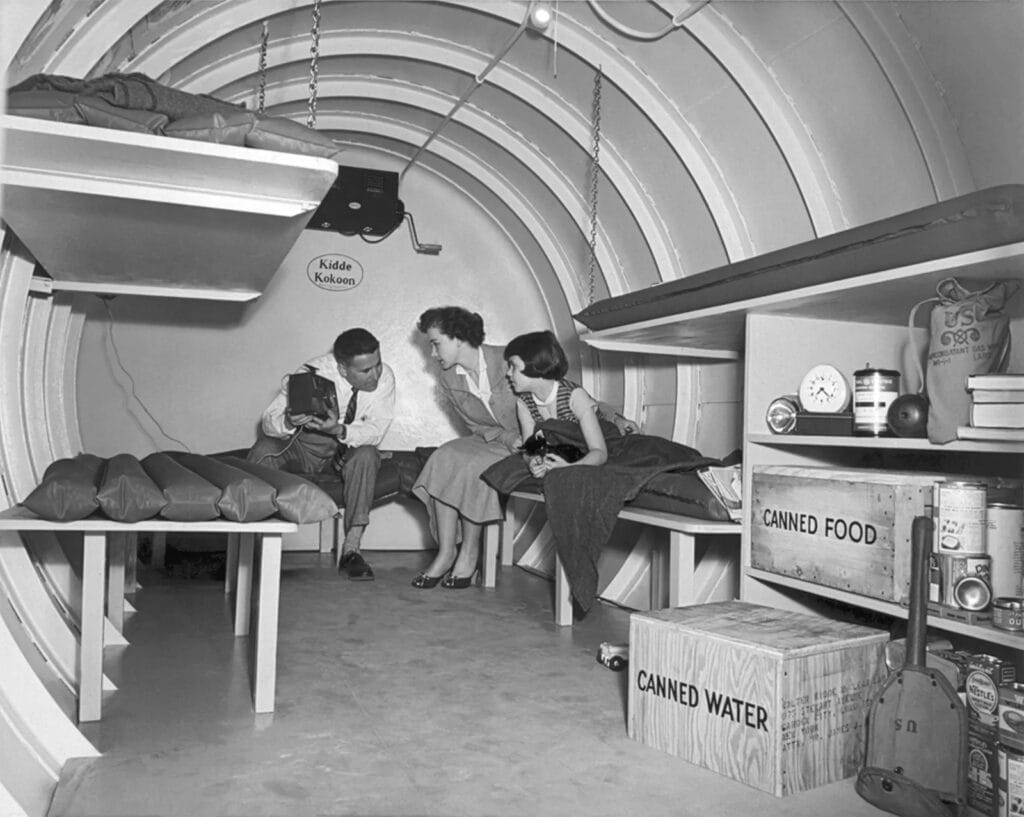
By the early 1960s, fallout shelters had become a bizarre status symbol. Magazines ran spreads of “stylish shelter living.”
Companies advertised pre-fab bunkers and hand-crank blenders. Homemakers clipped coupons for canned peaches not just for convenience, but for the end of the world. It was a surreal fusion of 1950s domestic bliss and atomic dread.
Civil Defense: Homemaking for the End Times
To guide this new kind of homemaking, the U.S. government published millions of Civil Defense pamphlets. Titles like “You Can Survive the Bomb” and “Family Shelter Designs” offered blueprints for home bunkers, lists of what to stock, and “sample menus” made from nonperishable goods.
One such pamphlet, “Facts About Fallout,” stressed the difference between survival and starvation: you didn’t need fresh food—you needed calories and shelf life.
Families were instructed to store 2,000 calories per person per day, mostly in the form of canned goods, crackers, powdered milk, and sugar. There was even a government-issued “survival biscuit” that tasted somewhere between drywall and hope.
Pamphlets also emphasized morale. Good food—or at least edible food—was a key to psychological resilience. In a dark, claustrophobic shelter with no windows, electricity, or certainty, even something as simple as fruit cocktail in syrup could lift the spirits. That’s where Cold War recipes, like Marie Adams’ vichyssoise and deviled ham dip, took on new significance.
Preservatives: The Unsung Heroes of Armageddon
Preservatives were once viewed as a technological marvel of modern food science. But during the Cold War, they became something more: a line between life and death.
This food had to last through extreme temperatures, radiation risk, and total isolation. That meant canned goods, powdered mixes, and vacuum-sealed products were gold. Shelf life wasn’t just a matter of convenience; it was survival insurance.
Spam, powdered milk, canned fruit, saltines, and instant coffee became pantry staples not because they were loved, but because they could endure. Preservatives like sodium nitrate and ascorbic acid, often criticized today, were essential then. Without them, the nation’s emergency food stockpiles would have been worthless.
Even the structure of meals changed. Cold soups became standard because heat sources might be unavailable. Canned meat was glazed with vinegar and sugar not just for flavor, but to simulate the idea of a home-cooked meal when ovens and comfort no longer existed.
Domestic Life Under the Mushroom Cloud
The image of a 1950s housewife ladling out cold soup in high heels and lipstick might seem ridiculous to us now—but it was very real to the people living under the threat of global annihilation. Women were expected to carry the burden of preserving normalcy. If the bomb dropped, they would be the ones comforting children, organizing meals, and keeping spirits alive in a 6×12 cement cell.
Marie Adams’ recipes captured that strange fusion of domestic pride and apocalyptic dread. Her fallout meal wasn’t haute cuisine—but it was practical, thoughtfully assembled, and psychologically strategic. It allowed mothers and wives to do something—to reclaim a sliver of control in a world spinning toward chaos.
If you’re enjoying my work, check out Eats History Shop!
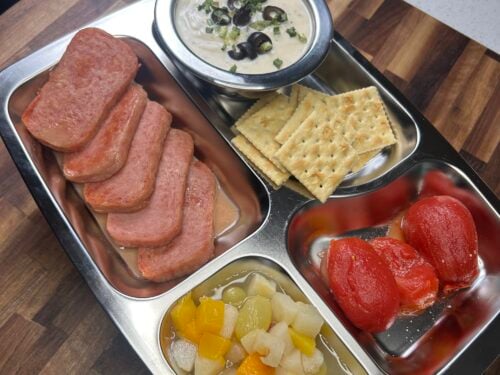
Fallout Shelter Meal (Cold War Survival Menu)

Don’t lose this one.
I’ll email it to you so it’s waiting when you’re ready to cook.
Ingredients
Instructions
Notes
- Shelf-Stable Survival: Every item in this recipe was chosen for its long shelf life and ease of storage—ideal for Cold War bunkers or emergency kits.
- Low-Energy Cooking: This entire meal can be made without heat, which was crucial in fallout shelters with limited or no access to cooking fuel.
- Mental Comfort in Crisis: Though the flavors are basic, this meal was designed to maintain morale and create a sense of normalcy during high-stress survival conditions.