There are few festivals in the world that capture the balance between the seen and unseen like the Hungry Ghosts Festival. It is one of those ancient Chinese traditions that draws you in the moment you learn about it. Every August, when the air is heavy with incense and the moon begins to glow brighter in the night sky, people across China and East Asia prepare food for the dead. The belief is that for one lunar month, the gates of the spirit world open, and those who have passed on wander among us again, longing for the tastes and comforts they once knew.
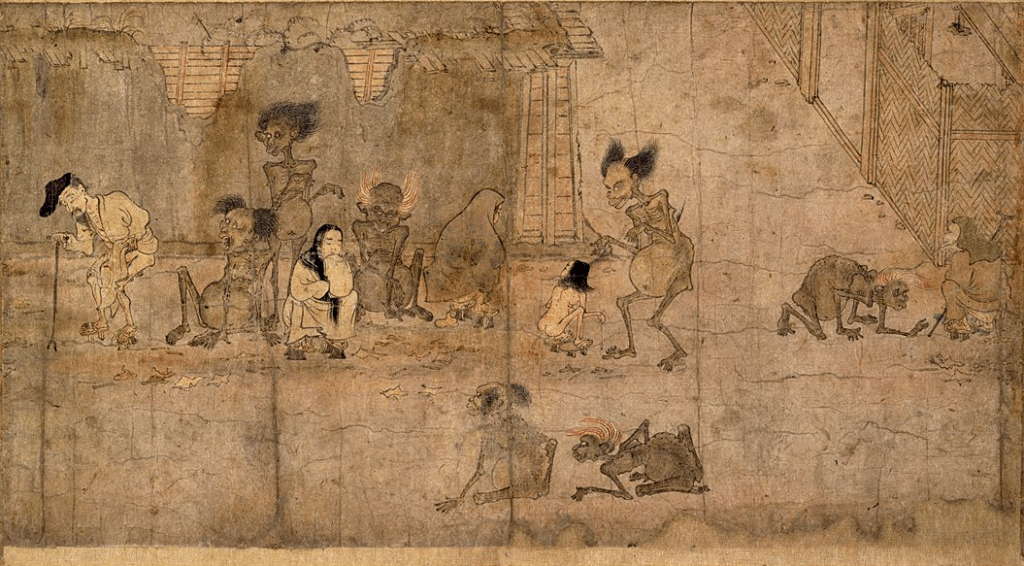
The food offered during this time is not eaten by the living. It is meant for those who no longer have mouths to feed or stomachs to fill. Plates of rice, pork, noodles, and fruit are set out beside candles and incense. Families burn paper offerings, everything from money to paper mansions, as gifts for the departed. The whole idea is profoundly human: the living feeding the dead so that the hungry, restless souls might find peace for a night.
When I first read about this festival, it struck me on a deeper level. The idea that food could connect two worlds felt ancient and yet oddly familiar. It is an act of remembrance, compassion, and continuity all at once. To explore it further, I decided to make one of the dishes tied to the festival, hand-pulled longevity noodles, which represent health and long life.
If you’re enjoying my work, all of my e-cookbooks are 40% off at Eats History Shop!
The Origins of the Hungry Ghosts Festival
The Hungry Ghosts Festival, known as Zhongyuan Jie, has been celebrated for over two thousand years. Its roots are a blend of Daoist tradition and Buddhist compassion. The festival grew from early Chinese ancestor rites, but the Buddhist story of Mulian saving his mother from the realm of hungry ghosts gave it a more universal purpose.
In the tale, Mulian discovers that his mother’s spirit suffers in torment because of her greed and attachment during life. Her ghostly hunger is endless, and nothing she eats can fill her. Moved by compassion, Mulian offers food and prayers to relieve her suffering, and the Buddha teaches that such offerings can help not only her but all souls trapped in that state. From then on, the festival became an annual practice of feeding and remembering.
It is fascinating to me how something so ancient remains alive in modern China. You can still walk through streets during the seventh lunar month and see tables covered in offerings, the smoke of incense curling into the night. Even in today’s world, where so much feels disconnected from spirituality, this festival is a quiet reminder of how food and memory still carry sacred meaning.
Feeding the Spirits: A Bridge Between Worlds
The Hungry Ghosts Festival isn’t about fear. It’s about empathy. The souls that wander are said to be those who died with deep attachment to the material world. Maybe they were greedy in life, or maybe they just loved life too much to let go. They crave the warmth of food, drink, and human company, but their bodies no longer exist to experience it.
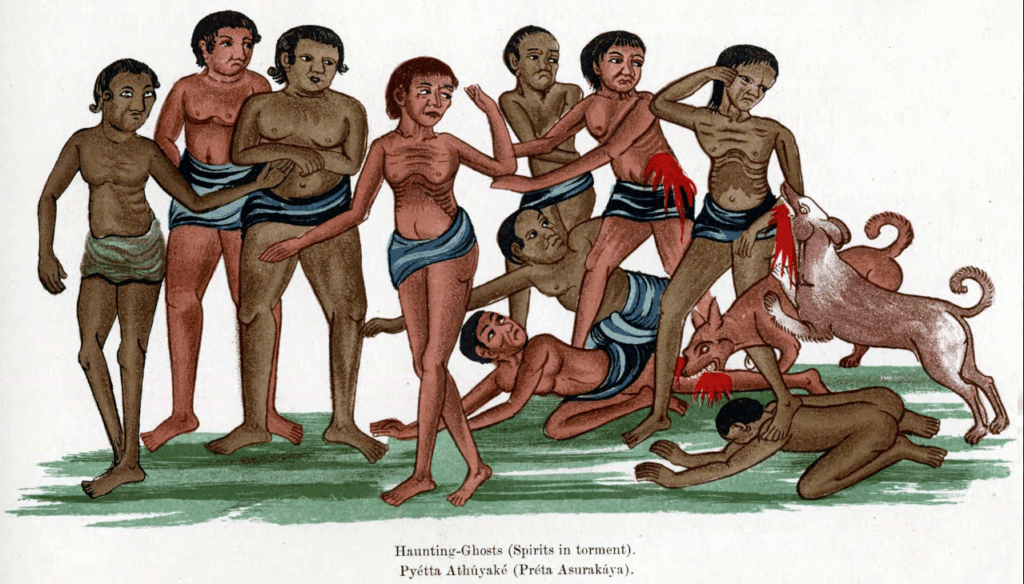
In Buddhist imagery, hungry ghosts are drawn with thin necks and swollen bellies, a symbol of unending desire. They want, but they cannot receive. The living, in turn, feed them symbolically through ritual offerings. In Daoist thought, this balance of giving helps harmonize the yin and yang between the worlds of the living and the dead. To ignore the hungry ghosts is to invite imbalance, while feeding them restores cosmic order.
Across cultures, you find the same idea repeated in different ways. The Greeks poured wine into the ground for the shades of Hades. In medieval Europe, families left food out for souls in purgatory. Even in Western esoteric thought, there is the belief that those too attached to material pleasures remain earthbound, unable to ascend. Whether you call them ghosts or spirits, the story is the same. Desire without release becomes suffering.
Longevity Noodles and Symbolism
Hand-pulled noodles carry their own deep symbolism in Chinese culture. Their length represents life itself — continuous, unbroken, and resilient. During birthdays and New Year celebrations, people eat them for good fortune and longevity. In the context of the Hungry Ghosts Festival, they take on a dual purpose. They bless the living with long life and health while offering the spirits a gesture of nourishment.
Making the noodles by hand has a meditative rhythm to it. You start with a lump of dough and pull it, fold it, and stretch it until it becomes long, thin strands. It takes focus and patience. There’s something beautiful about the process, almost spiritual. Each pull feels like a thread of life being extended, connecting generations across time.
When offered during the festival, the noodles become a link between worlds. They feed both the body and the spirit, reminding us that the cycle of life continues through memory, ritual, and food.
The Spiritual Lesson Behind the Feast
What I find most fascinating about the Hungry Ghosts Festival is the philosophy behind it. It is not about superstition but about confronting the human condition itself. The hungry ghost represents all the parts of us that cling to what we cannot keep. It is the person who can’t let go of ambition, desire, resentment, or attachment. We all have that spirit within us at times.
The offerings are an act of mercy. They are meant to nourish the hungry ghosts but also to teach the living to release their own cravings. When you feed the dead, you are reminded that everything you hold onto will one day pass. In giving, you let go. In remembering, you find peace.
That’s the part that stays with me most. To cook for those who can no longer eat is to understand something profound about love. It is an act that expects nothing in return, only the quiet hope that somewhere, a restless soul finds rest.
My Recreation: Stir-Fried Hand-Pulled Noodles
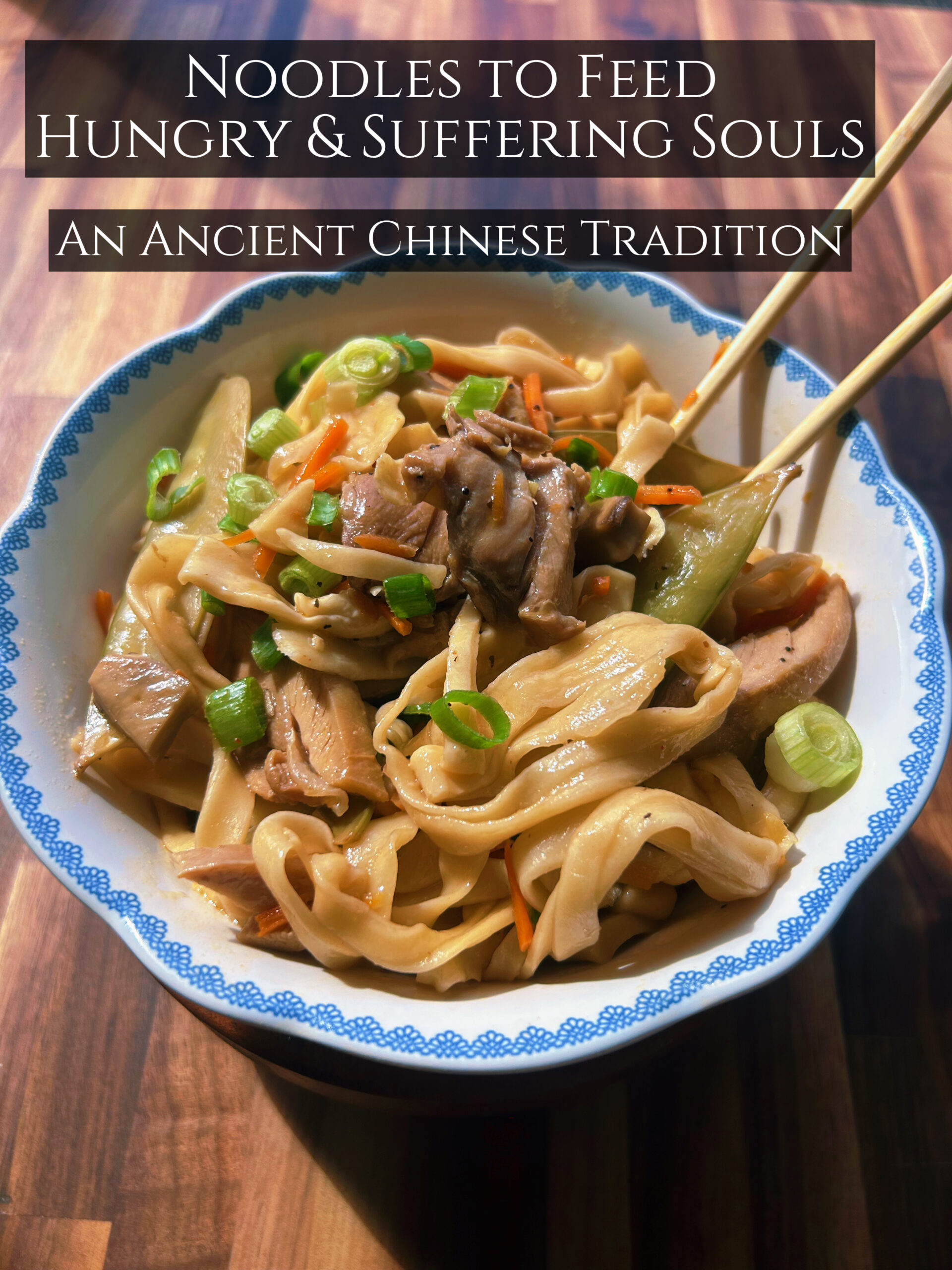
When I recreated this dish, I wanted to keep it simple but meaningful. The noodles were made from scratch, using nothing but flour, water, and salt. After resting, I stretched them by hand until they became long, soft ribbons. The process felt ancient, almost like muscle memory passed down from generations of cooks.
For the stir fry, I used sliced chicken thigh, snow peas, carrots, mushrooms, garlic, green onions, and a bit of heat from pepper flakes. The sauce came together with soy sauce, oyster sauce, and chicken stock, which coated the noodles perfectly. Each bite carried a mix of chewy texture, savory depth, and a hint of warmth.
As I cooked, I thought about the spirits the festival honors, about desire and release, and about how food has always been humanity’s way of making peace with both life and death. On flavor, I’d give it an 8.8 out of 10, but as an experience, it was a perfect ten.
Recipe: Hand-Pulled Noodles and Stir Fry
Hand-Pulled Noodles and Stir Fry
Ingredients
Noodles:
- 2 cups 250 g all-purpose flour (or Chinese high-gluten flour if available)
- ½ tsp salt
- ¾ cup 180 ml warm water
- 1 tsp sesame oil
Stir Fry:
- 1 cup sliced pre-cooked chicken thigh
- ½ cup snow peas
- 1 small carrot julienned
- 2 green onions sliced
- ½ cup mushrooms sliced
- 2 garlic cloves minced
- ¼ cup chicken stock
- 1 tbsp soy sauce
- 1 tbsp oyster sauce
- ½ tsp pepper flakes
Instructions
- Combine flour and salt in a bowl. Gradually add warm water while mixing until a rough dough forms. Add sesame oil and knead for 10 minutes until smooth. Cover and rest for 30 minutes.
- After resting, divide dough into pieces and roll or stretch into long strands by pulling evenly until thin. Dust lightly with flour to prevent sticking.
- Boil noodles for 2–3 minutes until tender. Drain and set aside.
- In a wok or large pan, heat oil over medium-high heat. Add garlic, then chicken, snow peas, carrots, mushrooms, and green onions. Stir-fry for 3–4 minutes.
- Add soy sauce, oyster sauce, chicken stock, and pepper flakes. Toss to combine.
- Add the cooked noodles last, tossing thoroughly to coat with sauce. Cook for another minute and serve hot.
Video
Notes
- Rest the dough properly. Letting it rest for at least 30 minutes allows the gluten to relax, making it easier to stretch the noodles without breaking.
- Stretch with confidence. Use gentle but consistent pulls. If the dough resists, let it rest a few minutes more before trying again.
- Toss quickly in the wok. Add the noodles last so they soak up the sauce without overcooking. A brief toss over high heat gives them that perfect chewy texture and glossy finish.