In 1961, American home cooking stood at a crossroads. Convenience foods were everywhere, boxed dinners dominated weeknight meals, and French cuisine was widely seen as something reserved for restaurants or the elite. Then Mastering the Art of French Cooking landed on kitchen counters across the country, and with it came a dish that would quietly revolutionize how Americans cooked at home: beef bourguignon.
If you’re enjoying these recipes, check out my e-cookbook collection, now 40% Off!!

This was not fast food. It was not forgiving of shortcuts. It required time, attention, and trust in the process. But that was exactly the point. Julia Child’s beef bourguignon was not meant to intimidate. It was meant to teach. One careful step at a time, it showed home cooks that they were capable of more than they had been told.
Julia Child: A Beginner Who Refused to Stay One
Julia Child did not grow up in a French kitchen. She discovered cooking later in life, after moving to France in her thirties. She trained formally at Le Cordon Bleu, struggled publicly, failed often, and documented everything with meticulous clarity.
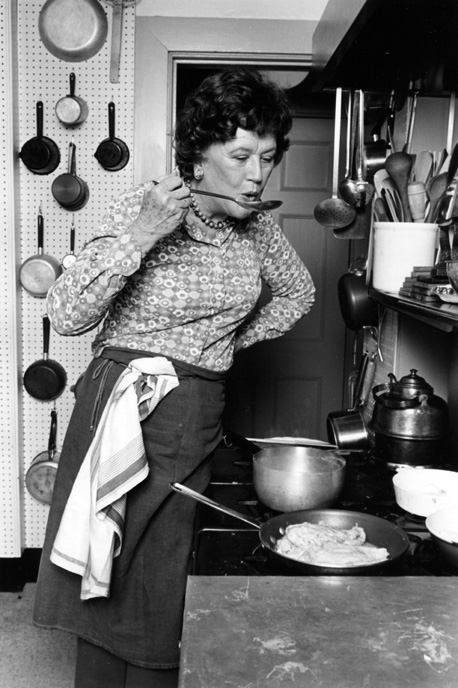
That background mattered. Julia never assumed her reader knew anything. She explained why meat must be dry before browning. She warned when a step would look wrong before it looked right. She acknowledged when something was tedious. This was unheard of at the time.
Julia Child and the Birth of Modern American Home Cooking
You probably already know who Julia Child is, but her importance to American cooking culture cannot be overstated. She was the bedrock of how people in the United States cook today. Before Julia Child, most American home cooking revolved around convenience foods, shortcuts, and a quiet fear of anything that looked complicated or foreign. French cuisine, in particular, was viewed as something distant and unattainable.
Julia changed that. She launched one of the first television cooking shows ever to reach a mass American audience, The French Chef, and in doing so, she reframed cooking entirely. Her goal was never to impress. It was to teach. She spoke directly to the viewer, explained what was happening in the pan, and trusted that regular people were capable of learning real techniques.
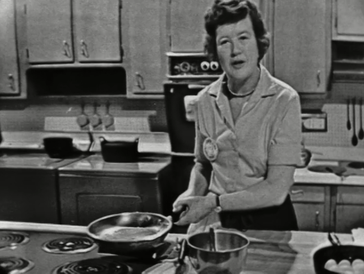
What made her truly unique was how human she was on screen. There were no flashy edits, no perfect plating, no illusion of effortlessness. She dropped food, burned things, laughed at herself, and kept going. Mistakes were not edited out. They were part of the lesson. That honesty made intimidating recipes feel approachable and even forgiving. If Julia could recover from a mistake on live television, so could you at home.
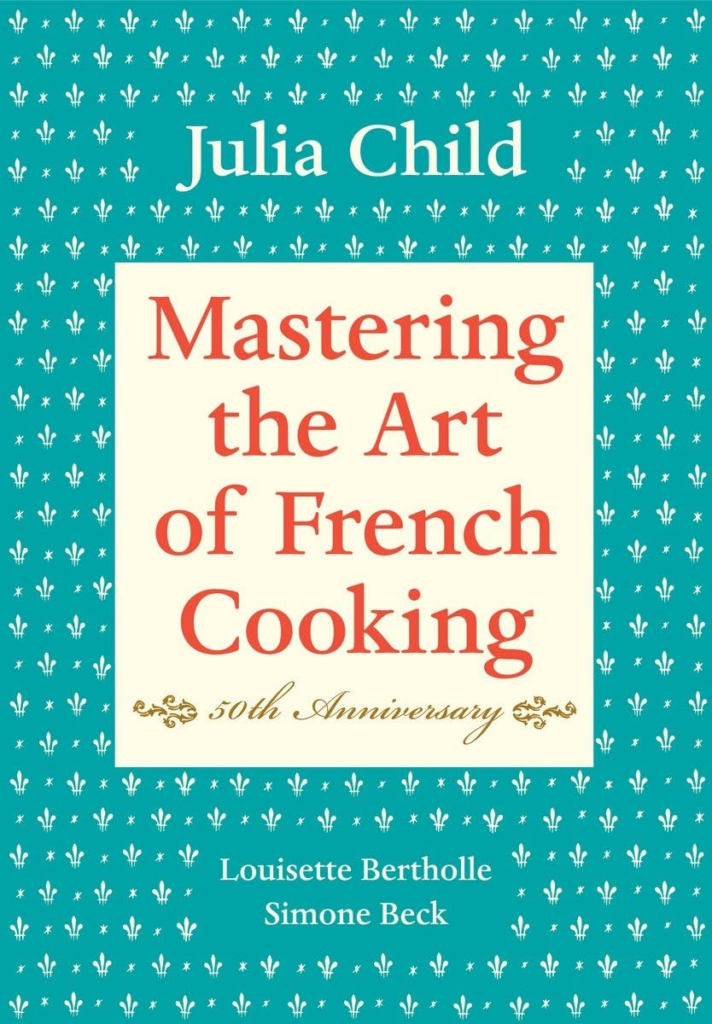
Her magnum opus came in 1961 with the publication of Mastering the Art of French Cooking. The book was not just a collection of recipes. It was a method. It taught Americans how to think like cooks rather than follow instructions blindly. Within its pages is what may be one of the most influential recipes of the modern era: beef bourguignon.
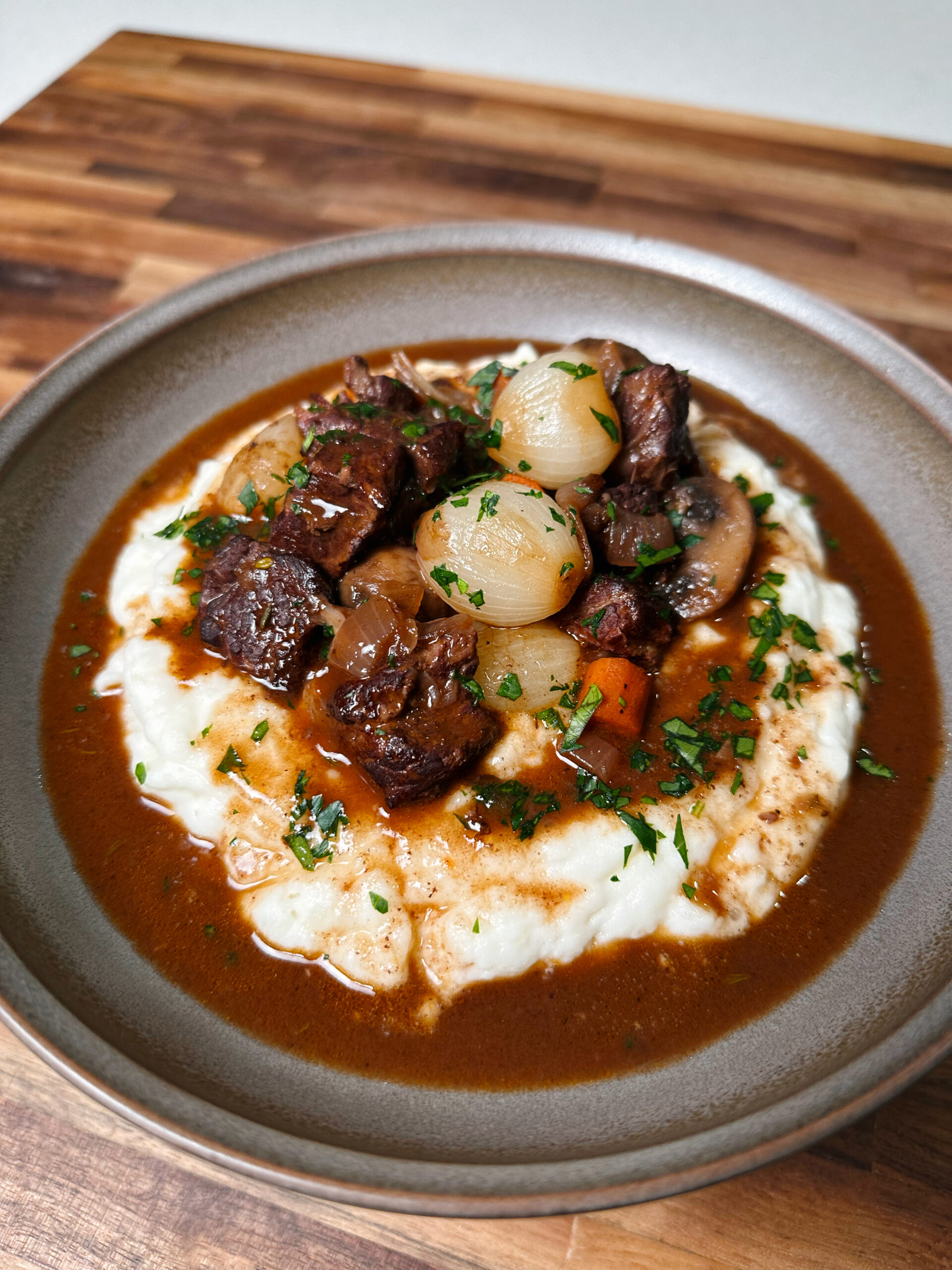
This dish represents traditional French cooking translated for the modern home kitchen. Beef slowly braised in red wine and stock with herbs and aromatics becomes deeply tender and rich. The addition of boiled bacon, a subtle but deliberate step, keeps the pork flavor clean and balanced rather than overpowering. Pearl onions are cooked until they nearly collapse, mushrooms are sautéed separately for depth, and everything comes together into a stew that feels both rustic and refined.
It is iconic for a reason. It is deeply flavorful, visually comforting, and surprisingly manageable. Despite its reputation, beef bourguignon is not overly difficult to make. It simply asks for time, attention, and trust in the process. That balance of ambition and accessibility is exactly why the recipe endured.
Julia Child did not just give Americans a famous stew. She gave them permission to try.
Why Beef Bourguignon Became Her Signature Dish
Beef bourguignon was the perfect teaching recipe. It was deeply French, but not delicate. It relied on technique rather than rare ingredients. It rewarded patience more than precision.
The dish itself comes from Burgundy, where inexpensive cuts of beef were braised slowly in red wine to transform toughness into tenderness. Julia respected that peasant tradition while refining it just enough for American kitchens. She preserved the soul of the dish while making it legible.
Every step in her recipe builds confidence. Browning meat properly teaches heat control. Oven braising teaches gentle, even cooking. Preparing garnishes separately teaches restraint and timing. By the end, you have not just made a stew. You have learned how to cook.
The Lore of the Recipe and the Famous Steps
Certain steps in Julia Child’s beef bourguignon have become legendary. Boiling the bacon before browning it often raises eyebrows today, but it reflects a French preference for clean pork flavor rather than aggressive smokiness. This step softens the saltiness and ensures the bacon supports the dish rather than dominating it.
The brief high-heat oven step after coating the beef in flour is another hallmark. It forms a light crust that deepens flavor and improves texture before the long braise begins. These details may seem fussy, but each one has a purpose.
Julia never added steps to show off. She added them to teach.
Cooking the Dish Today: Respecting the Method, Not the Fear
When recreating this dish, I stayed very close to Julia’s original method. I boiled the bacon. I browned the beef in stages. I oven-braised rather than simmering on the stove. Where I diverged was in straining the sauce at the end, a step Julia recommends for refinement.
Instead, I allowed the stew to thicken naturally by simmering uncovered once everything came together. This preserves texture, saves effort, and produces a more rustic result. Julia herself often encouraged adaptation once a cook understood the principles.
This flexibility is key. Julia did not want imitation. She wanted understanding.
Taste and Review: Why It Still Holds Up
The result is exactly why this dish became iconic. The beef is meltingly tender, rich without being heavy. The sauce is deep, wine-forward, and layered with savory complexity from bacon, mushrooms, and herbs. Nothing feels sharp or aggressive. Everything feels deliberate.
The pearl onions add sweetness and contrast. The mushrooms bring earthiness. Served over simple mashed potatoes, the stew becomes both comforting and quietly elegant. It is not flashy. It is deeply satisfying. 9.8/10
Recipe: Julia Child’s Beef Bourguignon
Julia Child’s Beef Bourguignon (1961)
Ingredients
- 2½ –3 lb stewing beef or chuck roast cut into large cubes
- 4 oz bacon cut into lardons
- 1 carrot peeled and sliced
- 1 onion sliced
- Salt and black pepper
- Olive oil
- 2 tbsp flour
- 2 cups beef stock
- 3 cups red wine
- 1 tbsp tomato paste
- 2 garlic cloves mashed and finely chopped
- 1 tsp thyme
- 2 bay leaves
- 12 –18 pearl onions peeled
- 10 oz mushrooms halved or quartered
- Butter
- Fresh parsley chopped, for garnish
Instructions
Boil the bacon
- Place bacon in a saucepan, cover with water, and simmer for 10 minutes. This removes excess salt and smoke. Drain and pat dry thoroughly.
Brown the bacon
- Heat a heavy Dutch oven over medium heat with a little olive oil. Brown bacon until lightly crisp. Remove and set aside. Leave the fat in the pot.
Brown the beef in stages
- Dry the beef completely. Moisture prevents browning. Brown in batches without crowding, turning to develop a deep crust. Remove each batch as it finishes.
Cook the vegetables
- In the same pot, sauté the sliced onion and carrot until softened and lightly browned. This builds the aromatic base.
Combine and season
- Return beef and bacon to the pot. Season with salt and pepper. Sprinkle flour evenly over the meat and toss gently to coat.
Oven crust step
- Place the uncovered pot in a 450°F oven for 10 minutes. Stir once and return for another 5 minutes. This sets the flour and deepens flavor.
Braise gently
- Lower oven to 325°F. Remove pot and add carrots, onions, wine, beef stock, tomato paste, garlic, thyme, and bay leaves. Liquid should barely cover the meat. Cover and return to oven for 2½–3 hours until the beef is tender and nearly falling apart.
Prepare the garnishes separately
- About 30 minutes before the stew is done, sauté pearl onions in oil and butter with a splash of broth and water. Simmer gently until translucent and tender. Remove. In the same pan, add more butter and sauté mushrooms until browned and soft.
Finish the stew
- Add onions and mushrooms to the stew. Simmer uncovered on the stove for 10–15 minutes to thicken naturally. Remove bay leaves and thyme stems.
Serve
- Serve over mashed potatoes. Garnish with fresh parsley.
Video
Notes
- Dry the beef thoroughly before browning. Moisture prevents proper caramelization, and good browning is the foundation of flavor in this dish.
- Do not rush the braise. Low heat and time are what turn tough cuts into fork-tender beef and create a cohesive sauce.
- Cook the mushrooms and pearl onions separately from the stew. This prevents them from becoming mushy and preserves their individual textures and flavors when added at the end.