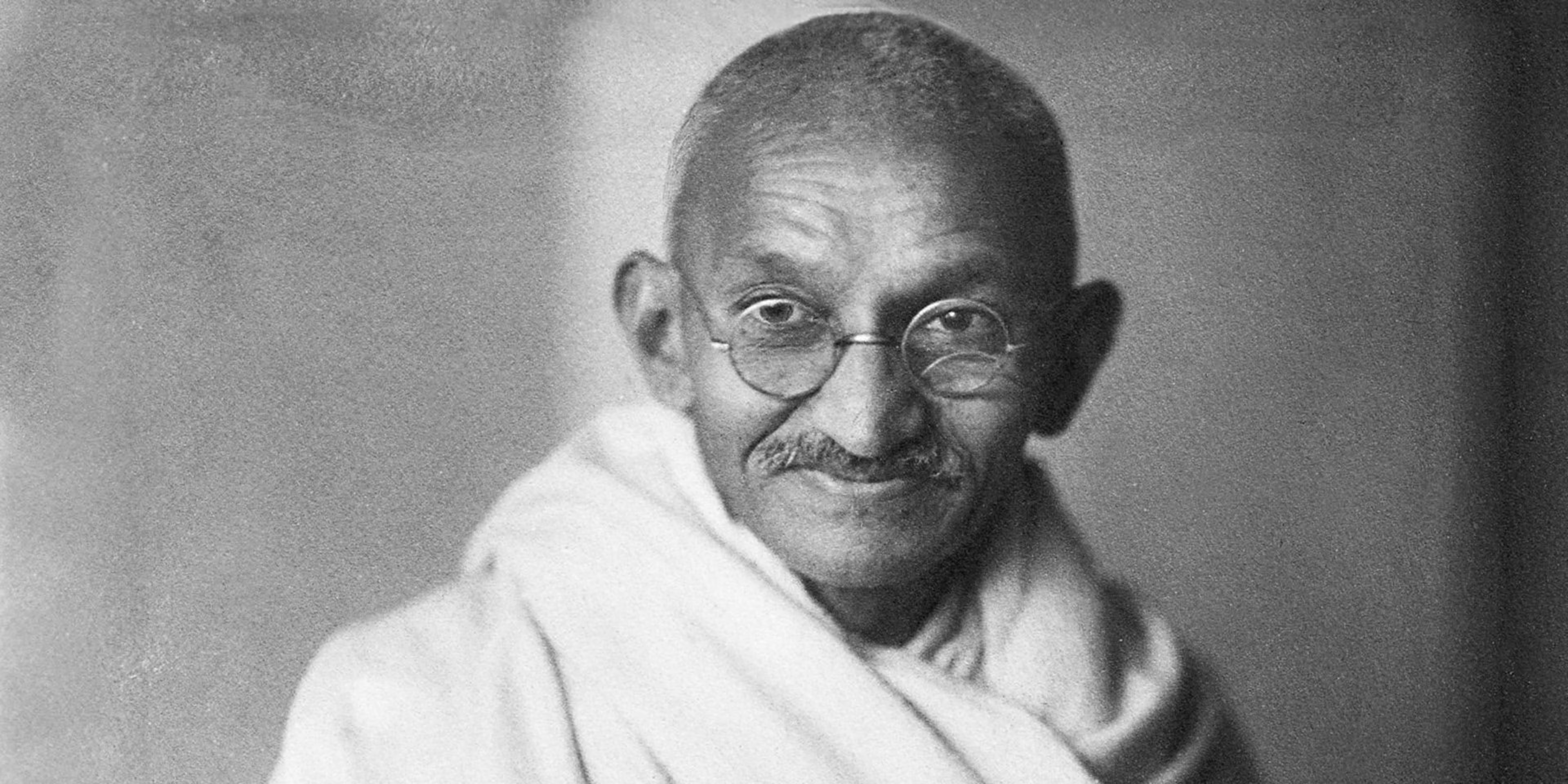
When we picture Mahatma Gandhi, we think of spinning wheels, salt marches, and silent protest. But behind those sweeping acts of civil disobedience stood a man of deeply held personal discipline, and that discipline extended all the way to his dinner plate. Gandhi believed that food was more than fuel; it was a tool for moral development, social justice, and spiritual clarity.
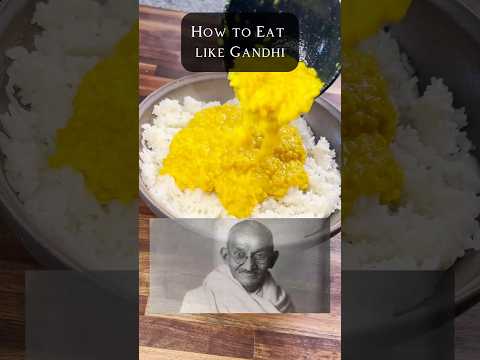
His meals were rarely elaborate. In fact, his go-to dish was startlingly simple: a bowl of moong dal, split yellow lentils, seasoned lightly with salt, turmeric, and ginger, served over plain rice, with a side of fresh fruit like banana, mango, or guava. It was a dish that matched his philosophy: humble, nourishing, and rooted in the soil of India.
A Life Defined by Simplicity
Born in 1869 in Gujarat, India, Gandhi was raised in a devout Hindu household where vegetarianism was the norm. But it wasn’t until his time in London in the 1880s that he became a conscious, committed vegetarian. Inspired by Henry Salt’s Plea for Vegetarianism, Gandhi later wrote, “From that day forward I may claim to have become a vegetarian by choice.” Food, for him, became a moral choice—an extension of ahimsa, or nonviolence.
Later, during his years in South Africa, Gandhi turned his body into a kind of living experiment. He meticulously recorded the effects of different foods on his health and energy. He tried a fruitarian diet. He went without salt. He eliminated pulses for a time, then brought them back. His goal wasn’t variety or enjoyment, but balance and harmony. He once said, “The body was never meant to be treated as a refuse bin, holding the refuse from the surrounding kitchen.”
Next week
I cook these before I write them. Some of it never makes the post.
The failures, the source documents, the version that actually tasted good. That part goes out by email, and next week’s is already on the stove.
 Written and cooked by Donnie
A Plate That Preached
By the time Gandhi returned to India to lead the independence movement, his approach to food had become part of his spiritual and political toolkit. He fasted not just for health, but to bring attention to injustice. He avoided imported foods to support Indian farmers. And he encouraged everyone to embrace simple, local meals: food that sustained, not seduced.
His personal diet, as documented by his associates, rarely strayed from a core of lightly seasoned dal and fresh fruit. One companion recalled, “He insisted he needed dal and once he somehow hunted out moong, cooked it and brought it to my place. I ate it with delight.” Moong dal became his staple being mild on the stomach, easy to digest, and protein-rich. It was often served over plain rice, and eaten alongside sliced banana, guava, or mango, depending on the season.
The Meal: Dal, Rice, and Fruit
I wanted to try it for myself, to sit, for one meal, at the table Gandhi set. I prepared a simple version of his daily meal: moong dal simmered with just salt, turmeric, and grated ginger. I ladled it over steamed white rice, and served it with a small plate of fresh banana, mango, and guava. It came together in under 30 minutes.
There was nothing flashy about it. The dal was mellow, the rice plain, the fruit sweet and fragrant. But there was something quietly satisfying in how each bite grounded me. It wasn’t meant to impress. It was meant to nourish. Eating it, I understood why Gandhi chose this meal, because it allowed him to focus on what mattered more.
Food as Revolution
To Gandhi, eating simply wasn’t an act of poverty, but it was an act of protest against colonial indulgence, against industrialized greed, against overconsumption. He believed that denying himself was a way of liberating others. He once said, “A man is but a product of his thoughts. What he thinks, he becomes.” And what he ate, in many ways, was an extension of what he thought.
Even in his ashram, the rules around food were strict. No snacking. No second helpings. Food waste was a sin. Eating was a ritual, done slowly, mindfully, and with gratitude. In Gandhi’s view, we are not just what we eat, but we are how we eat it.
The Recipe: Gandhi’s Moong Dal
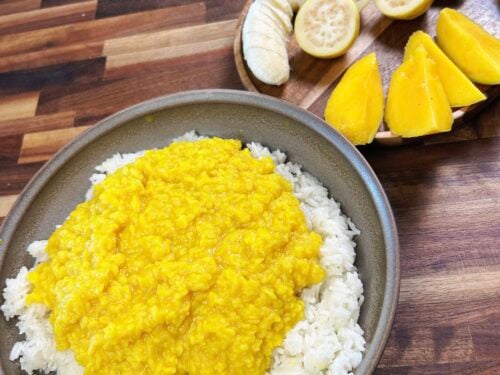
Moong Dal with Rice and Fresh Fruit

Don’t lose this one.
I’ll email it to you so it’s waiting when you’re ready to cook.