Before coffee conquered the morning and tea became Britain’s national obsession, the streets of London ran on something far stranger. A thick, warm, slightly elastic drink made from ground orchid roots, sweetened with sugar, laced with rose water or cinnamon, and sold from stalls in the dark hours before dawn to chimney sweeps, carters, dock workers, and anyone else who needed something warm in their stomach before a hard day began.
It was called saloop, it was everywhere for nearly a century, and then it vanished so completely that most people have never heard of it. I made it at home. Here is the whole story.
Where It Came From
The drink begins not in London but in the highlands of Anatolia and the mountain meadows of the Middle East, where wild orchid species had been harvested for centuries for their starchy, nutritious tubers. The word salep comes from the Arabic term for the tubers, a reference to their paired bulbous shape that the Arabic-speaking world had connected to foxes.

Ground and dried, the tubers produced a fine powder that when heated in liquid transformed into something unlike anything else available at the time, thick, smooth, viscous, and warming in a way that went beyond simple heat. The Ottoman Empire had been drinking it for generations before Europe discovered it, and in Istanbul the street vendors called salepçiler were a fixture of winter street life, calling out through the cold air as they moved through the city with their brass urns strapped to their backs.
Salep was what you drank in the Ottoman world before coffee arrived in the 16th century, and even after coffee came along, it held its ground in the markets and streets of Istanbul and across the Levant. It still does today.
How It Reached London
Saloop arrived in England in the late 17th century carried by the same trade routes that brought coffee, tea, and chocolate to British shores. The first recorded reference to it in English appears in a 1694 text by the physician John Peachi, who recommended it primarily as a food for invalids and children, warm and easy on the stomach and deeply nourishing.

That medicinal framing was typical of how new beverages entered English culture at the time, and like chocolate and coffee before it, saloop made the jump from apothecary recommendation to street corner commodity within a generation. By the early 18th century saloop stalls had become a fixture of London’s pre-dawn streetscape, selling cups for a penny to the working men and women who needed something hot before sunrise.
Catherine Baker, who kept a saloop stand in Hatton Garden, documented leaving for her pitch as early as 3:30 in the morning and returning home around 7:30, placing herself exactly in the path of London’s earliest risers. Vendors positioned themselves near worksites, carter’s yards, and market approaches, returning to the same spots year after year until the stalls became as much a part of the street as the cobblestones themselves.
Why London Loved It
In a city where most working people had no kitchen and could afford to cook at most once a day, a hot, filling, cheap drink available on the street at any hour of the night or morning was not a luxury. It was a lifeline. For a penny you got a bowl of saloop and a slice of bread, which for many Londoners was breakfast.
The writer Charles Lamb described the saloop stalls of early morning London with genuine warmth in his essay In Praise of Chimney Sweepers, writing about the chimney sweep boys who treasured it as a delicacy and the stall keeper Mr. Read, who ran the only dedicated saloop house in the city and boasted that all the imitators on the streets around him were pale shadows of the real thing.
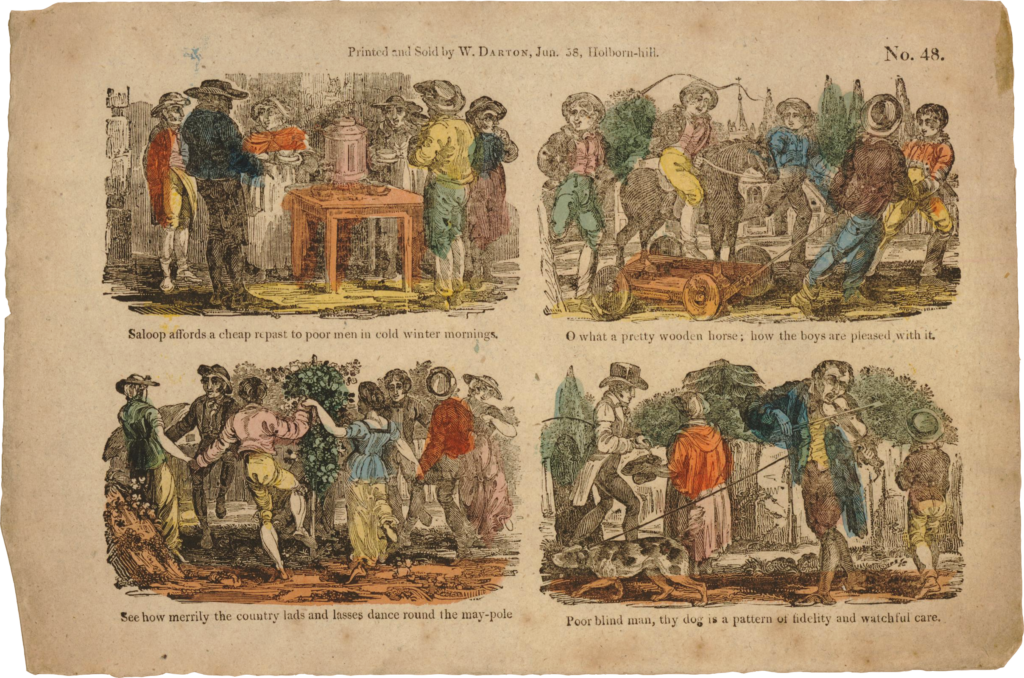
Henry Mayhew, who documented the street life of Victorian London in extraordinary detail, listed the cry of Sa-loop among the great street calls of the city alongside hot sheep’s feet and pepper and saffron, a sound as embedded in the soundscape of London mornings as any other.
The drink was also used as a hangover cure, and the naval physician James Lind recommended it as an emergency provision for the Royal Navy in 1768, noting its value in treating sick sailors. Captain James Cook’s logs document its use at sea. A drink that started in an Ottoman mountain meadow had ended up in the rigging of the ships that were building the British Empire.
Why It Disappeared
The decline of saloop in London is one of the more peculiar stories in food history and it happened in stages. The first problem was class. As the drink became more associated with the working poor, the labouring classes, and the pre-dawn street stall culture of Cheapside and Holborn, it shed the exotic desirability that had given it status in its early years.
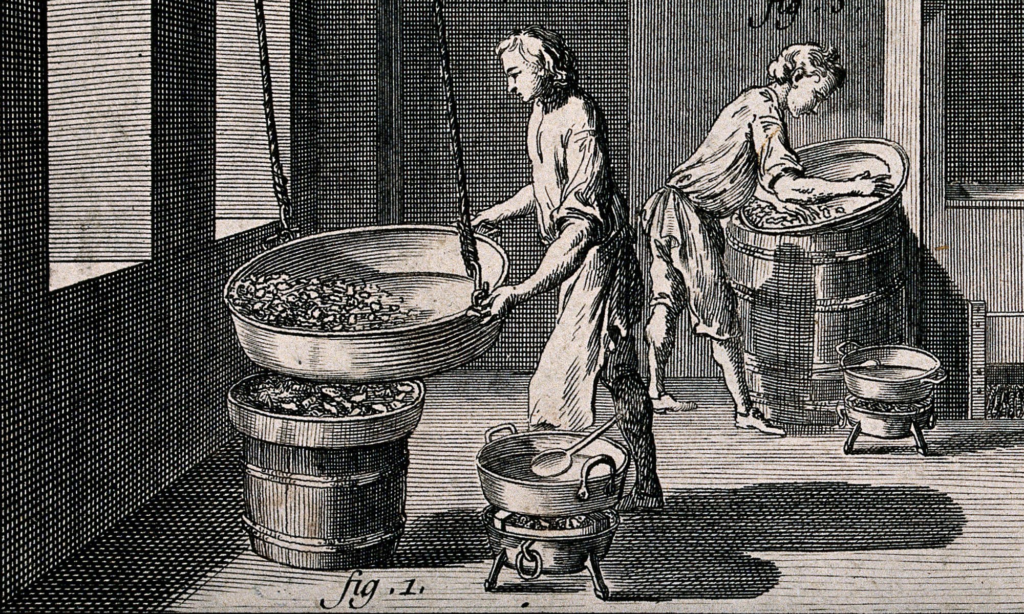
By 1825 it had become so identified with a certain kind of London working life that critics were using it to insult poets they considered insufficiently refined. The second problem was that domestically produced saloop, made from cheaper native British orchid roots rather than imported Turkish ones, flooded the market and reduced the price to almost nothing, stripping the last of its exotic appeal. And then came the final blow.
As the 19th century progressed saloop became increasingly associated with treating venereal disease, and being seen drinking it in public became quietly shameful. The stalls that had served London for a century disappeared within a generation, replaced by coffee stalls that appeared just as saloop vanished. By the 1830s it was already being described in London sources as a curious relic of the past. By the 1840s it was gone.
Where It Lives Today
In Turkey and across the Middle East it never left. Salep is still sold by street vendors in Istanbul through the winter months, still prepared the same way it always was, milk simmered with the powder until it thickens into that distinctive smooth elastic consistency, finished with cinnamon and pistachio on top.
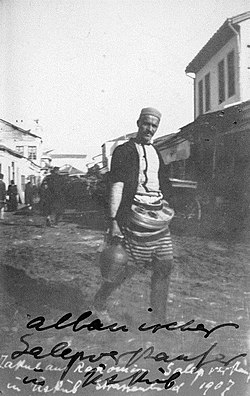
The brass urns have been modernized in some places and the packaging has changed but the drink itself is unchanged. In Egypt it is called sahlab and served warm in milk with coconut and nuts. In Lebanon and Syria it appears at winter markets in the same form it has taken for centuries.
The Western world forgot about it entirely while the Middle East simply kept drinking it. I went and found real salep powder from a Turkish specialty supplier and made the London version at home, the milk-based recipe that the street vendors were selling to chimney sweeps in the dark hours of an early 19th century morning.
My Review
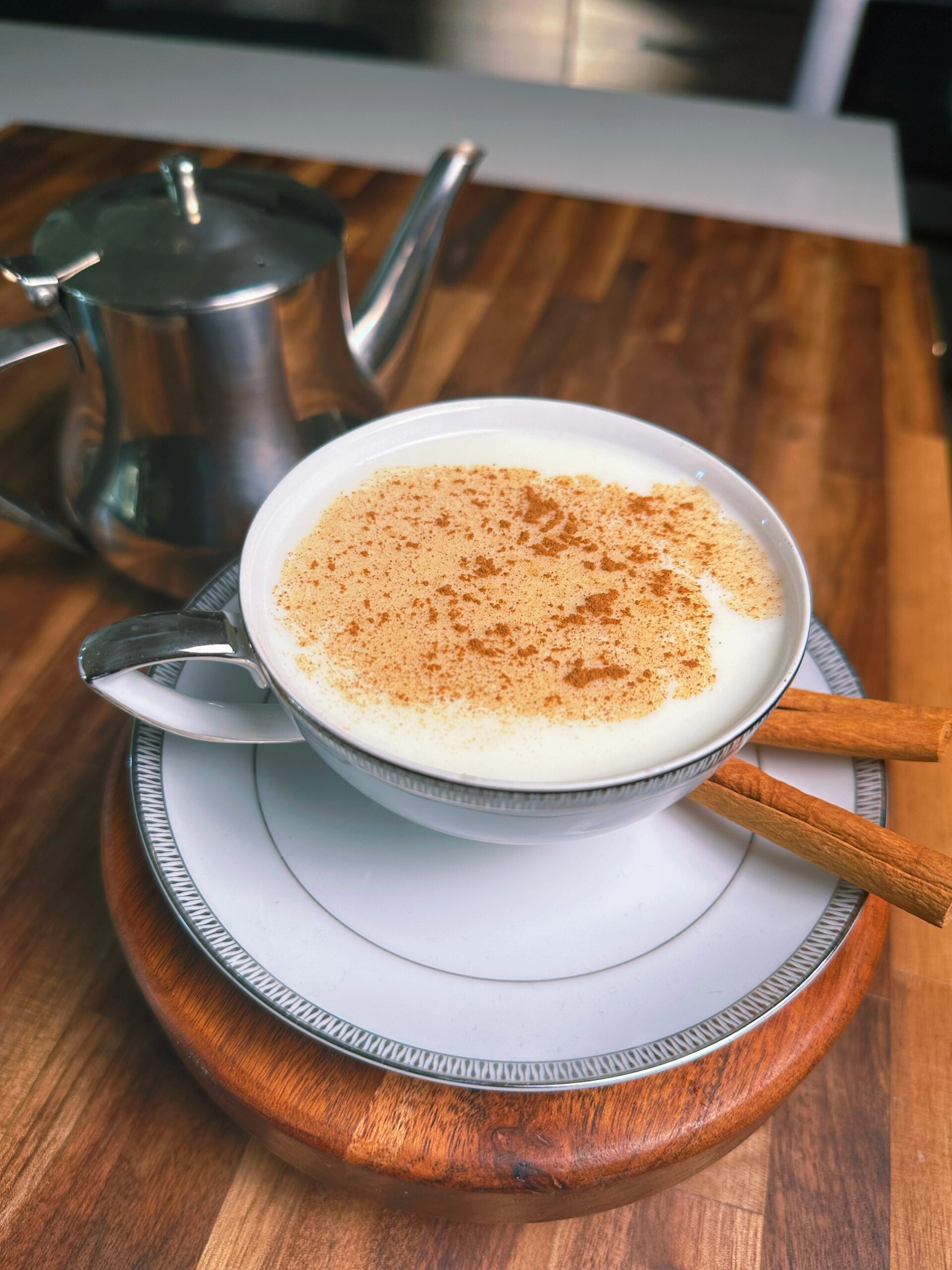
The texture is unlike anything I have made before, a bit thicker than hot chocolate and with a slight silkiness that comes from the glucomannan in the orchid powder and cannot be replicated with any substitute. The flavor on its own is mild and slightly floral, and the cinnamon on top does real work here, cutting through the richness and giving it a warmth that makes complete sense as a drink for someone standing in the dark at 3am in a London winter.
I understand why the chimney sweeps loved it and I understand why it rivaled coffee and tea for a place in the daily life of an entire city. It is deeply comforting in a way that is hard to describe without sounding excessive. What I kept thinking while drinking it was that this is what hot drinks felt like before the world standardized on coffee and tea and stopped looking for anything else. 8.4 out of 10.
Salep Recipe: Make It At Home
Salep
Ingredients
- 1 pint whole milk
- 1/2 oz salep powder sourced from a Turkish specialty supplier
- 2 tbsp sugar or to taste
- 1 tsp rose water or orange flower water optional
- Ground cinnamon for topping
Instructions
- Pour milk into a small saucepan over medium low heat and warm gently until steaming, do not let it boil
- Whisk in the salep powder gradually, a little at a time, to prevent lumps
- Stir continuously as the mixture heats, it will begin to thicken within 4 to 5 minutes into a smooth, glossy, slightly elastic consistency
- Stir in sugar and rose water or orange flower water if using, taste and adjust sweetness
- Pour into a cup and finish with a generous dusting of ground cinnamon
- Serve immediately while hot
Notes
- Do not let the milk boil. Salep powder in boiling liquid can seize and go gluey rather than smooth. Keep it at a gentle steam throughout and stir continuously.
- Source your salep powder from a reputable Turkish supplier. Heavily diluted or low quality powder will not thicken properly and the texture is the entire point of this drink. Cornstarch will thicken a liquid but it will not give you the same slightly elastic, glossy consistency that makes saloop what it is.
- The drink is best served immediately. It continues to thicken as it cools and becomes less pleasant to drink once it drops below a certain temperature, which is probably why the London street vendors sold it from heated brass urns that kept it warm and fluid throughout the morning.