There are countless strange ways that kings and rulers have left this world, but few are quite as absurdly human as the death of King Adolf Frederick of Sweden. On February 12, 1771, the monarch didn’t die on the battlefield or in a palace coup—he died after dinner.

His legacy has been immortalized not by great acts of leadership, but by a single dessert: the Swedish semla. These pillowy cream buns, filled with almond paste and topped with whipped cream, proved too tempting, and the king’s overindulgence made history.
Today, semlor are celebrated across Sweden during the Lenten season as a treat to look forward to, but they also carry with them the story of a king who simply could not say no to one more bite.
The Final Feast of King Adolf Frederick
King Adolf Frederick was never remembered as a strong ruler. His reign fell during Sweden’s “Age of Liberty,” a time when real power rested in the parliament rather than the crown. Historians often describe him as a figurehead, more interested in hobbies and comforts than political battles. But on that February night, his dinner table became his legacy.
His last meal was already fit for a king: lobster, caviar, sauerkraut, smoked herring, and champagne. It was a decadent spread by any standard, but it was the dessert that pushed him over the edge. Adolf Frederick decided to indulge in semlor, served in hot milk in the traditional fashion. And indulge he did—reportedly eating fourteen helpings.

Not long after, he collapsed from digestive complications and died the same night. The newspapers of the time were quick to note the irony: the king had literally eaten himself to death.
Semla: The Humble Bun with a Royal Legacy
The semla itself has humble roots. Originating as a simple bread bun eaten before Lent, it evolved into a rich dessert filled with almond paste and cream. In Swedish, it is sometimes called fastlagsbulle (Shrove Tuesday bun) or hetvägg when served in warm milk.
By the 18th century, it had already become a seasonal delicacy, tied to pre-Lenten feasting. For a king accustomed to excess, semlor were not just dessert—they were the crown jewel of indulgence. That Adolf Frederick chose to gorge himself on them feels oddly fitting.
A Lesson in Indulgence
There is something almost comical about this story. History remembers emperors for battles, revolutions, or political reform. Adolf Frederick is remembered for his sweet tooth. But maybe that is what makes this tale so enduring. It is not about power or glory, but about the universal temptation of food. Who among us has not gone back for seconds, or thirds, when we should have stopped?

When I baked my own batch of semlor, I understood. The combination of fluffy cardamom bun, sweet almond paste, and rich cream is almost impossible to resist. Adolf Frederick’s downfall was eating fourteen in a row, but I admit, after polishing off one, I was tempted to test my limits too.
If you’re enjoying my recipes, check out Eats History Shop for my e-cookbooks!
The Recipe: King Adolf Frederick’s Small-Batch Swedish Semlor (4–6 buns)
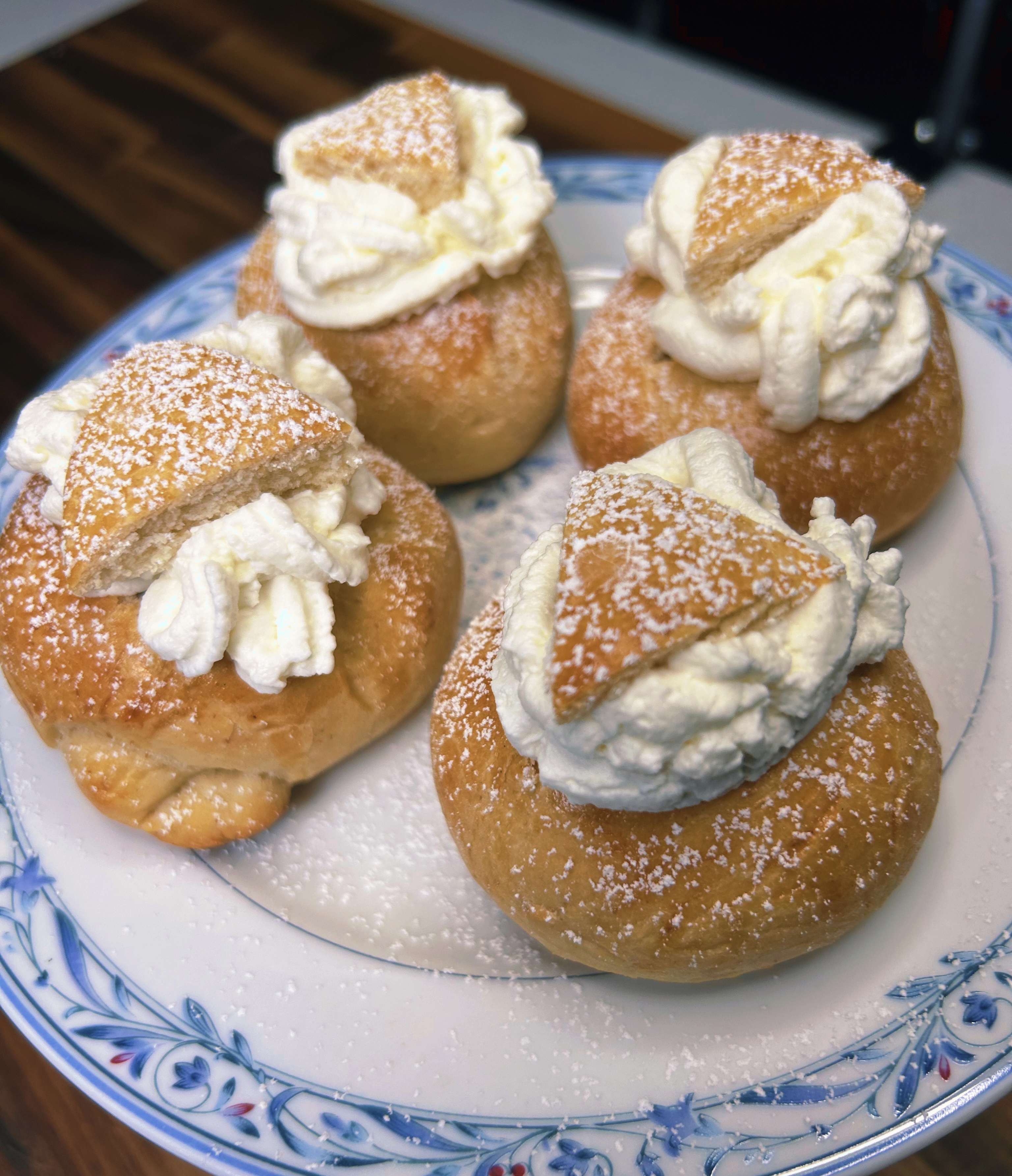
Semla
Ingredients
For the buns:
- 1 cup 120 g all-purpose flour
- 1 ½ tablespoons sugar
- ¼ teaspoon ground cardamom
- ¼ teaspoon salt
- 1 teaspoon instant yeast
- 3 tablespoons butter melted
- ⅓ cup warm milk
For the filling:
- ¼ cup almond flour or finely ground blanched almonds
- 2 tablespoons powdered sugar
- 1 –2 tablespoons milk enough to form a paste
For assembly:
- ½ cup heavy cream
- 1 tablespoon powdered sugar plus more for dusting
- ½ teaspoon vanilla extract
Instructions
- Make the buns: In a mixing bowl, combine warm milk, melted butter, sugar, and yeast. Let sit until foamy. Add flour, cardamom, and salt, stirring into a dough. Knead for 5–6 minutes until smooth. Cover and let rise for 1 hour.
- Shape and bake: Divide dough into 4–6 equal pieces and shape into balls. Place on a parchment-lined baking tray, cover, and let rise 30 minutes. Bake at 375°F (190°C) for 12–15 minutes until golden. Cool completely.
- Prepare filling: Mix almond flour, powdered sugar, and milk to create a thick paste.
- Assemble: Slice a small “lid” off each bun. Hollow out some crumbs from inside. Mix crumbs into the almond paste for extra texture, then spoon the mixture back into each bun.
- Whip cream: Beat cream with powdered sugar and vanilla until soft peaks form. Pipe or spoon onto buns. Replace the bun lids and dust with powdered sugar.
Video
Notes
- Cardamom makes the difference: Use freshly ground cardamom if possible—it gives the buns their distinct Scandinavian flavor and makes them stand out from regular sweet rolls.
- Customize the filling: Traditional semlor use almond paste, but you can blend the scooped-out crumbs with almond flour and sugar for extra texture and sweetness.
- Best enjoyed fresh: These buns are at their peak the day they’re filled. If you need to prepare ahead, bake the buns a day before and assemble just before serving.