Some dishes don’t reveal themselves in museums or guidebooks. You find them standing on a cobblestone street, paper plate in hand, watching locals order without hesitation. Supplì is one of those dishes. Crispy, deeply savory, and unapologetically Roman, it’s the kind of food that tells you more about a city than a dozen plaques ever could.
I first learned about supplì while walking through Rome on an Eating Europe Food Tour, where the goal isn’t just to eat well, but to understand why people eat what they do. These tours connect food to history, geography, and daily life in a way that’s hard to replicate on your own. If you’re traveling to Europe soon and want to experience a city through its food culture, I can’t recommend them enough.
👉 You can explore their European food tours here: Eating Europe Food Tour Sign-Ups

Supplì may look simple at first glance, but behind that crisp shell is a story shaped by poverty, empire, war, and creativity. Like so many great street foods, it exists because people figured out how to make something extraordinary from leftovers.
Learning Supplì on the Streets of Rome
Rome is a city where the everyday and the ancient exist side by side. One minute you’re passing ruins that predate Christianity, the next you’re eating something that’s been made the same way for generations. Supplì lives firmly in that everyday category. It’s not ceremonial food. It’s food for workers, students, and anyone who needs something filling, cheap, and satisfying.
On the tour, supplì was introduced not as a novelty, but as a staple. Something Romans grow up with. Something you grab without thinking. That context matters. This isn’t “Italian food” in the broad sense. This is Roman food, shaped by Roman habits and Roman history.
What struck me most was how consistent the idea of supplì is across the city. The shapes may vary slightly, the fillings may differ, but the core remains the same: cooked rice bound together, stuffed with cheese, breaded, and fried. Simple, yes. But incredibly refined in execution.
The History of Supplì: A Street Food Born of Necessity
Supplì likely emerged in the 19th century, when rice became more common in central Italy and leftovers needed to be repurposed. Cooked rice, especially rice cooked with tomato, could be cooled, shaped, and fried the next day. Adding a bit of cheese turned it from sustenance into comfort food.
This was not aristocratic cuisine. Supplì belongs to the working-class tradition of Roman cooking, where nothing was wasted and flavor mattered more than elegance. Frying gave leftover rice new life, creating contrast between a crisp exterior and a soft interior.
As Rome modernized, supplì moved from home kitchens to bakeries and friggitorie. It became something you bought by the piece, eaten hot, often standing up. A food of motion, not ceremony.
Why It’s Called Supplì: The “Surprise” Inside
The name supplì is generally believed to come from the French word surprise, introduced during the Napoleonic occupation of Rome in the early 1800s. French soldiers encountered these fried rice balls and were struck by the melted cheese hidden inside. The name stuck, Italianized over time.

That surprise is still the point. When you break a supplì open, the mozzarella stretches in long strands, earning the classic Roman nickname supplì al telefono, because the cheese looks like old telephone wires.
It’s a rare case where the name of a dish captures the experience perfectly. You’re not just eating something fried. You’re revealing it.
How Supplì Is Made: Technique Over Ingredients
Supplì starts with rice cooked far past what would be acceptable for risotto. The goal is cohesion, not creaminess. Tomato, stock, and aromatics are cooked down until the rice is thick, dense, and able to hold its shape.
Once cooled, the rice is shaped by hand, filled with mozzarella, and sealed tightly. This step matters. Any gaps, and the cheese will escape during frying. The rice ball is then coated in a simple flour-and-water batter and rolled in breadcrumbs.
Frying transforms everything. The exterior becomes crisp and golden, while the interior warms just enough to melt the cheese without collapsing the structure. When done right, it’s one of the most satisfying textures in Italian street food.
Why Supplì Endures
Supplì has survived because it fits Roman life. It’s portable. It’s affordable. It’s deeply comforting. And it rewards care without demanding luxury ingredients.
In a city layered with imperial excess and artistic grandeur, supplì is humble by design. That humility is its strength. It reminds you that great food doesn’t need reinvention, just respect for what works.
Making it at home connects you directly to that tradition. You’re not modernizing it. You’re participating in it.
Recipe: Roman Supplì (Makes 6)
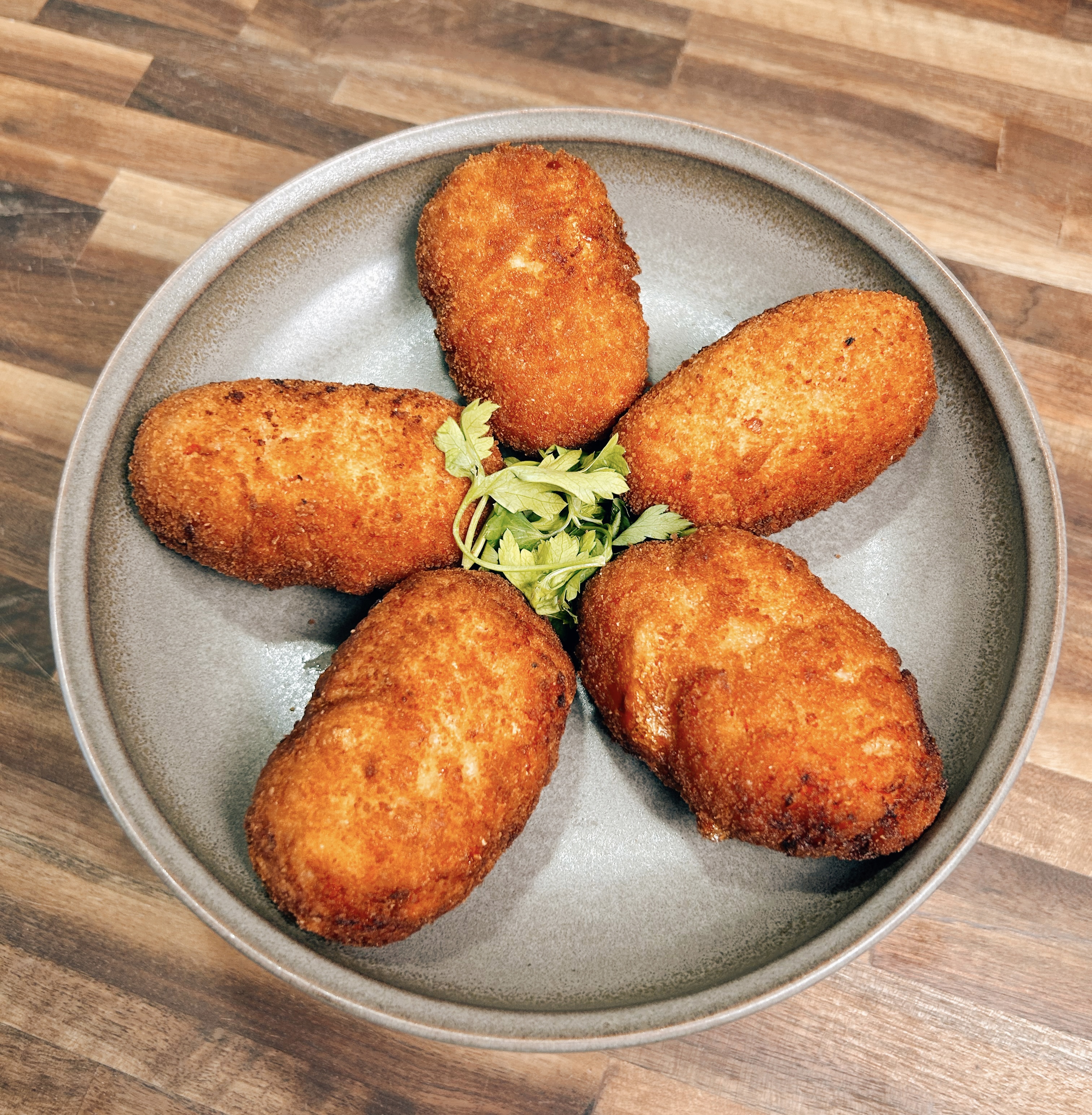
Roman Supplì
Ingredients
- 1¼ cups Arborio or Carnaroli rice
- 2½ tbsp extra-virgin olive oil
- 2 tbsp finely minced shallot
- 3 tbsp finely chopped onion
- 1½ cups hot vegetable stock
- 1¼ cups tomato sauce
- ¾ tsp tomato paste
- 1½ tbsp butter
- 1½ tbsp finely grated Parmigiano Reggiano
- Salt and black pepper to taste
Filling
- ¾ cup diced low-moisture mozzarella
Breading
- 3 tbsp all-purpose flour
- 3 tbsp water
- 1 to 1½ cups breadcrumbs
For frying
- Neutral oil vegetable or peanut, for deep frying
Instructions
- Heat olive oil in a saucepan over medium heat. Add shallot and onion and cook until soft and translucent.
- Stir in rice and cook 1–2 minutes to coat.
- Add tomato sauce and tomato paste. Begin adding hot stock gradually, stirring often, until rice is fully cooked and very thick, about 16–18 minutes. Season lightly.
- Remove from heat. Stir in butter and Parmigiano. Spread on a tray and cool completely.
- Divide rice into 6 portions. Press mozzarella into the center of each and shape into tight ovals.
- Mix flour and water into a thin batter. Dip each supplì into batter, then coat in breadcrumbs.
- Fry at 350°F (175°C) until deep golden brown, about 3–4 minutes. Drain briefly.
- Serve hot, ideally with the cheese still stretching.
Video
Notes
- Let the rice cool completely before shaping. Warm rice will fall apart and make it difficult to seal the mozzarella inside, increasing the risk of cheese leaking during frying.
- Use low-moisture mozzarella. Fresh mozzarella releases too much liquid when heated and can cause the supplì to burst while frying.
- Keep the oil at a steady temperature. Fry at around 350°F (175°C). Too cool and the supplì absorb oil, too hot and the outside browns before the center warms through.