Before the rise of Rome, the Italian peninsula was home to a remarkable people known as the Etruscans. They flourished from around 800 to 300 BCE across modern-day Tuscany, Umbria, and parts of northern Lazio. Though eventually absorbed into the Roman Republic, the Etruscans laid much of the cultural groundwork that would define classical Italy.
If you’re enjoying my recipes, all of my e-cookbooks are currently 40% Off!

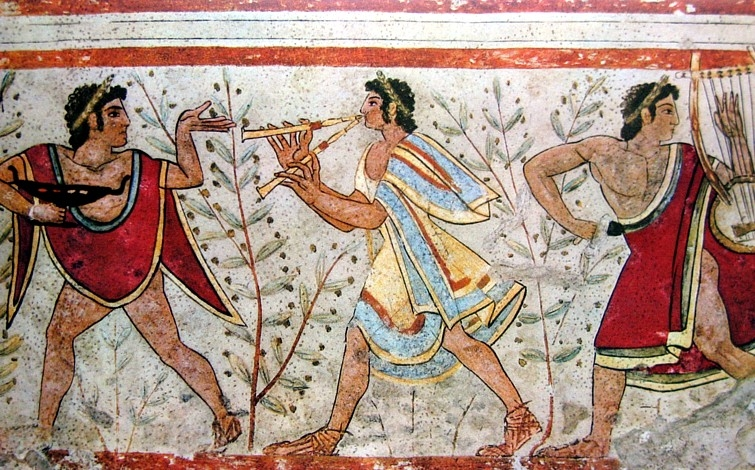
They built cities before Rome, developed writing, and left behind intricate tombs painted with scenes of banquets and daily life. Through these frescoes and archaeological finds, we catch glimpses of a society that valued art, craftsmanship, and, importantly, the ritual of shared meals.
Etruscan feasts were not just about food but about connection and spirituality. Their banqueting scenes depict reclining diners, musicians, and servants bringing trays of bread, oil, wine, and meat. From the grains they grew—emmer, barley, and wheat—they created flatbreads and porridges that formed the foundation of their diet. Among these early grain dishes emerged something extraordinary: a primitive form of pasta that would survive the collapse of their civilization and echo through time in a dish still made today in the hills of Lunigiana—Testaroli.
Italy’s Oldest Pasta
Historians consider Testaroli to be the earliest known ancestor of Italian pasta. The name comes from testo, the flat terracotta or cast-iron pan on which the batter was cooked. These pans were found in Etruscan sites, and the technique itself appears in later Roman culinary writings.
Unlike the firm, kneaded doughs that would define later pasta, Testaroli began as a simple batter of flour, salt, and water, more akin to a crepe or pancake. The batter was poured onto a hot pan, cooked on both sides, and left to cool before being cut into diamond-shaped pieces.
What makes Testaroli remarkable is its hybrid identity—neither bread nor noodle but something in between. Once the pieces are cut, they are briefly boiled in salted water, transforming them into a soft, supple texture that sits perfectly between pasta and dumpling. This ingenious method demonstrates how the Etruscans were experimenting with grains long before Rome or Renaissance Italy perfected their pastas. In essence, Testaroli is living proof that the Italian art of transforming flour and water into a meal began well before written recipes existed.
The Myth of Marco Polo & Noodles
For generations, schoolbooks repeated the tale that Marco Polo brought pasta to Italy from China in the 13th century. It’s a romantic story, but one that doesn’t hold up to history. Archaeological and textual evidence shows that Italians—and earlier, the Etruscans and Romans—were eating cooked grain doughs centuries before Polo was even born. The Chinese had their noodles, yes, but the Italian peninsula had already developed its own traditions independently.

The Etruscans used stone mills, clay ovens, and simple tools to create a variety of grain-based foods, including flatbreads, porridges, and early pastas like Testaroli. Roman authors later described similar preparations, proving that Italy’s pasta lineage is native, not imported. The myth of Marco Polo persists because it fits a convenient narrative about East meeting West, but the truth is far older and far simpler: Italy’s first pasta was born from the soil of Tuscany itself.
How Testaroli Is Made
The preparation of Testaroli is a study in minimalism. You start with flour, warm water, and a pinch of salt, whisking until the batter is smooth and slightly thicker than pancake mix. The mixture is then poured onto a hot cast-iron skillet—or, if you want to be authentic, a testo—and cooked on both sides until lightly golden. Once cooled, the pancake is sliced into diamonds or triangles.
The cut pieces are then briefly boiled in salted water for one to two minutes, just enough to soften them into a tender, pasta-like texture. Traditionally, Testaroli is served with olive oil and grated Pecorino cheese, but in the Ligurian hills, it’s often paired with pesto. The genius of this method lies in its efficiency. With only three ingredients and a single pan, the Etruscans created a dish that could be made anywhere, even on the road or in the fields.
My Modern Interpretation
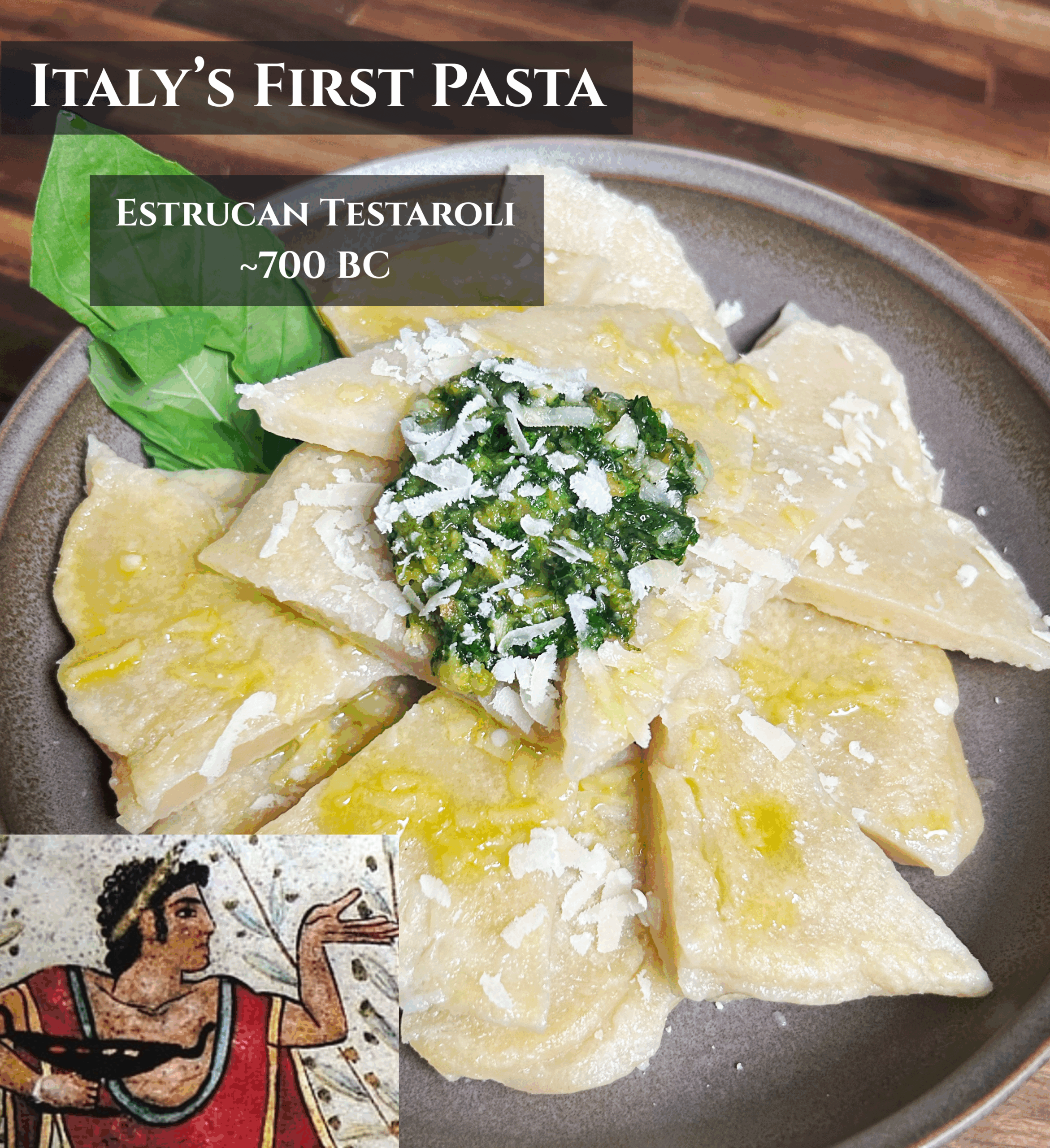
When I recreated this dish, I followed the ancient process as closely as possible but finished it in a way that would feel both rustic and refined. After boiling the triangles, I tossed them in a walnut pesto made from parsley, mint, garlic, walnuts, Pecorino cheese, and olive oil—a blend inspired by the herbal sauces of early Etruria. The pesto’s rich, earthy flavor complemented the toasty, grain-forward taste of the pasta perfectly. I finished it with a final dusting of grated sheep’s cheese, a nod to the pastoral roots of this ancient civilization.
The result was simple yet deeply satisfying—a dish that tastes of olive oil, earth, and history. The texture of Testaroli is soft and spongy, absorbing flavors like a sponge while retaining a rustic chew. Eating it feels like stepping back into a Tuscan hearth 2,500 years ago. It’s food that connects you to the origins of Italian cuisine, a reminder that culinary genius often starts with the humblest ingredients. For taste, comfort, and legacy, I give it a solid 8.8 out of 10.
Recipe: The Etruscan Testaroli with Walnut Pesto
The Etruscan Testaroli with Walnut Pesto
Ingredients
For the Testaroli:
- 300 g ≈ 2 cups all-purpose flour (or a mix of spelt or durum for authenticity)
- 450 ml ≈ 1¾ cups warm water
- Pinch of salt
- Good olive oil for cooking
For the Walnut Pesto:
- 1 small bunch parsley
- 6 –8 basil leaves optional — basil existed in the region but wasn’t central until later
- 2 –3 sprigs mint or celery leaves
- 1 clove garlic
- 2 tbsp grated Pecorino sheep’s milk cheese, common in Etruria
- 1 tbsp crushed walnuts
- 3 –4 tbsp extra virgin olive oil
- Pinch sea salt
To serve:
- Grated Pecorino or Parmesan cheese
- Drizzle of olive oil
Instructions
Prepare the Testaroli Batter
- In a mixing bowl, combine flour and salt. Gradually whisk in warm water until smooth, forming a batter slightly thicker than pancake mix. Let it rest for 10–15 minutes.
Cook the Testaroli
- Heat a cast-iron skillet (or traditional testo pan) over medium heat and brush lightly with olive oil. Pour in a ladle of batter to make a round about 3–5 mm thick. Cook for 3–4 minutes until set and lightly golden underneath, then flip and cook the other side for about 1 minute. Repeat until all the batter is used.
Cut and Boil the Pasta
- Allow the cooked rounds to cool slightly, then cut into diamond or triangle shapes. Bring a pot of salted water to a boil, add the pieces, and cook for 1–2 minutes until tender. Drain well.
Make the Walnut Pesto
- In a mortar and pestle (or small food processor), pound garlic and salt into a paste. Add the herbs and crush until coarse. Mix in the walnuts and cheese, then drizzle in olive oil while stirring until you reach a smooth, creamy consistency. Taste and adjust salt if needed.
Combine and Serve
- Toss the warm Testaroli with the walnut pesto until evenly coated. Serve immediately with an extra drizzle of olive oil and a generous sprinkle of grated Pecorino cheese.
Video
Notes
- Use a cast-iron skillet or terracotta pan if possible to replicate the traditional testo used in Etruscan cooking.
- The pesto can be adjusted to taste — parsley and walnuts were historically accurate, while adding basil gives it a more modern Italian twist.
- Avoid overboiling the Testaroli; 1–2 minutes in hot water is enough to achieve the perfect tender, pasta-like texture.