There are few dishes in world history that carry the weight of spiritual and cultural memory quite like Tharid. Known as the favorite dish of Prophet Muhammad, Tharid is far more than a lamb stew. It is a reflection of simplicity, nourishment, and divine grace, a meal eaten in the most honored of households and spoken of with reverence in Islamic texts.
While the world has changed dramatically since the 7th century, Tharid remains a culinary and cultural bridge between the past and present, still served on tables across Arabia during Ramadan and family gatherings.
As a non-Muslim, approaching a dish with this level of religious significance demands a deep respect for its origins. My intent is not to replicate the exact dish of the Prophet, for no modern kitchen can truly do that, but rather to honor its essence. I hope to offer a glimpse into its importance, while sharing my own humble interpretation of this dish: a slow-cooked lamb stew served over torn flatbread, garnished with herbs, and meant to be eaten communally. It’s a meal that centers you, quiets you, and reminds you of what food can mean beyond taste.
A Dish Loved by the Prophet
The reverence for Tharid in early Islamic tradition is unmistakable. One of the most cited references comes from Sahih al-Bukhari, one of the most respected collections of hadith: “The superiority of A’ishah to other women is like the superiority of Tharid to other foods.” This is not a simple culinary compliment, but it’s also a metaphor steeped in affection and cultural meaning. To say a dish is like A’ishah, Prophet Muhammad’s beloved wife, is to elevate it to the level of grace, wisdom, and excellence.
Next week
I cook these before I write them. Some of it never makes the post.
The failures, the source documents, the version that actually tasted good. That part goes out by email, and next week’s is already on the stove.
 Written and cooked by Donnie
In that time, Tharid was commonly eaten by the Quraysh tribe, the very people into which the Prophet was born. It was rustic, nourishing, and easy to prepare for large groups. But it was also elegant in its own way—slow-cooked meat, spiced gently, poured over softened bread that absorbed every ounce of flavor. Tharid was not an indulgence. It was sustenance made sacred.
Today, when I ladle the stew over warm flatbread, I imagine a scene from centuries ago: a modest home, the Prophet sitting among his family or followers, sharing this very dish with warmth and humility. To recreate it is to participate, even slightly, in something timeless.
Sacred Simplicity
There is a quiet sacredness to dishes like Tharid. The ingredients are humble—lamb, onion, garlic, carrots, chickpeas, water, and a few key spices—but their alchemy is profound. This is not a stew meant to impress. It is meant to nourish. And in that way, it feels holy.
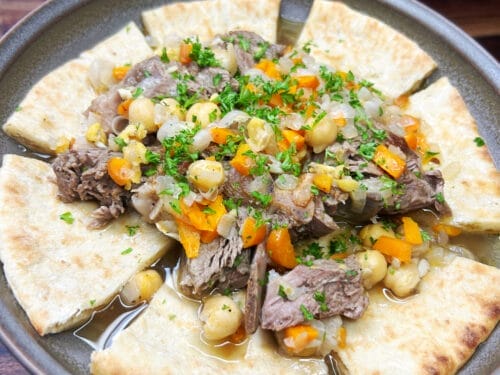
I chose bone-in lamb shoulder for this version, seared until golden brown to create a deep, hearty base. The onions caramelized slowly in olive oil, followed by minced garlic, diced carrots, and tender chickpeas. The broth developed over hours, seasoned with salt, pepper, cumin, cinnamon, and coriander, spices available even in 7th-century Arabia. Each hour of simmering deepens the flavor, softens the meat, and thickens the connection to the past.
Flatbread plays a central role too, not just as a vessel, but as part of the meal itself. It is torn and placed on the bottom of the bowl, ready to soak up the rich stew. The bread dissolves slightly, becoming one with the broth. It is the bridge between the hand and the dish, the eater and the earth.
A Lasting Tradition in the Muslim World
Tharid has endured. Over 1400 years later, it is still served throughout the Muslim world, especially during Ramadan. In the Gulf region, it appears on iftar tables after long days of fasting. In Morocco and Egypt, variations of it appear under different names. Across generations, this dish continues to carry meaning far beyond its ingredients.
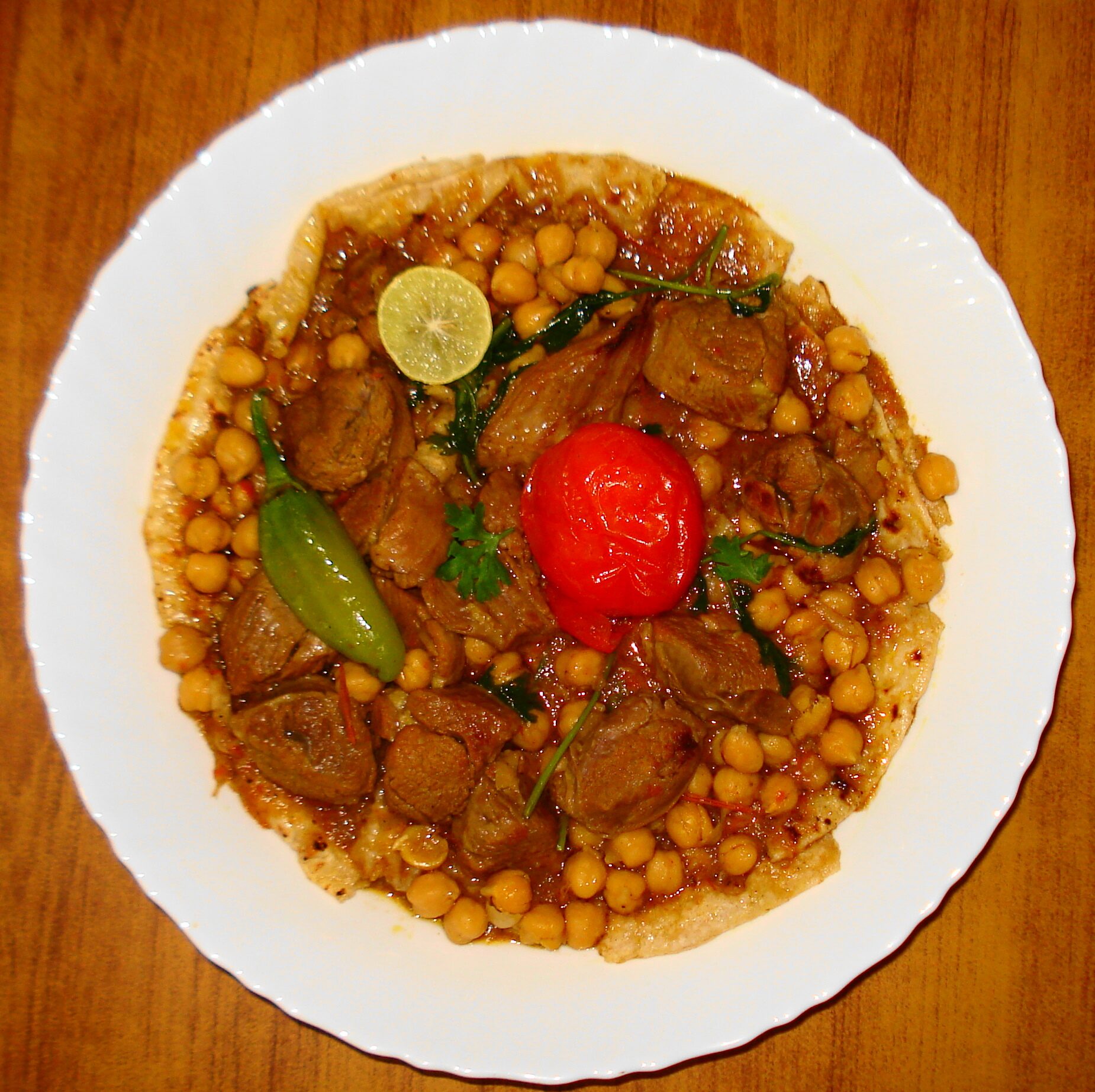
In many households, Tharid is made by grandmothers and passed down to daughters. It is often reserved for guests, for special gatherings, or moments of reflection. In some cultures, it’s even used to teach values to children—sharing, patience, respect for the food on your plate.
What amazes me is that no matter how much the world evolves, food like this holds its place. It doesn’t need to be reinvented. It simply needs to be remembered. When I cooked this stew, the aroma of cinnamon and lamb filled my home with a quiet, almost meditative energy. It made me cook slower, speak softer, and appreciate more.
My Interpretation: Stewing the Past into the Present
Of course, I approached this dish with my own culinary instincts, while still doing my best to remain faithful to its spirit. I browned lamb shoulder with bone in, letting the rendered fat flavor the pot. I added sliced onion, minced garlic, carrots, and chickpeas, all gently sautéed to build layers. The spices—just a touch of cinnamon and cumin, coriander and salt—gave the broth a fragrant warmth. I covered it all with water and let it stew for several hours on low heat, until the meat pulled apart effortlessly.
Just before serving, I tore up warm flatbread and placed it in a wide dish, spooning the stew directly on top. A sprinkle of fresh parsley gave it brightness. There was no need for embellishments. The dish spoke for itself.
And yes, I rated it. 9.2 out of 10. Not because it’s trendy or gourmet, but because it felt meaningful. It satisfied in a way few meals do. Not just the stomach, but the spirit.
If you’re enjoying my recipe, feel free to check out Eats History Shop!
Tharid: Muhammad’s Favorite Dish Recipe
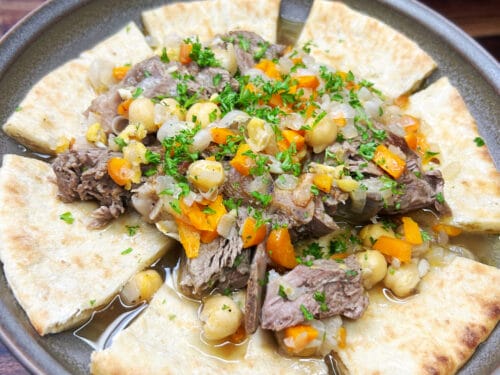
Tharid Recipe

Don’t lose this one.
I’ll email it to you so it’s waiting when you’re ready to cook.
Ingredients
Instructions
Notes
- Choose Bone-In Lamb: Bone-in lamb shoulder adds depth to the broth as it stews. The marrow and connective tissue break down slowly, enriching the liquid with savory flavor and natural gelatin.
- Flatbread Is Essential: Use hearty flatbread like taboon, saj, or even pita. Tear it into pieces and lay it at the bottom of the serving dish so it can soak up the broth. This makes it both spoonable and traditionally eaten by hand.
- Make It Ahead: Like many stews, Tharid tastes even better the next day after the flavors have melded. If you’re serving for guests or during Ramadan, consider cooking it the night before and reheating gently.