
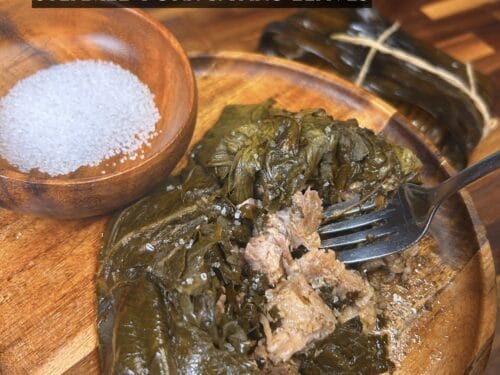
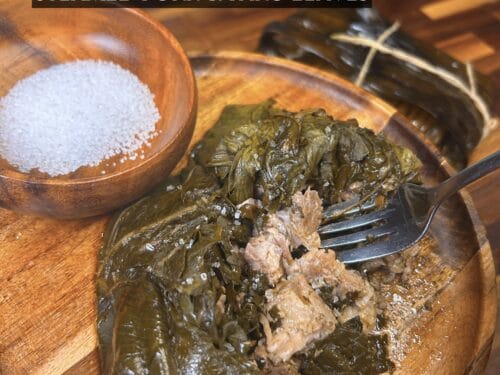
The first thing you notice when you open a lau lau is the steam. It pours out in a rush, carrying with it the scent of tender pork that has been wrapped in leaves and slowly cooked until it nearly melts. The taro leaves have softened into a silky texture, and the meat is infused with their earthy flavor.
On the outside, ti or banana leaves hold the bundle together, sealing in the moisture. Simple, humble, and powerful, lau lau is one of Hawaii’s most enduring dishes, and its story reaches deep into the islands’ past.
Wrapping the Bundle: The Making of Lau Lau
Lau lau begins with pork, traditionally a fatty cut like shoulder or belly, seasoned only with Hawaiian sea salt. This meat is folded into large taro leaves, which are not only edible but also add an herbal depth when steamed. Once secured, the bundle is wrapped again in ti leaves, which are not eaten but act as a natural casing to protect the food during the long cooking process. Outside of Hawaii, banana leaves make an excellent substitute.
The bundles are then tied with kitchen twine to hold everything in place. Traditionally, they would be placed into an imu, an underground oven filled with hot stones and covered with earth to trap the steam. In the modern kitchen, a slow cooker or steamer replicates the effect, though with less ceremony. Four hours of steaming transforms the pork into something tender, juicy, and rich, while the taro leaves soften into a smooth complement.
Next week
I cook these before I write them. Some of it never makes the post.
The failures, the source documents, the version that actually tasted good. That part goes out by email, and next week’s is already on the stove.
 Written and cooked by Donnie
This method reflects the practical brilliance of Hawaiian cooking. Wrapping and steaming in leaves allowed cooks to preserve moisture and flavor without metal pots or pans, making the most of what the land offered. Lau lau is both a dish and a technique, showing how food, plants, and environment were woven together in daily life.
The Roots of Lau Lau in Ancient Hawaii
The origins of lau lau stretch back to the Polynesian voyagers who first settled Hawaii more than a thousand years ago. These settlers brought taro, pigs, and their knowledge of earth ovens with them across the Pacific. Once established on the islands, they developed cooking traditions that used local resources, adapting to new landscapes while holding to familiar methods.
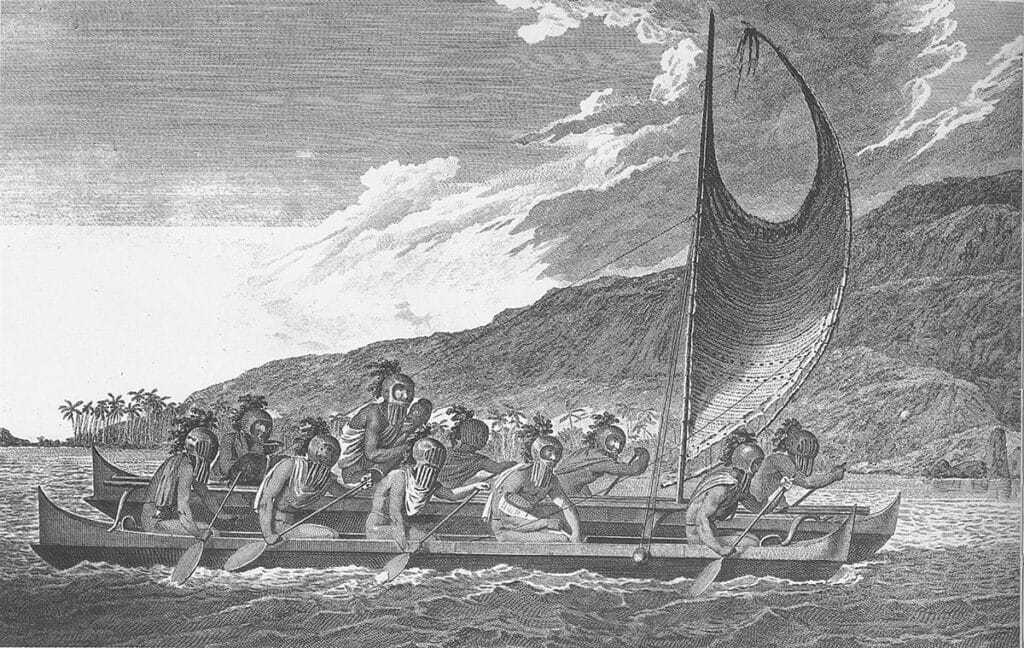
Wrapped foods were common across Polynesia, and lau lau is the Hawaiian refinement of that tradition. It became part of both daily sustenance and ceremonial meals, served alongside poi, fish, and other staples. The word itself, laulau, comes from the Hawaiian term for “leaf leaf,” reflecting the multiple layers of wrapping. This layering wasn’t just practical but symbolic, reflecting the way Hawaiian cooking linked nourishment with respect for the natural world.
The dish also points to the deep connection Hawaiians maintained with taro, or kalo. The plant was not just food but part of their creation story, considered an elder sibling to humanity. By wrapping pork in taro leaves, early Hawaiians combined the sacred plant with the prized animal, uniting two symbols of life and continuity in a single meal.
Pigs and the Hawaiian Pantheon
Pigs were more than livestock in ancient Hawaii. They carried sacred weight in the Hawaiian pantheon, tied closely to the gods Lono and Kū. Lono, the deity of fertility, rain, and agriculture, was honored during the Makahiki festival, a season of peace and harvest. Pigs were among the most important offerings given to Lono, symbolizing abundance and fertility. Their sacrifice was believed to help ensure rain and plentiful crops.
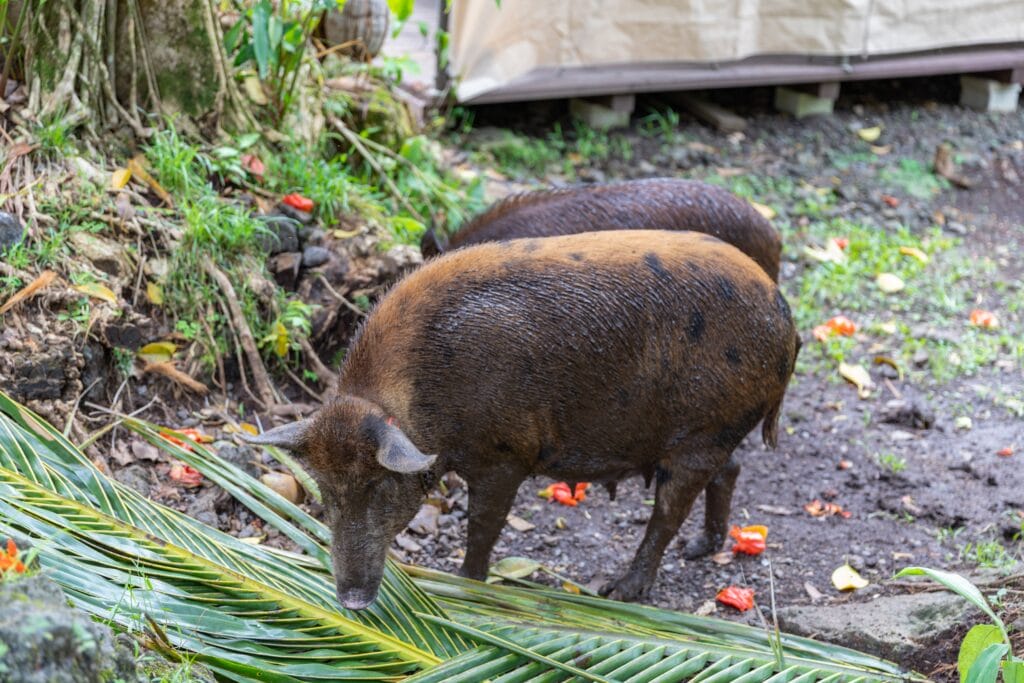
At the same time, pigs were associated with Kū, the god of war and politics. In some traditions, pig sacrifices took the place of human offerings, their life force seen as powerful enough to satisfy the god. This duality—nourishing the body and feeding the gods—placed pigs at the center of both Hawaiian diet and spirituality.
The stories of Kamapua‘a, the pig demigod, added another layer to their meaning. Known as a trickster and shape-shifter, Kamapua‘a embodied both the fertility and the wildness of pigs. His tumultuous romance with Pele, the goddess of volcanoes, became one of the most famous Hawaiian legends, reflecting how pigs symbolized both creation and destruction.
When pigs were wrapped in taro and ti leaves for lau lau, the act carried these echoes of divine significance. Eating pork was not only a matter of sustenance but also an engagement with the spiritual world.
From Imu to Modern Kitchens
Traditionally, lau lau was cooked in an imu. This underground oven, lined with hot stones and covered with leaves and soil, allowed food to steam for hours. Families would dig the pit, heat the stones, place wrapped bundles inside, and then wait while the slow cooking transformed the food. The imu was as much a social event as a cooking method, bringing people together for ceremonies, feasts, and celebrations.
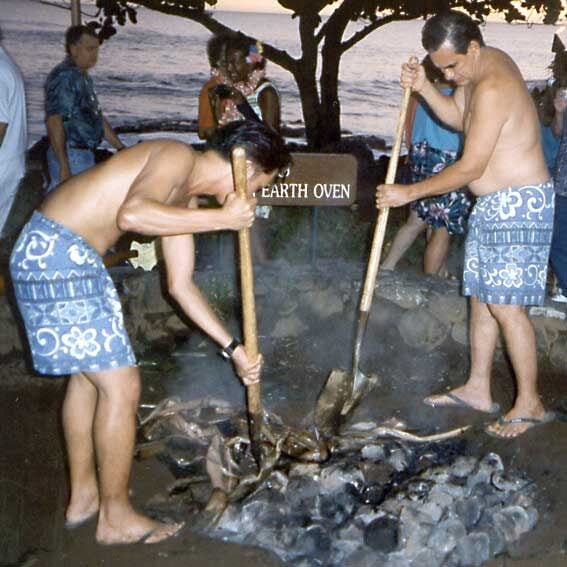
Today, few families maintain the tradition of cooking in an imu regularly, but the method lives on in luaus and cultural events. For the home cook, steaming over a stovetop or in a slow cooker brings lau lau within reach, even far from the islands. The ti leaves may be replaced with banana leaves, and collard greens can substitute for taro leaves if necessary, but the spirit of the dish remains the same.
What has not changed is the time required. Lau lau still needs hours of slow steaming to reach perfection. This patience is part of the ritual, teaching us to wait, just as Hawaiians once waited by the imu until the earth itself revealed its meal.
Lau Lau Today: A Living Tradition
Despite centuries of upheaval, lau lau has endured as a cornerstone of Hawaiian cuisine. It appears on the tables of family gatherings, at luaus, and in Hawaiian restaurants. It is often served with poi, lomi salmon, or rice, connecting modern meals to the ancient roots of Hawaiian culture.
Its survival is a testament to cultural resilience. Colonization, missionary influence, and modernization brought new ingredients and outside cooking methods, but lau lau remained. It continues to be a dish that binds Hawaiians to their past, carrying forward traditions of respect for the land, the gods, and the community.
For me, preparing lau lau outside the islands meant simplifying. I kept the dish plain, avoiding modern spices, to stay true to its pre-contact roots. The result was extraordinary. The pork melted in my mouth, rich and fatty, while the taro leaves added depth no seasoning could match. It was a reminder that the best flavors often come from simplicity, time, and care.
On my scale, I give it an 8.9 out of 10. Not because it lacks, but because its plainness is its strength. This is food as history, and history you can taste.
If you’re enjoying my recipes, check out Eats History Shop for my e-cookbooks!
Lau Lau Recipe (3 Bundles)
Traditional Lau Lau

Don’t lose this one.
I’ll email it to you so it’s waiting when you’re ready to cook.
Ingredients
Instructions
Notes
- Leaf Substitutions: If taro leaves and ti leaves are unavailable, collard greens and banana leaves make reliable substitutes without losing the spirit of the dish.
- Cooking Method: While an imu was once the traditional method, a slow cooker provides a practical way to replicate the same moist, tender results at home.
- Salt Matters: Hawaiian sea salt adds an authentic flavor and texture, but kosher salt can be used in its place if needed.

Thank you. I love the history information you provided.So clear, precise, and accurate. Recipe was easy.