Today, marshmallows are light, sweet, and disposable. They melt into hot chocolate, get toasted over fires, and are eaten without much thought. But the marshmallow did not begin as candy. Its origins are older, medicinal, and tied to one of the earliest civilizations in human history. Long before gelatin and corn syrup, the marshmallow was a substance pulled directly from the earth.
If you’re enjoying my recipes, check out my e-cookbooks at Eats History Shop, now 40% Off!
The story of the marshmallow begins not in Europe or America, but along the Nile. In ancient Egypt, sweetness was rare, honey was sacred, and plants were valued not only for nourishment but for healing and ritual. The marshmallow root, harvested from wetland plants, offered a unique texture and soothing quality that set it apart from other ingredients available at the time.
This post explores how a humble root moved from ancient medicine to luxury confection, how centuries of refinement stripped it of its original substance, and what an early marshmallow may have tasted like before it became modern candy.
Marshmallow Root in the Ancient World
The marshmallow plant, Althaea officinalis, grows naturally in marshy environments and produces a thick, mucilaginous root. When soaked or boiled, this root releases a gel-like substance that coats and soothes the throat and digestive system. Ancient physicians recognized this property early.
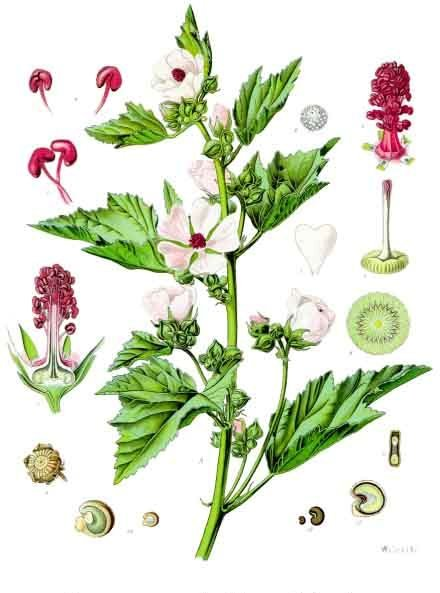
Greek medical writers such as Hippocrates and later Galen described preparations made from marshmallow root to treat inflammation, coughs, and digestive irritation. The plant appears in early pharmacological texts as both food and medicine, valued for its calming effect on the body. Its use was not recreational but functional, tied to healing rather than pleasure.
In Egypt, where medical and ritual knowledge overlapped, the marshmallow root likely occupied a similar role. Egyptian medical papyri list plant-based remedies extensively, and honey was commonly used as both medicine and offering. Combining honey with a soothing root would have made sense within this tradition. While no surviving Egyptian recipe explicitly names a marshmallow confection, the ingredients and techniques existed.
Egyptian Sweetmaking and Honey Confections
Ancient Egyptian sweets were rare and symbolic. Sugar did not exist in the form we know it today. Honey was the primary sweetener, gathered with effort and used sparingly. It was associated with the gods, with preservation, and with ritual purity. Most Egyptians would have encountered honey only on special occasions.
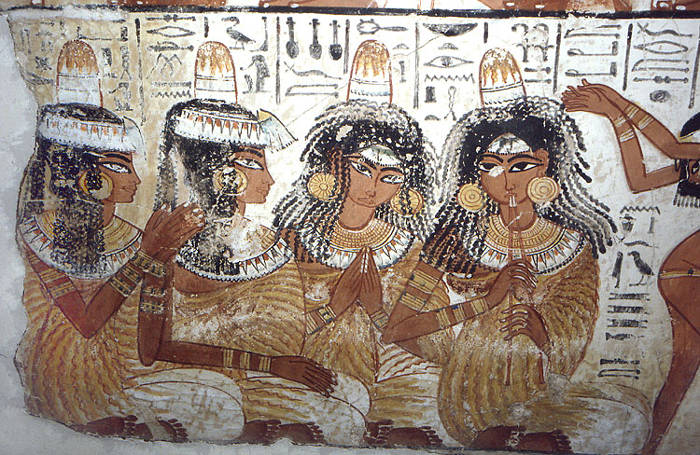
Egyptian confections were often dense and practical. Honey was combined with nuts, seeds, fruits, or herbs to create offerings, travel foods, or medicinal pastes. Texture mattered, but fluffiness was not the goal. What mattered was preservation, nourishment, and symbolic value.
In this context, a marshmallow-like preparation would not resemble the modern product. It would have been dense, sticky, and rich. The marshmallow root would have provided body and thickness, honey would have sweetened and preserved it, and nuts such as almonds would have added fat and substance. This would have been a luxury, not a snack.
From Root to Refinement: The Evolution of the Marshmallow
As marshmallow preparations moved through Greek and Roman medicine into medieval Europe, the root remained central. Apothecaries prepared syrups, lozenges, and pastes from marshmallow root for coughs and throat ailments. These were still medicinal, though sweetened to make them more palatable.
In France during the 18th and 19th centuries, confectioners began transforming marshmallow root into a true candy. They whipped the root extract with sugar and egg whites, creating a lighter texture closer to what we recognize today. This confection, known as pâte de guimauve, was labor-intensive and expensive, but still contained the real plant.
The final transformation came in the late 19th and early 20th centuries, when industrial production demanded speed and uniformity. Gelatin replaced marshmallow root. Corn syrup replaced honey and sugar refinement accelerated. The root, once the heart of the confection, disappeared entirely.
Why the Modern Marshmallow Has No Marshmallow
The modern marshmallow contains no marshmallow root because it is no longer necessary for the function the candy serves. Gelatin provides structure more efficiently. Corn syrup stabilizes sweetness. Industrial whipping produces volume without patience or variability.
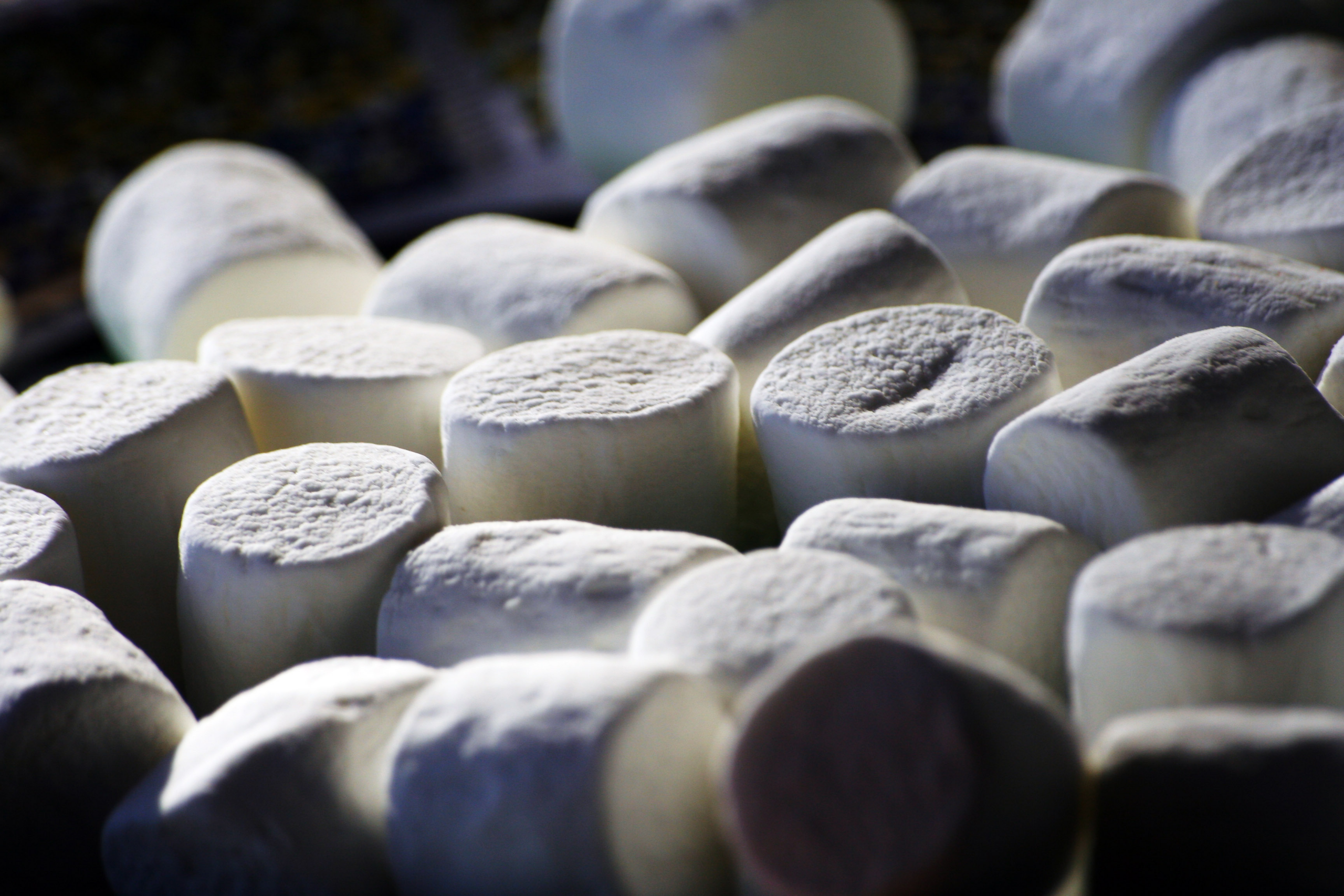
This shift mirrors a larger pattern in food history. Ingredients tied to place, season, and labor are replaced by substances that are cheaper, faster, and easier to control. The marshmallow became lighter, fluffier, and more shelf-stable, but also lost its original identity.
What remains is the name. The word “marshmallow” now refers to a texture rather than a plant. The medicinal, botanical origin is mostly forgotten, even though the candy still carries the echo of its past in name alone.
Imagining an Egyptian Marshmallow
Recreating an Egyptian marshmallow requires imagination grounded in historical possibility. This version is not meant to be exact. It is meant to be plausible. It uses ingredients known to the ancient world and techniques consistent with early food preparation.
The result is nothing like a modern marshmallow. It is dense, sticky, and deeply honeyed. The marshmallow root provides a subtle vegetal bitterness beneath the sweetness, while the whipped egg whites introduce a faint lightness without true fluff. The almonds add richness and texture, making it feel more like a ceremonial sweet than a dessert.
The flavor is complex and ancient. Floral honey dominates, followed by nutty warmth and a lingering herbal note. It feels closer to a medicinal confection than candy, something meant to be eaten slowly and deliberately.
Dish Rating: 7.6 / 10
Recipe: Ancient-Style Marshmallow Root Confection
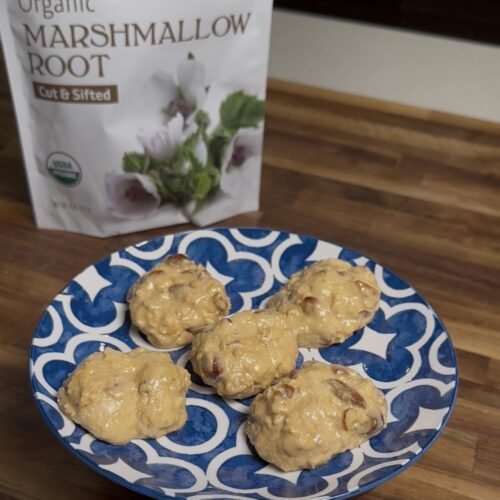
Ancient-Style Marshmallow Root Confection
Ingredients
- 2 tablespoons dried marshmallow root
- 1 cup water
- 1 cup honey
- 3 egg whites
- 1 cup almonds warmed
Instructions
- Combine the dried marshmallow root and water in a bowl. Let steep overnight.
- Strain out the root, reserving the infused water.
- Pour the infused water into a saucepan and gently heat. Reduce for about 5 minutes.
- Add the honey and keep over low heat. Do not boil. Simmer gently for about 10 minutes, stirring continuously.
- Whip the egg whites to stiff peaks in a separate bowl.
- Slowly incorporate the hot honey mixture into the egg whites while mixing continuously.
- Return the mixture to low heat and continue stirring for about 45 minutes until thickened.
- Warm the almonds in a 350°F oven for a few minutes, then stir them into the mixture.
- Transfer to a greased or parchment-lined dish.
- Allow to cool and set for at least 6 hours before cutting.
Video
Notes
- Heat Control Matters: Keep the honey mixture at a gentle simmer and never allow it to boil. High heat can scorch the honey and break down the marshmallow root’s thickening properties.
- Texture Expectations: This will not set like a modern marshmallow. The final texture should be firm, sticky, and slightly chewy rather than fluffy.
- Almonds for Balance: Lightly warming the almonds enhances their natural oils and flavor, helping balance the sweetness of the honey and giving the confection a more grounded, ancient character.