Everyone thinks hummus is ancient. They’re right. But not in the way they think.
People have been eating chickpeas mashed with olive oil in the Levant for thousands of years. Chickpeas are native to the region. Sesame has been grown there for over four thousand years. But the first time anyone actually wrote down a recipe for hummus, with tahini, lemon, garlic, the whole thing, was in a 13th-century Syrian cookbook written in Aleppo.
If you’re enjoying my content, check out my E-Cookbooks at the Eats History Shop, now 40% Off!
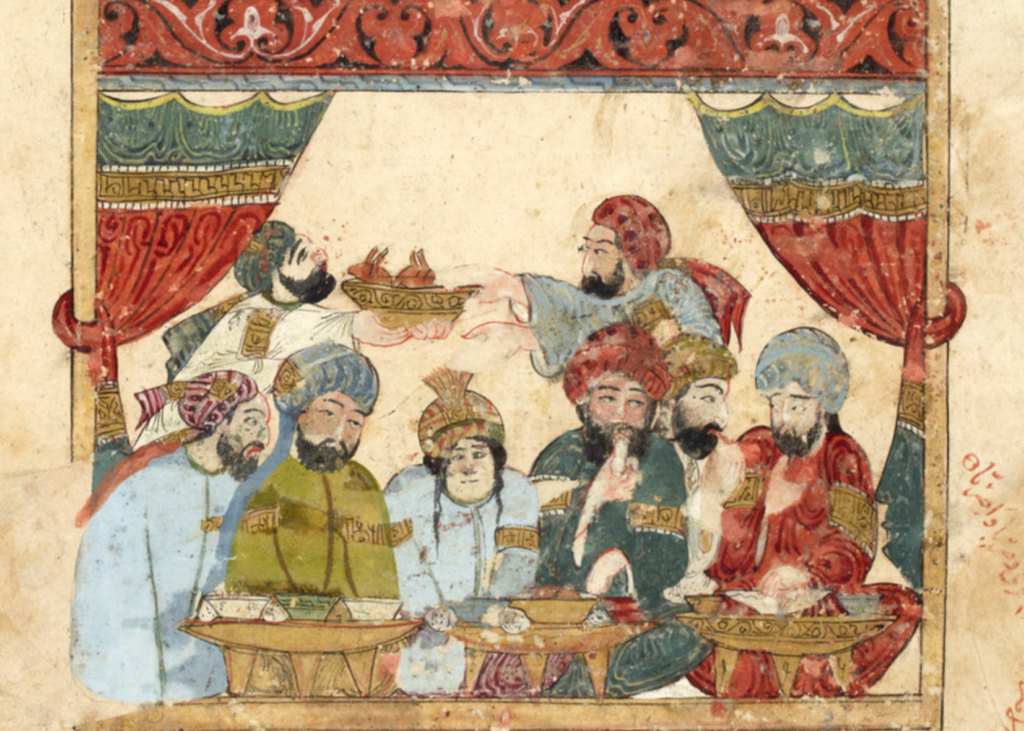
The cookbook is called Al-Wusla ila’l-Habib fi Wasf al-Tayyibat wa’l-Teeb. It translates roughly as Winning the Beloved’s Heart with Delectable Dishes and Perfumes. It was written around 1250 CE by Ibn al-‘Adeem, one of the most important historians and scholars of medieval Aleppo. This was not a peasant’s recipe scrawled on parchment. This was a documented culinary record from one of the great intellectual centers of the medieval Islamic world.
The recipe is called Himmas Kassa. At 773 years old, it just scored a 9.4 out of 10 in my kitchen.
Hummus Has Been Around Forever, Just Nobody Wrote It Down.
Here is what most food historians agree on. People in the Levant, what is now Syria, Lebanon, Israel, Palestine, Jordan, have been eating some version of mashed chickpeas since at least the Bronze Age. The ingredients were all there. Chickpeas, sesame, olive oil, lemon. They were not exotic imports. They were everyday staples that had been growing in that soil for millennia.
So why don’t we have older written recipes? Because for most of human history, nobody wrote down what they ate every day. You didn’t write down how to make bread any more than you’d write down how to breathe. It was knowledge passed hand to hand, mother to daughter, cook to apprentice. The dish existed long before anyone thought to document it.
When hummus finally does appear in writing, it shows up in this 1250 CE Syrian cookbook fully formed. Chickpeas, tahini, lemon, garlic. The complete recipe. That tells you everything. A dish doesn’t arrive fully formed in its first written mention unless it had already been refined over a very long time before anyone picked up a pen. What Ibn al-‘Adeem documented was not an invention. It was a tradition that had existed for generations.
The Man Who Wrote It Down
Ibn al-‘Adeem of Aleppo died in 1262 CE. His full name was Kamal al-Din ‘Umar ibn Ahmad ibn Abi Jarada. He was not primarily a chef. He was one of the foremost historians and biographers of his era, known across the medieval Islamic world for his multi-volume biographical dictionary of Aleppo. At some point he also wrote one of the most extraordinary cookbooks of the medieval period.
The Al-Wusla ila’l-Habib fi Wasf al-Tayyibat wa’l-Teeb runs to two volumes. It covers everything from meat dishes and bread to perfumes and medicines. It is a window into the culinary culture of medieval Aleppo, a city that sat at the crossroads of trade routes connecting Persia, the Mediterranean, and Central Asia. The flavors in this book reflect that geography. Complex, layered, fragrant with spices that were passing through the city from a dozen different directions.
The hummus recipe sits in Volume 2, pages 718 and 719. It is not a casual mention. It is a full recipe with specific instructions for preparation. And here is the part that got me. It includes specific instructions for how the finished dish should look when it is served. A 13th-century scholar in medieval Syria is giving you plating advice. Some things really do not change.
What the Recipe Actually Says
The base of the Himmas Kassa is identical to what you would make today. Chickpeas pounded into a thick paste. Tahini. Fresh lemon juice. Garlic. Salt. The core recipe has not changed in 773 years. What the manuscript says about consistency will also sound familiar. It should not be runny. Thick. Spreadable. Holding its shape on the plate.
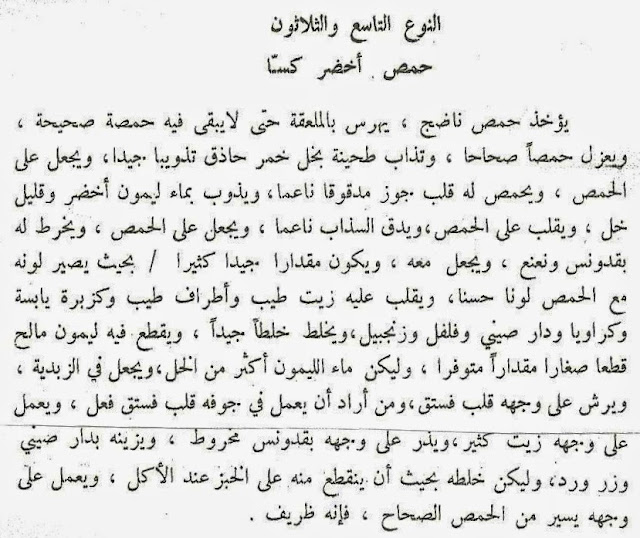
Where it parts ways with the modern version is the garnish. After the hummus is spread flat on a wide plate, the manuscript calls this the jafna, the traditional wide serving vessel of the Arab table, it gets drizzled generously with olive oil. The manuscript describes it as sweet-tasting. Then chopped parsley, called baqdunis in the original Arabic. Then chopped pistachios. Then cinnamon. Then crushed rose buds scattered across the entire surface.
The manuscript also says a handful of whole boiled chickpeas should go on top. It specifically notes the dish will look quite nice this way. A medieval Syrian historian telling you your food will look nice. He was right in 1250 CE. He is still right. The only difference between this garnish and the way hummus is traditionally served across the Levant today is the chili pepper. That didn’t arrive in the region until after contact with the Americas. Everything else was already there over 700 years ago.
The Rose Buds. Don’t Skip Them.
I want to stop here because this is the ingredient no modern hummus recipe uses. It’s the one that surprised me most.
You crush dried culinary rose buds between your fingers and scatter them across the finished dish. That’s it. They are available at any Persian or Middle Eastern grocery store, sold as ward in Arabic or gole mohammadi in Persian. They cost almost nothing.
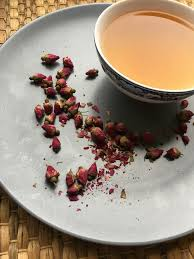
What they add is subtle but real. A faint floral perfume that lifts the whole plate. A visual contrast that turns the dish from looking like excellent hummus into looking like something from a feast. Pale pink petals scattered across green parsley, golden olive oil, and cream-colored chickpea paste. The manuscript said it would look quite nice. That is a significant understatement.
The rose was a prestige ingredient in medieval Arab cuisine. It showed up in drinks, desserts, savory dishes, perfumes. Using it on a chickpea dish was not strange. It was refined. It was a marker of culinary sophistication. The fact that it disappeared from hummus sometime in the last seven centuries is one of those small losses you don’t know to mourn until you taste the original and realize what has been missing the whole time.
The Method Matters as Much as the Ingredients
The manuscript says to beat the chickpeas well with a ladle until they disintegrate into each other. No food processor in 1250 CE. No blender. A mortar and pestle, a heavy bowl, a ladle, and physical effort. The result is a texture that is noticeably different from the silky smooth commercial hummus most people are used to. Slightly rough. Thick. Holding its shape in a way that the blended version simply does not.
I used a mortar and pestle. It took about ten minutes of real work. The chickpeas were still warm from cooking because hot chickpeas pound dramatically more easily than cold ones. They came together into a thick coarse paste that had body and presence in a way that store-bought hummus does not come close to. If you use a food processor, pulse it in short bursts. Never run it continuously. The goal is rough and thick, not smooth and pourable.
One more thing from the manuscript. Serve it on a wide flat plate, not a bowl. The jafna was the wide communal serving vessel of the medieval Arab table. Spreading the hummus flat to the edges of a plate rather than mounding it in a bowl changes how the garnish sits and how the whole dish reads. The olive oil pools in the center well. The parsley and pistachios settle into it. The rose buds lie flat across the surface. It looks like a painting. Serve it that way.
What Happened to Hummus in the 600 Years After This Recipe
After Ibn al-‘Adeem writes this down in 1250 CE, hummus disappears from written cookbooks for several centuries. When it shows up again in 1885, in a Lebanese cookbook, the recipe has been stripped back. Chickpeas, garlic, lemon juice, tahini. The pistachios are gone. The cinnamon is gone. The rose buds are gone. The dish is recognizably the same at its core but has lost most of its complexity.
What happened in those six centuries is not entirely clear. Wars. Migrations. The fall of medieval Aleppo as a culinary center. A shift from the elaborate court cuisines of the medieval Islamic world toward simpler regionalized home cooking. The expensive spices and perfumed garnishes that were once marks of sophistication gradually gave way to a stripped-back version that traveled more easily and fed more people more cheaply.
The hummus in a grocery store tub today is two steps removed from the 1885 version, which was already a simplified version of the 1250 CE original. Every generation of commercial production stripped away another layer. The Sabra tub has the same four core ingredients as the Himmas Kassa. Nothing else. Taste them side by side and you will know immediately what 773 years of simplification looks like.
My Verdict
9.4 out of 10.
This version of hummus from over 700 years ago would hold up in any modern Mediterranean restaurant. It would hold up at the best ones. The core is exactly what you want. Thick, tangy, rich, with the bitterness of the tahini balanced perfectly by the lemon and the sweetness of the garlic. The texture from pounding rather than blending gives it a weight and presence that the commercial version does not have.
The garnish is where this goes from excellent to extraordinary. The pistachios add crunch and richness. The cinnamon adds a warm depth that plays against the sourness of the lemon in a way that should not work but does completely. And the rose buds. The rose buds are the thing. That faint floral note floating over the whole dish. The moment you taste it you understand exactly why someone in Aleppo in 1250 decided to put rose buds on hummus and then wrote it down so people would keep doing it.
The only reason this is not a 10 is that making it properly takes a mortar and pestle and about 90 minutes from scratch. That is not a flaw in the recipe. That is just cooking something the way it was meant to be cooked. Ibn al-‘Adeem would have no complaints.
– Donnie
Himmas Kassa – The Oldest Hummus Recipe in the World
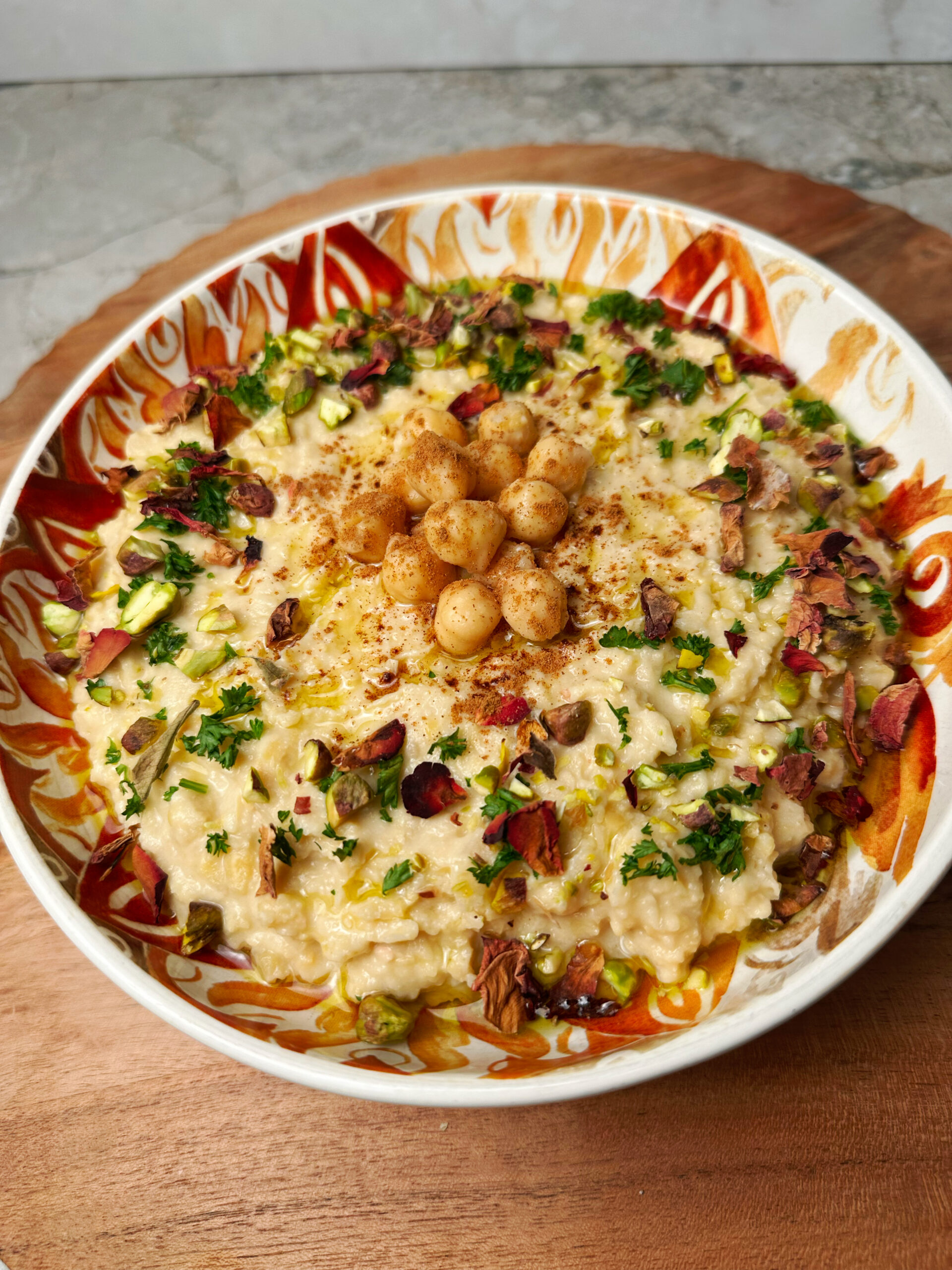
Himmas Kassa — The Oldest Hummus Recipe in the World
Ingredients
The Base
- 2 cups dried chickpeas soaked overnight in cold water (or 2 cans chickpeas, drained and warmed through)
- Salt for cooking
The Paste
- 3 tablespoons tahini
- 3 tablespoons fresh lemon juice
- 2 garlic cloves crushed to a paste
- 1 teaspoon salt
The Garnish — do not skip any of these
- 4 tablespoons good quality olive oil
- 3 tablespoons flat-leaf parsley baqdunis, finely chopped
- 3 tablespoons shelled pistachios roughly chopped
- 1/4 teaspoon Ceylon cinnamon — not cassia use the sweet variety
- 1 tablespoon dried culinary rose buds crushed
To Finish
- A small handful of whole cooked chickpeas reserved for the top
Instructions
- Cook the chickpeas. Drain the soaked chickpeas and cover with fresh cold water by 3 inches. Bring to a boil, reduce to a gentle simmer, cook 60 to 90 minutes until completely tender. They should crush between two fingers with zero resistance. Do not salt the water until the last 10 minutes of cooking. Reserve 1 cup of cooking liquid before draining. Set aside a handful of whole cooked chickpeas for the garnish. If using canned, drain and rinse, warm in a small saucepan for 5 minutes, reserve half a cup of the warming water.
- Pound — do not blend. Work the chickpeas while they are still hot. Use a large mortar and pestle or a heavy bowl and a potato masher. Pound firmly until a coarse thick paste forms. If you use a food processor, pulse in short bursts only. Never run it continuously. The manuscript is clear. Thick, not runny.
- Build the paste. Add the tahini, lemon juice, crushed garlic, and salt to the pounded chickpeas. Work everything together firmly. Add reserved cooking liquid one tablespoon at a time only if the paste feels too stiff to spread. Taste and adjust salt and lemon.
- Plate — the exact 1250 CE method. Wide flat plate, not a bowl. Spread the hummus flat to the edges with a slight well in the center. Garnish in this order. Drizzle olive oil generously across the entire surface. Scatter the chopped parsley. Scatter the chopped pistachios. Dust lightly with Ceylon cinnamon. Crush the rose buds between your fingers and scatter them across the top. Arrange the reserved whole chickpeas across the surface. The manuscript notes the dish will look quite nice. It is correct.
Video
Notes
- Ceylon cinnamon vs. cassia. Most grocery store cinnamon is cassia. It is stronger and slightly bitter. Ceylon is sweeter and more floral. It matters in this recipe. Find it at Whole Foods, Sprouts, or order online.
- Rose buds. Persian or Middle Eastern grocery stores. Ask for ward in Arabic or gole mohammadi in Persian. Food grade only, not potpourri.
- Serving. Best at room temperature. If made ahead, bring it out 30 minutes before serving and add the garnish fresh just before eating.
- On pounding. The texture difference between pounded and blended hummus is real and significant. The extra ten minutes is worth it every time.