Long before sugar refineries, chocolate, or even ovens became common, the people of Mesopotamia were already making sweets. These were not desserts in the modern sense. They were dense, nourishing foods built from what the land provided most reliably. Dates. Nuts. Sesame. Madgooga, the humble Iraqi date truffle, belongs to that ancient lineage.
If you’re enjoying my recipes, all of my e-cookbooks are currently 40% Off!!!
Madgooga are still made today in Iraqi households, especially for religious feasts, fasting periods, and family gatherings. They are rolled, not baked. Pounded, not whipped. Their simplicity hides an extraordinary depth of history. This is a sweet that connects medieval Iraq to the earliest civilizations on earth.
Often described as a “miracle” food, madgooga earned that reputation not through myth, but through function. They are shelf stable, calorie dense, nutritionally rich, and quick to prepare. In a hot climate where preservation mattered more than presentation, these qualities were essential.
What Is Madgooga?
The name madgooga comes from the Arabic root daqq, meaning “to pound” or “to crush.” This refers directly to the method of preparation. Dates are physically mashed into a paste, traditionally using a mortar and pestle, then enriched with sesame, nuts, or toasted flour. The technique itself is a historical artifact.
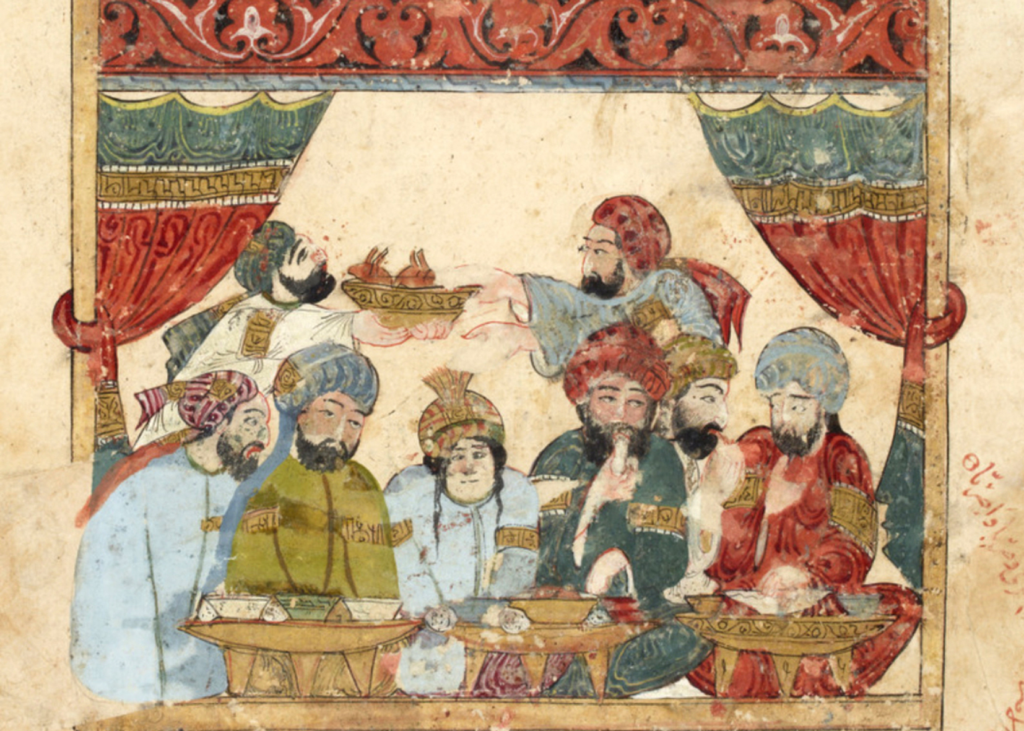
Madgooga are not pastries and they are not candies. They sit somewhere between food and confection. In Iraqi food culture, they are closer to sustenance than indulgence. They appear at moments of ritual and need, during Ramadan, religious festivals, and communal gatherings.
Unlike elite sweets that required sugar syrups, baking, or elaborate equipment, madgooga could be made by anyone. They required no oven and no refined ingredients. This accessibility is key to their survival across centuries.
Madgooga are not tied to one moment or ruler. They are vernacular food. Passed through families, not written in cookbooks.
Medieval Iraq and Date-Based Sweets
By the medieval period, Iraq was the heart of the Abbasid Caliphate and one of the most intellectually and agriculturally advanced regions in the world. Dates were central to this prosperity. Iraq’s date palm groves were legendary, producing dozens of varieties that fed cities, travelers, and armies.
Medieval Arabic culinary texts such as Kitab al-Tabikh document a wide array of sweets made from dates, honey, sesame oil, nuts, and warming spices like cardamom and cloves. While madgooga is not named explicitly in surviving elite cookbooks, its ingredients and method are firmly embedded in this tradition.
It is important to remember that most people did not eat from elite cookbooks. Everyday foods rarely appear in written sources. They survive through continuity, not documentation. Madgooga belongs to this category. A practical, everyday sweet made outside palace kitchens.
The fact that madgooga still exists today is itself evidence of its medieval and earlier roots. Foods that do not serve a real purpose disappear. Madgooga endured because it worked.
Descended from Mersu, the World’s First Sweet
To truly place madgooga in history, we must go back to ancient Mesopotamia and a confection known as mersu. Mersu appears in Sumerian and Akkadian texts dating as early as the third millennium BCE. It is one of the earliest recorded sweet foods in human history.
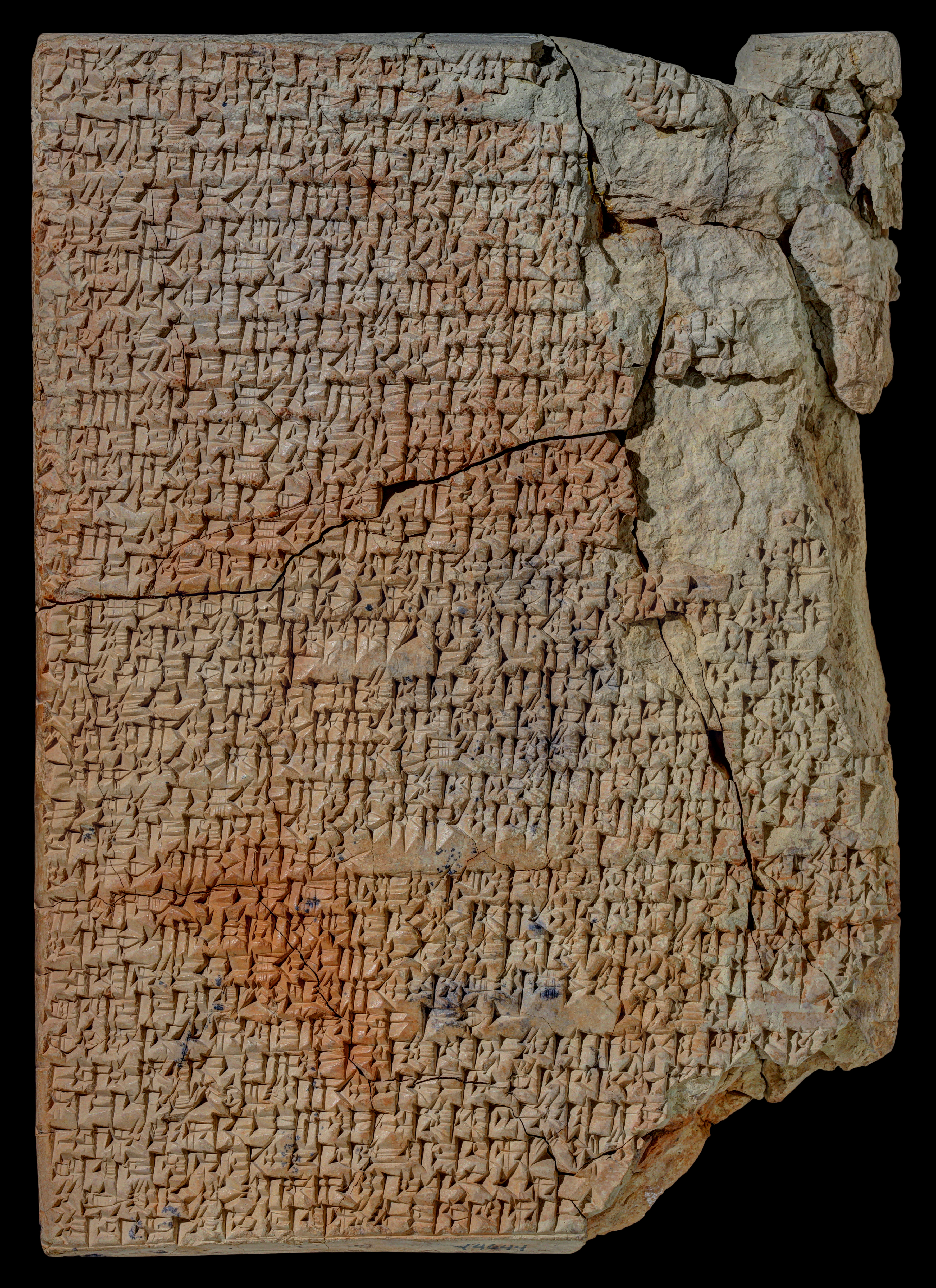
Mersu was made from pounded dates mixed with fat, often sesame oil, and sometimes nuts or aromatics. It required no baking and relied on the natural sugars and binding properties of dates. In structure, madgooga is unmistakably its descendant.
This is not speculation. The ingredients, preparation method, and function align too closely to ignore. Iraq is one of the few places on earth where culinary continuity from ancient to medieval to modern times is plausible due to uninterrupted date cultivation.
Madgooga represents inherited knowledge rather than invention. A food remembered not through texts, but through hands repeating what worked for thousands of years.
Dates as the “Miracle Fruit”
Dates earned their reputation as a miracle food long before modern nutrition confirmed it. In medieval Islamic medicine, dates were praised for restoring strength, aiding digestion, and supporting fertility. They were often recommended for travelers, the sick, and fasting individuals.
Modern science supports much of this wisdom. Dates are rich in natural sugars balanced by fiber, which provides sustained energy rather than rapid spikes. They are high in potassium, magnesium, copper, and antioxidants that support muscle function, circulation, and cellular health.
When combined with sesame paste and nuts, madgooga becomes even more nutritionally complete. Sesame contributes healthy fats and calcium. Almonds and walnuts add protein and minerals. This balance made madgooga ideal as a compact energy food.
This is why madgooga functioned as more than a treat. They were nourishment disguised as sweetness.
Spices, Medicine, and Meaning
The spices found in madgooga are not decorative. Cardamom, cloves, and cinnamon were valued in medieval Iraq for their warming properties and digestive benefits. In humoral medicine, these spices helped balance the body, especially when consuming sweet or heavy foods.

Spices also connected madgooga to global trade networks. Cardamom and cloves traveled through Indian Ocean routes, passing through Abbasid Baghdad. Their presence in a humble sweet reflects Iraq’s central role in medieval commerce.
Madgooga were often served during religious occasions, fasting breaks, or moments of communal gathering. They carried symbolic weight as food that nourished both body and spirit.
This combination of medicine, ritual, and practicality is what allowed madgooga to persist while other sweets faded.
A Living Link to Ancient Mesopotamia
Making madgooga today is not historical reenactment. It is continuation. Very few foods can trace their structure back over four thousand years with such clarity.
When you pound dates into a paste, roll them by hand, and coat them in sesame, you are repeating a motion older than writing. This is food history at its most intimate. Not preserved in museums, but in kitchens.
Madgooga remind us that history does not always survive through monuments or texts. Sometimes it survives because it feeds people well enough to be remembered.
This is not just a sweet. It is a thread tying modern Iraq to the earliest cities humanity ever built.
Recipe: Madgooga “Miracle” Date Truffles
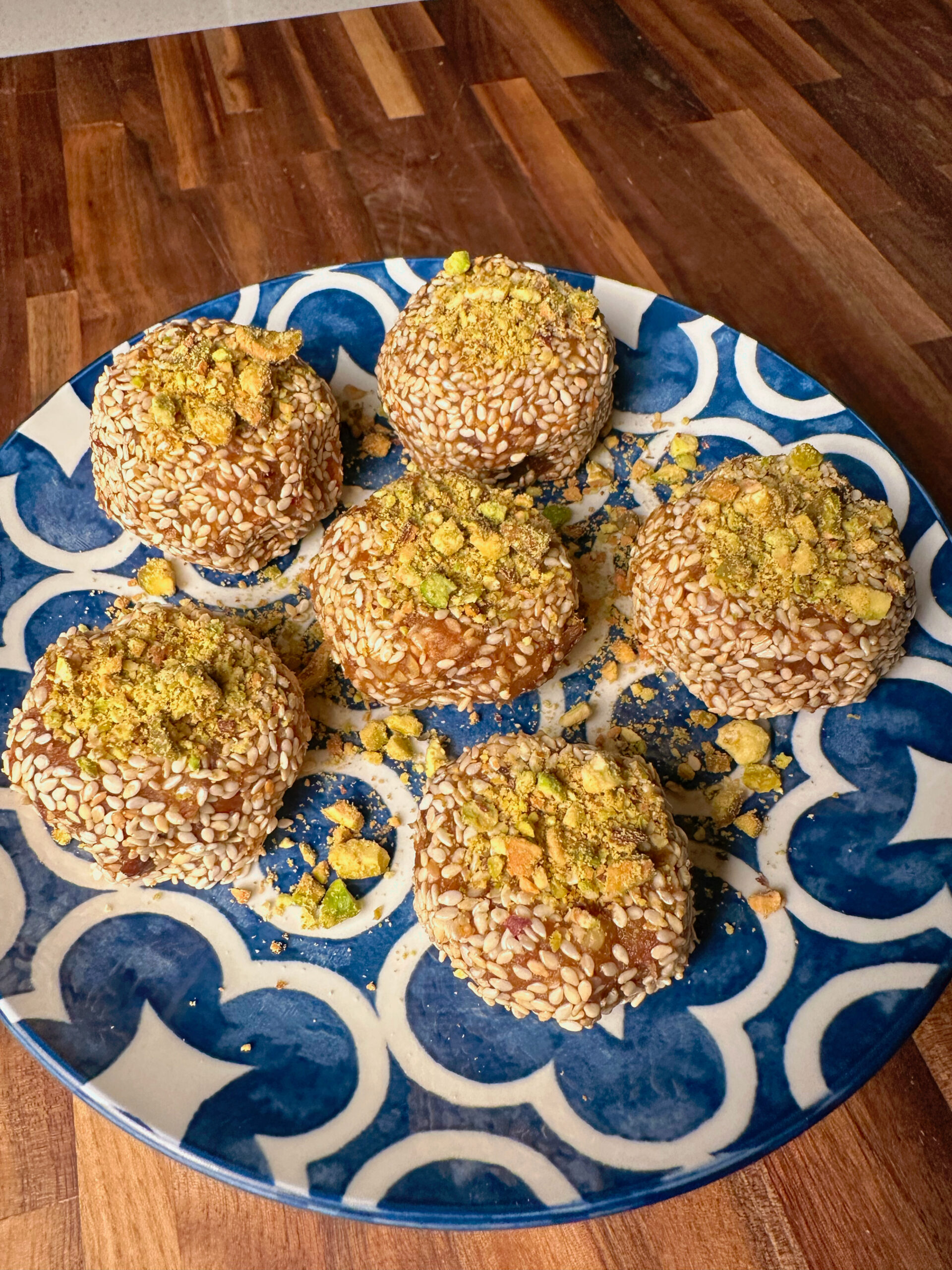
Madgooga “Miracle” Date Truffles
Ingredients
- 2 cups pitted dry dates chopped
- ½ cup toasted flour
- ½ cup tahini
- ½ tsp ground cardamom
- Pinch cinnamon optional
- ¼ tsp ground cloves or ground allspice optional
- ½ cup toasted sesame seeds for rolling
- ⅓ cup toasted almonds or walnuts finely chopped
- ⅓ cup pistachios finely chopped, for topping
Instructions
- If dates are very dry, soak in hot water and rest for 5 minutes. Remove water before pounding.
- Pound dates into a smooth paste using a mortar and pestle or food processor.
- Mix in toasted flour, tahini, cardamom, and optional spices. Fold in toasted chopped almonds or walnuts.
- Roll mixture into bite-size balls.
- Roll each ball in toasted sesame seeds.
- Press chopped pistachios onto the tops or roll halfway for a two-tone finish.
- Chill 20–30 minutes to firm before serving.
Video
Notes
- Traditional madgooga were pounded by hand using a mortar and pestle. While a food processor works, hand-pounding creates a denser, more historically accurate texture.
- Toasting the flour is essential. Raw flour was rarely used in historical kitchens, and toasting adds depth while improving digestibility.
- Keep spices restrained. Cardamom is the dominant flavor historically, while cloves and cinnamon should remain subtle to avoid overpowering the dates.