In the 13th century, while much of northern Europe leaned heavily on stews and coarse breads, the courts of Islamic Spain were perfumed with cinnamon, pepper, fennel, and fermented sauces. Al-Andalus was no culinary backwater. It was a crossroads of trade, scholarship, poetry, and power. And in one of the oldest surviving cookbooks from the region, we find a dish simply described as a roast worthy of presentation, praised for its aroma.
If you’re enjoying my recipes, check out my e-cookbooks at the Eats History Shop, now 40% Off!
This recipe comes from the anonymous 13th-century Andalusian cookbook often referred to as the Kitāb al-Ṭabīkh. It preserves elite court cuisine from a time when Iberia was politically unstable yet culturally radiant. Almohad rulers of Amazigh origin governed both North Africa and much of southern Spain. Christian kingdoms were advancing southward. Cities like Seville and Córdoba still glittered, but the world that produced this dish stood on shifting ground.
A Kingdom Between Continents
By the 1200s, al-Andalus was no longer the unified Umayyad caliphate of earlier centuries. The political map had fractured, and power shifted between dynasties. The Almoravids had come and gone. The Almohads, reformist Amazigh rulers from the Atlas Mountains, now controlled territories on both sides of the Strait of Gibraltar.
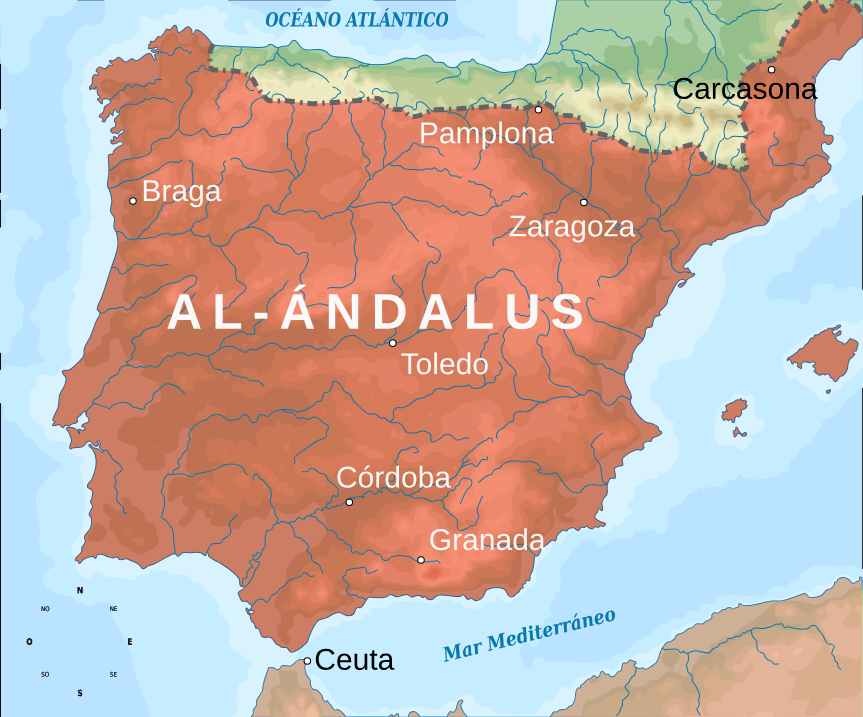
This was a Mediterranean empire tied together by trade routes stretching to West Africa and across the Islamic world. Pepper arrived from India. Cassia from East Asia. Murri was fermented locally but rooted in a broader culinary tradition that valued deep, savory complexity. The cuisine of this world reflected its connectivity.
At the same time, Christian kingdoms in the north were pressing southward. The Reconquista was not a single event but a long, uneven process. The courts of al-Andalus continued to produce refined culture even as political pressures mounted. This roast comes from that moment. It tastes like confidence. It tastes like continuity. And yet history tells us it was a fragile one.
The Source: An Anonymous Andalusian Masterpiece
The recipe appears in the 13th-century Andalusian cookbook known today as the Kitāb al-Ṭabīkh. It is one of the oldest surviving culinary manuscripts from medieval Iberia. The author is unknown, but the voice is assured. The instructions are concise and practical, assuming the reader is familiar with ovens and roasting techniques.
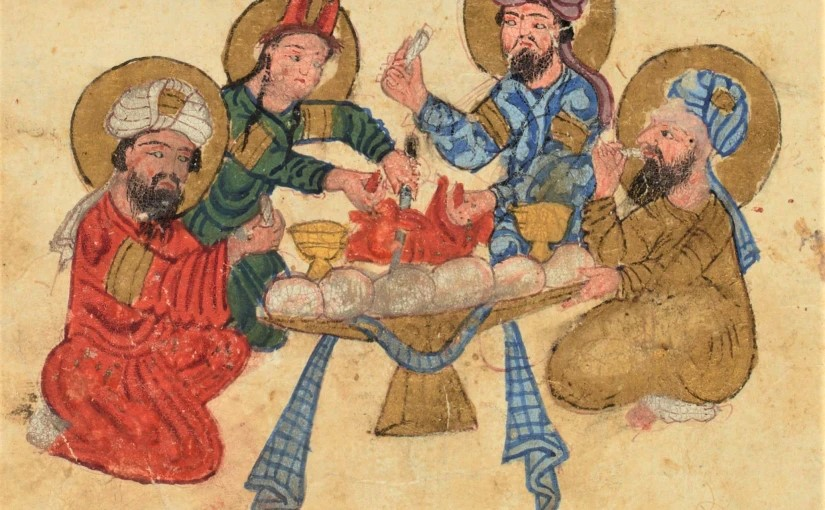
The original calls for pepper, caraway, fennel stalk, oil, murri, Chinese cinnamon, thyme, beaten eggs, and salt. It instructs the cook to place the lamb in a pan, cover it, and send it to the oven. When it is done and browned, it notes simply that it has an extremely good aroma. That line alone tells us something. Aroma mattered. Fragrance was part of luxury.
What is remarkable is the layering of flavors. Caraway and fennel bring brightness. Cinnamon adds warmth. Murri introduces a fermented depth similar to soy sauce. Eggs are brushed over the meat, not for sweetness but to create a savory crust. This is medieval Islamic cuisine at its most confident.
My Recreation: Bringing a Royal Roast to the Modern Oven
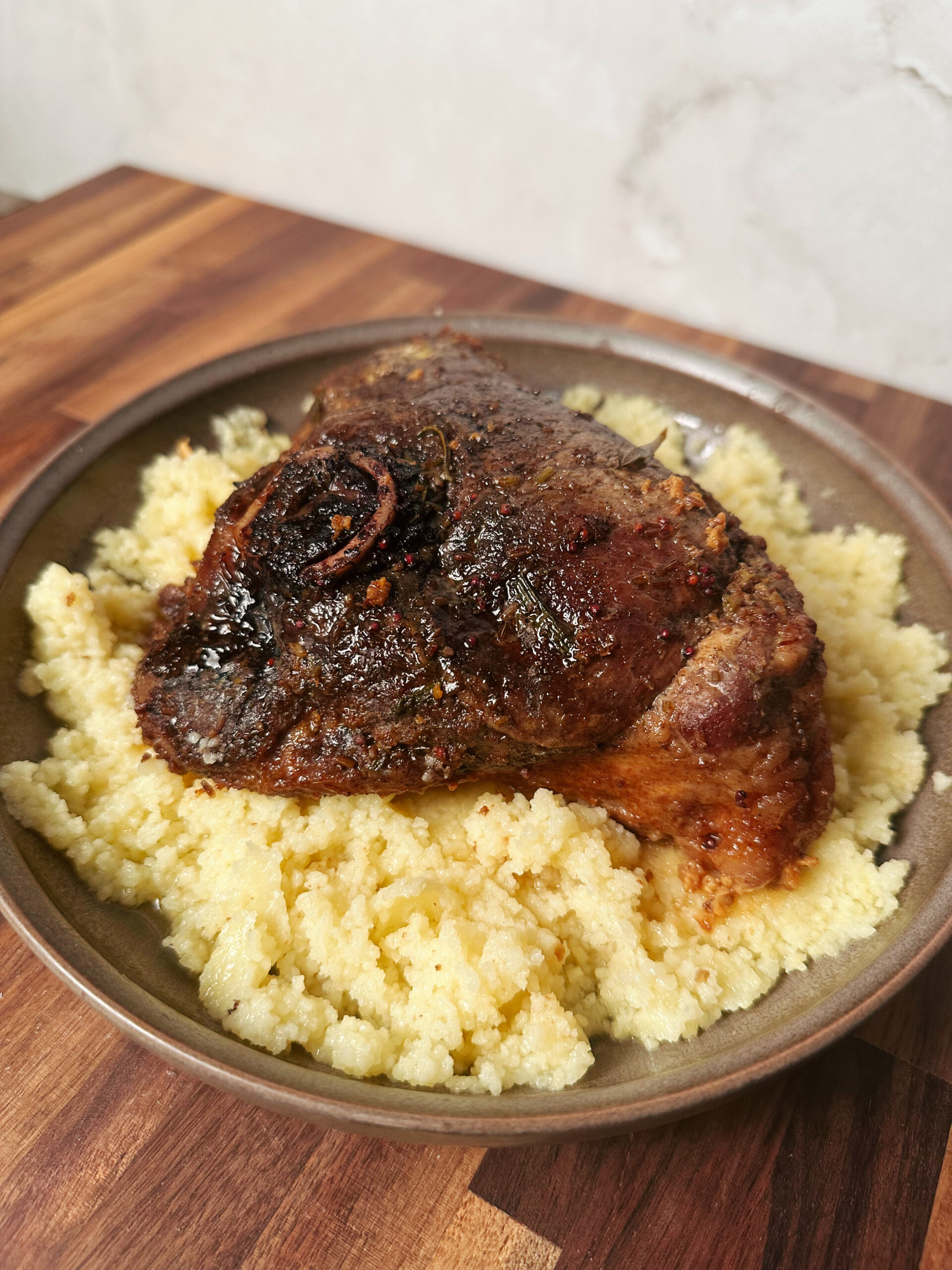
To recreate this dish faithfully while keeping it practical for a modern kitchen, I used a bone-in lamb shoulder, about two to three pounds. I combined black pepper, lightly crushed caraway, cinnamon, fresh thyme, salt, water, olive oil, and murri. Murri was a medeival Arab condiment of fermented barley; soy sauce works surprisingly well as a substitute, capturing that fermented backbone.
I rubbed the marinade thoroughly into the lamb and let it rest for several hours. This resting time matters. Medieval cooks may not have used the word marinate, but they understood absorption and fragrance.
I roasted the lamb covered at 375 degrees for about an hour and a half. Then I brushed it with four beaten eggs and returned it to the oven. The eggs set as they cook, forming a savory coating that locks in spice and moisture. After a total roasting time of about three and a half hours, I uncovered it for the final stretch to let it brown deeply.
I served it over couscous, a fitting accompaniment given the cross-Mediterranean world of the Almohads.
The Taste: Sweet, Savory, and Surprisingly Modern
The first thing you notice is the aroma. Pepper and cinnamon rise together. The murri (soy sauce) gives the lamb a depth that feels almost contemporary. It does not taste ancient in a dusty way. It tastes deliberate.
The egg coating forms a subtle crust that traps the spices against the meat. It does not make the dish eggy. Instead, it enriches the exterior and creates a silky layer that feels intentional. The caraway and fennel add brightness that keeps the lamb from feeling heavy.
This is not rustic mountain food. It is refined but not delicate. It feels like a dish meant to impress guests in a tiled courtyard under Andalusian arches. It feels like a meal meant to display status through aroma and abundance.
If this was served to a ruler in 13th-century Iberia, I understand why. 9.2/10.
Medieval Andalusian “Roast of Kings”
Ingredients
- 2 –3 lb bone-in lamb shoulder or leg
- 1 tsp black pepper
- 1 tsp caraway lightly crushed
- 3 tbsp water
- 1 tsp fennel seeds
- 2 tbsp olive oil
- 2 tbsp murri or soy sauce substitute
- ½ tsp cinnamon
- 1 tsp fresh thyme
- 2 eggs beaten
Instructions
Make the Marinade
- Mix pepper, caraway, cinnamon, thyme, salt, water, olive oil, and murri.
- Rub thoroughly over the lamb. Let sit 4–12 hours.
First Roast
- Preheat oven to 375°F.
- Wrap the lamb in foil and roast for 1.5 hours.
Add the Eggs
- Whisk the eggs.
- Remove lamb from oven and brush egg wash over the surface. Rewrap.
- The eggs will coat the meat, set during cooking, and help form an aromatic crust.
Finish Roasting
- Continue roasting for another 2 hours until extremely tender.
- Uncover during the final 20–30 minutes to allow browning.
- Serve over couscous.