Food often sneaks into history in unexpected ways. For me, recreating this lemony risotto was not just about making a dish but about exploring the quieter side of one of the most challenging thinkers of modern philosophy: Friedrich Nietzsche. We often imagine him as the grim author of Thus Spoke Zarathustra and Beyond Good and Evil, a man wrestling with God, morality, and the meaning of existence.
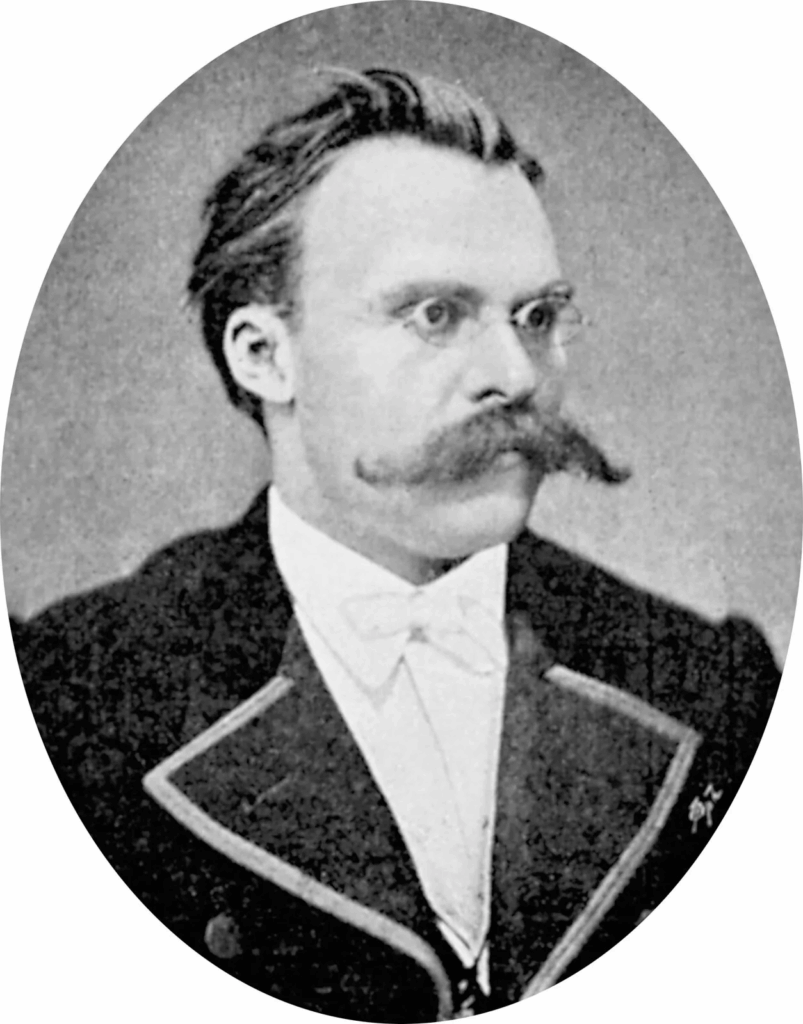
But behind those pages was also a frail, very human figure who, during his time in Italy, found solace in the act of cooking. In Sorrento, with its sunlit hills and lemon groves, Nietzsche not only wrote but also cooked. His letters reveal a surprising tenderness toward food, and in one of them he even promises to teach his mother how to make risotto, a dish he had learned firsthand from his housemaid.
I find that detail fascinating. It bridges the monumental ideas of his philosophy with the simple daily rhythms of eating. It is a reminder that even a man who challenged the foundations of Western thought still needed to nourish himself, and in those moments of nourishment he found inspiration. When I cook this dish, I think about Nietzsche in his quiet Sorrento villa, stirring patiently at the stove, perhaps already framing the language that would one day shake Europe.
Nietzsche’s Fragile Health
Nietzsche’s health shaped everything about his life. He was never robust, and throughout his twenties and thirties, he endured crippling migraines, stomach ailments, and deteriorating eyesight that often left him half-blind. These were not minor inconveniences but obstacles that defined his work routine and forced him into long periods of solitude.
In 1879, he resigned his position at Basel University at just 34 years old because his body could no longer endure the demands of academic life. His career as a professor ended prematurely, but in a sense, his career as a wandering philosopher began.
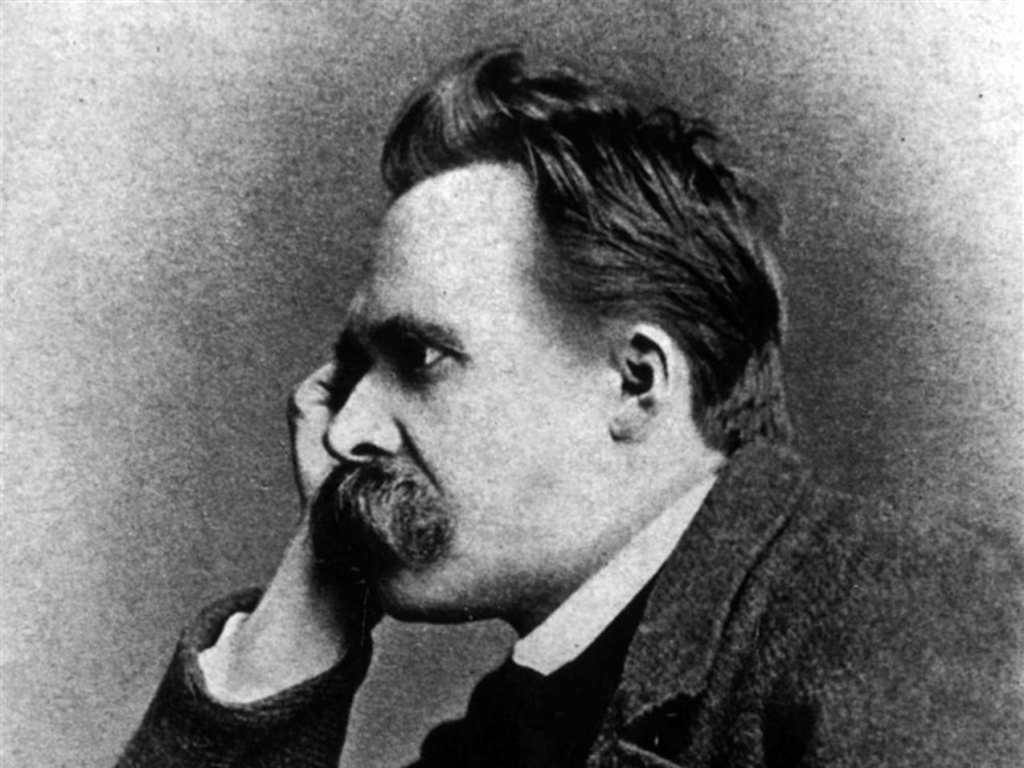
This frailty explains his constant search for climates and diets that might bring him relief. Nietzsche believed strongly in the connection between body and mind—he once remarked that philosophy itself might just be the reflection of a man’s digestion. Food, climate, and health were inseparable from thought.
When his body failed him in northern Europe, he headed south to the Mediterranean. Sorrento, with its gentle climate and abundance of fresh, simple food, was both a place of healing and of intellectual rebirth. It is in this context that risotto became more than just a meal; it was part of his attempt to restore equilibrium to a body always on the edge of collapse.
Time in Sorrento
Nietzsche’s time in Sorrento in 1876 was one of the most important interludes in his life. He stayed at a villa with friends and intellectual companions, among them Paul Rée and Malwida von Meysenbug, who provided him with both company and care. The villa overlooked the Bay of Naples, and the slower pace of life contrasted with the intense pressure of his former academic position. It was here, away from the demands of lectures and grading, that Nietzsche could think, write, and live on his own terms.
But the detail I love is this: in the quiet of that villa, he learned to cook. The housemaid taught him the art of risotto, and it clearly stuck with him. In one of his letters, he enthusiastically described his new skill and even promised to demonstrate it at home.
Risotto, with its patient stirring and gradual transformation, must have mirrored his own process of writing—slow, attentive, and requiring both discipline and faith that the end result would come together. Cooking became a metaphor for his life, and food became a grounding act in the middle of intellectual storms.
The Philosophy on the Plate
Risotto might seem far removed from philosophy, but in Nietzsche’s case, they overlap. The dish demands patience, discipline, and effort. You cannot rush risotto; it requires the cook to stay present, adding broth ladle by ladle, coaxing the rice to release its starch slowly. In the end, it transforms into something greater than its humble parts—a creamy, flavorful meal. That act of striving toward a higher state reflects Nietzsche’s central concept of the Übermensch, the “Overman” or “Superman,” who elevates himself beyond mere existence to create new values and meaning.

At the same time, Nietzsche warned of the opposite figure: the Last Man. This was the person who sought only comfort, who avoided challenges, and who reduced life to safety and ease. In many ways, modern society drifts toward the Last Man.
We want instant meals, instant gratification, instant results. Risotto refuses that mentality. It reminds us, just like Nietzsche, that greatness takes time, attention, and a willingness to endure discomfort. In the simple act of cooking this dish, I felt like I was embodying one of his most important lessons: to resist the temptation of the easy and instead embrace the hard path of creation.
A Warning to Society
Nietzsche’s warnings resonate today as strongly as they did in the 19th century. He saw a Europe drifting toward nihilism, where traditional values were eroding and people sought refuge in mediocrity. His call for the Übermensch was not a celebration of strength for its own sake but a challenge for humanity to strive for more, to create meaning in a world that no longer handed it down from the heavens. When I look at our world now, filled with distraction, shallow comforts, and constant shortcuts, I can see what he feared in the Last Man.
Food is one of the clearest reflections of this. Fast food, prepackaged meals, and a culture of speed leave little room for patience or craft. Risotto resists all of that. It insists on your time, on your presence, on your care. Cooking it in the spirit of Nietzsche feels like an act of rebellion against the Last Man. It is a way of saying: I choose the harder path, the slower path, the path that produces something truly worthwhile. And in that act, I think we come closer to the spirit of Nietzsche’s philosophy than we might in hours of reading.
If you’re enjoying my content, check out Eats History Shop!
Nietzsche’s Sorrento-Style Risotto Recipe:
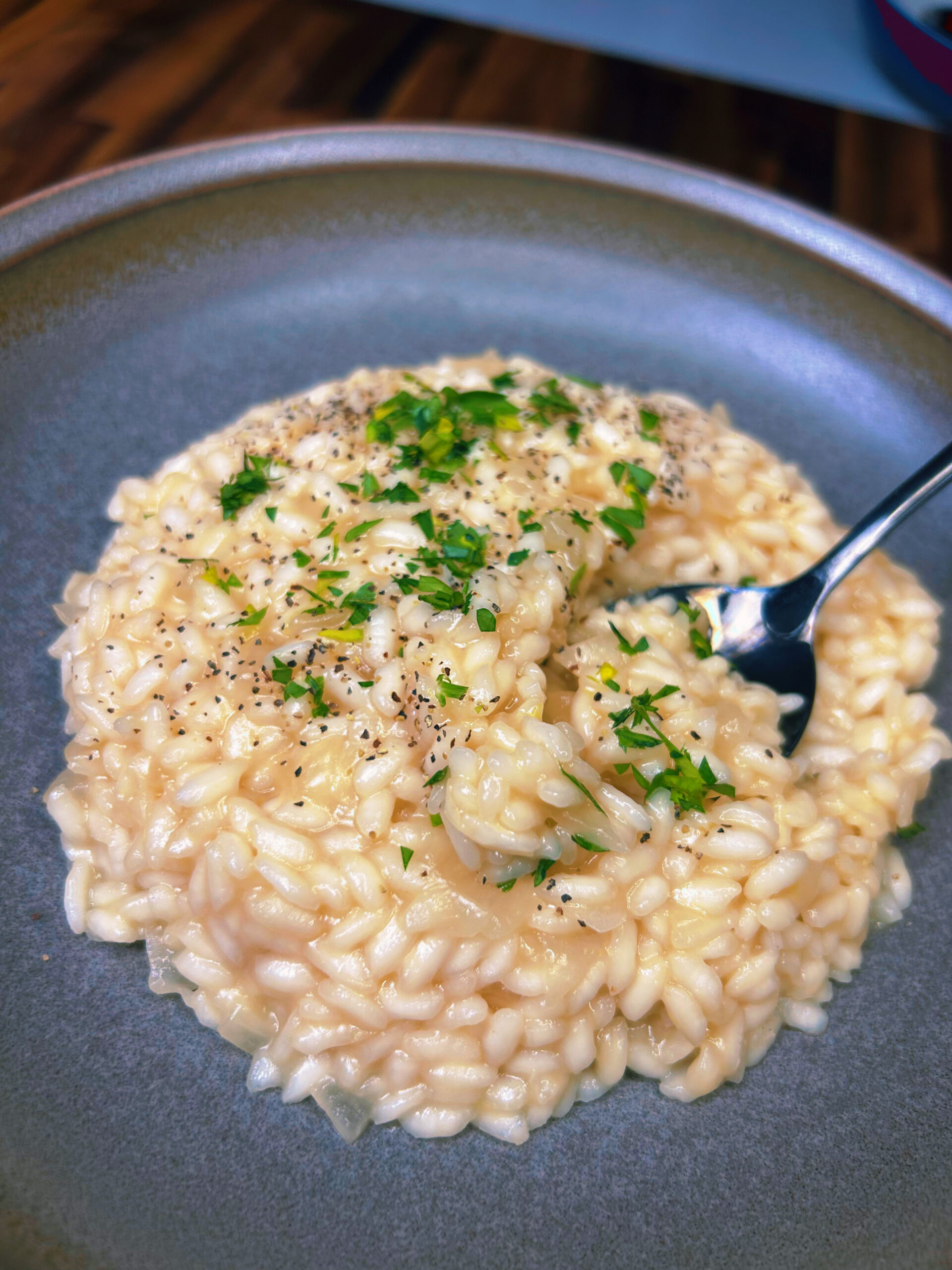
Nietzsche’s Sorrento-Style Risotto
Ingredients
- ¾ cup Arborio rice or Carnaroli if available
- 3 cups light chicken stock or vegetable stock kept warm
- 2 tablespoons olive oil or a knob of butter, both traditional
- ½ small onion finely chopped
- ½ cup dry white wine Falanghina or other southern Italian white works beautifully
- Zest of 1 lemon Sorrento lemons if possible
- 2 tablespoons grated Parmigiano-Reggiano
- Pinch of fresh parsley for garnish
- Salt to taste
- Extra butter or olive oil to finish
Instructions
- Warm the stock in a small saucepan and keep over low heat.
- In a wide pan, heat the olive oil (or butter) and sauté the onion until soft and translucent.
- Add the rice and stir until each grain is coated and lightly toasted.
- Pour in the white wine and cook until absorbed.
- Begin adding the stock one ladle at a time, stirring constantly and waiting until absorbed before adding more. Continue until the rice is creamy and tender, about 18–20 minutes.
- Stir in the lemon zest, Parmigiano, and a final swirl of butter or olive oil. Adjust seasoning with salt.
- Garnish with parsley and serve hot.
Video
Notes
- Stay Present – The key to risotto is slow, steady stirring while gradually adding warm broth. Do not rush it; the creaminess comes from time and care.
- Use the Right Rice – Arborio works well, but Carnaroli rice will give you a silkier, more forgiving texture if you can find it.
- Play with Citrus – Sorrento lemons are famous for their perfume, but any fresh lemon zest will elevate the dish. Taste as you go so the citrus is bright without overpowering.