Every so often a dish comes along that feels less like food and more like a piece of living history. Kei Niku no Yukagama — chicken cooked and served inside the hollowed rind of a yuzu fruit — is one of those recipes. It’s delicate, aromatic, and almost ceremonial in how it’s presented. This dish is not something you’d find at an ordinary dinner.
Traditionally, it was eaten only during moon-viewing parties, a Japanese custom that celebrated the harvest moon. To hold a yuzu filled with steaming chicken, mushrooms, and ginkgo nuts under the glow of the full moon was a way to link food with beauty, poetry, and the passage of the seasons.
Special thanks to Tehya from the For the Love of History Podcast for sending me the ingredients list and inspiring this video idea. If you’re into fascinating stories from history, definitely check out her show — she’s always uncovering the coolest topics and making history come alive.
You can listen to her podcast and follow her socials here: https://www.fortheloveofhistorypod.com/
The Discovery of a Cookbook
What makes this recipe even more special is the story of how it was preserved. Imagine flipping through the shelves of a dusty thrift store and pulling out a century-old cookbook. The pages might be yellowed, the binding fragile, but inside you’d find a window into a world of food long past.
Kei Niku no Yukagama is one of those recipes that survived through such a treasure. This dish, once reserved for elite moon-viewing parties, was written down and carried forward into modern times because someone thought it was worth saving.
Food Tourism in Japan
The cookbook in question wasn’t just any collection of recipes. It came out of the early days of Japanese food tourism in the late 19th and early 20th centuries. As travel expanded by rail, and more people began to visit cultural centers from rural towns, food became a major attraction.
Companies and cities published guides that didn’t just list sights, but also highlighted the dishes that made each region unique. Kei Niku no Yukagama, with its elegance and rarity, became a symbol of refined seasonal dining.
The Kikkoman Connection
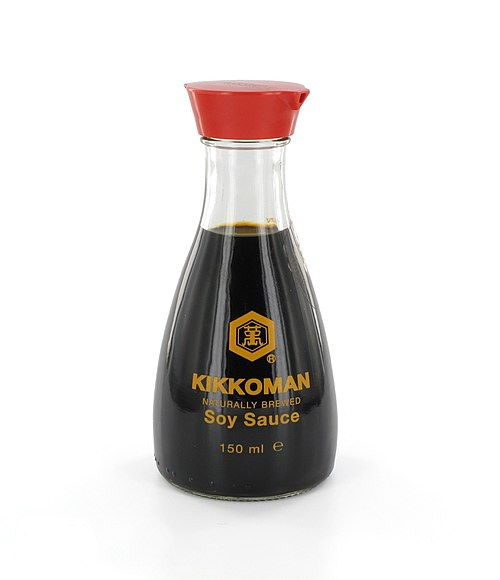
One of the most fascinating aspects of this story is that the cookbook itself was created by Kikkoman — the soy sauce company most of us still have in our kitchens today. At the time, it was part advertising, part recipe collection. The goal was to show people outside of the big cities that they could cook and enjoy gourmet dishes too, all while using Kikkoman products. This recipe is a perfect example: a dish once limited to elites, reimagined as something home cooks could aspire to recreate.
A Dish of Ceremony and Elegance
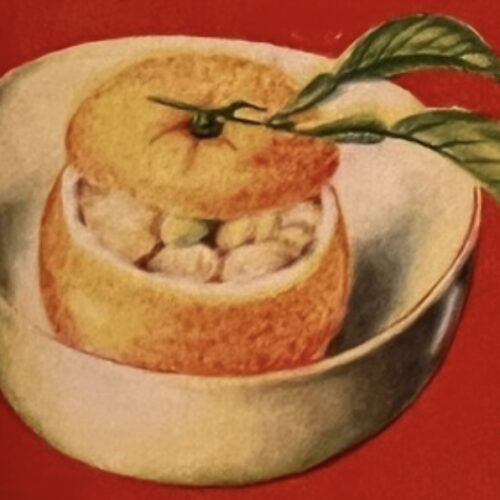
Kei Niku no Yukagama is unlike most chicken dishes. The hollowed yuzu acts as a cooking vessel and a serving bowl, infusing the meat with its citrus fragrance. Ginkgo nuts, a traditional autumn ingredient, add texture and symbolism — longevity and endurance in Japanese culture. Together with shiitake mushrooms and a delicate soy-based dashi, the dish is both light and deeply flavorful. Eating it with the lid of the yuzu gently closed feels almost like unwrapping a gift.
Recipe: Kei Niku no Yukagama (Serves 5)
Kei Niku no Yukagama
Ingredients
- 187 g chicken thigh
- 5 yuzu fruits or oranges if yuzu unavailable, preferably with stems
- 15 ginnan ginkgo seeds
- 3 shiitake mushrooms minced
- 1 tsp vegetable oil
- Soba flour sprinkled generously
- 1 pinch katsuobushi bonito flakes
- 3 Tbsp mirin
- 3 Tbsp cooking sake
- 5 Tbsp soy sauce
- 1 pinch ajinomoto soup stock
Instructions
- Prep ginkgo nuts: Boil or roast as needed, then peel. Heat vegetable oil in a pan and lightly cook the nuts until tender and slightly translucent. Set aside.
- Prepare chicken: Score and tenderize the chicken thigh, then cut into half-inch bite-sized pieces. Dust generously with soba flour and set aside.
- Hollow yuzu: Cut the top third off each yuzu to make a lid. Carefully scoop out the insides to form a hollow shell. Reserve the “lids.”
- Make dashi: In a large pot, add 12 oz water, katsuobushi, mirin, sake, soy sauce, and ajinomoto. Bring to a low boil and simmer for 15 minutes. Strain through cheesecloth to remove the bonito flakes.
- Cook filling: Return dashi to the pot and bring to a boil. Add the chicken and cook until just done. Add the minced shiitake mushrooms and simmer until tender.
- Assemble: Place the cooked chicken and mushrooms into each hollowed yuzu bowl. Ladle a small amount of hot dashi over the top, leaving space for garnish.
- Finish: Place 3 ginkgo nuts on top of each portion, then close with the reserved yuzu lid. Serve immediately, while steaming, as a centerpiece dish.
Video
Notes
- Yuzu Substitution – If fresh yuzu is unavailable, oranges make a good substitute. They provide the same citrus aroma and create the hollow bowl effect.
- Ginkgo Nuts – These are a classic autumn ingredient in Japan, but they can be tricky to find. If unavailable, toasted pine nuts or chestnuts can offer a similar texture.
- Balance of Flavors – The dashi is light and delicate. Be careful not to overpower it with too much soy sauce; the citrus from the yuzu should shine through.