How to Eat Like the Buddha
Buddha’s journey toward enlightenment is not just a spiritual one but also one marked by pivotal moments around food. Three meals, in particular, stand out in Buddhist lore, each representing a distinct chapter in his transformation. The simple sweetness of Sujata’s milk rice, the nourishment of barley meal honey balls after enlightenment, and the somber tones of his final meal tell a story deeper than mere sustenance. They symbolize awakening, balance, and the impermanence of life.
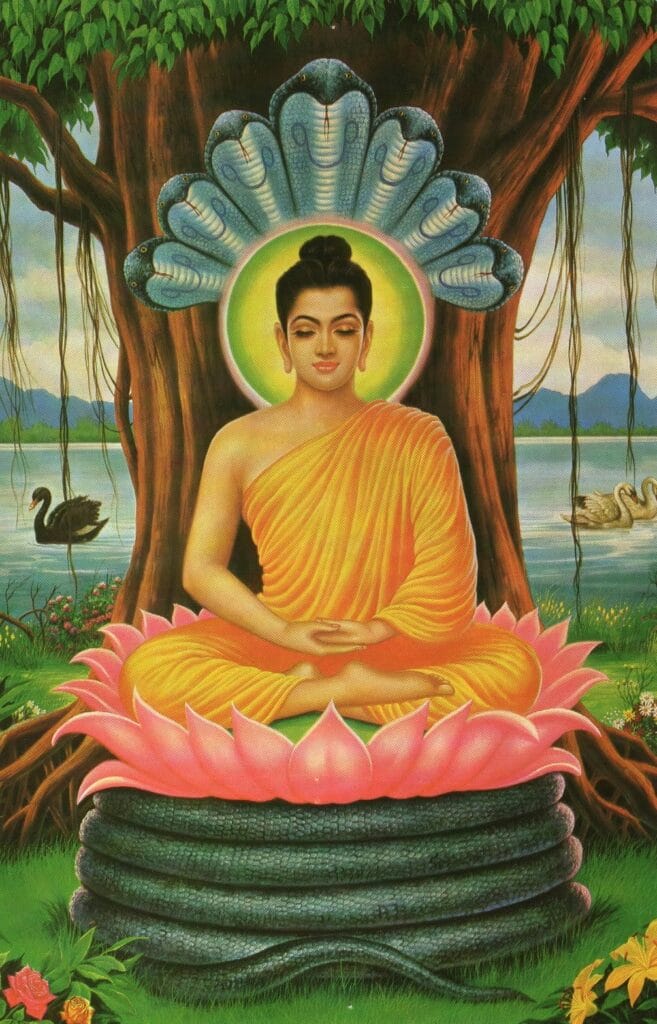
Although the Western world has only recently begun to truly engage with Buddhist philosophy, its teachings have quietly rippled through cultures for centuries. The idea that suffering stems from attachment—whether to our identity, possessions, or desires—offers a powerful antidote to modern unrest. Through mindfulness, meditation, and daily intention, we can begin to separate from the “annatta,” or false self, and live in the present with greater peace. These meals are not just recipes; they are reflections of a man’s journey to Nirvana.
The Early Life of the Buddha
Born Siddhartha Gautama around the 5th or 6th century BCE in Lumbini (modern-day Nepal), the man we now call the Buddha was raised in luxury. His father, a regional king, shielded him from the harsh realities of life beyond palace walls. Legend says Siddhartha was destined for greatness; either as a powerful ruler or an enlightened sage. To keep him from choosing the latter, his father ensured he was surrounded by pleasure and ease.
But that illusion cracked. In a series of chariot rides outside the palace, Siddhartha encountered an old man, a sick man, a corpse, and a wandering ascetic. These sights devastated him. For the first time, he saw the inevitability of suffering, aging, and death. The safe bubble of palace life could not protect anyone from the truth. He left his home, wife, and infant son to seek the meaning behind this suffering.
Next week
I cook these before I write them. Some of it never makes the post.
The failures, the source documents, the version that actually tasted good. That part goes out by email, and next week’s is already on the stove.
 Written and cooked by Donnie
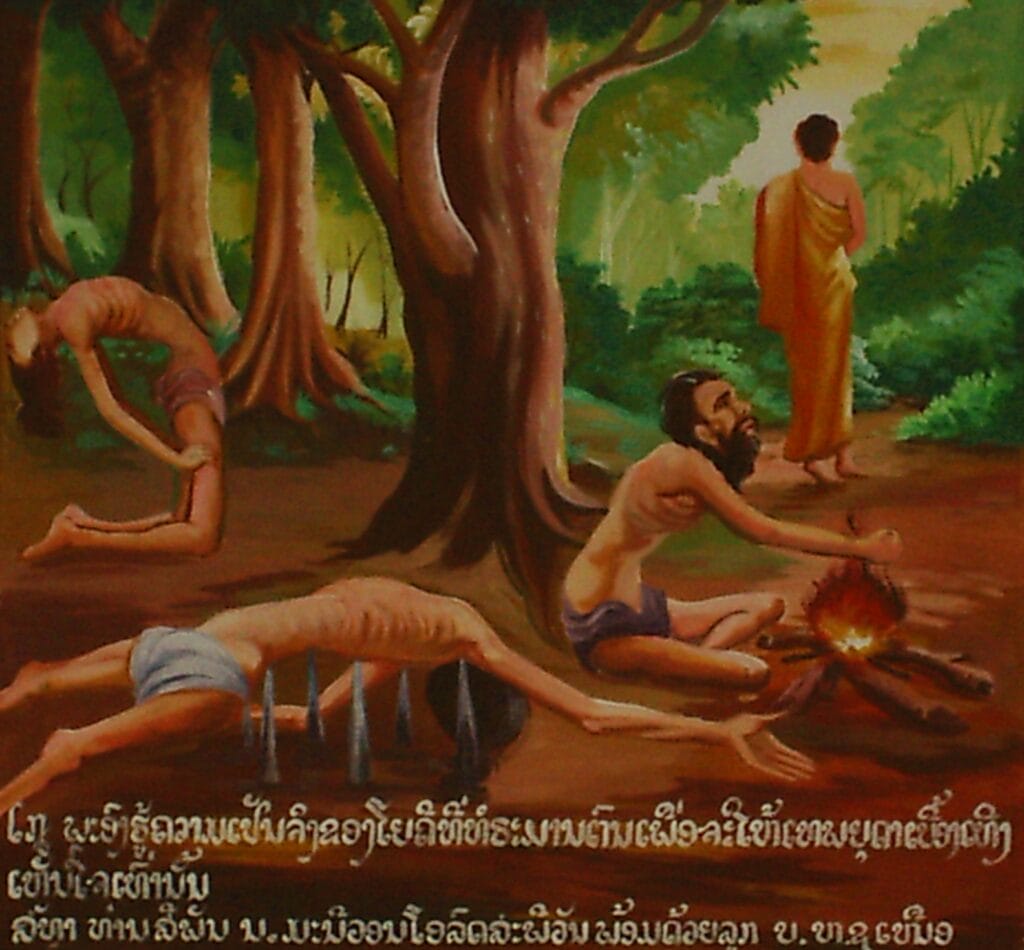
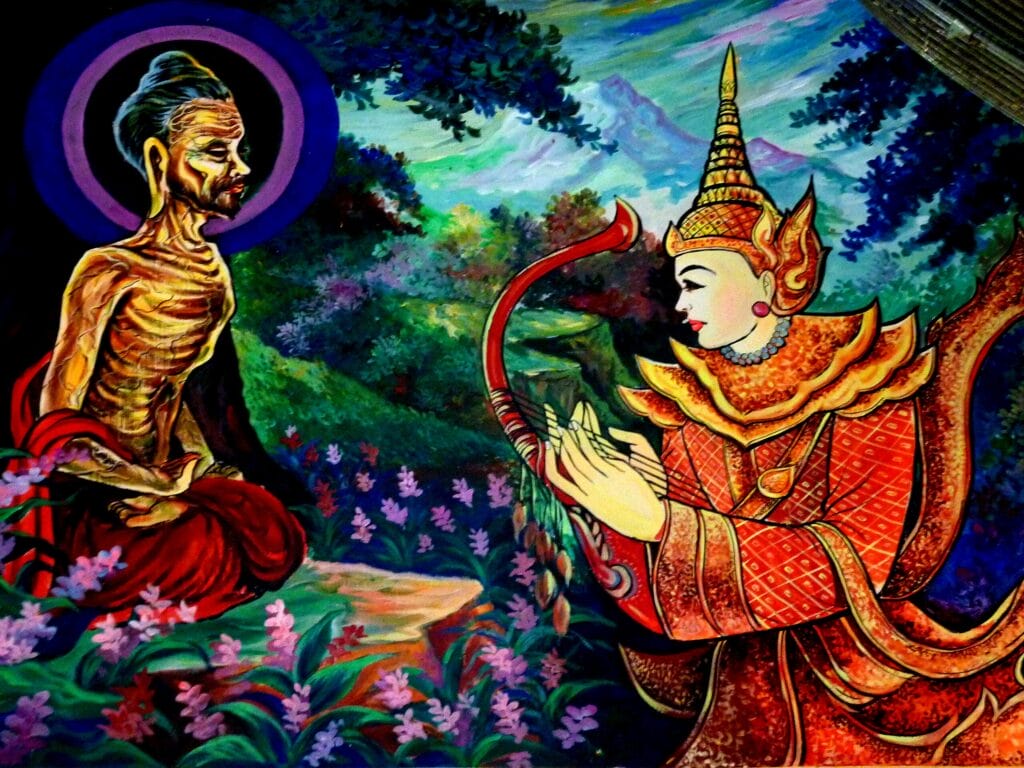
For six years, he practiced extreme asceticism—living on nearly nothing, sleeping in forests, and meditating without end. It was during this time that he nearly starved himself to death, convinced that denying the body would purify the soul. But what he found instead was weakness and delusion. This experience would lead to the pivotal turning point in his path—the embrace of the Middle Way.
Sujata’s Milk Rice and the Middle Way
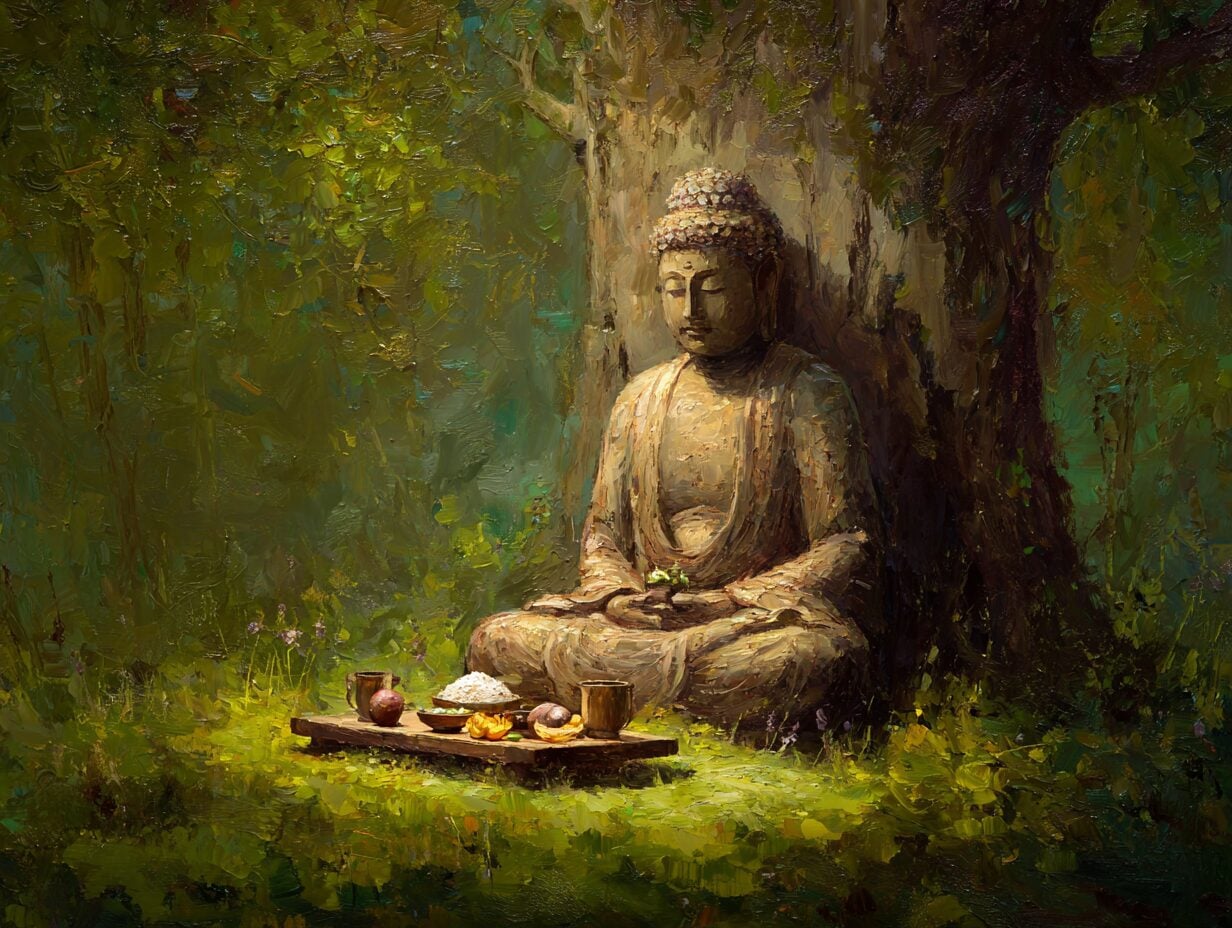
Weakened and close to death, Siddhartha collapsed beneath a Bodhi tree. It was then that a village girl named Sujata found him. She mistook him for a forest spirit and offered a simple bowl of warm milk rice pudding. This act of kindness did more than nourish his body. It restored his faith in balance and taught him the futility of extremes.
This was the moment Siddhartha realized that neither indulgence nor self-denial leads to enlightenment. It is the Middle Way—a path of moderation, mindfulness, and compassion—that offers clarity. The bowl of milk rice marked his first step back into the world, no longer as a prince or an ascetic, but as a seeker of truth grounded in human experience.
The dish itself, known today as kheer in Indian households, is creamy, sweet, and humble. It reminds us that even the smallest acts—sharing food, offering help, showing kindness—can become sacred. It’s a meal that sustains not just the body but also a philosophy, one spoonful at a time.
His Enlightenment and the Honey Barley Balls
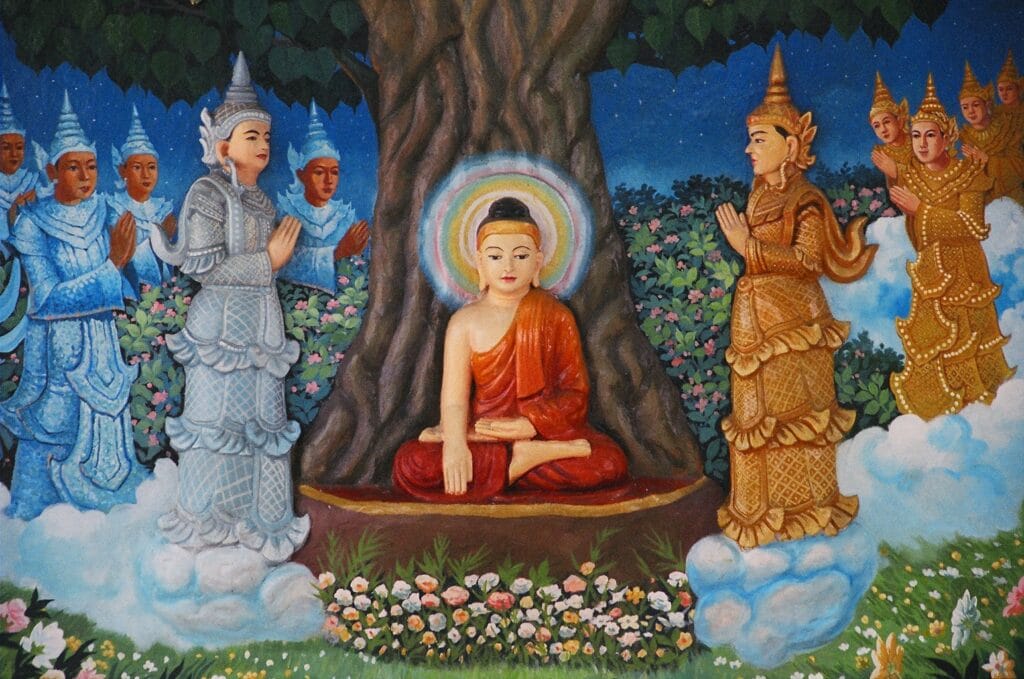
After Sujata’s offering, Siddhartha meditated under the Bodhi tree for 49 days. On the final night, he encountered Mara, a demon of illusion who tempted him with fear and desire. Siddhartha did not flinch. With his hand touching the earth as witness, he saw the truth of the universe. In that moment, he became the Buddha—the Enlightened One.
In the days following his awakening, the Buddha was visited by two merchants, Tapussa and Bhallika. They offered him barley meal balls mixed with honey, marking the first meal he accepted after enlightenment. These sweet, earthy balls were simple and nourishing. They also symbolized the beginning of his role as a teacher. No longer seeking, he was now sharing.
These barley balls, much like tsampa in Tibetan culture, are easy to carry and deeply satisfying. They also reflect the Buddhist principle of gratitude—accepting what is given without greed. They sustained the Buddha in his early travels as he began to preach the Four Noble Truths, the Eightfold Path, and the road to liberation from suffering.
His Final Meal: Sukaramaddava
Years later, as the Buddha approached the end of his earthly life, he accepted one final meal from a blacksmith named Cunda. The dish, referred to as sukaramaddava, has long puzzled scholars. Some believe it was a soft preparation of mushrooms, while others interpret it as “pig’s delight,” which could mean pork or a dish traditionally fed to pigs. Regardless of the translation, it became the Buddha’s last supper.
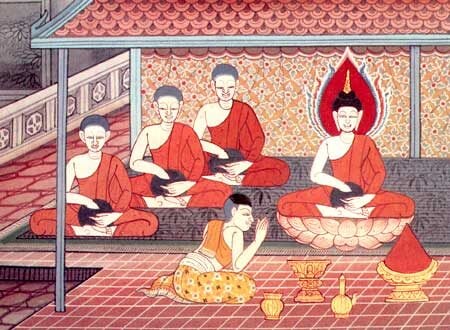
Shortly after consuming the meal, the Buddha became ill. Yet, he insisted no blame fall upon Cunda. He declared that the meal was a meritorious offering, no different than Sujata’s milk rice. His grace in that moment, even in the face of death, reflected the depth of his enlightenment. Life and death, joy and pain, are all part of the same cycle.
In many ways, this meal serves as a final lesson in detachment. Food, like life, is impermanent. The body will pass, but the Dharma—the teachings—will live on. With his disciples gathered around him, the Buddha offered one last reminder: “All compounded things are subject to vanish. Strive with earnestness.”
His Legacy
Today, over 2,500 years later, the Buddha’s teachings remain a cornerstone of spiritual thought across the globe. His message—that suffering is rooted in attachment, and freedom lies in letting go—has found resonance far beyond monasteries or temples. In a world increasingly obsessed with self-image, possessions, and endless craving, his call to live mindfully feels more urgent than ever.
Through meditation, ethical living, and inner reflection, the Buddha taught that anyone can walk the path to enlightenment. You don’t need robes, titles, or temples. You need awareness, compassion, and commitment to your inner truth. This is the heart of Buddhism—not dogma, but practice.
And what better way to engage with that legacy than through food? These three dishes offer a tangible, sensory connection to a story that changed the world. By preparing them, we don’t just taste the past. We remember it. We honor it. And perhaps, we carry a piece of it with us into our own journey.
If you’re enjoying my work, check out Eats History Shop!
How to Eat Like the Buddha: Recipes from His Life
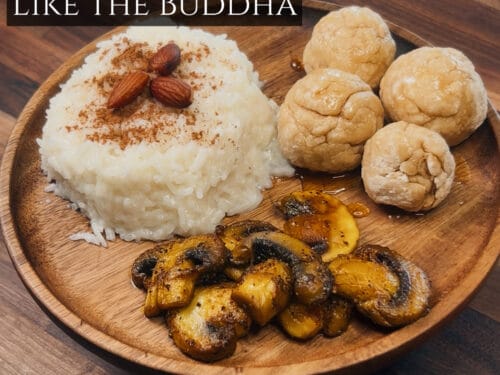
Three Dishes from the Buddha’s Life

Don’t lose this one.
I’ll email it to you so it’s waiting when you’re ready to cook.
Ingredients
Instructions
Notes
- Tsampa Substitute Tip: Roasted barley flour (tsampa) is traditional and used in many Himalayan cultures, but you can make your own by toasting barley flour in a dry pan until fragrant and golden brown.
- Mindful Cooking: These recipes are perfect for a slow, meditative cooking session—use the time to reflect or breathe deeply, just as monks might in a monastery setting.
- Customizable Simplicity: Feel free to adjust sweetness or texture in the milk rice and honey balls. These recipes are forgiving, rustic, and meant to be adapted to what you have on hand.
Sources:
General Life of the Buddha & Teachings:
- “The Life of the Buddha” by Bhikkhu Ñanamoli – A foundational text compiling Pali Canon sources that narrates the life of the Buddha from birth to Parinibbāna.
- The Pali Canon (Tipiṭaka) – Specifically the Dīgha Nikāya, Majjhima Nikāya, and Vinaya Pitaka, which contain references to the Buddha’s biography and teachings.
- “Old Path White Clouds: Walking in the Footsteps of the Buddha” by Thich Nhat Hanh – A narrative-style retelling of the Buddha’s life drawn directly from ancient texts.
- “What the Buddha Taught” by Walpola Rahula – Explains core principles like annattā (non-self), dukkha (suffering), and nirvāṇa in accessible detail.
- “The Middle Length Discourses of the Buddha” (MN 26: Ariyapariyesanā Sutta) – Covers the Buddha’s renunciation and path to enlightenment.
Sujata’s Milk Rice (Pre-Enlightenment Meal):
- Buddhacarita by Aśvaghoṣa (1st–2nd century CE) – Epic poem describing Sujata offering milk rice to Siddhartha under the Bodhi tree.
- Lalitavistara Sutra – Sanskrit Buddhist scripture that includes an embellished version of the Sujata episode.
- “The Legend of Sujata” – Journal of the Pali Text Society – A scholarly look at the evolution of this story across Buddhist traditions.
Barley Meal Honey Balls (Post-Enlightenment Offering):
- Vinaya Pitaka – Mahavagga 1.23.1–10 – Describes the first offerings made to the Buddha after his enlightenment, including barley meals and honey balls.
- “Food and Insight: Monastic Diet and Mental Training in Early Buddhism” – Pacific World Journal, Vol. 12 – Academic treatment of early Buddhist food practices.
Buddha’s Final Meal (Mushrooms or Pork):
- Mahāparinibbāna Sutta (Dīgha Nikāya 16) – Describes the Buddha’s last meal offered by Cunda. The ambiguous term sukaramaddava is debated to mean “pig’s delight” or “soft mushrooms.”
- “The Buddha’s Last Days: The Mahāparinibbāna Sutta” – Translated by Sister Vajira and Francis Story – Clear English version of the text with footnotes on sukaramaddava.
- “Did the Buddha Die of Pork or Mushrooms?” – Journal of the American Oriental Society, Vol. 102 – Academic article analyzing interpretations of the final meal.
- “The Death of the Buddha: The Mahāparinibbāna Sutta and Its Commentaries” by André Bareau – Covers interpretations of the Buddha’s passing and the symbolism of the final meal.