There is something quietly powerful about cooking a dish that millions of men ate when they were cold, muddy, exhausted, and a long way from home. Corn Willy Hash is one of those dishes. It won’t dazzle you with refinement. It won’t make a food blogger swoon. But it will fill you up, warm you through, and connect you across a century to the young American soldiers (the doughboys) who ate it from tin mess kits in the trenches and rest camps of northern France.
Few foods are more historically loaded than this humble skillet of corned beef and potatoes. To eat Corn Willy Hash is to follow a very literal trail of breadcrumbs, or rather a trail of canned beef and army-issue broth, through one of the most consequential chapters in American military history. So let’s dig in, starting with who was doing the eating.
The Doughboys: America Enters the War Late and Changes Everything
When the United States formally entered World War I in April 1917, the conflict had already been grinding for nearly three years. Britain and France had bled themselves white against the German war machine. The trenches on the Western Front had become a byword for industrialized slaughter. Verdun, the Somme, Passchendaele: names that would haunt the European imagination for generations. Into this exhausted, traumatized theater arrived the American Expeditionary Forces (AEF), fresh, well-fed by comparison, and deeply optimistic in a way that their allies had long since forgotten how to be.

The American soldiers were called “doughboys,” a nickname whose true origin remains disputed. Some trace it to the adobe clay balls that frontier soldiers cleaned their brass with; others point to fried dough dumplings that were a staple of soldier rations during the Civil War era. Whatever its origins, the term stuck, and by 1917 it had become the universal shorthand for the young American men, roughly two million of them by the war’s end, who crossed the Atlantic to fight.
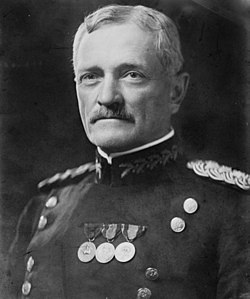
Commanded by General John “Black Jack” Pershing, the AEF arrived with one firm directive from Washington: the Americans were to fight as an independent army, not be parceled out as replacement troops to plug the gaps in British and French lines. Pershing resisted enormous pressure from the Allies to do otherwise. This insistence on operational independence would shape how American soldiers experienced the war, and as it turned out, how much of its worst brutality they would be spared.
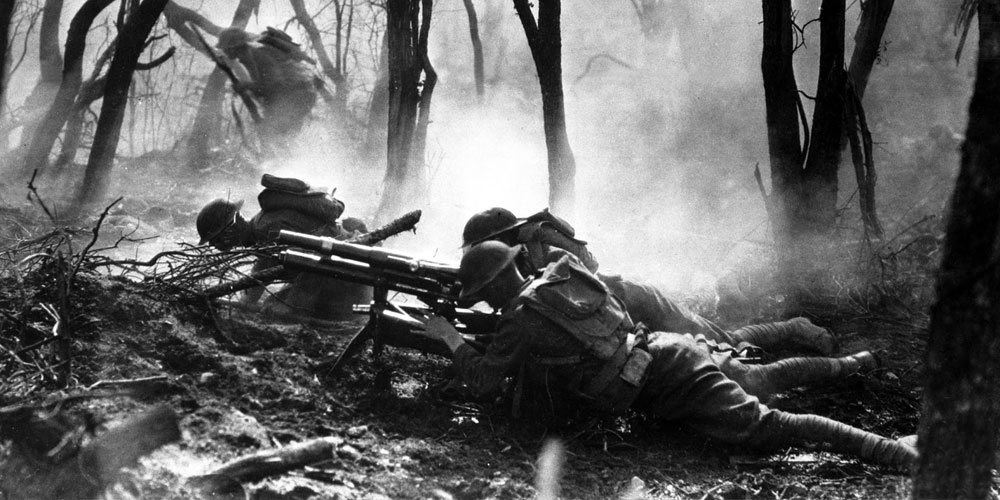
By the summer of 1918, American troops were fighting in earnest at Belleau Wood, Chateau-Thierry, and eventually the massive Meuse-Argonne Offensive. The war ended on November 11, 1918, just months after the United States had thrown its full weight into the fight. The doughboys had arrived late to a war that was already decided in its broad outlines, and they paid a real price in blood. But compared to their British and French counterparts who had endured four brutal years of attritional slaughter, the American experience, terrible as it was for those who lived it, was mercifully compressed.
Corn Willy Hash: A Name, a Legend, and a Quarry in France
“Corn Willy” was the American doughboy’s affectionate, or perhaps sardonic, nickname for corned beef hash, the dish that appeared with stubborn regularity in their mess kits and field rations. The exact origin of the name is genuinely murky. Some accounts suggest a reference to a mythical “Uncle Willy,” some anonymous purveyor of canned beef who became the symbolic villain of army chow. Others treat it simply as one of those pieces of soldier slang that spring up organically and resist easy explanation. The nickname was applied broadly: to the hash itself, to corned beef in any form, and occasionally to the entire miserable category of tinned, preserved meat that soldiers were expected to eat and be grateful for.
The corned beef itself came from various sources. American, British, and French suppliers all contributed to the Allied logistical machine, and quality varied wildly. When the beef came from British or French sources, the soldiers often gave it rather less charitable nicknames: “monkey meat” was a popular one, a designation that tells you something about how it smelled and tasted by the time it made its way to the front. The American-sourced product was generally considered a step up, but “Corn Willy” was never a term of unqualified praise.
Near the front lines in 1918, there was a place that American soldiers called “Corn Willy Quarry,” a rest and aid station where weary troops were fed, bandaged, and given a brief respite from the fighting before being sent back. The quarry’s walls offered cover from artillery; the hash offered whatever comfort food can offer to men who have seen too much. That a field kitchen nickname could become a place name on military maps is a remarkable testament to how central this food was to the daily texture of the doughboys’ lives.
The name also appeared in darker contexts. One of the hills in the Meuse-Argonne sector earned the sobriquet “Corn Willy Hill,” a grim bit of soldier humor suggesting that the men expected to be ground up into something resembling hash before the offensive there was finished. That the same name could describe both a place of rest and a place of anticipated slaughter tells you everything you need to know about the peculiar gallows wit that sustained fighting men through the war.
As for the hash itself, it existed on a spectrum. At its best, it was made from scratch: diced potatoes, cooked corned beef, onions, and rendered fat, fried together until a proper crust formed at the bottom of a heavy pan. At its most utilitarian, it was a can of corned beef hash opened and heated, or not bothered to be heated, and eaten cold or congealed directly from the tin. Both versions fed the doughboys. Both were called Corn Willy.
My Verdict: A Dish From Another Era (In the Best Possible Way)
Let me be honest with you: Corn Willy Hash is not a dish that’s going to set the internet on fire. It won’t show up on anyone’s Michelin shortlist. It has the visual appeal of something scraped from the bottom of a cast-iron pan, because it was, and that’s the whole point. If you come to it expecting the kind of composed, photogenic plate that dominates contemporary food culture, you will be disappointed and also somewhat confused about why you’re eating this.
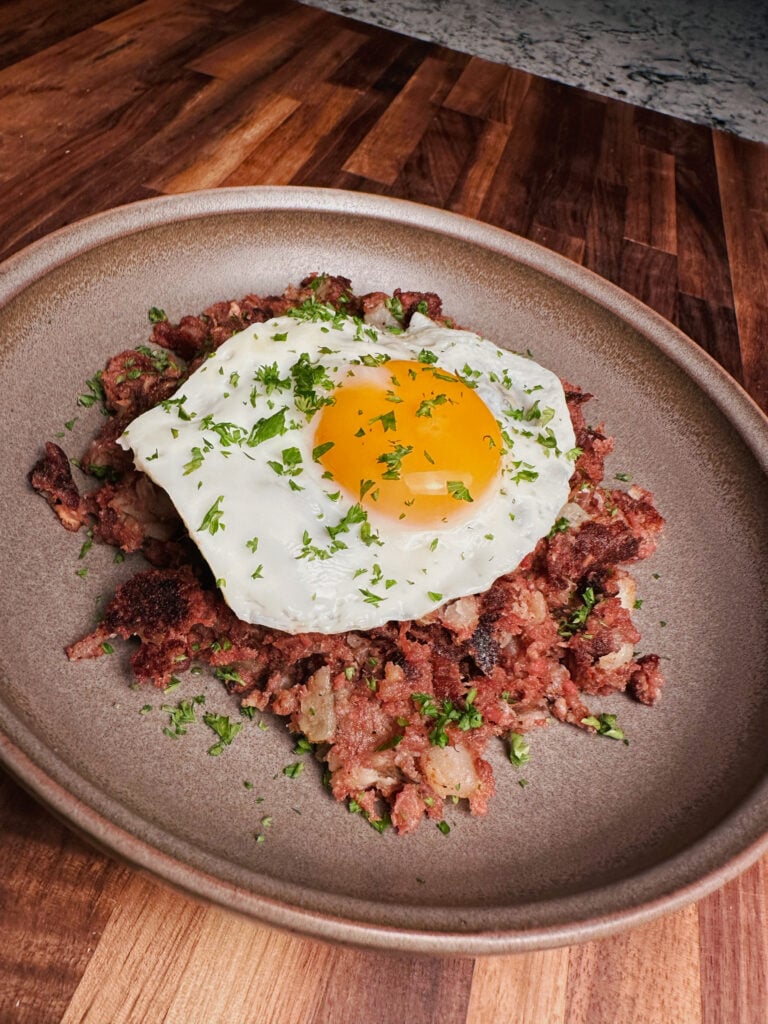
It does feel dated, in the way that all earnestly unpretentious food from an earlier era feels dated. There’s no acid, no bright herb, no clever textural contrast. It is a meal engineered to fill a hungry person, period. And I think that’s actually part of the appeal, not as nostalgia exactly, but as a reminder that food has a history that predates the era of eating as performance. The doughboys weren’t eating this because it was fashionable. They were eating it because it was there, and they were hungry, and they needed to keep moving.
Rating: 7.8/10. A dish from another era that deserves more credit than it usually gets. Make it for the history as much as the flavor. Just don’t be surprised when the flavor delivers too.
WW1 Corn Willy Hash Recipe:

Corn Willy Hash (1917-1918)
Ingredients
- 3 cups diced potatoes
- 1 cup chopped onion
- 4 cups chopped corned beef cooked
- 1/4 cup butter
- 3/4 cup beef broth or water heated
- Salt and pepper to taste
- Fresh parsley for garnish
- 1 fried or poached egg per serving for topping
Instructions
- Boil diced potatoes in salted water until just shy of fork-tender. Drain well.
- Mix the drained potatoes with the chopped corned beef. Set aside.
- In a large skillet, melt the butter over medium heat. Add onions and fry until translucent, about 5 minutes.
- Add the potato and beef mixture to the skillet along with the heated beef broth.
- Cover with a lid and cook for 14–16 minutes, or until a deep golden-brown crust has formed on the bottom. Resist the urge to stir.
- Season with salt and pepper. Invert onto a platter or serve directly from the skillet. Top with fresh parsley and a fried or poached egg.
Video
Notes
- Don’t skip the parboil. Cooking the potatoes partway before they hit the skillet is the difference between crispy-outside-tender-inside and a raw, chalky mess. Pull them out while they still have a little resistance.
- The crust is everything. Don’t lift the lid to check every few minutes. That steam is doing work, so let it cook undisturbed and trust the process. A properly formed crust on the bottom is what separates hash from glorified scrambled beef.
- Canned corned beef also works. This is, after all, a dish with deep roots in military provisioning. If you’re using canned corned beef rather than slicing your own from a brisket, there’s no shame in it. Just chop it coarsely so you get some texture, and go a little lighter on the broth since canned beef can be saltier.