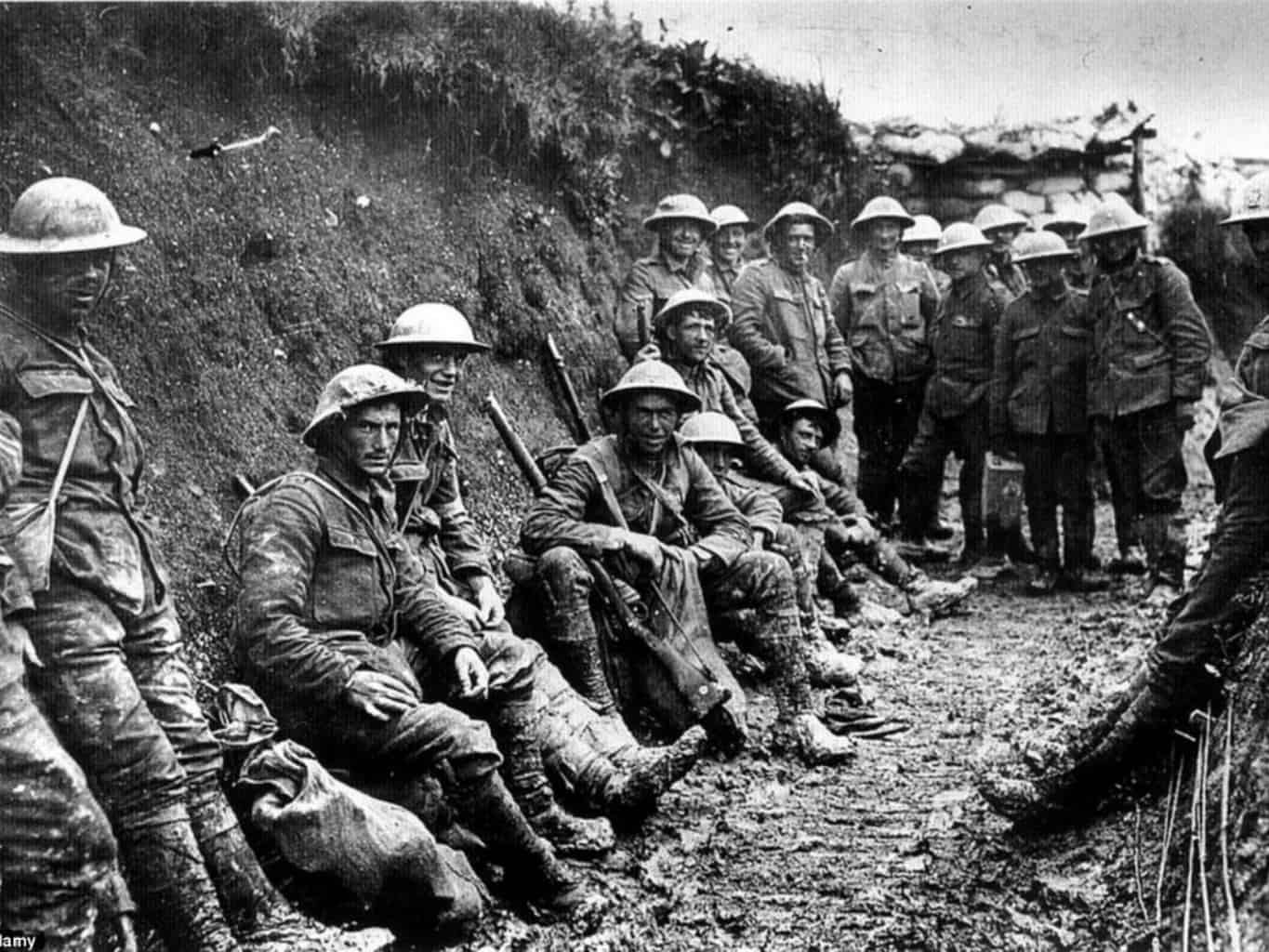
The Battle of the Somme stands as one of the bloodiest, most devastating campaigns in human history. Over one million men were wounded or killed along a stretch of earth that became synonymous with futility and sacrifice. It is hard to comprehend such horror—but sometimes, a meal can help tell the story.
In this post, I commemorate the soldiers who fought and died on both sides by recreating a humble dish from the German WW1 trench cookbook Kochbuch für den Schützengraben (1915). The meal? Fried breadcrumb beef cutlets (Panierte Rindfleischschnitten), potato pancakes (Kartoffelpuffer), a mustard vinegar sauce, and a side of sauerkraut. It’s a taste of wartime simplicity, grounded in the resilience of those who endured the unimaginable.
The Battle of the Somme: A River of Blood
The Somme offensive began on July 1, 1916, and was intended as a major Allied breakthrough against entrenched German lines in northern France. In theory, it was a coordinated push that would relieve pressure on the French at Verdun and exhaust the German army. In reality, it opened with catastrophe. On the very first day, the British suffered over 57,000 casualties—making it the single bloodiest day in British military history. The Germans, too, sustained severe losses as artillery pounded the earth and infantry poured over the tops of trenches into a storm of machine-gun fire.
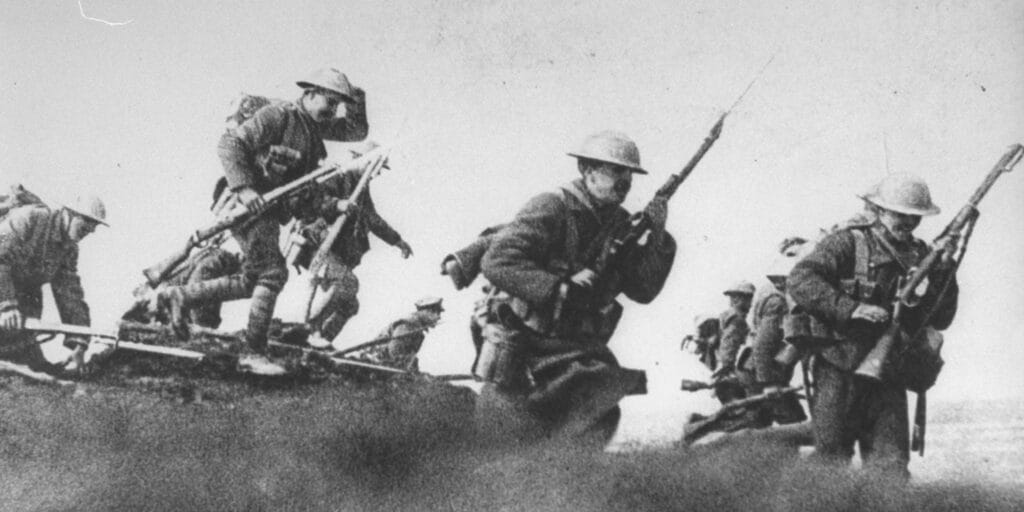
For over four months, soldiers fought for inches across a hellscape of mud, wire, shell holes, and death. Trenches filled with water and blood, men drowned in craters, and shells fell relentlessly day and night.
Next week
I cook these before I write them. Some of it never makes the post.
The failures, the source documents, the version that actually tasted good. That part goes out by email, and next week’s is already on the stove.
 Written and cooked by Donnie
By the time the battle ended in November, the Allies had advanced just seven miles—and over a million men on both sides had become casualties. The Somme wasn’t just a battlefield. It was a crucible of mechanized warfare that changed the course of history and left a permanent scar on the psyche of Europe.
Kochbuch für den Schützengraben: Recipes from the Trenches
Published in 1915, Kochbuch für den Schützengraben—Cookbook for the Trenches—wasn’t written by chefs or officers. It was assembled by and for ordinary soldiers, trying to make the most of limited rations and impossible conditions. The book offered simple, affordable meals using ingredients that were easy to transport and store, like dried potatoes, preserved meats, vinegar, and mustard.
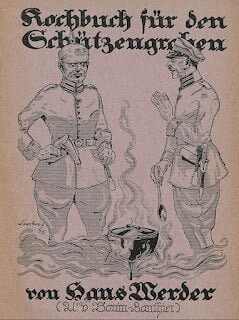
The cookbook gives us a rare glimpse into the culinary improvisation of World War I soldiers. Food wasn’t just sustenance. It was a form of morale, a scrap of routine amid the chaos, and sometimes, a last comfort before death. This dish—breadcrumb beef cutlets and potato pancakes—might not sound extravagant, but it represents the small acts of care that men gave themselves and each other in the worst of times.
Eating in a WW1 Trench: Survival, Not Satisfaction
Meals in the trenches were often erratic, bland, or downright inedible. Soldiers relied on tins of meat, dried biscuits, and whatever could be scrounged, traded, or cooked over a fire if one could be lit without attracting enemy fire.
On the German side, field kitchens would try to deliver hot meals behind the lines, but by the time they reached the front, the food was often cold or spoiled. When possible, soldiers made do with small stoves, fire pits, or even makeshift pans heated by candles or engine parts.

Despite this, food held deep emotional value. Sharing a hot meal—even a rough one—offered a moment of normalcy, brotherhood, and dignity. Recipes like the one below weren’t just about calories. They were a way to reclaim humanity in an inhuman war. Recreating them today isn’t just historical curiosity—it’s an act of remembrance.
If you’re enjoying my work, check out Eats History Shop!
The Recipe: Panierte Rindfleischschnitten mit Kartoffelpuffer
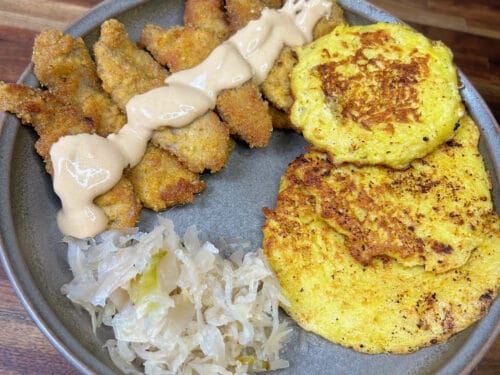
WW1 German Trench Recipe

Don’t lose this one.
I’ll email it to you so it’s waiting when you’re ready to cook.
Ingredients
Instructions
Notes
- Beef Cut Selection – Choose boneless beef cuts like sirloin or top round that are easy to slice into strips and tenderize with a mallet or back of a pan. If possible, use grass-fed beef for a more rustic, old-world flavor.
- Drain Your Potatoes – After grating the potatoes for the pancakes, wrap them in a clean towel and squeeze out as much liquid as possible. This keeps the pancakes crispy, not soggy.
- Rustic Mustard Sauce – Use a grainy or Dijon mustard for a more authentic texture. Red wine vinegar adds acidity, but apple cider vinegar can also work well for a slightly sweeter twist.