Benjamin Franklin is remembered as a statesman, inventor, and philosopher, but he was also one of the most curious eaters among the American founders. His travels across Europe exposed him to foods that fascinated him just as deeply as ideas, and few ingredients captured his imagination more than Parmesan cheese. To Franklin, food was not a trivial pleasure but a form of cultural knowledge, something that revealed how a people lived, thought, and valued craftsmanship.
If you’re enjoying my recipes, check out my e-cookbooks, now 40% Off!
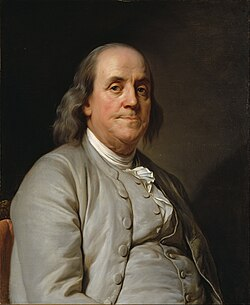
That curiosity followed him throughout his diplomatic life. While serving in Europe, Franklin immersed himself in local customs, language, and cuisine. Among the many flavors he encountered, Parmesan stood out as a marvel of patience and technique, a cheese aged for years and prized for its sharp complexity. He pursued it with the same enthusiasm he brought to science and politics.
Franklin’s Obsession with Parmesan
Franklin’s admiration for Parmesan cheese is well documented in his correspondence. In one letter, he famously wrote, “And for one I confess that If I could find in any Italian travels a receipt for making Parmesan Cheese, it would give me more satisfaction than a transcript of any inscription from any stone whatever.” The statement is revealing. Franklin valued practical knowledge that could be shared and reproduced, and the mystery of Parmesan’s production fascinated him more than ancient monuments.
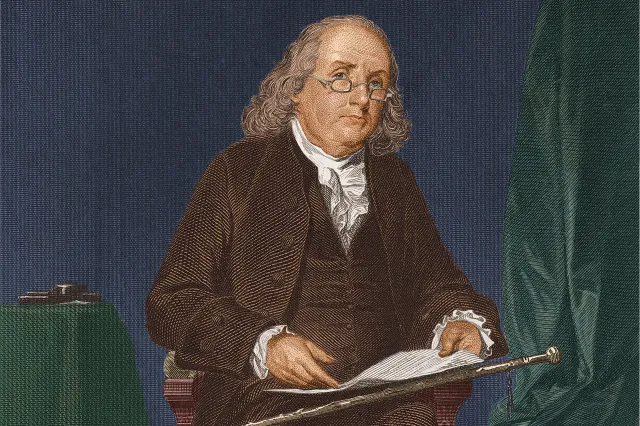
His interest was not casual. It took four years of inquiry before Franklin finally received a detailed explanation of how Parmesan was made. In 1773, a letter arrived outlining the process, satisfying a long-standing curiosity. This was not simply about taste. It was about understanding how careful technique, time, and tradition transformed simple milk into something extraordinary.
The Cookbook Source
This Parmesan cheesecake appears in Benjamin Franklin: Book of Recipes, a collection that preserves a number of culinary notes and recipes associated with Franklin’s European years. The book reflects Franklin’s deep interest in practical knowledge, including food, and documents his engagement with contemporary European cooking rather than purely colonial American fare.
The recipe itself aligns with eighteenth-century European cheesecake traditions, where aged cheeses like Parmesan were often incorporated into sweet preparations. Rather than an oddity, the dish represents the flexible boundaries between savory and sweet that characterized elite cooking of the period. Franklin’s fascination with Parmesan and his long pursuit of its method of production make this cheesecake a fitting expression of his curiosity, experimentation, and willingness to taste beyond convention.
Sweet, Savory, and Eighteenth-Century Taste
To modern palates, the idea of Parmesan in a cheesecake can sound surprising, even unsettling. Yet in Franklin’s time, aged cheeses were commonly used in sweet preparations. Sugar enhanced rather than masked their flavor, and the result was considered refined rather than strange. Parmesan brought depth, salt, and a subtle sharpness that contrasted with custard-like richness.
This reflects a broader truth about eighteenth-century cooking. Dishes were designed to engage the entire palate, not just satisfy a craving for sweetness. Franklin’s Parmesan cheesecake belongs to a world where cooks were unafraid of bold combinations and diners expected complexity rather than comfort.
My Attempt and Tasting Notes
I approached this recipe with a bit of hesitation. The concept feels unusual to modern expectations, and it is easy to imagine it going wrong. Still, historical curiosity demands honesty, and Franklin himself would have insisted on testing the idea rather than dismissing it outright.
The result was better than expected. The texture is familiar, very much like a traditional cheesecake, but the Parmesan adds a gentle bite and savory depth that lingers on the finish. It does not overwhelm the dessert, but it makes it more interesting. This is not a novelty dish, but a thoughtful one, and it earns a solid 7.9 out of 10.
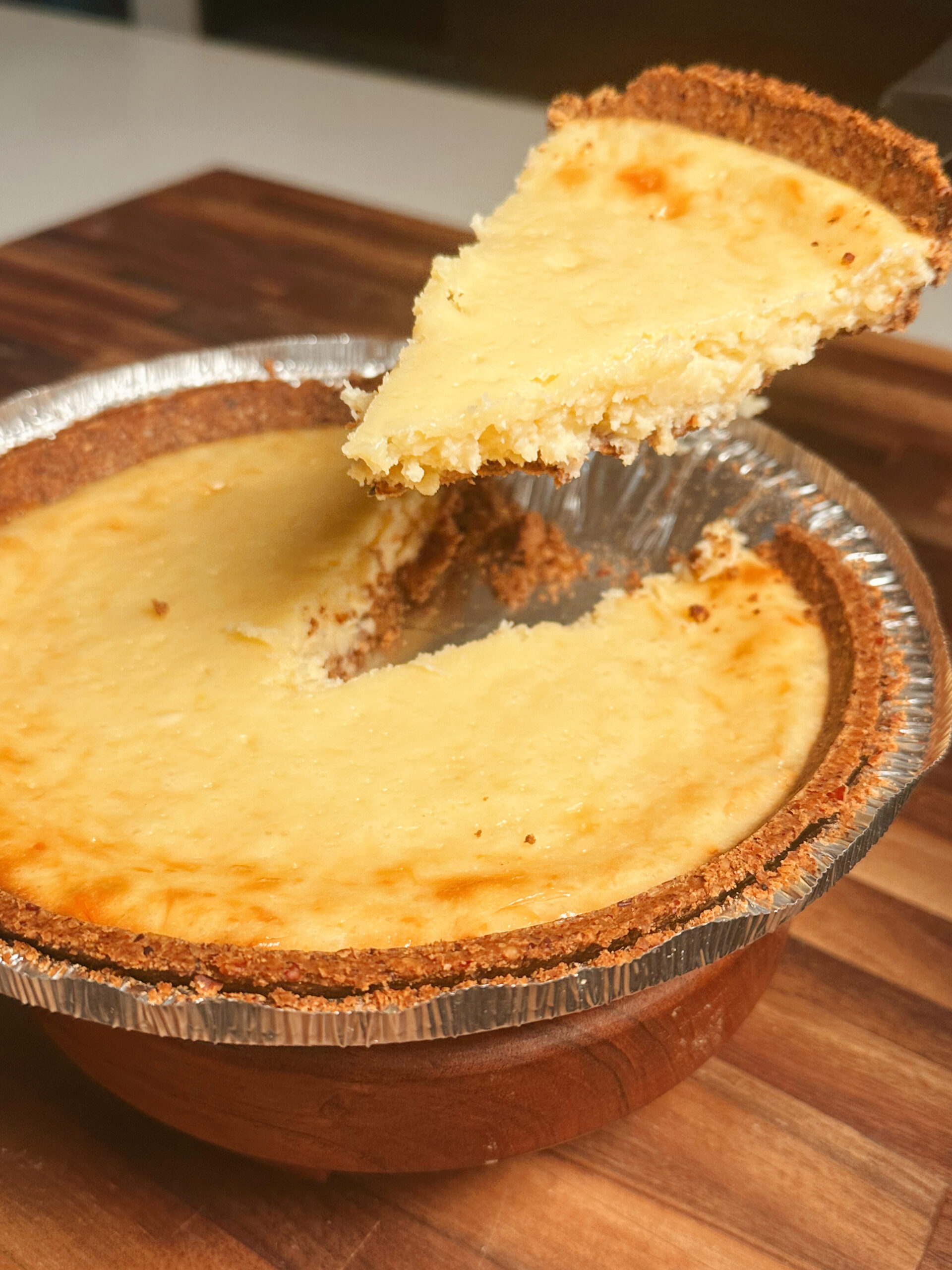
Benjamin Franklin’s Parmesan Cheesecake
Ingredients
Filling
- 8 oz 225 g cream cheese, softened
- 1 cup finely shredded Parmesan cheese
- 2 large eggs separated
- ½ cup granulated sugar
- 1 tablespoon lemon juice
- 1 teaspoon lemon zest
Crust
- 1 cup graham cracker crumbs
- ½ cup finely crushed walnuts
- 4 tablespoons butter melted
- 2 tablespoons granulated sugar
Instructions
- Preheat the oven to 350°F (175°C). Lightly grease a small springform pan or pie dish.
- In a bowl, combine the graham cracker crumbs, crushed walnuts, melted butter, and sugar. Mix until evenly moistened. Press firmly into the bottom of the pan to form the crust. Set aside.
- In a large bowl, beat the cream cheese until smooth. Add the shredded Parmesan and sugar, mixing until well incorporated.
- Add the egg yolks one at a time, stirring gently after each addition. Mix in the lemon juice and lemon zest until smooth.
- In a separate bowl, lightly whip the egg whites until they hold soft peaks. Do not overwhip.
- Gently fold the egg whites into the cheesecake batter, taking care not to deflate them. This will give the cheesecake a lighter texture.
- Pour the filling over the prepared crust and smooth the top.
- Bake for 35–40 minutes, or until the center is just set and the top is lightly golden.
- Allow the cheesecake to cool completely before slicing. Chill for at least 1 hour for best texture.
Video
Notes
- The Parmesan should be finely shredded so it melts evenly into the custard.
- The flavor is subtly savory, not salty, with a familiar cheesecake texture and a gentle bite from the aged cheese.
- This recipe reflects eighteenth-century tastes, where sweet and savory were often blended rather than separated.